My characters are slackers.

The outline of my novel-in-progress is now fully scrawled in 24 notebook pages.  The next job is to type it up, massage it into a sort of stage manager’s “bible” which was a technique I used with The Watery Girl. This process seemed to help.  Character motivations, scene breakdown, major “props” or icons that I needed to follow through the novel, for continuity.  But now what?  I still have to figure out how this story ends.

Writers often talk about how their characters take over, dictate, and decide what happens next.

So where are my people?  Asleep, at the bar?  It’s sunny out, did they call in sick today?

Slackers.

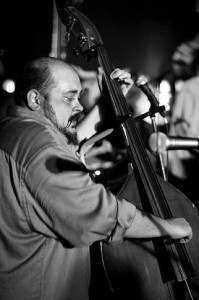
Jason Dryden of Sleepybird

Jason Dryden died too soon.  Too soon because I needed to see him play more music.

I didn’t know Jason well, but saw him perform often as part of the band Sleepybird. I am lucky to have seen them play as many times as I have.  But I am greedy.  I want more.  Jason on bass and theremin was something brilliant. The alchemy of Sleepybird I have written about before.  Jason was a huge presence, a performer among performers, down to his moustache.  When I first saw Sleepybird (in a friend’s living room) the musicians plucked and plunked and blew and soon, strains of their song, “Butter her up” warmed the air.  I was hooked.

I was lucky enough to see Sleepybird et al in “The Fruit for the Egg” at Stivers in February.  It was amazing.  My husband bid on and won a ceramic piece Jason made, a round white vessel with crackly grey fault lines, and a lid with a primitive white bird as handle.  It’s beautiful and delicate and ancient-looking.

In ways that are so close to my being that they are hard for me to articulate, Sleepybird (performing live, especially) gives me license to write fiction.  The inspiration that comes through them to me, to my inner creator, is tangible every time I hear them.  Something about the substance that they form with their individual selves and instruments, and all encompassed in the music, flows directly into the bloodstream of my creativity.  The inventiveness that I can sometimes muster in my fiction is buoyed by the phenomenon that is Sleepybird.  In particular, that potent energy has been embodied in the way Jason Dryden played the theremin… in the magic of watching his hand dance, ever so slightly, a delicate feather of motion, through the air, and the sounds that motion created.

Although I didn’t know him well enough to glorify him, or demonize him, Jason’s death is really affecting me.  People I know and love were very close to him.  Listening this week to the Sleepybird song, “Already Gone,” I was reminded of the impermanence of everything.  But if anything is important, then everything is important.

Send love to someone.  Do it with words, or clay, or music.  The person who receives your love may not know you, and you may not know them, but do it anyway.  You might do it unwittingly, as perhaps Jason did for me.  The magnitude, though, like the sadness, will last forever.  And even so, is worth it.

On being specific

When I was studying theatre, good directors always talked about being exquisitely specific in our choices as actors. The character had to be known in the body of the actor, imagined in clear view. Knowing what the character had for breakfast, down to the amount of milk they poured on their overcooked (or undercooked) oatmeal. How much honey, or brown sugar. Bananas, raisins, or something exotic like candied ginger? Or did they had nothing for breakfast? And then, more importantly: how did the breakfast feel in the belly? Inhabiting characters.

In this same way, I think characters in fiction (and probably some creative nonfiction, too) have to be built, drawn, and very specific. Let the audience, the reader, really see (and more importantly, feel) the life of the character.

And I am not talking about eye color.

I was once in a creative writing workshop with a very unskilled writer. (I make this judgment based upon the truly terrible work she had submitted for the workshop.) Her comments on the other writers’ work boiled down to saying she wanted to see more of what the characters looked like. “Like, how tall is he? What color is his hair? His eyes?” She didn’t have much else to say. Until just this moment, I scoffed at how unsophisticated her comments were, and how unimportant those details are in a good story. I still feel that if a writer mentions those pedestrian details, they better be important to the story. But it just occurred to me that this unskilled writer might have been talking about eye color, but meaning something more salient, that is: perhaps she wanted the writers to draw specific characters. Maybe the other writers (myself included) had made fuzzy or unconsidered choices with our characters. We probably needed to go much further, all the way down the alimentary canal.

Where to break things

I have been thinking in a very gestural and unscientific way about how poems, short stories, and novels are similar and different, both for reader and writer.

Something comes to mind about pacing, tempo, and where to break things.

When working on a novel, finding the right chapter break is crucial. It’s also important to think about where to end paragraphs. Is the question of where to end paragraphs even more important in writing short stories? And decisions about line breaks, even in the very occasional poems I’m working on, seem similarly intuitive and challenging.

I am not claiming that sentences, or words, are not crucial in novels. But there does seem to be a point of comparison among the forms, with the question of chapters, paragraphs, and lines, and where to break them.

Now the question is: how to end this post?

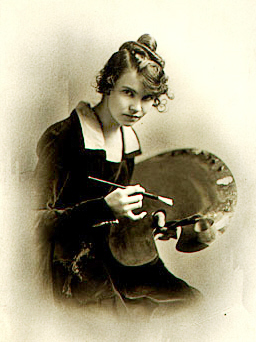
Wanda Gág

I read Millions of Cats, by Wanda Gág, three times today. Several months ago, it was my toddler’s favorite book, but we haven’t read it recently. My daughter brought me the book for today’s third reading, and said “We haven’t read this book in a long time!” (This phrase, like many others she says, are echoes of things my husband and I say to her, but I still find it charming.)

The book, recommended to me by Jim Krusoe, is wonderful. A lonely old man goes out in search of a cat for his lonely old wife, finds a hill full of them, and can’t decide which is best, so brings them all home. The cats are thirsty and hungry, and subsequently devour a pond and hills full of grass on their way. Once back at the homestead, the cats start a huge rumble because each thinks it’s prettiest, and the old man and woman take cover. Once things are quiet again, only one scraggly waif remains–saved because no one bothered about it. The couple assumes all the other cats ate each other. (My husband assumes the little waif ate them all.) The old man and woman adopt the waif, bathe and feed it, and by the end of the book, it’s healthy and charming, and the couple is no longer lonely.

The illustrations are amazing.

According to the Wikipedia entry, Wanda Gág sounds like she would have been interesting to know.

“She eventually received a scholarship to study art in St. Paul. She supported her younger siblings as best she could by sending money home, but underwent great conflict over the choice between pursuing her creativity (what she called her “Myself”) or becoming a commercial artist.”

Her “Myself.” Too often, I ignore my “Myself.”

Soon, I need to find my Myself a pond to drink dry, and hills of grass to devour.

Beautiful people

I had three great conversations with three beautiful people this week. One is about to have a baby, one is working on several projects (and helped me think through a future project I’ll work on), and one is healing from a major illness. The last conversation was about writing, too.

And, having reconnected with an old friend via the dreaded Facebook, I am smitten with how deftly and deeply words can go to the core of a person.

Two of my three conversations mentioned above were aided by Skype. Maybe technology will save us.

I remember reading somewhere that, if you have one authentic conversation with someone every day, you’re doing pretty well. This week, I feel rich.

Ed Hammell was right

“It’s a land of many paths
There ain’t only one right way
And I will keep on rocking that
Until my dying day–
It’s a land of many paths
There ain’t only one right way
And I will keep on rocking that
Until my dying day…”

–Hammell on Trial, “Gonna Be a Meeting”