A book that might help

IMG_9410
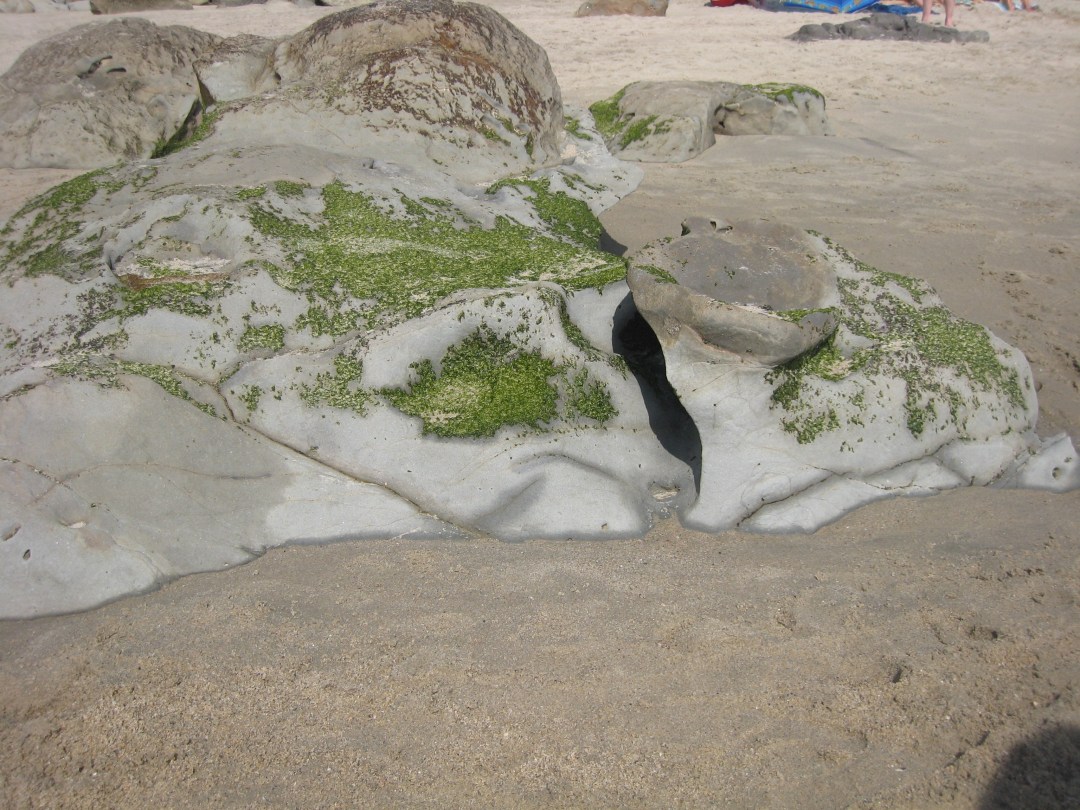
Mountain/small rock, Laguna Beach, California, 4/3/16

Considering the controversy surrounding the Antioch Review’s publication of the article “The Sacred Androgen: The Transgender Debate,” by Daniel Harris, I thought of Maggie Nelson’s genre-bending memoir, The Argonauts. (You can read an overview of the Antioch Review controversy here.)  (And I blogged a tiny bit about The Argonauts here.)

In The Argonauts I find a beautiful work of humanity. Reading it helped open my thinking about gender and the lack of imagination it takes to embrace the too-limiting gender binary. (As a writer and person who celebrates the human imagination, why should we only acknowledge two poles?) (I like to believe my mind and heart were already pretty open, but as a relatively straight, cisgendered woman, with a relatively well-understood path to walk, I have some distance to travel before I can truly understand less straightforward life narratives. As stories will do, reading the story of Maggie Nelson and Harry Dodge helped open me, helped me see a wider vista.) I recommend the book. In addition to its value as a work of social justice (and theory: it is quite accessible even to me, as someone outside of Theory) its lyricism is breathtaking.

What I find in Nelson’s book is a beautiful argument in favor of focusing on the particulars of being human, that specificity. For those of us who write fiction, this is an important part of creating character. (And as we create character in fiction, we have the opportunity to open the minds and hearts of our readers, to allow them to imagine another human’s inside terrain.)

Maybe the Antioch Review could invite Maggie Nelson to write for a future issue!

Experiments with raw

IMG_9149.jpg

I’m trying experiments where I don’t overthink some of the writing I release into the world. Where I don’t polish until it’s as perfect as my ego can make it (perfection is overrated and a lie, anyway.). This (below) is a raw something I wrote recently (some even tonight) and I will soon type it onto handmade paper by Sarah Strong for an exhibit called The Power Of Story, so I thought I’d also put it here.

**

I am from

1970s Osh Kosh overalls having
too much TV in the afternoon after school
Brady Bunch Courtship of Eddie’s Father, as sad a show as I have ever known.
What else in the afternoon in the house that is no longer there is the driveway even there anymore, I think not.
I am from a fire exercise a house burned down on purpose
it was my house but not really my house because we were renters.
Who did that fire serve, I hope someone, maybe it served my friend whose house burned down later because maybe the firefighters had learned something when they burned down my house.
Did they learn anything.
What did I learn.
Maybe just that stuff needs a place
but if you don’t have a place then
at least keep the stuff keep all the stuff you can from that place
from those days
(and later learn that whether or not you keep one damn thing it doesn’t matter
because stories stick to you better than the shadow to Peter Pan
and don’t need to be reattached by Wendy or anyone else.)

(On apologizing only when necessary) From The Argonauts, by Maggie Nelson

argonauts cover
A stunning and exceptional book from Graywolf Press

I’m so grateful that my dear friend Melissa Tinker gave me a copy of Maggie Nelson’s amazing and gorgeous work of humanity otherwise known as The Argonauts. I adore this book, for about a million reasons. I have so much to say about it, and will, when time and thought allow. For now, here’s what I have stolen from the book today.

Sometimes as a writing warm-up, it’s useful to type up someone else’s well-written words. Today I typed up from p. 98 of The Argonauts.  As someone who has struggled all my life with equivocating and unnecessary apologizing, this passage speaks to me.

Maggie Nelson writes:


“Afraid of assertion. Always trying to get out of ‘totalizing’ language, i.e., language that rides roughshod over specificity; realizing this is another form of paranoia. Barthes found the exit to this merry-go-round by reminding himself that ‘it is language which is assertive, not he.’ It is absurd, Barthes says, to try to flee from language’s assertive nature by ‘add[ing] to each sentence some little phrase of uncertainty, as if anything that came out of language could make language tremble.’

My writing is riddled with such tics of uncertainty. I have no excuse or solution, save to allow myself the tremblings, then go back in later an slash them out. In this way I edit myself into a boldness that is neither native nor foreign to me.

At times I grow tired of this approach, and all its gendered baggage. Over the years I’ve had to train myself to wipe the sorry off almost any work email I write; otherwise, each might begin, Sorry for the delay, Sorry for the confusion, Sorry for whatever. One only has to read interviews with outstanding women to hear them apologizing. (Monique Wittig). But I don’t intend to denigrate the power of apology: I keep in my sorry when I really mean it. And certainly there are many speakers whom I’d like to see do more trembling, more unknowing, more apologizing.”

—Maggie Nelson, The Argonauts, p. 98


My Naming


IMG_9493.jpg
Glen Helen, 4/24/16

Here are some words that arrived as I was waking up this morning. So I wrote them down.

**

My Naming

I am from You don’t get to name me. I am from Give me enough time and I will name myself.

I will turn over all the stones and I will find what I need for the naming; I will find the paint and the bones and the breath. I will find the nest of flowers and I will find the eggs.

In the hunting-places it is so quiet that you can put your ear on the ground and hear nothing, hear forever. You don’t need to speak there; you don’t even need to keep your eyes open.

You will read my name in my hair. You will wind my shed hairs into a lute and play the song that is my name. I will shed hairs and weave a web and write my name in my sleep.

Prince (& how it still seems impossible)

messy_ink detail
Purple prose, to be sure.

His music was the color of the sky of my coming of age. His potency and unapologetic thrust toward LIFE made room for us to do the same…and by “do,” I don’t only mean do the nasty…he named things we could only stumble through feeling, back in our half-formed days…he was able to let the quivery bits of being a vulnerable human shine through, but refused to let that vulnerability stop him…when I think of the iconic flirtation in the geometry of his mouth…he was such a beautiful gamester…I don’t want to make him into a messiah…but there’s something about a world where Prince’s style of shiny permission-giving could be part of my teenage life so casually, so almost accidentally, that makes me believe there COULD be a messiah like Prince…

“How not to buy more babies”

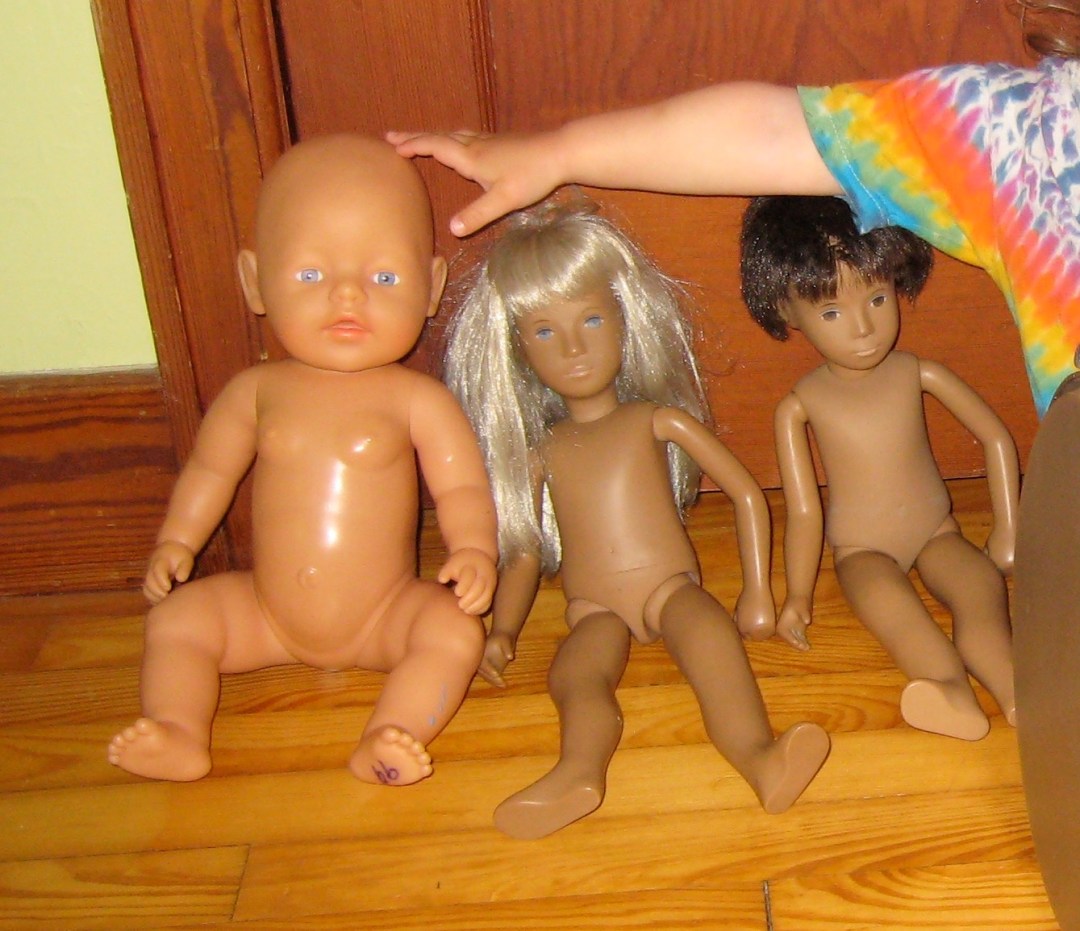
Photograph of three dolls
Left to right under Merida’s arm: Big Baby (note 99 on foot); Sasha, Gregor.

In my computer files, today I found something I had written in June 2011 for one of my daughter’s caretakers. The title of the file is “how not to buy more babies.” Good timing. Last night my husband and I were reminiscing about one of our daughter’s babies which we called “Big Baby.”  Big Baby was purchased from a thrift store in Dayton when my very young daughter fell in love with the hunk of plastic and wouldn’t leave the store without her. Big Baby had “99” sharpied on her foot, because she cost 99 cents. A while later, my daughter agreed to pass Big Baby along to another family. I found a photo of Big Baby with the Sasha dolls from my childhood, and my daughter having a drumming circle with them. Here are my instructions about how not to buy more babies:

We’re working on some population control strategies for the baby dolls in our house. I know it’s hard to say no to her, but this has worked for me:

If she asks to go to the toy store, offer another option, another place to go, like the playground. If she is insistent, say you will take her to the toy store and get her a balloon, she can choose whatever color she wants, but not a baby. This works best if you talk about it before you are there. When you get there, if she grabs and wants a baby, tell her what a nice baby that is, but that baby is for someone else, and that she can come back and VISIT the baby at the store again sometime. (And by the way, what color of balloon would she like?)

There are several reasons we want to control the number of babies in the house:

  1. She has plenty already. There’s too much stuff on the planet and in our house.       We want to teach her that she doesn’t need more and more stuff to be happy. She already has so many other babies that she loves, etc.
  2. For her 4th birthday, we will get her a very special baby, and we want her to understand the idea of quality over quantity.
  3. Also, we want to start teaching her about the value of money. We’re trying to find her a good piggy bank so she can start saving money toward things she wants, so she understands the value of saving and choosing carefully.

With your blessing, we are going to negotiate that some of her babies might come stay at your house, so she will have some other little souls to take care of over there. :)


Women’s Healing Writing Practice at Kula Cooperative

IMG_9251I am grateful to be leading a 5-week series of healing writing practice for women at the Kula Cooperative in Yellow Springs, Ohio, beginning on April 13.  For more information, please visit the public Facebook event site, which you can find here.

This sort of community workshop is a new endeavor for me. I’m grateful to the women who experimented with me in the series I offered a couple months ago. More about this work over the coming months…stay tuned!

Description and details:

Writing helps us discover and know ourselves,
uncover received messages we have outgrown but still carry, and move toward healing long-held stories. In this safe, supportive circle of women, we will practice writing together based on prompts, and witness each others’ stories (if we opt to share).

With focus on process rather than product, as we build a practice over time we will demystify and disarm the critical inner voice.

The series will meet on five consecutive Wednesday evenings April 13th through May 11 from 7 to 8:30 pm
The fee is $50 if you pre-register, or $12 per night to drop-in. It is ideal if you can attend the first session (April 13).
Payment in advance is available by contacting: kulacooperative@gmail.com or calling #937-554-1141

Spring cleaning

Before
Before

For weeks, maybe months, I’ve been hobbling alongside compromised implements: all my fountain pens were writing choppily, or out of ink (or both). There are giant problems in the world, but a functional, pleasing pen is one small texture of my day that matters a lot (to me).  (Neglected, deferred, the increasing row of pens waiting for service at the edge of my desk becomes a metaphor for a woman who is not taking care of herself.) Last week, overwhelmed by important and unimportant work to do, fumbling through the soup of distraction, I decided I needed to do something physical, tangible.

I needed to clean the pens.

Jim Kruose (whose book Parsifal I blogged about recently) suggests ammonia for clearing clogged pens. I finally bought some at the hardware store. It took more than an hour to clean all ten pens (two of which belong to my mother). The sink and my hands were a beautiful mess.

During
During

I refilled them with Noodler’s Ink, Concord grape. (I love Noodler’s. I even love the way it smells.) Some are flowing better but not perfectly, seem to need more than one cleaning. But most of them are working now.

Meaning I can work, now.

My essay at The Rumpus


IMG_9230
I made this.

My essay “Hot Thing” (about menopause) was published last Sunday on The Rumpus. (You can read it here.) In the literary community, The Rumpus is a big deal, and I’ve never had anything published there. And to any woman, writing an essay about something as personal as menopause is a big deal. (Theme emerges; to me, this whole event is a big deal.)

(I’m grateful to Zoe Zolbrod and Martha Bayne, editors at The Rumpus, who asked thoughtful questions and helped me fortify the essay and say what I meant to say. May all writers have the experience of working with such helpful editors along the way!)

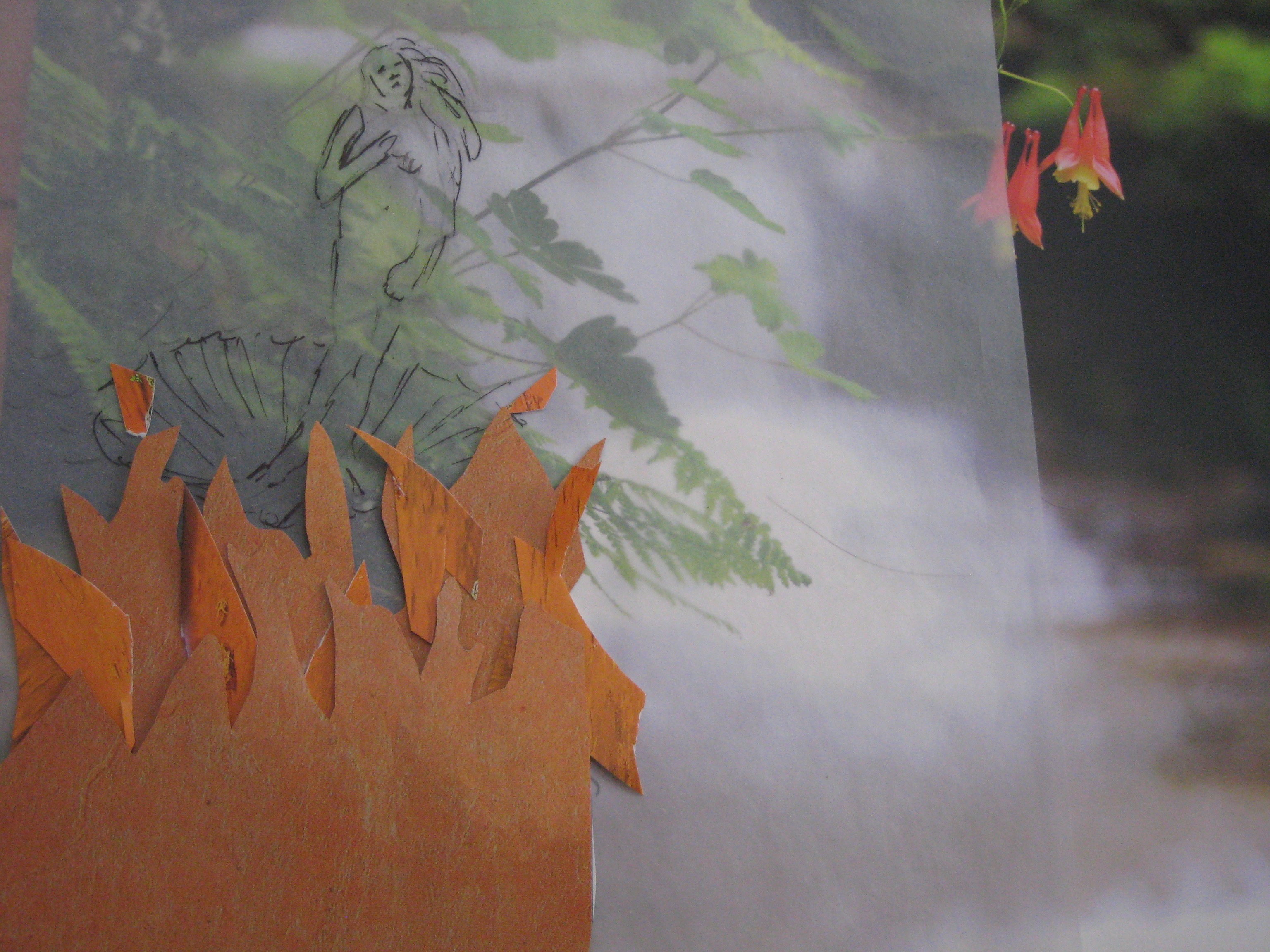
It’s also a big deal because they chose to use my original art alongside the essay. I was glad to be asked what I wanted them to use. To answer, I thought about the essay, extracted themes and images.  Flames, visibility and invisibility,  beauty, mess…The day before I sent the final revision, the image of Venus rising appeared. When I should have been working on edits, I printed the Venus image. On tracing paper with a felt pen, I sketched her lines and contours, placed the paper over various backgrounds, finally settling on a painting of the moon which I made decades ago. And from a photograph of autumn leaves torn from a discarded Glen Helen calendar, I cut flames. Pieces arranged but not glued down, I took a photo and sent it. I felt self-conscious about presenting the art (because I’m an amateur) but blazed ahead anyway. That they chose to use this image validated what I tell my students: Trust your instinct.

So that’s part of the story of this essay.

Another part is that that publication of “Hot Thing” inspired a 2:30am craft essay about writing the essay, which I am now hatching. Not sure where it will end up, but I’m holding on to the tail of the kite.

Another—maybe most important—part is of the story is that I am claiming this new phase in my life. As I put words and images into the world, I am no longer practicing the art of invisibility.

Being enough

IMG_9065
This was a real thing I saw in the Glen…frost in the center, moss on a cut stump.  Eternal.

With certain kinds of new endeavor, I often feel completely unprepared (=like a fraud). But this day, as I quickly prepare for the next new work, I realize I have everything I need. I have worked for years to prepare the ground; the green tendrils peek from the soil. It’s all there, always been, breathing, waiting to stretch…