The latest from Marly Youmans

Having read the first page of A Death at the White Camellia Orphanage by Marly Youmans, I’m eager to read the rest.  For me it’s a moment of “can’t wait, have to wait” because some work reading must precede this novel, but I hope time will expand so I can get to this novel sooner.  I had the pleasure of participating in Marly’s decentralized interview leading up to the novel’s recent release.  You can read that brief interview here.

Dante the cat: 3/15/97-3/30/12

Dante (in photo, left) napping with friend Zlateh on his final day

I met Dante in 1997.  String-bean skinny tuxedo kitten, he battled a piece of popcorn in the lobby of the Little Art Theatre.  A local animal rescue organization had placed adoptable death row puppies and kittens in the cinema’s lobby during showings of the French film, When the Cat’s Away.  Despite great hesitation, and not wanting to traumatize my seven-year-old and rather particular Gumbie cat, my dear and only Houdini, I was convinced to adopt this dapper little scoundrel.

Dante (aka Dantela-Bantela, aka Dee-Dee, aka Da-dum, aka “slow loris” due to his lack of speed, aka “Big Tiny” due to his eventual bulk and nearly nonexistent “eep” of a meow) was always the beta to Houdini’s alpha.  She notified him early–and often–of her superiority.  Appropriately, he would bow down and close his eyes in front of her in apparent worship.  Houdini accommodated his presence but was always a tad cranky about it.  One day, he seemed to notice he was much bigger than she was, but even then, he never truly challenged her authority.

After Houdini died in 2007, Dante remained docile and easy.  My daughter was born later that year.  Dante was so neglected that my husband had to remind me to pet the cat.  Dante was laconic like his male role model, the Laconic Writer.  Often silently underfoot, Dante was a wall of cat, but he asked little, and was always grateful for whatever affection or food we gave him.  Then came Zlateh.

In December 2010, on a bitter cold snowy day, a fancy little grey fluffball meowed from our shed.  She was so tiny, and so clearly in need of a warmer home, we adopted her.  One of her eyes was badly infected and closed over.  Though Zlateh was about the size of a six month old cat, our veterinarian thought she was probably just extra small due to hard living.  After we had Zlateh spayed, Dante (neutered soon after he arrived) became romantically attached to Zlateh.  He demonstrated his affection graphically, comically, which the vixen Zlateh did not always mind.  She sometimes flirted with him; after a trial period, they got along well.

Dante was a cat who was also a shadow.  The dear slow loris would skulk through a room, perpetually getting the least amount of attention due to his unobtrusiveness.

On Thursday, Dante lay on his side, deflated.  My husband offered him chicken liver (Dante’s best treat) and he did not rise.  I gave him water with an eye-dropper, and he revived a little and drank from a bowl.  In the morning, the X-ray showed fluid in his chest, oppressing his lungs, making it so hard for him to breathe.  The veterinarian could not hear his heartbeat.  He was suffering a great deal.  He might not have survived a procedure to drain the fluid.  We decided to euthanize him.

It happened so fast.  He seemed fine (slow, normal) and then he was flat.  I’m grateful he didn’t suffer, didn’t have to endure long treatments.  But I keep hearing his creaky step on the floorboards, keep seeing his shadow.

Rest in peace, Big Tiny.  It’s not fair.  We thought we’d have more time with you.  Dear Dante, your people miss you so.

“One of the savers”

Wilbur, Charlotte, and some of her work

I am reading my four-year-old daughter Charlotte’s Web, by E.B. White.  I had forgotten how great the book is–easily one of the best novels I’ve ever read.

The first line: “‘Where’s Papa going with that axe?’ said Fern to her mother as they were setting the table for breakfast.”   Seriously, I can’t think of a better hook.  When I took it from the shelf last week, my daughter was hesitant to read what, a year or so ago, she had with odd prescience named “the bacon book.”  I said, “I’m just going to read the first line.”  I did.

E.B. White’s hook worked.

I love reading this book aloud because it’s so easy to read aloud.  E.B. White did his work well.

Today, after reading her the chapter where Wilbur et al prepare to go to the Fair, my daughter acted out part of the story.  She needed a spider, and I remembered my husband’s wonderful Steiff spider, now known as “Charlotte.”

My daughter (“Fern”) quickly made a tent for Wilbur and Templeton (because, she informed me, they were going to kill Templeton, too).  She said that Charlotte was “one of the savers.”  Fern and Charlotte were saving Wilbur and Templeton.

So another reason to love this book: from it spins the truth that it’s not only males who do the saving around the farm.  Females do, too.  Children who hear animals talking are taken seriously by most adults, even the medical establishment, in the form of Dr. Dorian: “Children pay better attention than grownups.  If Fern says that the animals in Zuckerman’s barn talk, I’m quite ready to believe her.  Perhaps if people talked less, animals would talk more.  People are incessant talkers–I can give you my word on that.”

I can’t wait until bedtime, so I can remember what happens next.

Sexism in a bird map?

In case you were wondering what an immature female Baltimore Oriole looks like...

This morning, my four-year-old daughter spread out her “bird map” (the Peterson FlashGuide to Backyard Birds–a laminated fold-out with illustrations of various birds), gathering characters for a play scenario.  She has lately been fixated on the name “Oriole” (which came about when she misheard someone who said “Ariel,” referring to the Disney Princess) and the name “Oriole” has stuck.  (If you’re new to my blog, I’ve ranted here and elsewhere about Disney Princesses.) It’s been a refrain for her pretend names.  So this morning, she perused her bird map for the Baltimore Oriole.  As she often wants to play that she’s the mama and one of her dolls or stuffed animals is the baby, she looked for pictures of the mama and “girl” Orioles.  She asked which picture was the baby girl.  There are drawings of adult male and female Baltimore Orioles, and an “immature” male.  But no immature female.  Quickly switching species, she asked if there were any other baby girl birds shown.  We looked.  There were none.  There were other youngsters listed as simply “immature” and a couple other “immature” males, but no females.  I told her she could pretend one of them was a girl (maybe it was, after all!) but she did not want to pretend, she wanted to find a real girl bird.

As she became increasingly frustrated, I told her I would look on the computer to find a picture so she could see a young female Oriole.  I did, and found the image you see above.

I assume the lack of immature females depicted on the Peterson FlashGuide has to do with conserving space, and most males birds being more colorful and showy, so the “before” and “after” images of males are more dramatic.  Perhaps male birds are more relevant for serious birdwatchers.  (Following my daughter’s lead, I appreciate and admire birds, in particular certain raptors, but I don’t go with binoculars looking for them.  Nothing against it, it’s just that I am not even a novice birdwatcher, so I’m ignorant about these nuances.)

I do not mean this post to sound humorless: Sexism in a bird map?  Is she nuts?  But ever since today’s pre-breakfast grapple for images of young female birds, I’ve been increasingly troubled by not being able to easily find an avian model for my daughter to cast in her homespun theatrics.  I’ve been reading blogs lately that deal with the incessant sexism young girls are subjected to (notably Reel Girl and Peggy Orenstein’s blog) and while I know it might sound far-fetched to claim that a bird guide can disenfranchise human girls, the thought has stuck with me today.

It’s such a tiny moment in my daughter’s life, and I know she’s getting plenty of other things that will not tear her spirit down.  But that I even thought about this lack makes me sad.  Bird guides aside, we have a long way to go, baby.

Stories help make us more human!

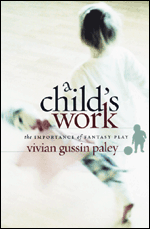
One of many fantastic books by Vivian Gussin Paley

And yes, I grant myself that exclamation point!

Here’s an interesting piece by Annie Murphy Paul about the neroscience of reading fiction.  It validates things that many know intuitively: among other things, reading fiction makes more empathetic humans.  (And it slashes through those conversations–conversations which, frankly, piss me off–about how nonfiction is somehow more important than fiction in helping people deal with “the real world.”  I love that the study corrects for things like whether people who are more naturally empathetic read more fiction.  Take that!)

Described in the piece is how we register sensations as we read descriptive language: how the evocative qualities of words like “cinnamon” work our sense of smell.  This aligns with something I heard the poet Cathy Smith Bowers discuss: when we read a word aloud, its sound affects us emotionally, but even when we read a word silently on the page, our bodies experience similar sensations.  As a writer of fiction, all this helps me understand why I care about what I do.  Why it’s important to make stories.  As a reader, it all sounds very true.

Last night, I finished reading Vivian Paley’s book, A Child’s Work.  Its emphasis is on the importance of fantasy play and stories in developing a young child’s ways of processing and coping with the world.  All the books by MacArthur Fellowship recipient Paley that I’ve read have moved me–she is a gifted writer, and her subject is so vital.  In her work, in addition to her observations as a wise teacher, she records and shares dialogue from real children in real classrooms, making sense of their real worlds and lives through fantasy and imagination.  In this book, Paley rightfully despairs at the push to bring academics to children too soon, leaving less and less time for preschool children to dream and do their natural thing.  Among many passages in this book that move me and are so true, Paley writes, on p. 102:

“Every day brought me new evidence of the preeminence of fantasy in children’s thinking.  It has reinforced my certainty that we perform a grave error when we remove fantasy play as the foundation of early childhood education.

We are going too far in the opposite direction.  Some school people feel that because young children engage in magical thinking we must pull them on to another track as early as possible; having added extra years of schooling to their lives, we are emboldened to counteract fantasy play with ‘reality-based’ activities.

Is this not the adult version of magical thinking?  To imagine that the purpose of early childhood education is to reorder the stages of human development is like the story of the prince who was turned into a frog.  In attempting to turn children into creatures that are unchildlike, we ignore all the messages young children give us as they play.  The frog turns back into a prince when the princess recognizes his need to be treated with kindness and respect.  In the case of our children, this would include the kindness of acknowledging that their perceptions and premises are not the same as older children’s or as our own.”

This idea of how we think we can reorder the natural stages of a child’s development haunts me.  Paley’s work speaks to me in particular now as the mother of a young child.  And pausing to read it has helped me slow down enough to more fully engage in the play my daughter is about.  So many of her sentences start with “Pretend that…” and I’m paying closer attention, and doing more active pretending with her.  (It’s good for adults, too!)  But anyone who is interested in stories and storytelling and their central importance to our humanity ought to read Paley’s books.  The Boy On The Beach is a really good one, too, and gets at why storytelling is important to building communities.

Now, back to my story in progress…

How can I can gratitude?

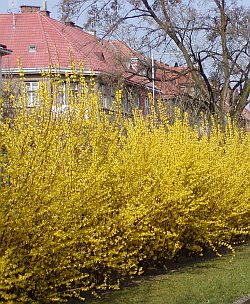
Maybe I can can some forsythia instead...

Because I know how life can be (nasty, brutish, and short) I want to can the end of last week and the anticipation of this week.  If I could, during harder times to come, I’d go to the basement shelf, perhaps having forgotten completely the dusty Ball jar is even there, and discover it.  It’s full of yellowness.  Open it.  Inhale it, taste a spoonful.  A few reasons for this urge, in mostly chronological order:

1) Serendipitous pizza lunch last Friday with my daughter and her friend and her friend’s mother, also my friend….the fun the children had, the fun their mothers had…

2) This ridiculous summer in March!…

3) Spontaneous last-minute plans to have dinner with friends Friday, the fun the kids had despite not getting lollipops afterwards…the portrait her friend drew of  most of us as sponge bob characters…

3) A playground work party at the Antioch School, where I did very little work, but being there with others, at one of the few places near here that still has a seesaw, caring about the place tangibly (I picked up a few sticks after all) talking about the importance of that place in the world; seeing the school with my dear old friend, also an alum, and her daughter, hearing from my friend how small the rooms are now…spending time with those friends later in the weekend, how our children play together like puppies…

4) A healthy and joyful daughter, a loving, gorgeous husband…

5) A birthday party of another of my daughter’s friends, where the sun shone like July and the kids ran up and down the beautiful Ohio hill, chasing chickens…

6) Anticipation of the new moon, and being in a circle with women I love…

7) Anticipation of seeing Julia Sweeney on Saturday night for a really great cause…

8) The iPod’s parting song this morning, during which my family danced our daily goodbyes…

9) Forsythia everywhere…

10) The ability to keep adding to this list as it grows…

Interview with Marly Youmans

I love what I’ve read of Marly Youmans’ work.  Her words remind me of snowdrops.  I’m using her story, “The Horse Angel,” for a class I’m teaching this spring.  The story is quiet, lovely, and tender without being sticky-sweet.  It’s also great example of how to do tricky maneuvers well, for example, using two points of view in a short story.  In the story, Youmans performs feats that new writers are often told not to attempt, but shows why rules should be broken, if broken well.  I am eager to read her forthcoming novel, Winner of The Ferrol Sams Award for Fiction, A Death at the White Camellia Orphanage from Mercer University Press.  I’m also honored to participate in the collective interview she’s giving at several blogs, in anticipation of the novel’s release on March 30, 2012.  You can order the novel from the publisher here.

 Rebecca:

As I re-read your story, “The Horse Angel,” I noticed a fascination with layers of orphandom.  Of the ghost in the mirror, you write, “…Edward and I thought that he looked as though he’d mislaid something of value and couldn’t think where it might be.  Or maybe it’s his family he’s mislaid. Maybe he can’t find his way back to them.”  The newly widowed Elsbeth dreams of her past, of being a sort of parent orphan: “…we are young man and woman again but changed, and often I hold my lost boy in my arms.”  And Mary, the younger neighbor of Elsbeth was violently orphaned when her stepfather killed her mother and then himself.  Your new novel, A Death at the White Camellia Orphanage, centers around the journey of a young orphan Pip Tatnell.  What is it that compels you to write about the orphan?

Marly:

Reading that quote from “The Horse Angel,” I immediately remembered the Rachel in Moby-Dick: how Stubb thinks that the captain of the ship has lost something, perhaps his watch, only to find that it is his precious son that he has lost to the sea. Some of my favorite characters are orphans—Ishmael is an orphan, and the indomitable Jane Eyre, and that other Pip from Great Expectations, and many more. “Orphan” is a state that often produces maximum trials and also may allow maximum freedom of thought and movement; it is automatically a condition set apart, a kind of state and place where dramatic things may happen. Fairy tales and stories often kill off the parents before or at the start.

I had not considered a relationship between “The Horse Angel” and A Death at the White Camellia Orphanage until you mentioned the two together. Perhaps one of your students assigned to read the story will read the book and tell me about it!

Although I am reticent about such matters and don’t care much for author talk about family or personal life (I have a distaste for the idea of misfortunes being used as a sensational marketing “hook,” though it is often done), I will say that my family suffered a death of one of its members in my childhood.  Such losses shape people and do not end or go away but leave traces. The sense that something is terribly missing can be quite strong and leave a child with the sense of being orphaned from the way the world ought to be. No doubt that childhood feeling colors “The Horse Angel” and A Death from the White Camellia Orphanage as well.

**

More about the novel can be found at Marly Youmans’ blog.

Comments from writers about A Death at the White Camellia Orphanage:

“A Death at the White Camellia Orphanage tells of a young boy’s travels through the black heart of Depression America and his search for light both metaphorical and real.  Writing with a controlled lyrical passion, Marly Youmans has crafted the finest, and the truest period novel I’ve read in years.”  –Lucius Shepard

“Marly Youmans’ new book is a vividly realized, panoramic novel of survival during The Great Depression. There is poetry in Youmans’ writing, but she also knows how to tell a riveting story.”  –Ron Rash

“In A Death at the White Camellia Orphanage, Marly Youmans gives us a beautifully written and exceptionally satisfying novel. The book reads as if Youmans took the best parts of The Grapes of Wrath, On the Road, The Reivers, The Adventures of Huckleberry Finn, and The Curious Incident of the Dog in the Night-Time and crafted from them a tale both magical and fine. Her rich language and lovely turns of phrase invite the reader to linger. Ironically, there is at the same time a subtle pressure throughout the novel to turn the page, because Youmans has achieved that rarest of all accomplishments: she has created a flawed hero about which we care. A Death at the White Camellia Orphanage is one of the best books I have read.” –Raymond L. Atkins

From the cover:

After a death at the White Camellia Orphanage, young Pip Tatnall leaves Lexsy, Georgia to become a road kid, riding the rails east, west, and north. A bright, unusual boy who is disillusioned at a young age, Pip believes that he sees guilt shining in the faces of men wherever he goes. On his picaresque journey, he sweeps through society, revealing the highest and lowest in human nature and only slowly coming to self-understanding. He searches the points of the compass for what will help, groping for a place where he can feel content, certain that he has no place where he belongs and that he rides the rails through a great darkness. His difficult path to collect enough radiance to light his way home is the road of a boy struggling to come to terms with the cruel but sometimes lovely world of Depression-era America.

On Youmans’ prior forays into the past, reviewers praised her “spellbinding force” (Bob Sumner, Orlando Sentinel), “prodigious powers of description” (Philip Gambone, New York Times), “serious artistry,” “unobtrusively beautiful language,” and “considerable power” (Fred Chappell, Raleigh News and Observer), “haunting, lyrical language and fierce intelligence” (starred review, Publishers Weekly.) Howard Bahr wrote of The Wolf Pit, “Ms. Youmans is an inspiration to every writer who must compete with himself. I had thought Catherwood unsurpassable, but Ms. Youmans has done it. Her characters are real; they live and move in the stream of Time as if they had passed only yesterday. Her lyricism breaks my heart and fills me with envy and delight. No other writer I know of can bring the past to us so musically, so truly.”
The twist of things

(Inspired by having read Mark Levine’s book, F5.)

March 2, 2012, remembering those skies of 1974

Toss words against chaos

see if something sticks

and undulates

sultry

opaque

like a twister

twister

and here’s

where

I start

my

story.

What we are fighting against

What NOT to buy (Look for Corolle Mini Calins instead)

Here’s a video introducing “My First Princess” baby dolls by Disney.  I saw some of these dolls at Target today.  Oy vey!  I don’t even know where to start!  What’s next?  A Disney partnership with pharmaceuticial to develop and manufacture shots for each girl fetus in utero, ensuring her first word will be “Belle”?

Though my daughter loves her “babies,” Cinderella will not eat my daughter.  I just hope Merida doesn’t see these creatures at the store.

Want a better splurge?  Buy yourself Peggy Orenstein’s book.

And if you want a really cute baby for little kids, find a Corolle Mini Calin.  I think Corolle doesn’t make them anymore, but you can find them in various skin colors on eBay or other online shops.  They are machine washable and very sweet, perfect for small hands and imaginations.  Uneeda makes cute little babies, too.

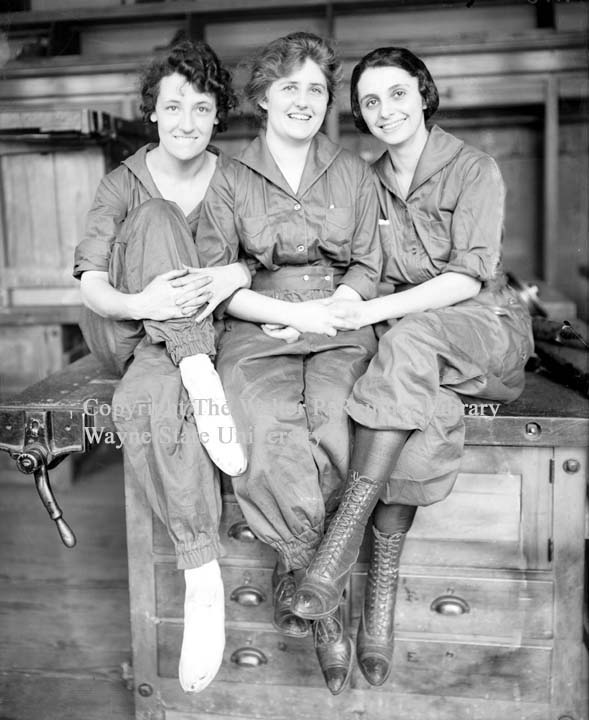
Who lost track past midnight at the Spurlock Munitions Factory, near-river, 1917?

The lovely ladies of some munitions works

A poem from a couple years ago, inspired by the novel I’m working on, working title of which is The Eight Mile Suspended Carvinal.  This is the character Beede talking.  I can’t do line breaks right in html, so I think the word “vast” was originally on the line above where it appears, but below it’s an orphan, which makes sense in the story of the novel at least.

Who lost track past midnight at the Spurlock Munitions Factory, near-river, 1917? 

Oh yes Oh yes Oh yes
What you’re to see, boys, you dark, dirty skells, you
seen plenty spark here, what else, you’re thinking
you constitute yourselves of solids, you’re commanding
gentlemen, can take some things, maybe you’ve traveled, say
Illinois, Illinoise, farther, it does not take ambitious nature
to see the world, just a slick hand and some loose pocket. Rust is everywhere–
Davey knows my language. So you did time, who hasn’t, all we got is time in this vast
bum’s end of things, I’ve spit up wet gobs of coal, we’re all the same
just don’t get caught. Once saw a man dangling from a shagbark hickory, by the neck, all of it, tree bark and scales fallen from those eyes, all I can say is use the brain-pan,
don’t get caught
and you won’t end up with any fallen scales, don’t laugh back there, it wasn’t all
that amusing seeing that man up there, the weight of himself dead
meat. He didn’t have much luck.

But you’ve stepped up around here, all of you,
waiting on that kiss which makes us all breathe in, every crusted morning, for the long years we’ve got, a kiss humid and lovely like that mind-reader at the carnival,
she’s got curves, wait another day and maybe you’ll find that luck somewhere. Factory life got you groaning, you’re thinking anew, ready for this
fire? Let me take off my shirt now. The way I do it, you won’t even see the spark,
just watch. Lucien B. Dunavant will show you the light.

You count your breaths; I’ll count mine. That old sack granddaddy Spurlock
has not one thing on me.

Ready, boys?