I used the word “decimated” in an essay today, and decided to make sure it was the right word, so looked it up, lazily, on the web. I’m using it somewhat hyperbolically in my essay, but this is among what I found:
Doing beautiful things

This evening, my daughter, who is almost four, said that next Halloween, she’s going to be a “real” princess. As my blog followers may be aware, she’s thus far been kept away from full-on Disney princess mania. But she loves dressing up as a princess. This usually involves wearing one of several tutus–more ballerina, really, than princess. She knows, from books, and from princess parties, that princesses usually wear fancy things (though I’ve also assured her that princesses can wear whatever they want, and introduced Princess Grace Kelly as an example of a princess who didn’t exclusively wear long and meretricious satin gowns). When she told me a doll of hers must be a princess because it has long hair, I assured her that princesses can also have short hair. She didn’t argue. She recently informed me, however, one thing she knows with certainty about princesses: “Princesses do beautiful things.” I’m not sure what she means by this, but it sounds really good.
This evening, when she told me about her plan for next Halloween, I reminded her that there is a big movie coming out next summer, and the princess in it is named “Merida,” which is my daughter’s name.
“Does she do beautiful things?” she asked.
I don’t know more than the trailer depicts about Princess Merida in “Brave,” but I told my Merida that the princess in the movie does indeed do beautiful things: she rides horses, and she is an archer. I explained what archers do. I reminded her about the strong and triumphant Violetta in Princess Knight.
If I’m indoctrinating my daughter in any way, it’s to be more like a vampire slayer than princess. But let’s say she doesn’t totally rebel, and loves Buffy: who am I to tell her what to be? Or to define what “doing beautiful things” might mean? There are so many beautiful things to do, many more than I can imagine. Wearing something fabulous might count. Or doing something completely silly, and making one person smile! Or staking a vampire, if done in that earthy, balletic style of Buffy.
Luckily I have a good teacher who is almost four years old. I hope she will enlighten me.
Alarming punctuation (!)
Hacking them out of my prose today, I am seeing a direct correlation between a writer’s use of exclamation points and how much she/he trusts the reader. Trust the reader to get what you mean. There’s no need to shout about it, assuming the rest of the sentence and the work is doing its job, I tell myself.
The writer Lee K. Abbott gave a talk at Antioch Los Angeles when I was in school there. I recall him saying that every writer is allowed ONE exclamation point per career. “And it better be a fire,” he said. Though I hope I am allowed more than one, I often recall that idea, and try to use them sparingly.
(Search, replace…)
Excerpt from an essay I’m writing
In college drawing class, I learned about negative space. If you look long enough at something, a shape forms around it: the thing where its object isn’t. So I look and look at nothing, pining for the past, wanting to yank back that day when we planted the live Christmas tree in the yard, or that other day when the circus was in the park next door, and my parents collected elephant poop to fertilize our garden. Elephants gone, dung gone too, no remnants now left. I want back so many other days. Memory provides only edges. Pinning decrepit butterflies to velvet, I smell the dust, turn around, look back, and find another disintegrating wing of the few things I can recall. I set out to order it all, by chronology, or theme; I make another list, “things that happened to my body,” such as falling down sixteen steps, such as running through the glass door. Anything that helps me contain the mess. But this story disobeys my desire for dramatic unity. It won’t sit still. Memory doesn’t fix itself close enough to truth, doesn’t allow our trust; the interior record is fuzzy, ephemeral. I call the county office to gather facts.
I’d like to know, for instance, when my house was burned down, when it began its exquisite disappearance.
Where do hummingbirds go in a hurricane?

Robert McCloskey’s Make Way for Ducklings was one of my daughter’s early favorite books. Soon, my friend Maryellen recommended some of McCloskey’s other books, Blueberries for Sal and One Morning in Maine. The Sal stories are fun, jaunty, and touching. Sal loses a wobbly tooth while grubbing for clams with her father on the beach, feeling for it with her muddy finger, the mud bitter in her mouth. The stories ebb and flow with the tide as they follow Sal and her family on their bucolic adventures on the Maine coast. (And I love how these stories depict strong, outgoing, capable girls, unafraid to roll up their pants and get dirty, carry heavy stuff, play with discarded spark plugs, and generally frolic freely through childhood.)
Then I found Time of Wonder which continues the saga of Sal and Jane, but this time in a very different type of narrative. My daughter just rediscovered the book, and so reading at “bed night” thrills me more than it usually does.
The book reads like a poem in places, and interestingly, rather than continuing to name Sal and Jane as the protagonists, Time of Wonder is written in second person, so it’s directed at “you.” With beautiful illustrations of the seasons of coastal life, spring ferns uncurl and fade to make room for summer boats. As the summer folks leave the island, there follows the uncertain skies, the time for being watchful. The climax of the book is the hurricane, and the hypnotic rhythm of preparation builds with the repetition of characters’ lines:
“We’re going to have some weather./It’s a-coming!/She’s gonna blow./With the next shift of the tide.”
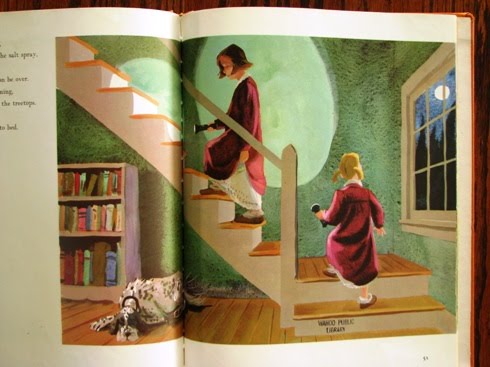
After the storm slows, the picture shows Sal and Jane creeping upstairs to bed. The text on that page reads:
“The moon comes out,making a rainbow in the salt spray,a promisethat the storm will soon be over.Now the wind is lessening,singing loud chords in the treetops.Lessening,it hums as you go up to bed.”
Brave

Before my daughter Merida’s accident, I might have (hyperbolically) called what happened today my worst nightmare: Shopping at Target, I asked her which underwear she wanted to choose. While I suggested Hello Kitty or Paul Frank monkeys, she grabbed the Disney Princesses. I suggested several other options (“Look honey, these have the days of the week!”) but she was certain of what she wanted. I bought them.
All her life, my husband and I have worked to keep her away from TV and mainstream junk. I know, everyone says the Pixar movies are great, and I have seen a couple of them (not bad) but Merida thinks movies are the things we watch on youtube, most often short videos of the band Hot Club of Cowtown, or Mark Bittman cooking.
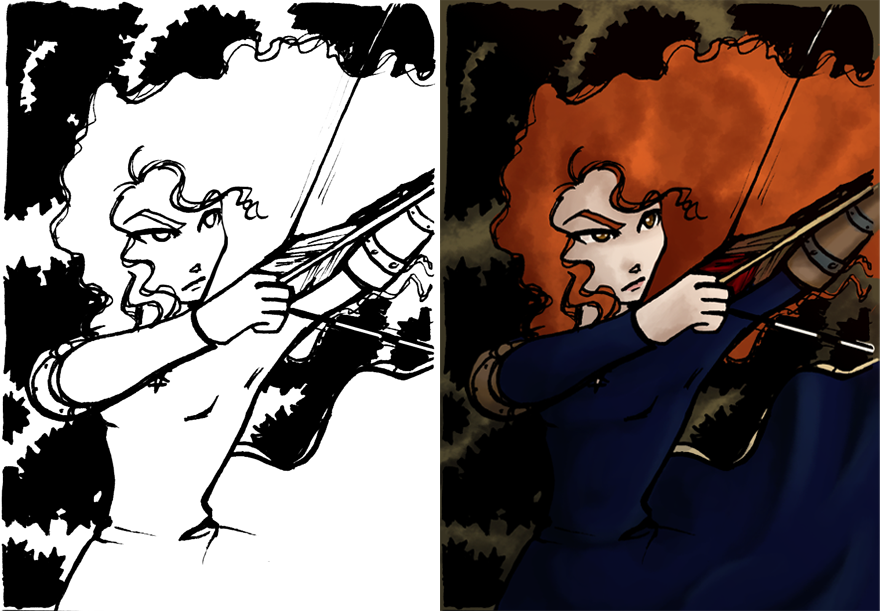
But next year, Disney/Pixar will release a film called “Brave“. The heroine is named Princess Merida. Princess Merida! When I first found out about this last spring, I was horrified. How dare they steal my child’s name?! And how badly will they mispronounce it, adding to the confusion we already face each visit to the pediatrician’s office, when she’s called “Muhr-Ida” and other versions that are not her name.
Then came the accident. Through the entire process, and still, my Merida has been unbelievably brave and strong. A little warrior, future slayer. (I’ve always wanted to raise a slayer, but that’s another story.) Swirled in now with all the ambivalence I have about Disney and skewed, commercial images of what girls and women should be, I am now, strangely, okay with the naming of next summer’s princess. I’ll take it! If it gives my daughter a little pop culture validation that she is awesome and strong and amazing, who am I to argue? I told Merida and a friend of hers about the movie, and was quickly convinced to take them both to the theatre next summer. (It’s a date! Robbie Coltrane does one of the voices, so it can’t be all bad.)
But next time she’s getting the monkey underwear.
Cornflowers and ghosts

This morning, as I did my post-child infrequent and highly interrupted version of Julia Cameron’s morning pages (more like three quarters of a page, if I’m lucky) my daughter said, “My, look at all those words! It’s like a giant nametag!” Aside from making me laugh, her comment reminded me of the photo I took last weekend: the mess I was making with a ghost story in progress, whose birth story can be found here. When I talk about making a mess, this is what I mean. This is the kind of mess that I love. It’s all my mess (no one else has read this story, and all the scribbles, highlighting, and editing is mine! No judgement, no other voices in my head!) and here I’m trying to make order of it. It’s the first draft of a messy story that came from a terrible essay about one thing which grew into an essay about something else. Like the leggy cornflowers that we let go (“Let?” Who has time to even consider “letting” weeds grow; they just grow taller when I’m not looking) that bloom into flowers, whose color is unmatched in the rest of nature. The flower that needed to be.
I’m not saying this mess is good, and I don’t know if it ever will be. But what else would I rather be doing? Maybe weeding the other flowers to give the cornflower more room.
What about you? What would you weed today? What would you plant?
Three winter songs

The other day when the sun didn’t shine, and didn’t shine, and didn’t shine, and all my clothes that are not in the attic weren’t warm enough, I got jittery, wondering how I would make it through winter this year. People say as you age, cold weather becomes harder to endure. But the grey is too soon this year. The rain. Drear, she came early this year.
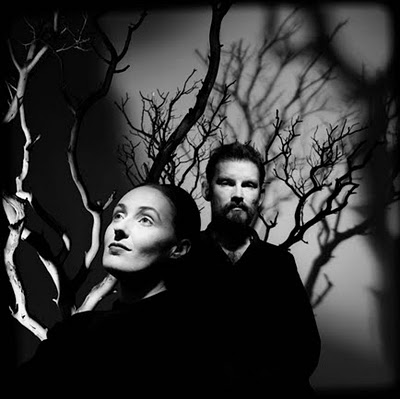
So as I do when I prepare for winter, today I listened to Dead Can Dance’s Toward the Within. The live album includes perhaps the saddest song ever, Lisa Girard’s transcendent “Sanvean.” You can see a long, beautiful version here. (Her gown is worth a look, too!) Lisa Girard just breaks my heart, and then fills up the broken pieces. This week of grey skies needed true keening like hers. It’s been a hard year.
Another cathartic winter song on the same album is the traditional, “I Am Stretched at Your Grave,” sung here by Brendan Perry. (For a version with a funky backbeat that you might have heard, try this one.)
And now for something completely different. This might be obvious to you raindogs, but “November” by Tom Waits is a worthy winter anthem. Who else but himself could sing, “Go away, you rainsnout, go away, blow your brains out…”
Here’s hoping the sun shines soon. But if not, you know what I will be listening to.
What will get you through the chill this year?
Grieving the loss of the linear narrative
Because I am or have been:
1) A rule follower, and
2) Timid, and always, still learning how to write,
I have tended to write stories that are mostly linear. I might mess with the order of things but there is usually only one layer of story happening. As a writer, more than that confuses me. Until recently.
Last spring, I set out to write an essay about stuff, the physcial stuff that fills my house. I forced all these ideas (William Morris! Feng shui! The long-kept dead canary in a close relative’s freezer!) into the salad bowl of words until it was a big mess (kinda like my closet). But instead, what emerged was that I actually needed to write an essay about my childhood house that burned down, and, alongside it, growing naturally from that fire, a ghost story (two ghost stories, as it turned out, because I thought the narrator was the ghost, but it was actually the boy whose father was the fire chief orchestrating the planned burning of the house. I’ll save the ghost POV for a parallel story, I think.) These last three layers (of fire) all turned out to be strata of the burning house “story” which is inspired by my own experiences. As the mess emerged (“wretched from my spirit” as I once described some of my friend Mark Horiuchi‘s ceramic art, which was “wretched from his spirit”) I realized I wanted to mess with my automatic stance of linear narrative. For the essay about the burned down house where I used to live, I set out to build layers, to mimic the memories as they occurred to me. Really, I was attempting a weak tea imitation of Joan Didion’s glorious memoir, The Year of Magical Thinking. My essay is still an unfinished mess.
There is something in me that until very recently has always believed stories actually are (or worse, somehow should be) linear. Believed that, trick around with things as writers might, the human being who reads actually needs, on some biological level, a pattern that makes sense. But I’m starting to see more deeply into the crusts, the layers, how much there is (or can be, some day, if we work hard enough at simultaneous clarity and opacity) under the patina of the linear.
Like layers of paint, the story starts to peel away, revealing hidden stories and complexities and differing perceptions.
Like multiple transparencies (remember those, before PowerPoint?) in slightly different languages I try to make something that’s more complicated (on purpose! Take that, William Strunk!) but that still has some sort of shape, so it’s not chaos exactly, but a sort of artifice, imitating the mess that is realness while also, by the end of the thing, amounting to something, making some sort of sense or logic or scaffolding, a pattern, no matter how faint or possibly only visible to the eye of the writer. (I did say “try.”)
(What was I saying?)
I still want things to make sense. Maybe it’s my primal need. Writing a story that’s relatively linear, like arranging and organizing things in my home, gives me a false sense of control, as if I can shape the unshapable. The problem, maybe, is that no matter how we play, words can only roll out one letter at a time, it’s how they are made, so there’s no avoiding the linear, and facts and feelings tend not to adhere to my yearning for order, tend to sprawl out like oversized legs in the aisle of a plane, tend to bump against the cart that delivers (via lovely manicured hands) peanuts and near-dry, immasculated slices of lime in tonic.
I don’t want to open a book and have the letters fall off the page, I just don’t.
But then you realize there is a large-ish ball of magenta fuzz on the seat back in front of you and although you have been staring at it, off and on, for two hours, you will never know the air-traveler who left it there for you to stare at while your plane bumps in the air, what is this metal machine bumping against, exactly? for it must be something there, or how can air have such an impact? Somehow, we have to live in all this not-knowing, not ever being able to know whose fuzz we are staring at without even realizing it.