The end of a story?

It’s weird writing something when you don’t know you’re about to write the end of the thing.  This might be the end of the ghost story I’m writing.  We’ll see.  But it seems like the end.

This photograph faded with time, as he told the story to Cricket, as he counted to one hundred, night after night as he himself drifted next to his child, wondering how on earth such a tender thing could continue to survive.

The “p” word

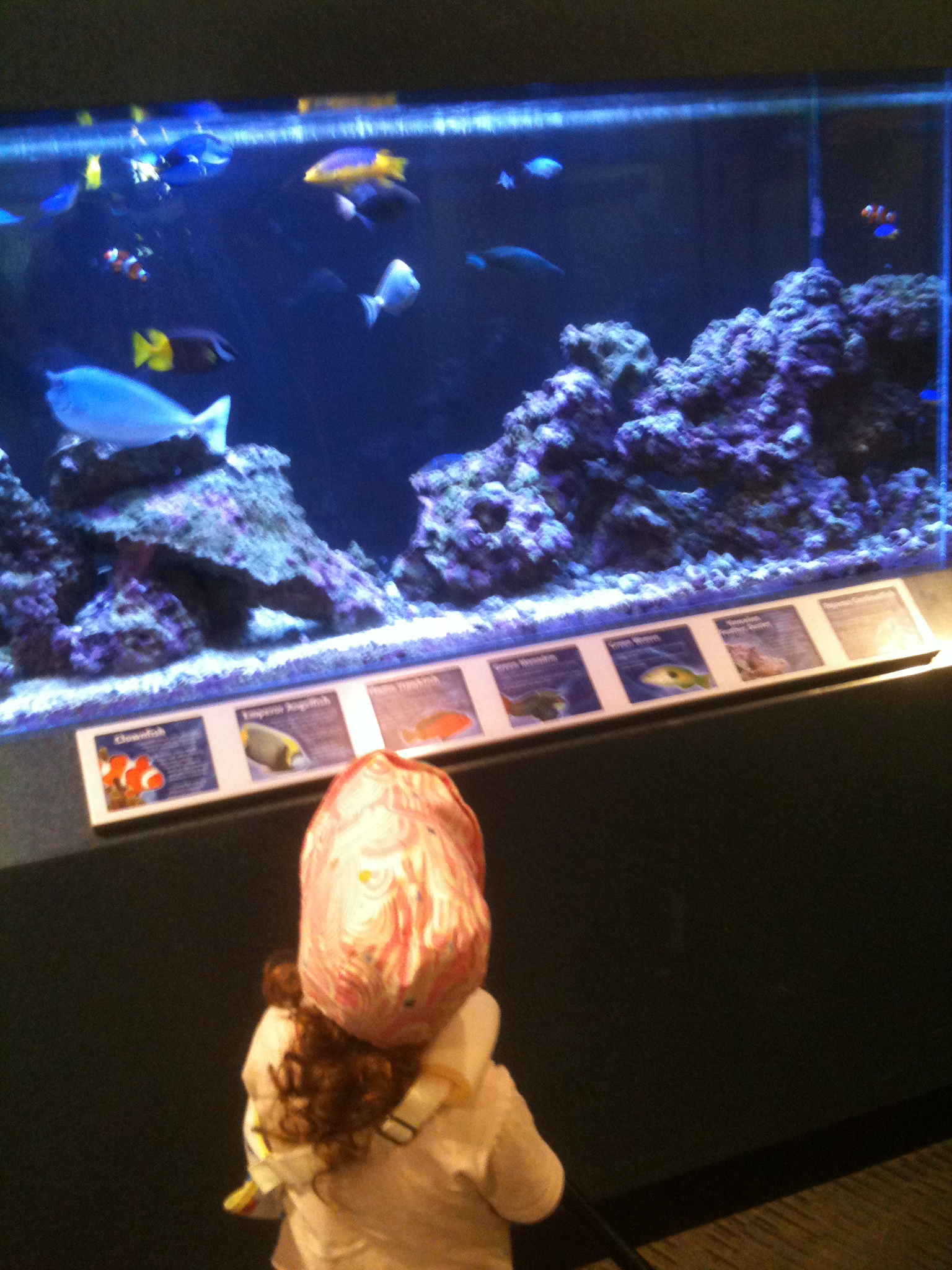
This is not my daughter. I stole this image from http://www.visualphotos.com.

In walking through the thick murk of life “after” my daughter’s accident when she lost part of each finger on her left hand, I have been thinking and reading a lot about pity.  From the free online dictionary:

pit·y (pt)

1. Sympathy and sorrow aroused by the misfortune or suffering of another.

I appreciate real sympathy–it’s one of the things that has gotten us through this.  But I’ve seen pity on the faces of strangers, and it’s of a different shade than mere sympathy. Waiting in the surgeon’s office for a check-up, others sit silently and smile those lopsided smiles full of benevolence, and selfish relief. I imagine even beloved friends might feel it for us right now, along with gratitude that it didn’t happen to their kids. (I bet I’d feel the same way: sympathy, compassion, and glad it wasn’t us. This is human!) But very soon after realizing how the change in my daughter’s hand might change our lives, I had a visceral wave of wanting absolutely no pity. Not for her, not for me, not for us.

Today I was reminded of the rightness of my reaction.

For the first time since her accident, we went to the playground at the Antioch School where she will begin nursery school in September. The last time we were there, she had climbed, fearless as is her wont, to the top of the blue jungle gym. (I blogged about that moment here.) Today, she climbed up, not to the top, but just about. She slipped a couple of times, but wasn’t hurt, and was unfazed. As she climbed, I coached a bit more than I would like, and more than I did last time, reminding her to pay attention to her feet, and feel her body. (This is something I hope to instill in her throughout her life, wanting, for the eventual woman she will be: root-like grounding, and trusting of the gut, that intuition that flows without effort from our bodies, in which dwell our souls.) Today, she was so proud of what she could do. As I witnessed her work, I was aware of my own body quieting down, being exquisitely present, breathing through my own fear of her falling or getting hurt. (Her surgeon seems petrified at the thought of her re-injuring her hand. I am too. But dammit, I wanted her to climb!) When she reached her near-top destination, I praised her but showed no surprise. For, some little shard in me knew she could do this.

She asked about the monkey bars. This question of monkey bars has been clunking around in me since the accident. How will her hands grasp and support her weight when she’s sustaining her entire body? Will she ever be able to cross those bars? Today I told her that when she’s bigger, she will be able to hold herself up and cross them. She wanted to try. I held her up; she grabbed hold of a rung with both hands. I told her I could hold on or let go. She wanted me to let go. I was below her, ready to catch.

I let go.

She held on.

She didn’t fall.

She dropped gracefully after a moment of dangle, and I was there, surrounding her with my arms. “You did it!” I said.

Of course she did it. I knew she could, but seeing was another thing.

I believe this strong, amazing child (who the hell can display such bias, if not her mother?) needs no pity. She may need some other things.  She needs a world that allows for (and celebrates) all the ways we do what we do.  I know she will teach me plenty along the way.

I know how lucky I am that she’s here with me now.

The hands of a storyteller

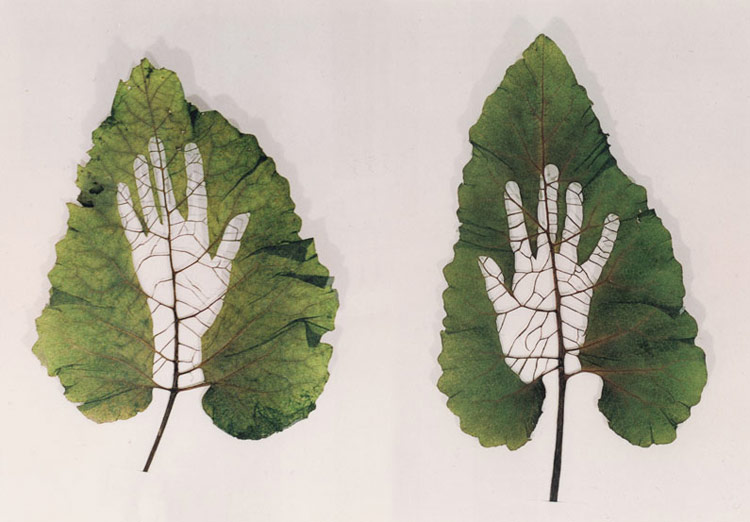
From http://www.janetpihlblad.com/pages/leafwork_thumbpage.html

“The first sentence of every novel should be: ‘Trust me, this will take time but there is order here, very faint, very human.’  Meander if you want to get to town.”

This is from Michael Ondaatje’s book, In The Skin Of A Lion, which I blogged about here.  When I first read this passage, years ago, I realized this is the kind of fiction I want to write, and this proclamation provides comfort.

There’s a beautiful feeling I sometimes get when I’m reading.  It’s the moment I realize I’m in the hands of a good storyteller.  I’ve had that feeling sometimes reading “great” books, and sometimes reading unpublished student work.  The feeling helps me relax and be along for the journey, and I crave it in everything that I read.  This is not to say that I want what I read to soothe me–on the contrary.  (As the fabulous Joy Williams wrote in her essay “Uncanny the Singing That Comes From Certain Husks,” “Good writing never soothes or comforts.  It is no prescription, neither is it diversionary, although it can and should enchant while it explodes in the reader’s face.”)  But that somewhat unnamable awareness that I’m in good hands as I read is always welcome.  It has to do, maybe, with an amount of confidence (and sincerity) in the writer, because I don’t get that feeling, usually, when I read an overly clever or cynical voice–a narrative stance that, to me, usually feels insincere.  I think the feeling I’m pondering can be called “trust.”  As I notice it, something changes in my body; I relax a little (even if the story is unsettling, exploding in my face) because I understand an agreement the writer is making with me, and I am making with the writer: I trust that she or he will uphold whatever rules and aesthetics the story (or poem) requires, and I trust that the writer’s choices were made in earnest, and with honor behind them.

I want to give that same feeling to my readers.  With my words, I want to craft a net, a web, or a hammock, to catch, or lull them into a place, a moment, a thought.  Myself I want to quiet down to what’s essential, and I want the reader to witness (with me) that silver drop of water on a leaf, or that strange knocking sound that’s just too far off to identify but too close to ignore.

Escape

Hugh Laurie (before “House”) and Stephen Fry

Near the end of the last century, I was traversing a difficult break-up.  It seemed the only thing that got me successfully out of my depths was watching “Law & Order” which aired incessantly (several times a day, but still not frequently enough) on the cable channel A&E.  Those gritty formulaic crimes and solutions, riding on the noble backs of wisecracks from well-worn characters like Lennie Briscoe, helped me survive my dark forest.  For an hour at a time, I was distracted enough to gain the relief called numbness–sometimes needed when real things are too hard to face.

Fast forward thirteen years or so, and I need another escape.  But we canceled cable last year, and now it wouldn’t be the classic L&O but instead one of its million children or grandchildren, the watered down spin-offs.  And I’m sure as beautiful as Mariska Hargitay may be, these pale descendents would not offer the comfort of long-ago Jerry Orbach.

So, to reading.  I’m enforcing a brief “vacation” from work-related reading.  First I picked up Animal Farm, which I  haven’t read since high school, and I love Orwell so want to read it again.  But quickly I surmised that wasn’t the right book.  Instead, on the beloved shelf I discovered a small gem called The Girl In Blue by P.G. Wodehouse.  A student had recommended it to me after a chat when we each admired Wodehouse (on whose birthday, incidentally, I was born).  I bought the book without knowing I wouldn’t have time to read it until now.  I’ve adored the Bertie Wooster stories since I read the first after watching their dramatizations with the unequaled (pre-“House”) Hugh Laurie and Stephen Fry.  But I’d never ventured outside the sunny, funny confines of Wooster and Jeeves.

The Girl In Blue stands alone, that is, it’s the only book he wrote about this set of characters.  But Wodehouse’s hilarious hyperbole rings like a carillon throughout, and will sound to anyone who’s read his other books like the verbal equivalent of tucking into a good silk robe and a mohair chair before the fire, belly full of Anatole’s cooking.  The perfect escape.  A rollicking plot, and many hilarious twists, unfolding in a world blessedly unfamiliar to mine.  But it was impossible to ignore the habit of reading like a writer, and this is good because this time, I found the novel better than escape.  It’s Wodehouse’s prose.

In grandiose trappings, his sentences dance through and around what could easily turn to cliché, but he saves them just before they tumble; his facility with the shades and nuances of English spins what could be a simple fun romp into much finer stuff.  To hell with the high art/low art debate!  To hell with that lofty, sniffing disdain for stories created with the intention of (gasp!) entertainment.  (I’ve never really cared about that fight anyway, but it’s fun to officially cast it off here.)

Could I please just spend a year reading through all of Wodehouse?  Don’t they award grants for stuff like this?  For 2.3 seconds, wild-eyed and laughing, I consider applying for Ph.D. programs, dream of researching a dissertation on the women in Wodehouse, if only so I could immerse myself in the genius of this man’s words.

(Okay, just one more book…)

Now that I have stepped from the safety of Brinkley Court, I will follow Wodehouse anywhere.

I’ve been looking so long at my pictures of you that I almost believe that they’re real…

Life for my family has changed since my last post, in ways I will not count.  I want to be the woman who wrote that post, without wavering.  But now I have to fight the urge to protect my daughter like a china cup.

These are facts: On July 5, 2011, my daughter had an accident.  The four fingers on her left hand were detached part way down.  Her middle and ring fingers were too damaged to be re-attached, so are now shorter.  Her pointer and pinkie finger tips were able to be re-attached–we now wait and see if they “take.”  Her thumb was unharmed–excellent in terms of the ultimate function of her left hand.  She is out of bandages and her hand is healing, blue fringey stitches tickling my face as I read to her before bedtime about Piglet and Pooh and all the other sweet creatures in that fictional world.

There are facts, and there’s everything else.  Mostly the everything else is a rock-tumbler inside myself, shining up emotions, thoughts, and wonderings as they clunk around in my brain.  Luckily some of the stones in my head include amazement at the unexpected beauty and grace this accident has brought into our lives.  So many people are sending love and support and gifts and food and the list is endless.  We are lucky.

Merida’s courage and strength through this has been astonishing.  For truly: children are 100% brave and strong and if we step aside and give them space, and love, they know how to heal.  They lead us.  They help us heal.  We are lucky.

And then I think about how I haven’t been able to post here, how at first I couldn’t even write in my journal (for one thing, there was no time, but also, if I wrote it down it would mean it was real, that it really happened.)  And now I look up at the subtitle of my blog, which I change periodically, and find the most recent tag is a line from a Cure song that always haunts me.  From “Pictures of You” the line goes:

I’ve been looking so long at my pictures of you that I almost believe that they’re real…

There are photos of her hand before the accident that are impossible to linger with, impossible not to linger with.  There are photos since the accident, which at first I forced myself to take, beautiful photos, taken knowing that she (and we) will want a chronicle of her healing.  Knowing that this is now her hand, her beautiful hand, and we are so lucky.  Accepting that this is now how we are; this is how it is for us.  She can use her left hand well, better every day, despite the injury; she still considers herself left-handed, and because before the accident, she was very strongly left-handed, she is using it now without thinking, which will help healing, and function, and help her feel like herself.  Yesterday, for the first time, she played her grandmother’s violin, testing it out, to see how it feels, using both hands, making noise, bowing with her left hand.  We are so lucky.

Yet it’s so hard for me to look at any pictures of her hand prior to July 5, 2011.  All the bile I’ve absorbed my entire life about how a person (a girl, a woman, in particular) looks, all the propaganda and the noise joins the rocks in my head and clunks around in the mental tumbler, and I push them aside and try to stop caring about such unimportance, because I believe she will use her whole self: mind, spirit, voice, heart, body (including her left hand!) for greatnesses we cannot even anticipate.  But lookism seeps in, coats the rocks with rancid unshine, and I keep trying to rinse it off.  Must quickly come up with the antidote to hurtful things that other people will say to her, who knows when.  Must indoctrinate her well so she feels a clear, sweet resolve when she uses whatever comebacks or affirmations we can think of that amount to, “We all have damage, some visible, some not.  Nothing to see here–move along.”

When she was one month old, I wrote about filing the nails of her baby hand.  The post was entitled “Safety” and it was about keeping her from scratching her face with sharp baby nails.  I had no idea what her future would hold.  Still don’t!  And every fucking metaphor seems to involve hands, “what her future would hold,” the writer typed, thinking of hands, focussing on how her daughter still has two beautiful hands that work, and how the child is still alive and whole and strong and amazing.

We make the world.  We make it!  We color it, we frame it, we choose words and metaphors and say what we say to each other, and we love or dent or harm each other as we make the world, as we believe what we believe about each other.  I don’t want pity for her or for us.  I will make her world a fair and loving place.  She will know from our hearth that she is strong and amazing and beautiful and that she can do whatever she chooses to do; she will know that fact with every part of herself.

This story may be huge in her life for a while but it will not be her only story.

(Nous sommes embarques!)

Our children

They have their own thoughts, they have their own thoughts

Hardly an original thought, but I am starting to understand how much “our” (=all) children need nature.  Even the grownup children.  In my mind, this thought, which is so simple, connects to this song.

Lyrics by Khalil Gibran, Music by Ysaye M. Barnwell

Your children are not your children
They are the sons and daughters of life’s longing for itself
They come through you but they are not from you and though they are with you
They belong not to you
You can give them your love but not your thoughts
They have their own thoughts
You can house their bodies but not their souls
For their souls dwell in a place of tomorrow
Which you cannot visit not even in your dreams
You can strive to be like them
But you cannot make them just like you
Strive to be like them
But you cannot make them just like you

It is impossible to overstate how bittersweet it is to watch a child grow up.  The process is so slow that it becomes invisible, and then one day, the infant is walking, the toddler is speaking, the child is telling stories.  She runs and stumbles and gets up and isn’t scared and she climbs to the top of the blue jungle gym.  When she stands there, realizing where she is, she says, “Mama, help me,” and while I calmly coach her to find a place to put her feet, I am not breathing, I am “please don’t fall!”ing, and I am trying to know with my own body that she is balanced and strong and wise and that even if she falls, this is the work she needs to do on this day, at this moment.  It is exactly right.

(I can house her body but not her soul…For her soul dwells in a place of tomorrow which I cannot visit not even in my dreams, and this fact is what is so beautiful and this fact is what breaks my entire heart.)

She finds her feet, she climbs down, she smiles with exhilaration and now she has done her work of this day and I have not done it for her, I have resisted even trying, and this means that she knows she can do it herself.  She can do it herself.

And you know what?  I do not want the children to be just like us.  Please no!  I want them to find a better way to live here on this earth.  Meanwhile, let’s help them learn by stepping aside and letting them put their bare feet on the earth, letting them feel the mud and water and prickly grass, and letting them pay attention and do all those beauteous things that surround us every day, those things we forget have such significance in the constant rush of rush rush rush.

The exquisite seasons of Kazuo Iwamura

A lovely book from a series by Kazuo Iwamura.

A librarian friend sent my daughter a bunch of discarded library books last year.  (I often find the best children’s books are discarded by libraries.)  Among that batch was the The 14 Forest Mice and The Summer Laundry Day, by Kazuo Iwamura.  It’s a story of a family of mice who pack up and take their laundry to the river to wash.  The mama mouse knows why her children are rushing–they’re excited for the accompanying swim.  Along the way, gorgeous illustrations walk the reader past delicately-rendered dragonflies and foliage.  Reading it feels like a hike in the woods.

My daughter loved this book almost as much as I did.  Quickly I looked for the other books in this series: there’s one for each season.  Finding affordable copies of the 1991 English translations by MaryLee Knowlton was a slight challenge.  I eventually found all three of the others, on eBay and abebooks.com.   Today, the winter book came, completing our collection.

I love how this series shows the mice making sleds and indoor games to pass the time during a blizzard, or forging a platform to watch the harvest moon in autumn, or rice dumplings for a spring picnic.  The illustrations make me feel like I’ve been out in nature: colors rich and vibrant, drawings not just of “flowers” but true species.  The wood violets look like wood violets.  I also love how the series can give a child a sense of the year’s cycles, and a focus on the natural world.  The mice create things by using curiosity and invention, and the materials around them.

The stories are elegant and simple, and illustrate how to live in harmony with nature.  The large family (grandmother and grandfather on down to a toddler) works together to do the stuff of life, the maintaining of home.  Though somewhat hard to find, if you are seeking books that show kids something other than our consumer-based culture, it’s worth the search.  Let me know what you think of them.

Raising a Raindog

This morning, my daughter was pushing the play button over and over again to hear the beginning of a song on a mixed CD that my husband made for her.  On the CD are various of her favorite songs, but all are real “grown up” music that this child’s parents like to listen to.  (There are a few kids CDs in the house, and  some aren’t bad, but we like her to listen to music that won’t sound icky-sticky to our ears.)

The song she kept replaying was “Filipino Box Spring Hog” by Tom Waits.  She likes Tom Waits.  She’s enjoyed this song for a while, even sang it spontaneously one day awhile ago, but today, she was studying on it.  Asking me what instruments were in that musical stew.  I tried to identify each bang and clang as I could (it’s hard–you try it!).  I explained that sometimes Tom Waits just bangs on things, like cans and other things–his percussion is not only drums and the usual stuff.  And as I reveled in the idea of Tom Wait and Marc Ribot et al making that song, I realized my daughter was trying to find the guitar in the song and play along on her beat-up dulcimer, which she calls her banjo.

Later when I asked her what she was up to, she said she was trying to find out why he said, “Kathleen” (as in “Kathleen was sitting down in Little Red’s Recovery Room, in her criminal underwear bra…”)

“T’ain’t the mince meat filagree
T’ain’t the turkey neck stew
T’aint them bruleed okra seeds
though she made them especially for you…”

I’m fighting the urge to expect her to like everything I like, but I’m hoping that putting her around really interesting music will at least be good for her curiosity which will be good for her soul.

One by one

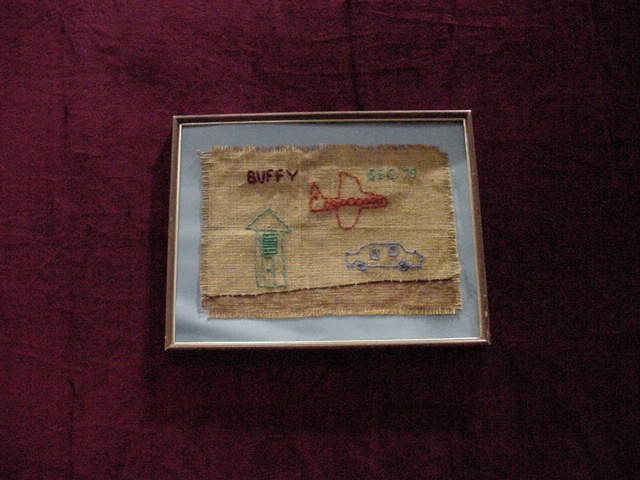
Buffy made this when she was a kid.

A few years ago, Buffy said:

So here’s the part where you make a choice. What if you could have that power, now? In every generation, one Slayer is born, because a bunch of men who died thousands of years ago made up that rule. They were powerful men. This woman is more powerful than all of them combined. So I say we change the rule. I say my power, should be *our* power. Tomorrow, Willow will use the essence of this scythe to change our destiny. From now on, every girl in the world who might be a Slayer, will be a Slayer. Every girl who could have the power, will have the power. Can stand up, will stand up. Slayers, every one of us. Make your choice. Are you ready to be strong?

“Nous Sommes Embarques”

The hands of Bruno Ganz and Peter Falk

I watched some episodes of “Columbo” as a child, but it was the Peter Falk of Wim Wenders’ breathtaking “Wings of Desire” that I recall, sad at Falk’s passing.  In the film, Peter Falk played himself, “Peter Falk,” come to Berlin to make a movie about the Holocaust.  In the clips on youtube, Falk (as “Falk”) politely puts off the media who want to interview him, complains to the costumer until he gets a decent hat, and draws a portrait of one of the extras on the fictional set.  He marvels at her face, and about the extras:

 ‎”Extras. These humans are extras. Extra humans.”

Later, “Falk” talks about drawing, the process of making a line, making art, being alive.  He says,

“Here, to smoke, have coffee. And if you do it together it’s fantastic. Or to draw: you know, you take a pencil and you make a dark line, then you make a light line and together it’s a good line. Or when your hands are cold, you rub them together, you see, that’s good, that feels good! There’s so many good things! But you’re not here – I’m here. I wish you were here. I wish you could talk to me. ‘Cause I’m a friend.”

After we realized we both loved “Wings of Desire,” a friend sent me the poem which runs through the film.  It’s beautiful, and so I am sharing it here. (Thanks, and RIP, Steve B.)

Song of Childhood

By Peter Handke

When the child was a child
It walked with its arms swinging,
wanted the brook to be a river,
the river to be a torrent,
and this puddle to be the sea.

When the child was a child,
it didn’t know that it was a child,
everything was soulful,
and all souls were one.

When the child was a child,
it had no opinion about anything,
had no habits,
it often sat cross-legged,
took off running,
had a cowlick in its hair,
and made no faces when photographed.

When the child was a child,
It was the time for these questions:
Why am I me, and why not you?
Why am I here, and why not there?
When did time begin, and where does space end?
Is life under the sun not just a dream?
Is what I see and hear and smell
not just an illusion of a world before the world?
Given the facts of evil and people.
does evil really exist?
How can it be that I, who I am,
didn’t exist before I came to be,
and that, someday, I, who I am,
will no longer be who I am?

When the child was a child,
It choked on spinach, on peas, on rice pudding,
and on steamed cauliflower, 
and eats all of those now, and not just because it has to.

When the child was a child,
it awoke once in a strange bed,
and now does so again and again.
Many people, then, seemed beautiful,
and now only a few do, by sheer luck.

It had visualized a clear image of Paradise,
and now can at most guess,
could not conceive of nothingness,
and shudders today at the thought. 

When the child was a child,
It played with enthusiasm,
and, now, has just as much excitement as then,
but only when it concerns its work.

When the child was a child,
It was enough for it to eat an apple, … bread,
And so it is even now.

When the child was a child,
Berries filled its hand as only berries do,
and do even now,
Fresh walnuts made its tongue raw,
and do even now,
it had, on every mountaintop, 
the longing for a higher mountain yet,
and in every city,
the longing for an even greater city,
and that is still so,
It reached for cherries in topmost branches of trees
with an elation it still has today,
has a shyness in front of strangers,
and has that even now.
It awaited the first snow,
And waits that way even now.

When the child was a child,
It threw a stick like a lance against a tree,
And it quivers there still today.

And so, Mr. Falk, as the elderly Storyteller of the film says, at the final moment, “Nous sommes embarques!”

A fan back here is wishing on your wings, now returned to you.