Robert Freeman Wexler’s novel, The Painting and The City, was picked for Booklist’s top ten science fiction/fantasy for 2010! Hooray!
(Robert is also known as my husband.)
Robert Freeman Wexler’s novel, The Painting and The City, was picked for Booklist’s top ten science fiction/fantasy for 2010! Hooray!
(Robert is also known as my husband.)
When I was studying theatre, good directors always talked about being exquisitely specific in our choices as actors. The character had to be known in the body of the actor, imagined in clear view. Knowing what the character had for breakfast, down to the amount of milk they poured on their overcooked (or undercooked) oatmeal. How much honey, or brown sugar. Bananas, raisins, or something exotic like candied ginger? Or did they had nothing for breakfast? And then, more importantly: how did the breakfast feel in the belly? Inhabiting characters.
In this same way, I think characters in fiction (and probably some creative nonfiction, too) have to be built, drawn, and very specific. Let the audience, the reader, really see (and more importantly, feel) the life of the character.
And I am not talking about eye color.
I was once in a creative writing workshop with a very unskilled writer. (I make this judgment based upon the truly terrible work she had submitted for the workshop.) Her comments on the other writers’ work boiled down to saying she wanted to see more of what the characters looked like. “Like, how tall is he? What color is his hair? His eyes?” She didn’t have much else to say. Until just this moment, I scoffed at how unsophisticated her comments were, and how unimportant those details are in a good story. I still feel that if a writer mentions those pedestrian details, they better be important to the story. But it just occurred to me that this unskilled writer might have been talking about eye color, but meaning something more salient, that is: perhaps she wanted the writers to draw specific characters. Maybe the other writers (myself included) had made fuzzy or unconsidered choices with our characters. We probably needed to go much further, all the way down the alimentary canal.
I have been thinking in a very gestural and unscientific way about how poems, short stories, and novels are similar and different, both for reader and writer.
Something comes to mind about pacing, tempo, and where to break things.
When working on a novel, finding the right chapter break is crucial. It’s also important to think about where to end paragraphs. Is the question of where to end paragraphs even more important in writing short stories? And decisions about line breaks, even in the very occasional poems I’m working on, seem similarly intuitive and challenging.
I am not claiming that sentences, or words, are not crucial in novels. But there does seem to be a point of comparison among the forms, with the question of chapters, paragraphs, and lines, and where to break them.
Now the question is: how to end this post?
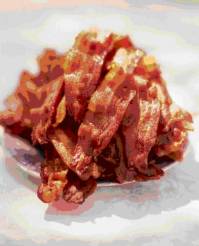 So says Wikipedia’s entry on bacon.
This morning, after my daughter learned that her father was thawing bacon for breakfast, she came to me and said, “When I have bacon I always know what is on bacon and I really like bacon.”
In order to evolve as a human, there’s surely an internal logic in that sentence that I must understand.
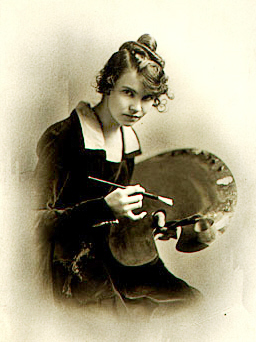
I read Millions of Cats, by Wanda Gág, three times today. Several months ago, it was my toddler’s favorite book, but we haven’t read it recently. My daughter brought me the book for today’s third reading, and said “We haven’t read this book in a long time!” (This phrase, like many others she says, are echoes of things my husband and I say to her, but I still find it charming.)
The book, recommended to me by Jim Krusoe, is wonderful. A lonely old man goes out in search of a cat for his lonely old wife, finds a hill full of them, and can’t decide which is best, so brings them all home. The cats are thirsty and hungry, and subsequently devour a pond and hills full of grass on their way. Once back at the homestead, the cats start a huge rumble because each thinks it’s prettiest, and the old man and woman take cover. Once things are quiet again, only one scraggly waif remains–saved because no one bothered about it. The couple assumes all the other cats ate each other. (My husband assumes the little waif ate them all.) The old man and woman adopt the waif, bathe and feed it, and by the end of the book, it’s healthy and charming, and the couple is no longer lonely.
The illustrations are amazing.
According to the Wikipedia entry, Wanda Gág sounds like she would have been interesting to know.
“She eventually received a scholarship to study art in St. Paul. She supported her younger siblings as best she could by sending money home, but underwent great conflict over the choice between pursuing her creativity (what she called her “Myself”) or becoming a commercial artist.”
Her “Myself.” Too often, I ignore my “Myself.”
Soon, I need to find my Myself a pond to drink dry, and hills of grass to devour.
I had three great conversations with three beautiful people this week. One is about to have a baby, one is working on several projects (and helped me think through a future project I’ll work on), and one is healing from a major illness. The last conversation was about writing, too.
And, having reconnected with an old friend via the dreaded Facebook, I am smitten with how deftly and deeply words can go to the core of a person.
Two of my three conversations mentioned above were aided by Skype. Maybe technology will save us.
I remember reading somewhere that, if you have one authentic conversation with someone every day, you’re doing pretty well. This week, I feel rich.
“It’s a land of many paths
There ain’t only one right way
And I will keep on rocking that
Until my dying day–
It’s a land of many paths
There ain’t only one right way
And I will keep on rocking that
Until my dying day…”
–Hammell on Trial, “Gonna Be a Meeting”
Outlining, after having written 150 pages of mess. All this will amount to a novel some day, but now, it’s a snarl of words in my computer and notebook.
And in my head.
I sometimes write an outline when I have something to write that needs a clear, simple structure. But with my fiction, which can be (and usually is) a mess, I tend to write an outline when I’m near the end of a draft, and stuck, not sure what happens, or needs to happen next.
Today, stuck, resuming after an uncomfortably long break, my smart husband suggested I write an outline, figure out what I have, and where I need more stuff.
It sounded quite unappealing. No romance, no forward motion.
But once I got started, it was welcome, easy, comforting busy-work. “I’m doing something in aid of my novel!” I thought. It’s not the exhilarating fall of writing new stuff, but feels productive. Like something a grown up would do. Like someone who Writes Novels would do.
Here’s how I do it:
1. Make sure all the handwritten notes are typed up into the computer file. (I write new matter on paper, with a fountain pen. It’s much more fun for me. And I usually write down scenes and new stuff as they occur to me, trying to put them in an order that makes sense, but not always in a linear or chronological way.)
2. Open the computer file, and start looking at it, page by page, but from a bird’s eye view (anyone who has a better way to put this without using a cliche, please share!).
3. With paper and pen next to the computer, write an outline, scene by scene. Mostly focus on plot (what happens) but sometimes on themes or other important things to note, things to pick up on later.
It takes a long time, but in the past, I have found it very useful. Sometimes the outline ends up being like a stage manager’s “bible” with set, costume, prop notes, and actor’s motivations, etc. Often, that’s how I find big gaps, things that need to be rearranged, or just taken out. I hope this will be true this time around.
At least it feels like I’m doing something.
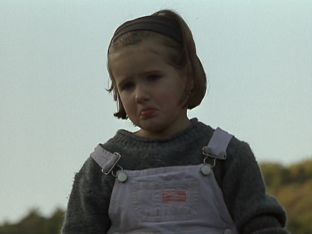 Why do I write about waifs and orphans? I am neither, but they stir me. Why?
Recently I realized that the characters in my novel-in-progress are all, in some manner, orphaned. I’m still uncovering, discovering, or making up the extent to which this manifests itself (and matters) in the mess. But I know that’s an emerging, and somehow important, current through this work, and much of my other work.
In my novel, The Watery Girl, Claire and the watery girl are both alone.
I am an only child, and the mother of an only child. But I don’t think my obsession with waifdom and orphandom is that simple. It could be the notion that we are all alone in some deep sense. I’m still figuring it out.
Community and family are really important to me, and day-to-day, I don’t feel alone. Honestly, I would like to have more actual time alone. But I don’t want to feel alone inside. There’s something scary about that feeling. And yet I also understand that independence is important, dependence can be tricky and dangerous, and I am okay with the occasional loneliness of being alone.
But the waif. The orphan. Something about their vulnerability (which is, perhaps, in all of us, in some deep, hidden place) attaches itself to what I am doing, or trying to do, in my fiction. Do these waifs and orphans need me to tell their stories? Does this render me less alone?

I am the breastfeeding mother of a two-year-old. If you’d told me, when I first had the baby, how long I’d be breastfeeding, I would not have believed you. However, I know that it’s a great benefit to my child, myself, and our family. And I have a part-time job, a very flexible schedule, and a supportive baby-daddy, so I know how lucky I am in being able to breastfeed this long. Also, I know that it’s a nearly political choice these days.
Plenty has been written, blogged, ranted about when it comes to breastfeeding, but this little ditty by Jan Moir in the Daily Mail really offended me. After a short diatribe against a breastfeeding mother who was chastised for feeding her baby in a shop changing room, Ms. Moir goes on to say:
“Campaigners and mothers always like to occupy the moral high ground by insisting that those who object are curmudgeons. Why, breast-feeding is the most natural and beautiful thing in the world, they cry. Well, so is urinating, but no one insists on doing that wherever and whenever the need takes their fancy. Not outside France, at any rate.”
Well, there is at least one major difference that I can see. Breastfeeding is eating, or more accurately, drinking, and doesn’t that make it sort of like the opposite of urination? And while I’m sure plenty of otherwise upstanding citizens urinate in public, my image of public urination usually has to do with men who have been out drinking and can’t make it to the nearest toilet.
Her comparison just doesn’t hold up, and more than that: the inane backlash against breastfeeding women depresses me. Yes, it was weird when I first began breastfeeding in public. And yes, I’m sure that some people are uncomfortable seeing me nurse a two-year-old on a bench or in a restaurant. I try to be discreet. I often take my child to the car, so at least we are not in someone’s face. But the idea that I should only stay home while nursing, or wean her in public, is neither fair nor realistic.
Okay, I guess I am a bit more militant than I thought. However, I would never judge another woman’s choices about where, when, how or whether to nurse. It’s a personal decision. I just hope that the world will evolve until women–the world over–have plenty of support and freedom to do something that is natural, free, and clean.
(Now if you’ll excuse me, I’m off to piss on a tree.)
 Rebecca Kuder