From Little Fires Everywhere, by Celeste Ng

This passage from Celeste Ng’s novel, Little Fires Everywhere, captures so perfectly the feeling of wanting what I know I can’t have.

“After Pearl had begun to snore softly, Mia kept her hand in place, as if she were a sculptor shaping Pearl’s shoulder blades. She could feel Pearl’s heart, ever so faintly, beating under her palm. It has been a long time since her daughter had let her be so close. Parents, she thought, learned to survive touching their children less and less. As a baby Pearl had clung to her; she’d worn Pearl in a sling because whenever she set her down, Pearl would cry. There’d scarcely been a moment in the day when they had not been pressed together. As she got older, Pearl would still cling to her mother’s leg, then her waist, then her hand, as if there were something in her mother she needed to absorb through the skin. Even when she had her own bed, she would often crawl into Mia’s in the middle of the night and burrow under the old patchwork quilt, and in the morning they would wake up tangled, Mia’s arm pinned beneath Pearl’s head, or Pearl’s legs thrown across Mia’s belly. Now, as a teenager, Pearl’s caresses had become rare—a peck on the cheek, a one-armed, half-hearted hug—and all the more precious because of that. It was the way of things, Mia thought to herself, but how hard it was. The occasional embrace, a head leaned for just a moment on your shoulder, when what you really wanted more than anything was to press them to you and hold them so tight you fused together and could never be taken apart. It was like training yourself to live on the smell of an apple alone, when what you really wanted was to devour it, to sink your teeth into it and consume it, seeds, core, and all.”

—Celeste Ng, Little Fires Everywhere (p. 248)

(Learning “to live on the smell of an apple alone” seems like the work of my current stage of motherhood.)

A SHINY POSTCARD WITH BIG NEWS!

assemblage of small items on desk, ermine, elephant, mug with tiger on it, Hans Bolling figure, clock, pencils, etc.
Step Right Up!
vintage postcard of California Alligator Farms, Los Angeles, Cal.
A Peep! A Teaser! A Glimpse Of What’s To Come…

My novel, The Eight Mile Suspended Carnival, is forthcoming from What Books Press!

It’s official!

I’m overjoyed and gobsmacked to announce that The Eight Mile Suspended Carnival is forthcoming (October 2021) from What Books Press. I’m so grateful to Rod Val Moore and Kate Haake and Gronk all who are working to make What Books Press such a fabulous collective. I’ll share more news when I can. For now, please mark your calendars for October, and get ready to enjoy the show!

p.s. No animals were harmed in the writing of this post, or the writing of this novel.

rumination about writing (& revising) essays, before/during a pandemic

Below is some process-related rumination about an essay I wrote, which details an experience from 2018. (The “her” mentioned below is a person I met and subsequently wrote about.) In late 2020, the essay was accepted for publication, and was published in summer 2021. It’s hard to imagine that it was just over 2 years between the event and the acceptance, because of how different everything became. Looking at the essay again—mid-pandemic—brought up thoughts about how weird a gig it is, to write essays. I still feel like a novice, because the essay was my second form, after fiction. I didn’t study what it is to be an essayist (whatever that means) and the requisite sharing/exposing of self without the veil of fiction (even with a sculpted persona at the helm). I find it interesting to ponder/obsess about the intricacies involved. Thought this bit might be worth sharing.

Written on November 21, 2020 (from morning pages)
I started looking at the essay and wow, it’s kind of badly overwritten. It’s sort of cringey! I mean I need to pare down some of the language. I’ve gone really far in making it way too articulate or maybe it’s skirting clever. I don’t like the voice somehow. It’s weird that I am having such a strong reaction to it. I just need to make it good enough & send it back but it’s really hard. I would revise the whole thing (and maybe I will). Maybe it could be that it just feels self-indulgent because it’s pre-COVID, maybe I just need to let it be pre-COVID and not sweat it. It just sounds really full of myself, or something. I think I need to talk to MT about it. It will be helpful to sort it out. I guess I should have looked it over before I sent it. I’ll see if I can just simplify the sentences. Part of it is that with an essay, I captured & canned the feelings and specifics at the time, and I really would write it differently now, I think—? Maybe I can find a way through it without being weirded out by the finished product. Anyway, we’ll see. I wish I had learned her name, or something—I wasn’t really even processing it all, when I met them, how big a deal their story would be. And I don’t want to sensationalize their story, like make it into “disaster porn” or appropriate it. Anyway I’ll just look at the sentences & try to make it better. What’s weird, of course, is that the (name of magazine) will publish it, so in that way, I’ll be exposing the younger me as narrator—it just feels weird. Maybe it’s just the problem of an old essay. Maybe I should put the lens I have now on it, if that doesn’t throw things off. I feel like it needs a date stamp or something. I wonder if that’s relevant. I mean do I need to make clear that it’s pre-COVID-19? I’ll see what I can make of it so it’s still relevant. Or at least so I can stand the sentences & the voice. Such a weird-ass gig. I’m glad the editor accepted it & I will do my best. I know there’s something real in it, and maybe I will work The Body Keeps The Score back into it. I’ll see if that paragraph will work again—I liked having it in there. For one thing it shows a bit about how trauma works, and I think that’s useful. God, this is hard. I mean the decisions & lenses and all that. Having experienced whatever we have experienced, then the work of sorting it, making sense or at least a little bit of order, or observations about it. It’s actually fairly scientific. I don’t know if others think of it that way,  but it makes sense to me. I mean to think of scientific inquiry.

Inbox

May Day 1983. (318. My ghost.)

I keep many emails in my inbox. I don’t always archive, delete, or (if I’m honest) even read all the messages that arrive there. What’s weird is how often the precise number of messages in my inbox is 318. Maybe I am trying to recreate that place in any way I can, even through my electronic inertia and disarray.

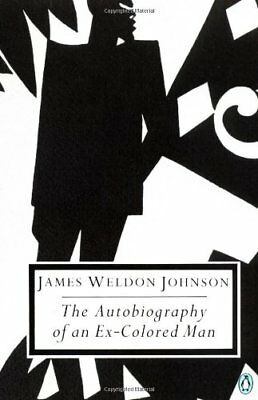
The Autobiography of an Ex-Colored Man by James Weldon Johnson

I recently read The Autobiography of an Ex-Colored Man by James Wheldon Johnson. Johnson was the polymath who (among so many other experiences and accomplishments) wrote “Lift Every Voice and Sing” which I hope some day the United States will embrace as national anthem…please enjoy this glorious video presented by 105 Voices of History National HBCU Concert Choir.

About The Autobiography of an Ex-Colored Man, from the Penguin website:

“Originally published in 1912, this novel was one of the first to present a frank picture of being black in America. Masked in the tradition of the literary confession practiced by such writers as St. Augustine and Rousseau, this “autobiography” purports to be a candid account of its narrator’s private views and feelings as well as an acknowledgement of the central secret of his life: that though he lives as a white man, he is, by heritage and experience, an African-American. Written by the first black executive secretary of the NAACP, The Autobiography of an Ex-Colored Man, in its depiction of turn-of-the-century New York, anticipates the social realism of the Harlem Renaissance writers. In its unprecedented analysis of the social causes of a black man’s denial of the best within himself, it is perhaps James Weldon Johnson’s greatest service to his race.”

The novel is extremely relevant and feels very modern. When I heard “Lift Every Voice And Sing” growing up, I don’t recall learning about the life of the person who wrote it. The resonant anthem seems almost incidental in Johnson’s life story, just one of his many varied works, although music was central to his existence. I’m grateful to know these things now. How different so much would be if I had been taught more about the writer behind the beautiful song, when I was a child.

May we teach our children and ourselves more fully about what our country is made from, so that we may lean toward what it finally may and will be…

Lift ev’ry voice and sing,
‘Til earth and heaven ring,
Ring with the harmonies of Liberty…

Drag it to the curb!

Cleaning a corner of my office…going through a box of stuff from when I taught a 9th grade creative writing class. In the box, I found a stack of half-pages detailing an extra credit assignment I offered the students at the end of 2019. Though I rarely read my own work to the class, in this case I had shared my story “Curb Day” which is about dragging items out of your house and life. Finding this assignment now (as I drag to the curb what I no longer need from that job) seems very resonant! Use it if you want to.

DRAG IT TO THE CURB!

  • Number from 1 to 10.
  • Pretend there was a day when the trash collectors would take ANYTHING…start with the phrase, “I would drag to the curb…”
  • List 10 things you would drag to the curb.
  • Find an item that seems like it wants your attention and circle it.
  • 5 minutes: Describe the item in detail. Pure description.
  • Let the dragged item become part of a brief narrative/story.
    • You can be the narrator/main character, or you can assign someone else to deal with the item.
    •  You can write in 1st (“I dragged…”) or 3rd person (“they/she/he dragged…”).
    • You can fictionalize as much as you want to.

You can even change your mind about dragging it to the curb, and drag it back into your life!

Happy new year (& here’s to good news in 2021)

photo of painting on wall, shadow of paper snowflake

Happy new year! May 2021 be gentle and kind to you, as it wipes the mess of 2020 from its shoes.

Reading my novel-in-progress, I found this bit, and I like it so thought I’d share. Completely torn from context but so what.

“In the silence, there are actually heaps to hear. Train your ears. Slow your breath until you glean what’s left. What’s been missing. The exhalation. Feel your shoulders drop. Everything you’ve been ignoring during The Disaster hasn’t disappeared. Even if it’s in the river and snagged on a rock, been taken captive, or submerged in mud, it’s still there, still out there somewhere. Maybe sleeping, maybe waiting. Maybe it’s only the bones. Maybe the next thing that happens is: whatever’s waiting wakes up.”

It’s fascinating to read through the pages of a novel I began writing in 2004 (that’s not a typo)…fascinating seeing how the “now” me filters through and makes sense of it…very strange. Like when Owl meets himself on the stairs in Arnold Lobel’s excellent book, Owl At Home. (“There must be a way,” said Owl, “to be upstairs and to be downstairs at the same time.”) I hope my next novel will take a shorter span of years, which may yield a psychically simpler writing process, I think? But this bit is new-er and informed by my fascination with embodiment, trauma, resilience, holding many things at once…etc.

(STAY TUNED because I will have some good news to share in the not too too distant future…)

The Grief Forest by Laraine Herring

If we are human, there is sure to be grief in our past, present, or future. We can deny or try to avoid this fact, but to me it seems better to prepare and find helpful resources.

My friend Laraine Herring has written (and illustrated!) The Grief Forest, a beautiful and necessary book, really a container for process and feelings, and a light along the path through grief. A picture book intended for all ages, this book is a gift to the world: beautiful, deeply resonant, and reassuring.

2020 has brought me and us plenty of reasons to grieve. I’m so grateful to Laraine for manifested a book that will help lighten the burden.