 “I don’t remember much; I went outside and I ate some snow, and G– ate some snow, and we said, ‘num num num.’ “
How children learn that there are people called authors

Reading to my daughter tonight, as usual, she chose the books. First, she chose one called Reading Makes You Feel Good by Todd Parr. “I really like books by Todd Parr,” she said. She’d already been reading it to one of her babies when I came in. [My daughter has a lot of babies. Often, when I tell her the name of an author or illustrator, she says, “I have a baby named” (fill in the blank).]
In the rush of the day, it would be easy to just get to the meat and read the book, rather than taking a few seconds to name the author and illustrator. Some books we have (and some she picks from the library) are so ugly, cheesy, and poorly written that I don’t feel like elevating the schmucks who created them by giving them name. Meow. (Though those schmucks are probably making a living at what they do, so I should refrain from sneering, at least from that whole “making a living by writing books” angle.) But even with these stinky books, each time, when I read the title, then “written by…” and “illustrated by…” the child comes to know that there are people behind each book.
My daughter lives with two parents who are writers. As she grows up, she’ll know a lot–maybe too much–about what it means to be a writer. So many writers bemoan the current state of publishing…it’s a sad time for books, some say. But we could do a lot to improve the morale of writers if we do this simple act: when reading a book to a child, include the name of the writer and illustrator. Every time. Every book.
If we do, maybe that lucky child who doesn’t know any writers personally will come to know that someone sat and thought about the book, someone chose words and painted images to tell the story that lulls her to sleep.
Gogol Bordello (Do your thing!)
 My, oh my, I saw Gogol Bordello last night. Excellent Brazilian expatriates Forro in the Dark opened. Though I didn’t say for the whole GB show (being a tired parent, too far from home for a late night drive), all that I saw and felt was incendiary. See them if you can.
There is something about being with people who are doing their thing. Clearly, these folks were at it. I remember a boy in high school who threw discus for the track team. There was a photograph of him with discus in the yearbook: elemental, he was doing his thing. My high school boyfriend had the same look when he was playing his guitar.
My husband looks that way when he reads his fiction aloud. It’s hypnotic.
My daughter is part of a Montessori toddler preschool. They sing a song that goes through all the kids by turns, “Go on Merida, do your thing, do your thing, do your thing, go on Merida, do your thing, do your thing and stop.” At home, she sings through all the children’s names. They take turns.
Last night was Gogol Bordello’s turn.
The planet needs more people out, doing their thing. It will make us all happier. We can take turns.
I’m going to go back to doing my thing and write this novel now.
Swashbuckling, parkour, or something else?

Several weeks ago, I asked my daughter, who is almost three, if she would like to dress up for Halloween. She said yes, that she wants to be a pirate. (I think she was inspired by the Charley character in Lucy Cousins’ Maisy books, because several of the books feature him dressed as a pirate.) I don’t think we’ll go pillaging for candy anywhere, unless it’s early enough to be before her bedtime, but I do think we’ll dress up and go out walking in our small town. (Last year, she had a lovely time at pizza dinner with a dear old friend and her daughter–the daughter is a year older than mine, and was dressed as Sleeping Beauty, in gorgeous shiny regalia. My daughter’s all purple ensemble: eggplant hat, fuzzy purple coat, shirt, pants, and purple Robeeze boots were cute but as a costume, it was a little abstract. I admit to putting very little thought into it. She was two!) But this year, pirate.
How to build a pirate costume for a toddler? I’m not going to rush out and buy a bunch of junk. We’ll use stuff from home: bandana, some shirt and pants, boots, jewelry, and a stuffed parrot from the toy box. I have no idea what a pirate mama should wear, but in my last-minute urge to be creative, I recalled a dream I had earlier this week.
So indulge me writing about a dream again. (It’s my blog!)
I was at a writing convention, in a big hotel, or maybe it was a cruise liner. Someone I used to work with at a regional theatre ages ago (who is not a writer) was there, and there was some craziness about him throwing a party that he invited me to but I didn’t have time to see the invitation, being too busy taking care of a sick toddler, but then later I saw him and some other men from his hallway dressed as women. (If you knew the man I’m talking about, this would be a very amusing sight. So we have a Halloween theme begun…) Later in the dream, I was delightedly climbing, scaling really, the outside of what had now become a beautiful, very old, stone building (apparently now not a cruise liner, but still the writing convention). Climbing the stone was exhilarating and effortless. I was the opposite of afraid. It was maybe as good a feeling as dreams of flying. Someone inside the building asked what I was doing. “SWASHBUCKLING!” I yelled. It was how I imagine those parkour people feel when they are doing their amazing yet completely natural movements.
And then (just now) I remembered Peter Pan and the pirates in Neverland, Smee and Hook and the gang. I’ve long been obsessed with those characters, so took a nostalgic stroll through the images I used in grad school for a seminar on J.M. Barrie’s Peter and Wendy, where I found the image above. (Not Disney. No. No. Read Peter and Wendy. Even if you are a grownup with no kids. It’s beautiful. If you have the time or money, look at the edition with illustrations by Mabel Lucie Attwell. They are transcendent.)
So yeah, I am going to be a pirate this year.
Song for my new year
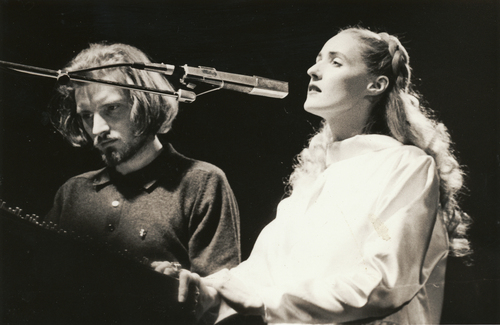 Yesterday, I listened to Dead Can Dance “Toward the Within” because, happily, it’s Dead Can Dance season again, and their music always helps me into the right moody mood for autumn. This song, “Cantara,” struck me as the proper anthem for my new year. The sort of warrior voice that echoes through this song, in Lisa Gerrard’s language, seem just what I need. I don’t usually choose battle metaphors, but this notion, the idea of preparing for battle, seems right for some reason. (Contradictory for a Libra, maybe.)
At the end of the video, Lisa Gerrard mentions her child’s pre-verbal state, and how the child sings, unfettered by the bounds of language. Maybe my war is with language, and I need to sing without words.
And I’ve been fascinated with death lately, fascinated with the full process that it is, and all that it implies. After listening to Gerrard and Brendan Perry, it seems like this song is my right anthem for now.
The beginning of empathy?

My daughter, who is two-and-a-half, is developing a habit of hugging books. When we’re reading a story and someone gets hurt, or might be scared, or sad, she embraces the book for a long moment. When Madeline gets her appendix taken out, or when Sal loses her tooth (One Morning in Maine) and makes a bitter face “almost like crying,” my daughter leans in to hug. She does this with her parents, too, when we stub toes or drop things, or are not feeling well. In trying to raise a child who cares about other people, we’ve talked a lot about considering others’ feelings, reminding her that it hurts the cat when she yanks his tail.
Tonight, I was reading Harold and The Purple Crayon at bedtime.
“He was tired and he felt he ought to be getting to bed. He hoped he could see his bedroom window from the top of the mountain. But as he looked down over the other side he slipped–And there wasn’t any other side of the mountain. He was falling, into thin air.”
Harold is shown upside down, with his purple crayon, simply falling. My daughter leaned in to hug Harold, and then held and comforted him (the book) for a long time. She said, “I’m going to hold Hamold” (as she calls Harold).
The wise people who write about child development tend to discount these early displays of empathy, and certainly my child does her share of throwing her dolls to the floor so that they cry, so that she can comfort them. (I encourage her not to throw them to the floor–“It’s better if they don’t cry in the first place, right?” but that’s not the point. She needs them to cry so that she can comfort them.) It is heart-warming to see her hugging a book, especially when the child protagonist is in peril, or pain, but I don’t think my daughter is unusual in this way.
I read an article recently (I wish I could remember where!) about a book that was claiming there is too much fiction in K-12 curriculum, and that children need to learn how to read nonfiction, that it helps them learn about the real world more than fiction does. Admittedly taken out of context, this notion really bothers me. Yes, children need to learn to read all kinds of things, and it’s crucial that they learn the nuances and distinctions between fiction and nonfiction. But how can I say that fiction doesn’t teach children about life in the “real” world? Even putting “issue” books aside (in my generation, there was Judy Blume) it’s not fair to partition fiction out of what is real in the world.
We learn the world from stories, and through stories.
p.s. There is truth and fiction everywhere.
Public breastfeeding on parallel with public urination? Really?

I am the breastfeeding mother of a two-year-old. If you’d told me, when I first had the baby, how long I’d be breastfeeding, I would not have believed you. However, I know that it’s a great benefit to my child, myself, and our family. And I have a part-time job, a very flexible schedule, and a supportive baby-daddy, so I know how lucky I am in being able to breastfeed this long. Also, I know that it’s a nearly political choice these days.
Plenty has been written, blogged, ranted about when it comes to breastfeeding, but this little ditty by Jan Moir in the Daily Mail really offended me. After a short diatribe against a breastfeeding mother who was chastised for feeding her baby in a shop changing room, Ms. Moir goes on to say:
“Campaigners and mothers always like to occupy the moral high ground by insisting that those who object are curmudgeons. Why, breast-feeding is the most natural and beautiful thing in the world, they cry. Well, so is urinating, but no one insists on doing that wherever and whenever the need takes their fancy. Not outside France, at any rate.”
Well, there is at least one major difference that I can see. Breastfeeding is eating, or more accurately, drinking, and doesn’t that make it sort of like the opposite of urination? And while I’m sure plenty of otherwise upstanding citizens urinate in public, my image of public urination usually has to do with men who have been out drinking and can’t make it to the nearest toilet.
Her comparison just doesn’t hold up, and more than that: the inane backlash against breastfeeding women depresses me. Yes, it was weird when I first began breastfeeding in public. And yes, I’m sure that some people are uncomfortable seeing me nurse a two-year-old on a bench or in a restaurant. I try to be discreet. I often take my child to the car, so at least we are not in someone’s face. But the idea that I should only stay home while nursing, or wean her in public, is neither fair nor realistic.
Okay, I guess I am a bit more militant than I thought. However, I would never judge another woman’s choices about where, when, how or whether to nurse. It’s a personal decision. I just hope that the world will evolve until women–the world over–have plenty of support and freedom to do something that is natural, free, and clean.
(Now if you’ll excuse me, I’m off to piss on a tree.)
I’m going to write down who I am
“I’m going to write down who I am,” said two-year-old Merida, paper and pen in hand, one recent morning. When I recounted this to her papa, she looked at it from another angle and said, “I’m a girl and I know how to write myself down.”
Necessary Dreams
Several years ago, my friend Nancy Jane Moore recommended a book that I keep coming back to. It’s called Necessary Dreams, by Anna Fels. The subtitle is “Ambition in Women’s Changing Lives” but less than ambition, what keeps recurring in my thoughts is our need for recognition. After I read the book, I was fired up, and decided to ask my boss for a raise. I worked in an all-male department, and while there was no duplication in job descriptions, I sensed that I was the lowest paid (which was probably not because I was a woman, but the idea was in my head). My boss was supportive, and the organization was not in the red, so I got a raise. Not as much as I asked for, but generous even so. It was very validating.
I often recommend Necessary Dreams to women who are grappling with what they want to do with their lives, or having mixed feelings about doing the work of raising children or taking care of life at home–a job that is often invisible, and certainly undervalued in larger society. It’s such important work, but if a person is a good parent (and not a bad one) it often goes unrecognized.
While I have lots of support from my immediate people, I have been yearning for broader recognition, both as a new parent and a writer. So maybe it is ambition, or “sheer egotism” (as Orwell said in his essay, “Why I Write”) that makes me want to finish my birth story and get it published.
Anyway, for anyone interested in these issues, I recommend Necessary Dreams. If you read it, let me know what you think.
 Rebecca Kuder