Nearsighted Monkey (or is that farsighted?)

In the continuing drama of when I will receive Lynda Barry’s book, The Nearsighted Monkey, I got this via email today:

We’re writing about the order you placed on October 22 2009. Unfortunately, the release date for the item(s) listed below has changed, and we need to provide you with a new delivery estimate based on the new release date:

Lynda Barry “Nearsighted Monkey”
Estimated arrival date: November 22 2010 – November 29 2010

Does this mean this is the year?  Can it be?

Antioch Writers Workshop July 2010

Embroiled fully in this year’s Antioch Writers Workshop.  I love being around writers, talking about writing, writing with writers, the world cracking open before me.

Before the keynote on Saturday, I was driving to campus and feeling guilty, semi-taking a week off from child, home, life, to do the workshop, because sometimes it seems like choosing to be a writer is a silly luxury (but is it even a choice? I ask myself).

However.

Then I realized (it’s so easy to REALIZE things while driving, isn’t it?) that all writing is really about life.  Whether fiction or nonfiction, poetry or prose, a person (who is alive) puts something on paper (or screen, or sand) and it means something to at least one person.  What else is life, if not that?

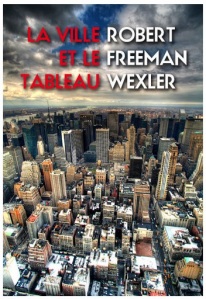
Lovely review of Wexler’s The Painting and The City

There’s a very nice review of my husband’s novel at OF Blog of the Fallen.  The reviewer, Larry, really seems to get at what I observed when I watched Robert work on the novel, when he says,

“Wexler’s novel felt as though it were a briskly-paced story that had been stripped of any extraneous fat, leaving the reader with a story that moves at a falsely languid pace until s/he realizes just how quickly things have developed and how engrossed s/he is with what has transpired.”

Gratifying!

Imagination proves life is worth living

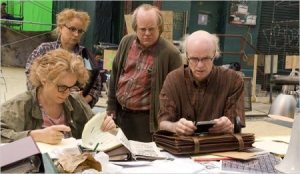
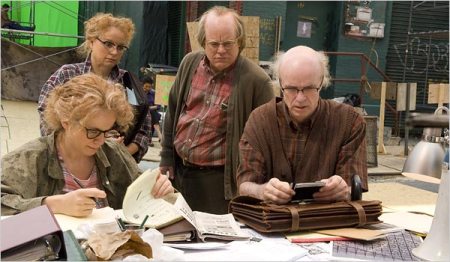
A couple of weeks ago, I watched “Synecdoche, New York” with the brilliant Phillip Seymour Hoffman leading a delectable cast of independent actor types.  I say “types” because the layers of fiction and nonfiction within the film (and the roles reversed and layered and reversed again) were so head-spinny that it made my head spin like a terrible cliché.

But.

The film was incredible.  Incredible that what started out as a dire look at what appeared to be the real world cracked open so deliciously and before me stood actors, cardboard cutouts, people, all echoing each other so brilliantly.  In a way, it reminded me of the intricate and mostly successful novel called The Way Through Doors by Jesse Ball.

So the film opens with this depressive, apparently hypochondriac theatre director (Hoffman looking really terrible) whose best creative days are behind him.  His painter wife (played by the fabulous Ms. Catherine Kinnear) and child soon leave for a show in Berlin without him.  From that point on, things (like time, space, etc.) start to crack open.  Layers of paint and facade peel off.  Hoffman’s character gets involved with a woman who buys a house that is literally on fire.  Etc.

Grindingly depressing, maybe.

But.

Phillip Seymour Hoffman holds the work together, like glue for layers of peeling wallpaper that wants to step off the wall and live a life that has nothing to do with two dimensions, thank you.

If you have the time and patience to sit through some grim, horrid, sad “what is the meaning of art?” types of questions, please watch this movie.

The fact of making a movie like this, and the human spirit embodied in a piece of work that sustains the crazy fantasy magical mess that unfolds (and folds back upon itself, several times), to me, proves the point that life is worth living.  It is such an incredible work of imagination.  This fact: that the filmmaker (Charlie Kaufman) made his film to the end, taking the magic of the world he created seriously is a feat of genius and love.   This type of real commitment to something (anything!) magical seems sadly rare in these cynical days.

The mere fact of the film undercuts the miserable character’s quest for meaning, and in a strange way, I found it completely uplifting.

Wanda Gág

I read Millions of Cats, by Wanda Gág, three times today. Several months ago, it was my toddler’s favorite book, but we haven’t read it recently. My daughter brought me the book for today’s third reading, and said “We haven’t read this book in a long time!” (This phrase, like many others she says, are echoes of things my husband and I say to her, but I still find it charming.)

The book, recommended to me by Jim Krusoe, is wonderful. A lonely old man goes out in search of a cat for his lonely old wife, finds a hill full of them, and can’t decide which is best, so brings them all home. The cats are thirsty and hungry, and subsequently devour a pond and hills full of grass on their way. Once back at the homestead, the cats start a huge rumble because each thinks it’s prettiest, and the old man and woman take cover. Once things are quiet again, only one scraggly waif remains–saved because no one bothered about it. The couple assumes all the other cats ate each other. (My husband assumes the little waif ate them all.) The old man and woman adopt the waif, bathe and feed it, and by the end of the book, it’s healthy and charming, and the couple is no longer lonely.

The illustrations are amazing.

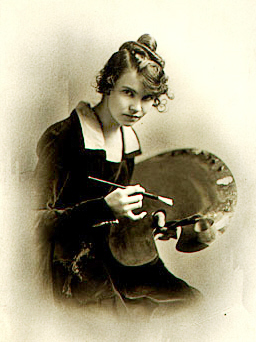
According to the Wikipedia entry, Wanda Gág sounds like she would have been interesting to know.

“She eventually received a scholarship to study art in St. Paul. She supported her younger siblings as best she could by sending money home, but underwent great conflict over the choice between pursuing her creativity (what she called her “Myself”) or becoming a commercial artist.”

Her “Myself.” Too often, I ignore my “Myself.”

Soon, I need to find my Myself a pond to drink dry, and hills of grass to devour.

The Lorax, revisited

What do we think of Dr. Seuss’ The Lorax these days?

I recall the book from my past, though I don’t exactly remember it from my childhood.  I’m not sure if I read it back then.  Being someone who cares about the environment and loves Dr. Seuss on what feels like a cellular level, I bought a copy (printed on recycled paper) for my two-year-old daughter.

She discovered it last week.

Discovering a book, for her, usually means that she wants her parents or any other literate person who happens to be around to read the book several times per day.  But the Lorax is long, and we didn’t make it to the end of the story for the first few days of its discovery.

But my husband and I both want to hide the book, and dread it being handed to us by the little waif who lives in our house.  I think there are two reasons for this.

1) It’s really, really too long.  I think it could be cut down by half, and would be a much stronger book.  The number of clunky sentences in this book is astonishing, considering who wrote it.  And I think this is because:

2) The genius of Dr. Seuss seems to be squelched, choked, or otherwise obscured by HAVING AN IMPORTANT MESSAGE.  Sure, there are messages in plenty of his books, and even though I agree with most of the message in this one (rampant, irresponsible industry=bad, trees=pretty) his message seems to have bent the tree of his narrative over too far, so that in a way it resembles a dying version of one of the book’s skewed, leaning, tufted trees.

As a writer, this is a really good lesson to learn (over and over again, each time my little cherub brings me the dreaded book).  If you have AN IMPORTANT MESSAGE (which is fine, and has its place) please make sure that the message doesn’t wilt the narrative.

And cut everything down by half.  But not the trees.

Jim Krusoe’s novel “Erased”

A couple weeks ago, I finished reading Jim Krusoe’s novel, Erased. I wanted to read the whole thing again right after finishing the last line.

Reading this book, or really any of Krusoe’s fiction, is like taking a trip to the inner layer of the mind, which has somehow been turned inside out and exposed to the sun, and then finding some unknown organ that you need to survive but never knew was there. In his novels, dreams and reality at first seem to (but then don’t quite) fit each other…like a box of mismatched lids for old canning jars.

Here’s a bit from later in the novel, which I don’t think will spoil anything.

“Time, that old fooler, expanded and compressed itself, rolled over and played dead, only to spring back to life again when I least expected it. How long I walked, I couldn’t tell. It could have been hours. It might have been minutes. I heard the high squeals of bats and the sharp cries of night birds. I heard my own breath grow heavy as I trudged up a smallish hill, then I heard it ease on the way down. The wild dogs, or a completely different set of wild dogs, were back.”

In Erased, Krusoe’s protagonist is looking for his mother, who is supposedly dead, but keeps sending him postcards. This quest takes him to Cleveland, an idealized Cleveland that is laughable to anyone who has been to the real Cleveland. In Krusoe’s vision, the city is brimming with artists, carrying their work (often classical sculpture busts) with them to cafes like real-life celebrities carry small dogs in handbags. I love how the writer boldly steals the city from “our” reality.

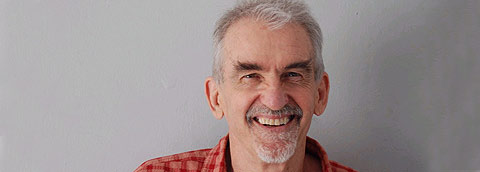
Speaking of theft, I stole this photo from an interview with Jim Krusoe at Bookworm on KCRW.

Jim Krusoe was my mentor in graduate school at Antioch Los Angeles. I still consider him my mentor. Jim is a wonderful teacher. By asking a seemingly a simple question, “What are you interested in writing?” and telling me to write seven pages, Jim fostered my novel The Watery Girl into being. His manner is so good-natured and encouraging that, when he tells you the first few pages of a story need to go, you cut them without pain. I have learned so much from Jim over the years, I can’t imagine where I’d be as a writer without him.

I think Erased is his strongest work yet. And I can’t wait to read more, and read again.