I’m extremely honored to have been invited to write about Virginia Hamilton for the Dayton Daily News. Virginia Hamilton was an early and abiding influence on me, as a writer. In the essay, “A Rememory of Virginia Hamilton,” I reflect, as well, on Virginia’s impact on literature and our local community. The piece was published in print and online on February 6. 2022. (It was a further honor to have this piece appear in print alongside pieces on Paul Lawrence Dunbar by Dr. Herbert Martin and Ralph Ellison by Sierra Leone. And I’m grateful to Leigh Adoff Hamilton and Jaime Adoff for their support, and to Ron Rollins and Nick Hrkman for the invitation.)
Me Myself & Him by Chris Tebbetts
Catching up on some book notes, I’m thrilled to spend a moment recommending that you hurry up and read Chris Tebbetts‘ fabulous & fun novel, Me Myself & Him.
I read this novel in 2019, but because the author is a beloved friend from early days, I was “only” able to absorb and enjoy. (There is nothing wrong with reading for pleasure! Please, let’s read for as much pleasure as we can! We need all the pleasure we can get—these days, any days.) In 2019, I was happily distracted by familiar details and voices, and I let myself get swept away in the experience. But recently, I re-read the novel with a blog post in mind.
Even if Chris Tebbetts were not my friend, I would still call this a friendly book. There’s an amiable generosity in the self-deprecating humor of the narrator—the voice—and I can imagine being a friend to the fictional Chris. Fiction or non, I love reading books like this, where the narrator seems honest, earnest, and trustworthy, fully human. In the case of Me Myself & Him, some of this trustworthiness comes from the narrator’s willingness to show his imperfection, his mistakes. I found that aspect of this novel extremely life-affirming. We make choices, we make mistakes, we fuck up. We keep going, despite injury and heartache. We endure shame. Sometimes people grow, and sometimes, people forgive each other.
This novel is a beautiful artifact of connection and friendship. (Very necessary in these times of isolation.) It centers friendship as an openhearted pursuit, through many twists of fate, or plot—and speaking of plot, this novel is so appealing in its puzzle-parts, its twin lines of possibility, in being a rumination on what might happen if.
One of the most compelling textures is the narrator’s storytelling voice. Readers glimpse the interior of the character as he grapples with a complicated relationship with his father. Such as:
p. 13: In a conversation with his father about college:
“Birch had been my first choice, and against all odds, not to mention my own expectations, I’d gotten in, as a film and English double major. I had no idea what I wanted to do yet (as in, when I grew up), but I knew exactly where I wanted to be for the next four years—at Birch. And, just as important, anywhere but Green River, Ohio.
I couldn’t not go to Birch, and Dad knew that, didn’t he?
‘I know you feel forced right now,’ he said. ‘I’d feel the same way. But this is all about choices you’ve made. You do understand that, don’t you?’
This is what I’m talking about with him. It’s like falling down a hole and there’s nothing to grab onto because it’s all lined with that stainless steel logic of his.
Then on p. 28:
Then he did this one thing that he and my mother share. They’ll smile in this patronizing way when I’m acting stupider than I actually am. It’s a harder habit to break than you might think—for me, I mean.
He took a sip of coffee, to let my stupidity sink in. Then he said, ‘Actually, I want two things. I want you to speak with a counselor, and I want you to come work at the lab this summer.’ Felicia moved her head, like maybe an eight of an inch. ‘Assuming you’re still planning on Birch in the fall,’ Dad added.
Ladies and gentlemen, welcome to the bottom of the hole. Please remain seated until we’ve come to a full stop at the terminal and the captain has turned off the HOW DID I NOT SEE THIS COMING? sign.”
And later, on p. 217 in the alternate narrative strand, re: his father’s second wedding:
“I kept forgetting—or losing track of the idea—that everyone else who was coming to the wedding thought of it as this champagne-soaked, all-good thing, and entirely worth celebrating. Mark and Felicia, together forever, whatever.
At the same time, there was a little bit of What the hell is wrong with me? mixed in there. Seriously, why couldn’t I just be neutral about it, or even, god forbid, happy for them? Why did everything always have to be so considered and examined and dissected? By the time you finish dissecting anything, it’s a disgusting mess. So what did I expect? That I was going to chew on all this wedding stuff, spit it out, and like what I saw?
Please.
Honestly, what I really wanted—what I’d always wanted with regard to Dad—was to not think about it. But that never seemed like an option. He had this sway over me; this way of invading my thoughts that only got worse when I was around him. Whether that was about my own weak-mindedness, or his strength, or something else, I don’t know, but I resented it as much as anything.
It was going to be a long three days.”
Although I recoil a bit at implying that authors have a responsibility to make characters “relatable” (no pressure, writers! and I just don’t like that word), I do find the gently neurotic flavor of the narration…familiar. :) Appealing. Reassuring? (Proving that maybe neurosis/over-anxiety is not only in my head.) Maybe because the neurotic bits are so artfully balanced by a round, complicated character. Interior rumination is used judiciously here, by a writer who knows well how to handle texture and pacing—so the rumination is, to me, one of the most delicious parts of this novel.
You can learn more about Chris and his work at the website above, and on Instagram here.
Oh, and p.s., thank you, Chris, for giving young people (and old people) such a beautifully engaging novel as Me Myself & Him that feature LQBTQ+ protagonists! What the world needs!
Q&A at the Pan Review
Dear friends,
Mark Andresen at the Pan Review (“a bi-monthly look at the arts and literary scene”) graciously invited me to answer some wonderful questions for the Pan Review Of The Arts No. XIII. I’m very grateful to Mark for this opportunity, and grateful there are such fascinating corners of the internet, where we can ponder the inner workings and explore inspiring esoterica.
Here’s where you can read the Q&A. And please support these creative people, including Daniel Mills, whose story collection Among The Lillies can be found at the most fabulous Undertow Publications.
Love, Rebecca
Online Launch Party, Nov. 12, 7pm (Pacific)/10pm (Eastern)

Please join me for the online What Books Press Launch party, hosted by Skylight Books! I will read from my debut novel, The Eight Mile Suspended Carnival, alongside poets Maureen Alsop and M. L. Williams. For more information, or to register, please visit the event page. (Please note the event will be held at 7pm Pacific/10pm Eastern.)
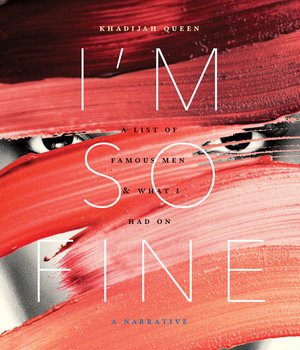
I’m So Fine by Khadijah Queen
I’m So Fine: A List Of Famous Men and What I Wore by Khadijah Queen
This book is hypnotic and gorgeous and it is so good to be alive right now and be living at a time when this book exists. My friend Melissa loaned it to me, and I am ordering a copy for my shelf, because, well, if you’ve read it, you know why, and if you are yet to read it, you will soon discover why.
Queen builds a rock-solid feminist narrative—a memoir formed by tight, crystalline, lyrical fragments, whose accumulation seems as effortless as how iridescent shells appear and gather on the beach, carried by waves of awareness and poetry, to shine in the sun…
Here are some of my favorite fragments.
On page 27:
“I never met Bill Cosby but I met Beverly Johnson at Magic Mountain with my dad & my sister one summer in the mid-1980s & she had on an oversized cardigan & jeans casual but lovely my dad chatted her up while we rode the Colossus with her daughter he said he asked for her number & she politely declined I remember her grace & regality & lace-up boots she sat on the beat bench with her feet crossed at the ankle so when she went public about Cosby drugging & trying to assault her I immediately believed her & not him I have seen enough of powerful men by now to know she had nothing to gain by going public & the truth of beauty means both spotlights & shadows find you & it takes more than instinct to know where to stand on the stage & I don’t mean looks all the time I mean all women are all beautiful and I wish we knew it in ways that make us realize the relative insignificance of the arrangement of external features so we might as well not get so caught up & my dad had a lot of nerve right I mean some men have a lot of fucking nerve in general & I think my sister & I had on matching Hawaiian shirts that day & wore them tucked in I didn’t wear that shirt again & not long after that I fell in love with fashion & asked my dad to start buying me issues of Vogue”
On p. 53
“At the end of summer I met a guy who looked like a six-foot-two Lenny Kravitz but he turned out to be another narcissistic sociopath & where is the law against men that fine & that messy but at least I could tell within the first 30 minutes of conversation which included tales of his multiple cars & failed pro football career & travels to China where he had adventures with sex traffickers & drug dealers & later (because I had to finish my raspberry cheesecake & glass of rose) the break up with his Chinese baby’s mother who he called his former weed bitch & his switch from Christianity to Judaism because he said he wanted to be rich & what in the world happened to this man to make him think it’s okay to reveal all of that to a stranger what kind of man does that I thought but it’s the kind who makes sure you arrive at the restaurant in time to see him speed into the parking lot in a black on black Porsche & the kind that wears not one but three diamond rings not one but three gold chains & after he hugs you hello reaches back into the car to grab his Louis Vuitton man purse & the zing of attraction crackles to ash because when I met him at the bookstore he claimed to be a small-time restaurateur he had on jeans & Frye boots & a worn Jimi Hendrix T-shirt no gold no chains just a leather cuff & a zillion tattoos & his arms were CUT so when he asked to buy me a drink later I gave him my number I had on zero makeup my 20 post-surgical pounds & an orange & white maxi tank & raffia wedges & I should have known better because he was 10 years younger & chose one of those self-published looking wealth management books & wandered to the money-oriented magazine aisle but his attention made me feel lovely at a time when I needed to feel lovely but I’ll be damned if I get dumb so I blocked him & changed his name to Red Flags & avoid making eye contact with men at the Barnes & Noble”
On p. 68:
“When I saw John Singleton buying a bean pie at Simply Wholesome I knew I had done the right thing cutting off all lover & ex-lovers all man candy & even decent prospects & coming to L.A. for my 40th birthday to hang out with my best friends & also who doesn’t love bean pie if they’ve had some bean pie & my son came with me his face all smiles because spicy Jamaican patty & cream soda heaven & even the live music at Simply is perfect & even though I’d had two surgeries & my newly cut up gut prone to protest I was alive in my hometown & seeing celebs just like old times & when I was young I could in equal measure celebrate & take everything about living for granted but 40 is so cool 40 is seeing & knowing not seeing & wanting 40 holds beauty as the accumulation of bliss & survival 40 widens its arms 40 seeks all the June sun instead of shade & flies with more than usual mechanical luster & says yes to all the right things because 40 knows what it wants & mostly gets its every fineness”
Please read this book!
The Rope Swing by Candace Kearns Read
After recently re-reading The Rope Swing by Candace Kearns Read, in my Facebook memories from 5 years ago, I noticed photos of friends around the country posing with copies of the book to celebrate its 2016 launch. Perfect timing to post
Happy 5th birthday to The Rope Swing!
Candace Kearns Read is my friend. We met in 1999 at the MFA program at Antioch Los Angeles. My focus was fiction. Back then, I was mystified by those who wrote creative nonfiction and especially memoir. How could a person handle the vulnerability of writing personal stuff without the protective veil of fiction? I was intimidated, and in awe of these humans. Although I have kept a journal most of my life, but this writing of personal stories for others to read was another continent.
As The Rope Swing evolved toward publication, I had the pleasure of reading various iterations, and was so happy to cheer this book on. It was deeply gratifying to revisit it again recently, with a fuller understanding of what memoir is and can do, and what it takes (for the writer/human) to survive the doing. Brava to Candace for making this beautiful book!
In pondering the memoir this time, a notion took root…in the form of subtitle, or how I might articulate some of the generous humanity contained in the narrative:
—How To Survive Loving Someone Who Is Broken and Complicated*—
(*Here I need to say that I consider many humans, myself included, broken and complicated. Some are more broken and complicated than others, but/and/so I am not judging anyone! May we all do our best as we navigate the messy endeavor of loving each other.)
This memoir makes me feel my own humanity, and it gives me some hope that despite how messy things can be, we humans tend toward mutual survival…and I find this a comfort.
**
Some thoughts on craft:
The book is skillfully woven of child and adult narration. The impact of the story accumulates via these dual voices. (That inner sense of still feeling like a kid, despite the mileage of adulthood…so rich and poignant.)
In particular, Candace has an uncanny ability to write in the voice of childhood. Experiencing that thread of the narrative—that close lens and naïve curiosity—reading the child’s experience is both grounding and unsettling. We have each been children in the past, and a reader accessing this strata of memory is reminded of what it was like…that vulnerability, the lack of full understanding of adult ways…this layer loops me back again, somehow, toward how children survive the challenge of childhood.
For instance, on p. 25 (when the narrator is age five, attending an adult party):
“I stay close to Irene all night. She sparkles, wearing her pink and orange party dress that shows off the tops of her boobs. She has freckled brown skin and thick brown hair and wears lots of Mexican jewelry. She is always so happy that it makes you happy just to be around her.
She is very friendly with all the men at the party, but doesn’t seem as friendly with their wives. When Sammy goes into a corner to tell a joke to a bunch of men, she goes with him. When I try to follow her, Sammy waves his hand for me to stop. ‘It’s not for little girls to hear,’ He says. I go a little ways away so I can’t hear a thing, but I watch them all the see what they do. After Sammy tells his story, everybody laughs real hard, especially Irene, who laughed so hard she has to wipe tears off her cheeks.”
While later, on p. 106, we see another shade of vulnerability from the adult narrator (helping her mother, whose cognition is wobbly) in this sweet/bitter moment:
“She squints down at her feet, then looks up and smiles kindly at me.
‘Where are you from?’ she asks, like she’s making polite conversation with a stranger. She is mistaking me for a nurse. I know how she loves to engage strangers in conversation, find out where they’re from, what’s their politics are, and if they don’t have any, to make suggestions. This is what is happening now— my mother thinks she is meeting someone new.
Where am I from?
‘I’m from your womb.’
She chuckles, and then I can see a wave of remembering cross her face. She knows, not exactly who I am, but that whoever I am, I might just be from her womb. In all my life, this is the first time my own mother hasn’t recognized me. It’s like the core of me has just been carved out, and I’m left hollow.”
**
And please revel in the emergence of a young witch in these pages! The child narrator holds powerful magic, and thusly strives to order often her chaotic corner of the world:
On p. 183:
“One morning I am in my room with the door closed and I see Tiger outside my sliding glass door, moving back and forth and meowing like she wants to get in. Before I can go over and let her in, she has somehow magically come inside. I look for a hole in the wall, a vent or something, but I can’t figure out how she got in. She looks at me with those big green eyes and I can hear her saying, ‘I have magical powers.’” (And later, the child’s friend says, “She must be your familiar….all witches have one.”)
Not only the cat has magical powers:
On p. 97 (when the narrator is six, and she and her mother are staying in a motel—having fled home to escape the mother’s abusive boyfriend):
“I dream that our house is burning down, in a bad fire. All my toys and clothes are being swallowed up in the flames. The fire gets bigger and bigger until it burns up our whole house.
I wake up to the sound of a phone ringing. It’s early in the morning, not really dark but not really light out either. I can tell it’s before the time when people are supposed to wake up. The phone is on the floor between our two beds and my mother picks it up finally. She says hello in a sleepy voice, and then she doesn’t say anything for a long time. Then she asks, in a scared voice, ‘Down to the ground?’ And that’s when I know our house burnt down, just like in my dream.”
**
I’m so grateful that Candace has crafted this book, used her alchemy, produced this “truth, artfully arranged” (as Dinty W. Moore has defined creative nonfiction).
Please read this book. You can learn more about her writing and coaching here: https://candacekearnsread.com/
Forthcoming (What Books Press covers)

Behold the glorious & soon-to-be-portable covers of this year’s offerings from What Books Press. (So grateful my debut novel is among these beauties.) Forthcoming in October. Covers by Gronk #elgronk
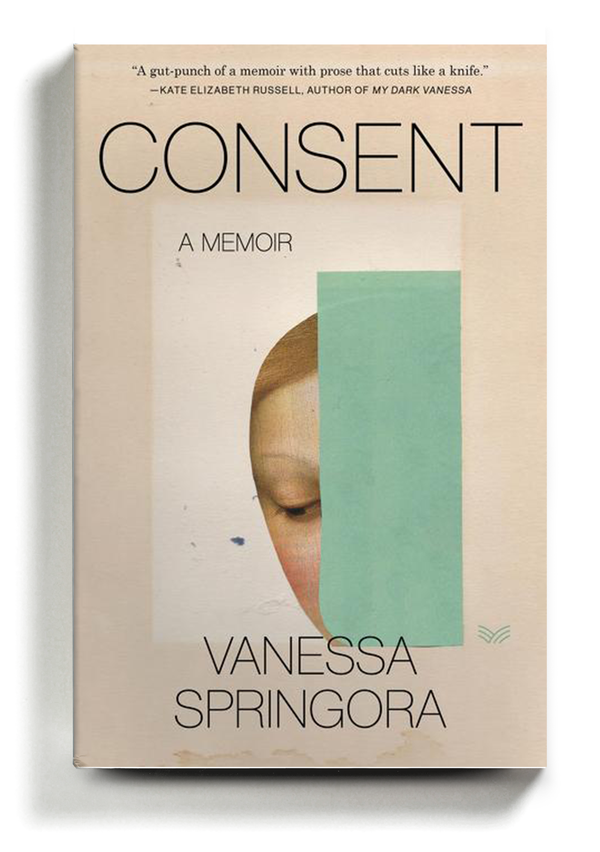
Consent by Vanessa Springora
Consent, by Vanessa Springora, describes the author’s history of being sexually abused (starting at age 14) by the writer Gabriel Matzneff who was, at the time, age 49.
This memoir explodes the structures & strictures of keeping secrets and carrying shame. It’s a reckoning on behalf of those who have been fondled, lied to, controlled, terrorized, gaslit, manipulated, damaged, and otherwise abused by pedophiles. (Good!)
(I recommend this book. And this book may bring up past/un-metabolized/unhealed trauma. If you are a survivor of sexual abuse, and you choose to read it, please find ways to take care of yourself as needed.)
& may we all find our way toward healing and wholeness.
A couple resonant bits:
p. 181:
“It’s incredible. I’d never have believed it possible. After so many romantic disasters, such a struggle to accept love unhesitatingly, the man whom I eventually met and with whom I now share my life was somehow able to heal my many wounds. We have a son who is just entering adolescence. A son who has helped me grow. Because you can’t remain fourteen years old forever once you become a mother. My son is handsome, with a gentle expression in his eyes, a bit of a dreamer. Fortunately, he never asks me much about my childhood. Which is just as well. In the imaginations of our children, at least when they’re young, our lives only began with their birth. Perhaps they sense, intuitively, that there is a shadowy zone it’s better not to venture into.”
p. 184:
“By setting his sights on young, lonely, vulnerable girls, whose parents either couldn’t cope or were actively negligent, G. knew that they would never threaten his reputation. And silence means consent.
But on the other hand, to my knowledge, not a single one of his countless mistresses has ever chosen to write a book recounting the wonderful relationship she had with G.
Does that tell us something?
What has changed today—something that men like he and his defenders complain about constantly, excoriating the general atmosphere of puritanism—is that following the sexual revolution, it is now, at last, the turn of the victims to speak out.”
When They Call You A Terrorist by Patrisse Khan-Cullors and Asha Bandele
When They Call You A Terrorist: A Black Lives Matter memoir
by Patrisse Khan-Cullors & Asha Bandele
If you want to better understand how systemic racism affects humanity, please read this book.
Here are some specific passages that resonate, for me, and help me see more fully.
On p. 93: Discussing the pitfalls of over/sole focus on personal responsibility as the solution for addiction, within the overarching structure of systemic racism:
“It was easy to understand that when race was a blatant factor, a friend says to me in a political discussion on afternoon. Jim Crow left no questions or confusion. But now that race isn’t written into the law, she says, look for the codes. Look for the coded language everywhere, she says. They rewrote the laws, but they didn’t rewrite white supremacy. They kept that shit intact, she says.
I don’t know if I ever convince my father of this line of thinking. A decade of 12-stepping has ensured that he only really knows how to hold himself accountable. Even with all my speeches and his engagement with me at the Strategy Center, I sense when we talk that everyone and everything else kind of gets a pass.”
p. 98: On the flagrant injustice that is knit into the “justice” system:
“I have never seen him high before but I refuse to turn away. If he matters to me at all then he has to matter to me at every moment. He has to matter to me at this moment. Seeing him like this feels like my soul is being pulled over shards of glass but I do not turn away. His life is not expendable. Our love is not disposable. I will not be to him what the world has been to him. I will not throw him away. I will not say he has nothing to offer.
I tell him that relapse is part of recovery.
I ask, What if we wrote off every person who fell off a diet? We laugh at that, but just briefly.
My father’s addiction and the stigma that attaches to it have made him so deeply lonely, forced him into a world that cannot ever be fully shared by anyone who loves him. I love him. I tell him I want to share his whole life with him. He sighs and expels air. He deflates. I move closer to him. He lets me. I tell him I won’t leave him and I don’t. We talk or we don’t talk, for the rest of the night. We hold each other on and off. We cry.
Two months later my father is sentenced to three years in prison. He is able to avoid the seven-year bid because he volunteers to go to the prison camp fire, a program where convicts are made to serve as front-line first responders when the California wildfires break out. They are the ones who go in before the trained firefighters do.
My father risks death for a faster shot at freedom.”
And p. 143:
“There is rarely discussion about the trauma that often drives chaotic drug use and addiction. And there is no discussion about the fact that fully 75 percent of the people who use drugs never develop addiction. (For some drugs, like marijuana, fully 90 percent of those who use never become addicted.) They wake up, go to work or school, pay their taxes, raise their kids, make love with their partners. They live. They live regular old boring lives. But for my father, my brother, others I know, chaos was a factor before drugs were a part of their lives. Why does no one ever address that?”