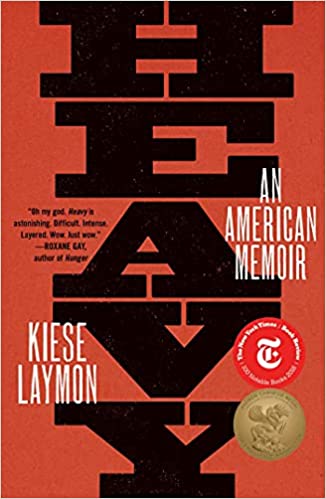
Heavy by Kiese Laymon

Heavy by Kiese Laymon is hypnotic. So much richness in the truth Laymon offers, so much vulnerability, so much powerful toppling of shame. Among other gifts, Laymon’s memoir deepened my understanding of the insidious and varied damage that systems of white supremacy cause on Black bodies and psyches. Of the pressure Black people are under, 24 hours a day, every day. Of what—to me (as a white-bodied person)—may be invisible in the classroom (and world). I’m grateful to Laymon for helping me open my eyes and see.

Please read and re-read this book. And meanwhile, behold some illuminating passages. (“You” in these passages refers to the narrator’s mother.):

P. 123: “In class, I only spoke when I could be an articulate defender of Black people. I didn’t use the classroom to ask questions. I didn’t use the classroom to make ungrounded claims. There was too much at stake to ask questions, to be dumb, to be a curious student, in front of a room of white folk who assumed all Black folk were intellectually less than. For the first time in my life, the classroom scared me. And when I was scared, I ran to cakes, because cakes felt safe, private, and celebratory. Cakes never fought back.”

P. 140-141: “I now knew what ‘patriarchy’ was.  I could define ‘compulsory heterosexuality.’  I could explain ‘intersectionality’ to Ray Gunn.  I understood gender was a construction and there were folk on Earth who were transgender and gender-fluid.  I went to abortion-clinic defenses.  I marched in safer-sex rallies. I made photocopies of my bell hooks essays and gave them to my friends. I had new lenses and frames to see the world. I called to those new lenses and frames ‘Black feminism,’ but I didn’t really have the will to publicly or privately reckon with what living my life as a Black feminist meant.”

P. 180: “‘The world was out to smother me and my kids,’  you told me a week after I arrived at Vassar. ‘ My job as a teacher was to help them breathe with excellence and discipline in the classroom. The ones that love you, they become what you model. Don’t forget that. Help them breathe by modeling responsible love in the classroom every single day. The most important thing a teacher can do is give their students permission to be loving and excellent.’” 

P. 180:  “My first week of class, I understood that none of my students, especially the black and brown ones who gravitated to me, wanted to be treated as noble exceptions to their communities. They wanted to be loved, inspired, protected, and heard. They didn’t want to be punished or unfairly disciplined for navigating the craziness that came with leaving home to sleep, eat, and drink with people they didn’t know while learning in haunted classrooms and dorms. Like nearly every black professor I knew from the Deep South, I expected to protect my students from security, police, and malicious administrations. I expected to pick them up from the police stations, train stations, and emergency rooms. I didn’t expect to fail them as much as I did. I mis-gendered my students when they asked if I could help push the college to cover the cost of transitioning because they’ve been disowned by their parents for being transgender. I made my students engage with art that attacked them for being queer, femme, black, and poor. I came into my James Baldwin lecture after the Virginia Tech shooting and told the one Asian American boy in the class, who happened to be Vietnamese, I was free if he ever wanted to talk about violence. I asked one of my Chicana students who told me her family had been deported if she knew when they’d be back, and if she wanted to publish an essay about it. 

I found more ways to fail and harm my kids than I ever imagined. Every time I failed them, I knew I thought I was doing something you would never have done.”

P. 228: “‘We all broken,’ I said. ‘Some broken folk do whatever they can not to break other folk. If we’re gone be broken, I wonder if we can be those kind of broken folk from now on. I think it’s possible to be broken and ask for help without breaking other people.’”
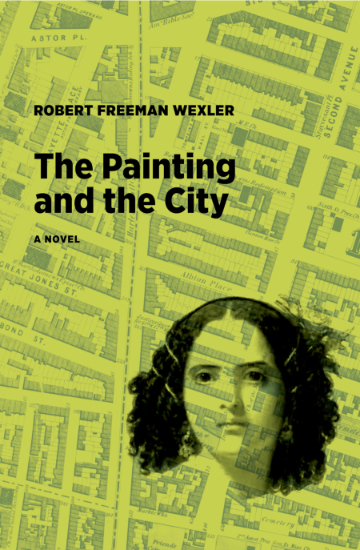
Cover reveal

Thrilled to unveil the cover of my debut novel, The Eight Mile Suspended Carnival! Grateful to Ash Goodwin for design, and to Gronk for the beautiful art, and to Rod Val Moore and everyone at What Books Press. (Please treat yourself by perusing the work of Gronk!) Also grateful to the generous humans who read and provided blurbs (Jim Krusoe, Gayle Brandeis, Ariel Gore, and Nick Flynn). It takes many hands & spirits to do this work.

The novel is forthcoming in October. Stay tuned here for more information!

From Little Fires Everywhere, by Celeste Ng

This passage from Celeste Ng’s novel, Little Fires Everywhere, captures so perfectly the feeling of wanting what I know I can’t have.

“After Pearl had begun to snore softly, Mia kept her hand in place, as if she were a sculptor shaping Pearl’s shoulder blades. She could feel Pearl’s heart, ever so faintly, beating under her palm. It has been a long time since her daughter had let her be so close. Parents, she thought, learned to survive touching their children less and less. As a baby Pearl had clung to her; she’d worn Pearl in a sling because whenever she set her down, Pearl would cry. There’d scarcely been a moment in the day when they had not been pressed together. As she got older, Pearl would still cling to her mother’s leg, then her waist, then her hand, as if there were something in her mother she needed to absorb through the skin. Even when she had her own bed, she would often crawl into Mia’s in the middle of the night and burrow under the old patchwork quilt, and in the morning they would wake up tangled, Mia’s arm pinned beneath Pearl’s head, or Pearl’s legs thrown across Mia’s belly. Now, as a teenager, Pearl’s caresses had become rare—a peck on the cheek, a one-armed, half-hearted hug—and all the more precious because of that. It was the way of things, Mia thought to herself, but how hard it was. The occasional embrace, a head leaned for just a moment on your shoulder, when what you really wanted more than anything was to press them to you and hold them so tight you fused together and could never be taken apart. It was like training yourself to live on the smell of an apple alone, when what you really wanted was to devour it, to sink your teeth into it and consume it, seeds, core, and all.”

—Celeste Ng, Little Fires Everywhere (p. 248)

(Learning “to live on the smell of an apple alone” seems like the work of my current stage of motherhood.)

A SHINY POSTCARD WITH BIG NEWS!

assemblage of small items on desk, ermine, elephant, mug with tiger on it, Hans Bolling figure, clock, pencils, etc.
Step Right Up!
vintage postcard of California Alligator Farms, Los Angeles, Cal.
A Peep! A Teaser! A Glimpse Of What’s To Come…

My novel, The Eight Mile Suspended Carnival, is forthcoming from What Books Press!

It’s official!

I’m overjoyed and gobsmacked to announce that The Eight Mile Suspended Carnival is forthcoming (October 2021) from What Books Press. I’m so grateful to Rod Val Moore and Kate Haake and Gronk all who are working to make What Books Press such a fabulous collective. I’ll share more news when I can. For now, please mark your calendars for October, and get ready to enjoy the show!

p.s. No animals were harmed in the writing of this post, or the writing of this novel.

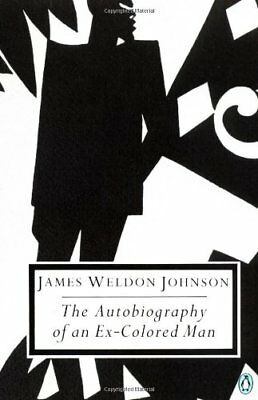
The Autobiography of an Ex-Colored Man by James Weldon Johnson

I recently read The Autobiography of an Ex-Colored Man by James Wheldon Johnson. Johnson was the polymath who (among so many other experiences and accomplishments) wrote “Lift Every Voice and Sing” which I hope some day the United States will embrace as national anthem…please enjoy this glorious video presented by 105 Voices of History National HBCU Concert Choir.

About The Autobiography of an Ex-Colored Man, from the Penguin website:

“Originally published in 1912, this novel was one of the first to present a frank picture of being black in America. Masked in the tradition of the literary confession practiced by such writers as St. Augustine and Rousseau, this “autobiography” purports to be a candid account of its narrator’s private views and feelings as well as an acknowledgement of the central secret of his life: that though he lives as a white man, he is, by heritage and experience, an African-American. Written by the first black executive secretary of the NAACP, The Autobiography of an Ex-Colored Man, in its depiction of turn-of-the-century New York, anticipates the social realism of the Harlem Renaissance writers. In its unprecedented analysis of the social causes of a black man’s denial of the best within himself, it is perhaps James Weldon Johnson’s greatest service to his race.”

The novel is extremely relevant and feels very modern. When I heard “Lift Every Voice And Sing” growing up, I don’t recall learning about the life of the person who wrote it. The resonant anthem seems almost incidental in Johnson’s life story, just one of his many varied works, although music was central to his existence. I’m grateful to know these things now. How different so much would be if I had been taught more about the writer behind the beautiful song, when I was a child.

May we teach our children and ourselves more fully about what our country is made from, so that we may lean toward what it finally may and will be…

Lift ev’ry voice and sing,
‘Til earth and heaven ring,
Ring with the harmonies of Liberty…

Happy new year (& here’s to good news in 2021)

photo of painting on wall, shadow of paper snowflake

Happy new year! May 2021 be gentle and kind to you, as it wipes the mess of 2020 from its shoes.

Reading my novel-in-progress, I found this bit, and I like it so thought I’d share. Completely torn from context but so what.

“In the silence, there are actually heaps to hear. Train your ears. Slow your breath until you glean what’s left. What’s been missing. The exhalation. Feel your shoulders drop. Everything you’ve been ignoring during The Disaster hasn’t disappeared. Even if it’s in the river and snagged on a rock, been taken captive, or submerged in mud, it’s still there, still out there somewhere. Maybe sleeping, maybe waiting. Maybe it’s only the bones. Maybe the next thing that happens is: whatever’s waiting wakes up.”

It’s fascinating to read through the pages of a novel I began writing in 2004 (that’s not a typo)…fascinating seeing how the “now” me filters through and makes sense of it…very strange. Like when Owl meets himself on the stairs in Arnold Lobel’s excellent book, Owl At Home. (“There must be a way,” said Owl, “to be upstairs and to be downstairs at the same time.”) I hope my next novel will take a shorter span of years, which may yield a psychically simpler writing process, I think? But this bit is new-er and informed by my fascination with embodiment, trauma, resilience, holding many things at once…etc.

(STAY TUNED because I will have some good news to share in the not too too distant future…)

The Grief Forest by Laraine Herring

If we are human, there is sure to be grief in our past, present, or future. We can deny or try to avoid this fact, but to me it seems better to prepare and find helpful resources.

My friend Laraine Herring has written (and illustrated!) The Grief Forest, a beautiful and necessary book, really a container for process and feelings, and a light along the path through grief. A picture book intended for all ages, this book is a gift to the world: beautiful, deeply resonant, and reassuring.

2020 has brought me and us plenty of reasons to grieve. I’m so grateful to Laraine for manifested a book that will help lighten the burden.

Brown Girl Dreaming by Jacqueline Woodson

When the news was announced that Jacqueline Woodson was awarded the MacArthur Genius grant, I had just finished reading her gorgeous memoir in verse, Brown Girl Dreaming. I had recently seen her in conversation with another writer I admire, and so I could hear her voice and image the writer as I read the memoir. I can’t wait to read more of Woodson’s work.

Brown Girl Dreaming is a beautiful and generous glimpse into a young writer’s emergence, where family and sense of place both act as characters in the story. I hope you will read it. Two poems that really stood out to me:

On p. 80:

miss bell and the marchers

They look like regular people
visiting our neighbor Miss Bell,
foil-covered dishes held out in front of them
as they arrive
some in pairs,
some alone,
some just little kids
holding their mothers’ hands.

If you didn’t know, you’d think it was just
an evening gathering. Maybe church people
heading into Miss Bell’s house to talk
about God. But when Miss Bell pulls her blinds
closed, the people fill their dinner places with food,
their glasses with sweet tea and gather
to talk about marching.

And even though Miss Bell works for a white lady
who said I will fire you in a minute if I ever see you
on that line!
Miss Bell knows that marching isn’t the only thing
she can do,
knows that people fighting need full bellies to think
and safe places to gather.
She knows the white lady isn’t the only one
who’s watching, listening, waiting,
to end this fight. So she keeps the marchers’
glasses filled, adds more corn bread
and potato salad to their places,
stands in the kitchen ready to slice
lemon pound cake into generous pieces.

And in the morning, just before she pulls
her uniform from the closet, she prays,
God, please give me and those people marching
another day.

Amen.

And this beautifully embodied gift on p. 217:

writing #1

It’s easier to make up stories
than it is to write them down. When I speak,
the words come pouring out of me. The story
wakes up and walks all over the room. Sits in a chair,
crosses one leg over the other, says,
Let me introduce myself. Then just starts going on and on.
But as I bend over my composition notebook,
only my name
comes quickly. Each letter, neatly printed
between the pale blue lines. Then white
space and air and me wondering, How do I
spell introduce?
Trying again and again
until there is nothing but pink
bits of eraser and a hole now
where a story should be.