In July, I had a dream that I went to a book talk at some generic chain bookstore. E.B. White was there to talk about Charlotte’s Web. It was a small audience—maybe twelve people. I had the book with me, and lots of questions (details lost, when I woke up). In the dream I asked my number of questions, and he sat, kind and patient, as I unwound the things I wanted to know. At some point, he asked the audience whether they had a favorite part of the book. I said that my favorite parts could be traced to the parts where, as we listen to him reading the book, I recite lines along with him. (“What are you gonna do with it?” Templeton asks, about the rotten goose egg, and so on.) I mentioned to the audience that I had first found the audio book read by someone else, but discovered Mr. White had recorded it, and that it’s easily the best audio book I’ve ever heard. The author reads and you can hear so much more about his wondrous story from his intonation, from the lilting good humor in his voice, from his accent even. Listening, the textures of the place come alive. There is the benevolent curmudgeon in his reading, too, in his voice, which complicates the earnest story, and from the page, the words take wing. (In waking life, I know that not every writer is the best reader of her own work. In the case of White reading Charlotte’s Web, the reading performance elevates the already flawless novel to a new level, makes of the masterpiece something altogether new.)
I was somewhat shocked, in the dream, that Mr. White was still alive. And shocked that there weren’t hundreds of people in the audience. (Even E.B. White has trouble filling the room for a literary event?) He was gracious and warm. I think I asked him what he though about the book. I think he said he liked it. I think he said he liked the place of it, the world of it. He liked that it’s a humble canvas to explore big ideas like life and death and justice and friendship.
I was beginning to wake up by then, with such gladness at having been there.
THIS JUST IN: Facebook has gone too far. They conducted what seems to me a highly unethical experiment on their users, to wit, they, “manipulated the news feeds of over half a million randomly selected users to change the number of positive and negative posts they saw. It was part of a psychological study to examine how emotions can be spread on social media.“ Read this NY Times article for more information. Here’s some of the bunk under which they explain the experiment:
“The reason we did this research is because we care about the emotional impact of Facebook and the people that use our product,” Mr. Kramer wrote. “We felt that it was important to investigate the common worry that seeing friends post positive content leads to people feeling negative or left out. At the same time, we were concerned that exposure to friends’ negativity might lead people to avoid visiting Facebook.”
I had been taking a semi-break from Facebook, as I wrote about here. But I hadn’t fully disentangled myself. After reading that article, I deactivated my account. (If I want to reactivate an account, however, the helpful people at FB assure me that all I need to do is log in. I suppose if I were not still somewhat ambivalent, I would actually delete my account. But I’m not ready for that.) After I deactivated my account, I got this message:
Hi Rebecca,
You have deactivated your Facebook account. You can reactivate your account at any time by logging into Facebook using your old login email and password. You will be able to use the site like you used to.
“You will be able to use the site like you used to.” I suppose that’s factually true. But as I detox and regain my regular old brain (the one that used to be less distracted and harried, and less anxious…the one that reads and writes books), I doubt I will want to use it like I used to. Facebook had become, for me, a sort of shiny opiate. I don’t think I will choose to go back there on those terms.
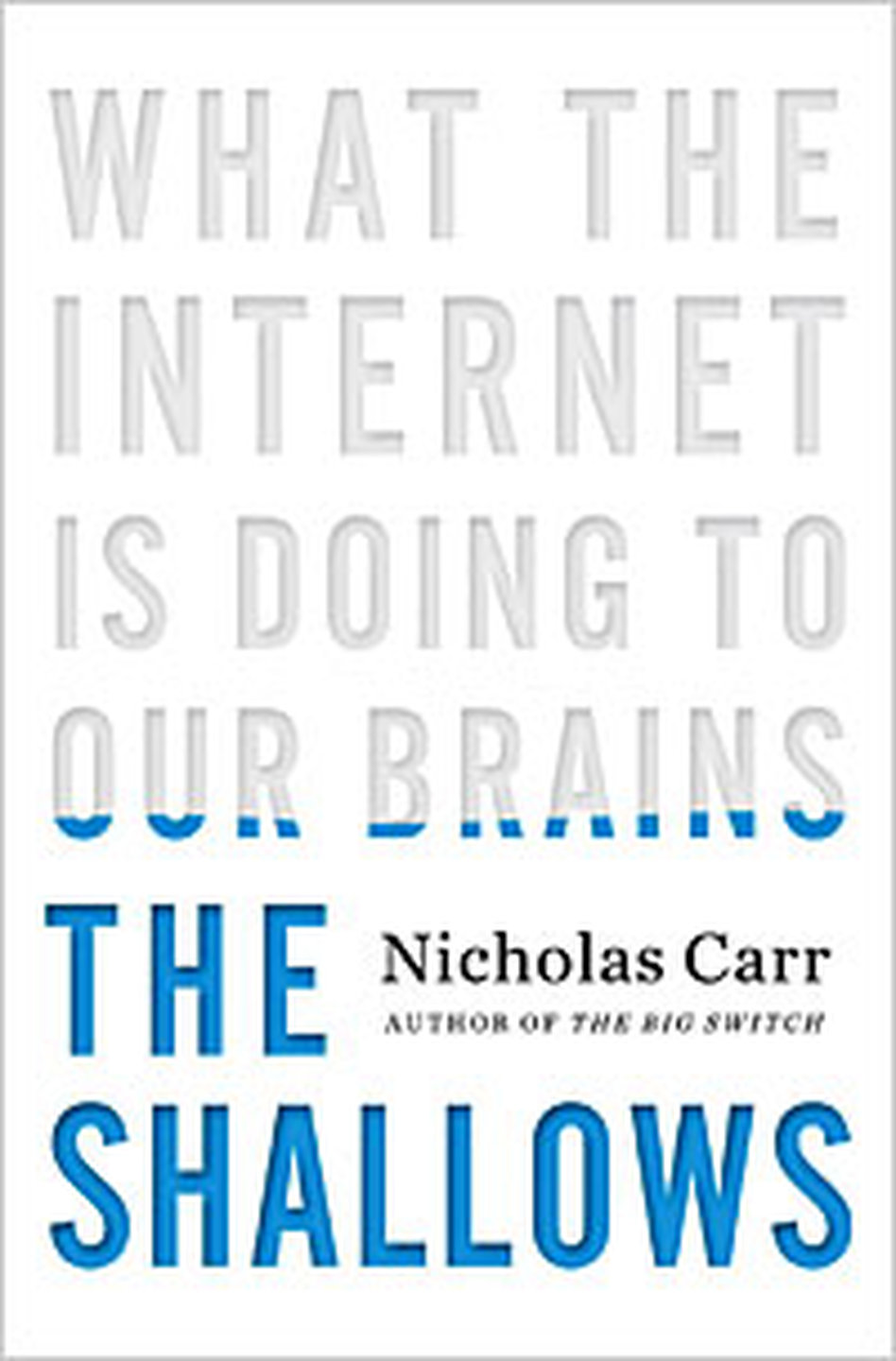
I am encouraging whoever I talk to about this issue to read The Shallows by Nicholas Carr. (About the book, Michael Agger at Slate wrote, “Nicholas Carr has written a Silent Springfor the literary mind.”) What I like is that Carr writes about how we have choices in how we use this technology. It sounds like if we step back, slow down, unplug, and act consciously, we can reclaim what is being lost as we click and click and click without thinking.
I apologize if I sound evangelical, but this seems very, very important, and I am just waking up from an unintentionally self-imposed nightmare, and I must talk about it.
With parents of all income levels increasingly handing smartphones and tablets to babies, who learn how to swipe before they can turn a page, reading aloud may be fading into the background.
“The reality of today’s world is that we’re competing with portable digital media,” said Dr. Alanna Levine, a pediatrician in Orangeburg, N.Y. “So you really want to arm parents with tools and rationale behind it about why it’s important to stick to the basics of things like books.”
Right on, Dr. Alanna Levine. Right on. This is also why we need to keep supporting libraries, by the way!
[For this post, I’m pleased to welcome the writer David B. Coe as my first guest blogger. David is among my favorite colleagues at the Antioch University Midwest Individualized MA program, where he works with graduate creative writing students. He’s a wonderful guide; I always learn something when I witness his interactions with our students. As part of his blog tour for the forthcoming A Plunder of Souls, he graciously agreed to write a post about something that new (and maybe most) writers feel pressure to do: build a platform. Here, David reflects on the oft-heard edict “Thou shalt build a platform!” from his perspective. —Rebecca Kuder]
David B. Coe:
This post grows out of an online conversation I’ve had with a student I’m mentoring. She is earnest, hard-working, and talented, a combination that bodes well for her ultimate success as a professional writer. I fully expect that she will be published before long.
She has spent part of this summer revising short fiction that we worked on last semester, and building what is commonly referred to as “a platform” for her future promotional efforts. She has been setting up accounts on Twitter, on Facebook, on Pinterest, on Google Plus, and also maintaining a blog. I’ve tried to be encouraging as she develops her social media identity and online presence, but I have also wanted to temper her ambitions in this regard with a bit of reality based in my own experiences.
As an academic exercise, I believe that maintaining a blog and experimenting with online accounts and social media is a worthy endeavor. In the long run, I’m hopeful that her efforts will pay dividends. She’ll be published someday, and then she’ll need that platform. In the short run, writing her blog, generating content on a weekly or even daily basis is great training for a writing career. Writers need to be creative on demand; it’s part of the job. Committing to a blog can be terrific preparation for the future to which she aspires.
But she is also reading a couple of books that I fear might be misleading her somewhat. The authors in question claim that aspiring writers should set up their social media/blogging platform so that it can be a foundation for future writing success. I believe they have this backwards. The fact is that for most writers, building any sort of audience with social media and blogging is next to impossible until they have work that has been published. Yes, there are examples of people who have built audiences for themselves with their blogs and THEN published. A couple of the more prominent authors who have done this happen to work in speculative fiction, as I do. But these authors were able to establish themselves as unique voices in what we used to call the blogosphere. They found niches for themselves and took full advantage of doing so, parlaying their fame into successful careers as authors of fiction. Put another way, they were exceptions to the rule.
I would never say that she cannot follow a similar path to success. For all I know, she will be the next exception. But I do feel obligated to say—if for no other reason than to be a corrective to the books she’s been reading—that the odds against such a path leading her to the career she envisions are steep indeed. She (and other aspiring writers) should not be discouraged if she doesn’t gain much traction with her fledgling blog, at least at first. I have never found much of a following for my own blog, and I had several novels and stories already published when I launched it.
There is a tremendous amount of content being generated each day on the web. Blog posts, Facebook posts, Tweets, etc. All of it matters to someone, but taken together it is all so much noise. Making oneself heard above that din is difficult for the best known author. For a writer who is just starting out, who has no name recognition, it’s next to impossible. If there was a secret formula to finding the perfect blogging voice that would enable a writer to stand out from the crowd, I would surely NOT tell any of you about it. I’d be using it myself! But alas, no such beast exists.
So what is an aspiring writer to do?
Write, of course. I have encouraged my student to continue her online work for now, to use the summer to set up her platform. But I’ve also warned her not to expect too much from it. And more to the point, I’ve advised her not to let blogging and social media keep her from more important things. If it comes to a choice between writing fiction and writing her blog, she should choose the former. Every time. I have seen too many authors become so obsessed with writing blog entries, so determined, beyond all reason, to post X number of times per week, that they completely lose sight of their fiction — you know, the stuff that might actually pay bills someday, the stuff that we care about so much it keeps us up nights wrestling with plotting ideas, the stuff that, more than likely, got us to start blogging in the first place.
I know what the books my student is reading are telling her (or at least I can imagine). But those authors are offering their advice with an ulterior motive: doing so enables them to sell their own books. For any aspiring writer, her fiction, her family, her health and sleep, are all WAY more important than building a platform. Trust me on this. Once an author has completed that first sale and can start to publicize something specific, she will have plenty of time to build a platform. That’s how I have approached the construction of my own platform, the end results of which you are welcome to view using the links below. (And yes, I’m aware of the irony . . .) But she should be in no rush; in case you didn’t know, the publishing industry takes its sweet time getting books out.
To repeat: As an exercise, for the purposes of familiarizing oneself with blogging and social media, doing this kind of work for a time makes all kinds of sense. But then get back to the stuff that matters: your fiction. And don’t sweat the rest of it too much. It’s just not worth it at this stage of the game.
*****
D.B. Jackson is also David B. Coe, the award-winning author of more than a dozen fantasy novels. His first two books as D.B. Jackson, the Revolutionary War era urban fantasies, Thieftaker and Thieves’ Quarry, volumes I and II of the Thieftaker Chronicles, are both available from Tor Books in hardcover and paperback. The third volume, A Plunder of Souls, will be released in hardcover on July 8. The fourth Thieftaker novel, Dead Man’s Reach, is in production and will be out in the summer of 2015. D.B. lives on the Cumberland Plateau with his wife and two teenaged daughters. They’re all smarter and prettier than he is, but they keep him around because he makes a mean vegetarian fajita. When he’s not writing he likes to hike, play guitar, and stalk the perfect image with his camera.
Last Saturday, at the Antioch Writers’ Workshop seminar, Paths to Publication, my understanding about the revolution in publishing deepened. The thread through the day showed how the conversation has shifted: even those in traditional publishing now acknowledge (rather gracefully) that self-publishing is no longer simply what we used to know as vanity publishing and that there are about a thousand smart and thoughtful ways to do whatever a writer wants to do. This kind of event—involving agents, editors, and people who help others self-publish—would not have been as collegial and open even a couple years ago. It might have been because the people in the room were generous and respectful of each other, but I also think it has to do with the changing marketplace, and with the idea of literary citizenship.
Presenter Cathy Day teaches a course in literary citizenship at Ball State University. Day encountered the term on Dinty W. Moore’s post at Brevity. Though I’ve been thinking about literary citizenship for a while, and doing my part when I make time for it, the conversation on Saturday opened up how I had been thinking about the quest for a publisher. And beyond that, opened up how I had been thinking about what it is to be part of a literary community, to walk in the landscape of creative writing.
My epiphany, coming after the Association of Writers and Writing Programs (AWP) conference in Seattle (my first ever AWP conference) is interesting timing. I’ve been a lurker in the world of words. Depending on the day and my mood, I blame this tendency to lurk on being an introvert, or not knowing everyone, or not being connected, or being a slow reader, or not having read everything that I know somehow I should have read. (For instance, I feel a sense of shame when I look at the end of Francine Prose’s book Reading Like A Writer where she provides a four page list entitled, “Books To Be Read Immediately.”) At age 47, there are many areas in my life where I have grown comfortable taking charge, and where I feel a sense of balance. Approaching the public with my work is not one of them. But I woke on Saturday morning (before the AWW seminar) with a new clarity: 1) I want my work to be read, and 2) I don’t want to be at the mercy of others to make that happen. I’m not sure what these two facts will manifest. (Stay tuned.)
And as the day went on, I realized that getting published (which sometimes seems like the only thing, as a thirsty plant needs water) is a relatively small part of the work of a literary life. Yes, it’s nice to have recognition, and not to feel invisible. But there’s more to it than that. “Ask not what you can to do get published. Ask what you can do for books,” read Cathy Day’s first slide in her presentation on literary citizenship. A great place to start reframing things…
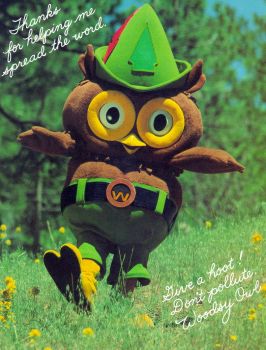
Literary citizenship seems a bit like taking care of the planet. But it goes beyond a literary version of Woodsy Owl’s “Give a hoot, don’t pollute!” It’s not just avoiding throwing a beer can out of your car window, and it goes beyond picking up the cigarette butts you see on the sidewalk. It’s composting, and taking the humus to the community garden. Earnest literary citizenship is a deeper way to care for the environment of books and words, and it is not self-serving, unless we think of maintaining the environment of books as a good thing in itself, and good for us humans (which it is). It’s giving thought (beyond our own writing) to what we give to the world, what we leave behind for future generations of readers…and it’s really about sustaining and contributing to a community.
(“We make the world. We make it!” I wrote a long time ago in a post here. It’s just now sinking in that this applies not just to the world but also to the world of books and words. We have a lot of work to do. I have a lot of work to do. But what else would I rather be doing?)
I’m grateful for all the presenters at Saturday’s AWW publishing seminar for a wonderful day: Jeff Herman, Deborah Herman, Kirby Gann, David Braughler, Steve Saus, and Cathy Day. As often happens at AWW events, early in the day, a sort of narrative thread emerged: Do your work, connect with others, practice the good form of nurturing books and supporting the community of writers, read the small print, you can do anything. Make something happen.
And finally after a long, oppressive winter, it’s spring.
When I was in graduate school, I gave a seminar on J.M. Barrie‘s Peter Pan. It’s one of my favorite books, in fact it’s maybe my favorite book, and reveling in the novel’s story and history was a joy. I’ve been waiting until I could read it to my daughter, suggesting it often, but she repeatedly refused. Wasn’t ready, or I was trying too hard. Then someone loaned us an audio book of Tinkerbell stories and I told Merida that we have to read Peter Pan (the original!) before she could listen to it. So a few days ago, she finally relented and we began The Great Book. Now she’s begging me to read more whenever we have time. After I read this passage from Chapter One, we had a funny conversation.
“Mrs. Darling first heard of Peter when she was tidying up her children’s minds. It is the nightly custom of every good mother after her children are asleep to rummage in their minds and put things straight for next morning, repacking into their proper places the many articles that have wandered during the day. If you could keep awake (but of course you can’t) you would see your own mother doing this, and you would find it very interesting to watch her. It is quite like tidying up drawers. You would see her on her knees, I expect, lingering humorously over some of your contents, wondering where on earth you had picked this thing up, making discoveries sweet and not so sweet, pressing this to her cheek as if it were as nice as a kitten, and hurriedly stowing that out of sight. When you wake in the morning, the naughtiness and evil passions with which you went to bed have been folded up small and placed at the bottom of your mind; and on the top, beautifully aired, are spread out your prettier thoughts, ready for you to put on.”
My daughter leaned over to me and said, “Do you do that?”
I’ve just read the most ridiculous and wonderful novel. It’s called The Young Visiters (sic) Or, Mr. Salteena’s Plan by Daisy Ashford. Written around 1890 by nine-year-old Daisy Ashford, the novel was published in 1919. (I love the internet. You can read the original text here.) According to the Academy Chicago Publishers 1991 preface by Walter Kendrick, J.M. Barrie, my icon and one of my favorite writers, doomed this novel to obscurity in our time. Kendrick writes: “I would lay the blame for juvenilizing The Young Visiters on Sir J.M. Barrie, creator of Peter Pan, who wrote a treacly preface to the 1919 edition. Barrie drew a precious picture of little Daisy at work, now with ‘the tongue firmly clenched between her teeth,’ now with ‘her head to the side and her tongue well out.’ He imagined her sucking her thumb and called her the ‘blazing child.’ The British stomach such goop better than Americans do; they seem to place a smaller premium on growing up. Barrie, however, falsified The Young Visiters for all readers when he made it out to be merely the product of a precocious imagination. It is that, of course, but it is also a Victorian novel in miniature, a tidy précis of English fiction circa 1890.” (I know that’s his opinion, and I might argue–have not yet read Barrie’s preface, but will later, as it’s online at Project Gutenberg. Stay tuned. And more on Barrie in a moment.)
But rather than tell about the novel, let me show. On p. 86, Miss Ashford treats the reader to the following, with the original spellings:
Chapter 9: A Proposale
Next morning while imbibing his morning tea beneath his pink silken quilt Bernard decided he must marry Ethel with no more delay. I love the girl he said to himself and she must be mine but I somehow feel I can not propose in London it would not be seemly in the city of London. We must go for a day in the country and when surrounded by the gay twittering of the birds and the smell of the cows I will lay my suit at her feet and he waved his arm wildly at the gay thought. Then he sprang from bed and gave a rat a tat at Ethel’s door.
Are you up my dear he called.
Well not quite said Ethel hastilly jumping from her downy nest.
Be quick cried Bernard I have a plan to spend a day near Windsor Castle and we will take our lunch and spend a happy day.
Oh Hurrah shouted Ethel I shall soon be ready as I had my bath last night so wont wash very much now.
No don’t said Bernard and added in a rarther fervent tone through the chink of the door you are fresher than the rose my dear no soap could make you fairer.
I have never read a book like this. The allure for me as reader hides in its layers, and in the child’s awareness of the weary adult world. Her prose. Her exuberent misspellings. And the allure is also in imagining this nine-year-old in the context of the nine-year-olds I know–smart and imaginative as they are–writing a book like this.
As Kendrick writes in the preface on p. xvii, “Ashford’s masterpiece truly deserves the overworked adjective ‘unique’: there is nothing else like it, and nothing can match the special pleasure it gives.”
In writing this post, I thought about a presentation I gave in graduate school about J.M. Barrie and the story behind Peter. I forgot how deeply I had then delved into Barrie’s work and life, but here are some of my presentation notes, which explained (in my words from twelve years ago, which I would re-write today, but for expediency, won’t) why this is interesting to me: “I have been working on an adult novel from a child’s point of view. I did not anticipate the power of looking through a child’s eyes at all the small things adults tend to overlook. This has been a great lesson in detail and imagery. Perhaps to normalize my obsession with childhood and the connection between child and adult, I keep coming back to Peter Pan as an important emblem. Reading Peter and Wendy has helped me think about the layers a writer can use to involve both child and adult awareness.”
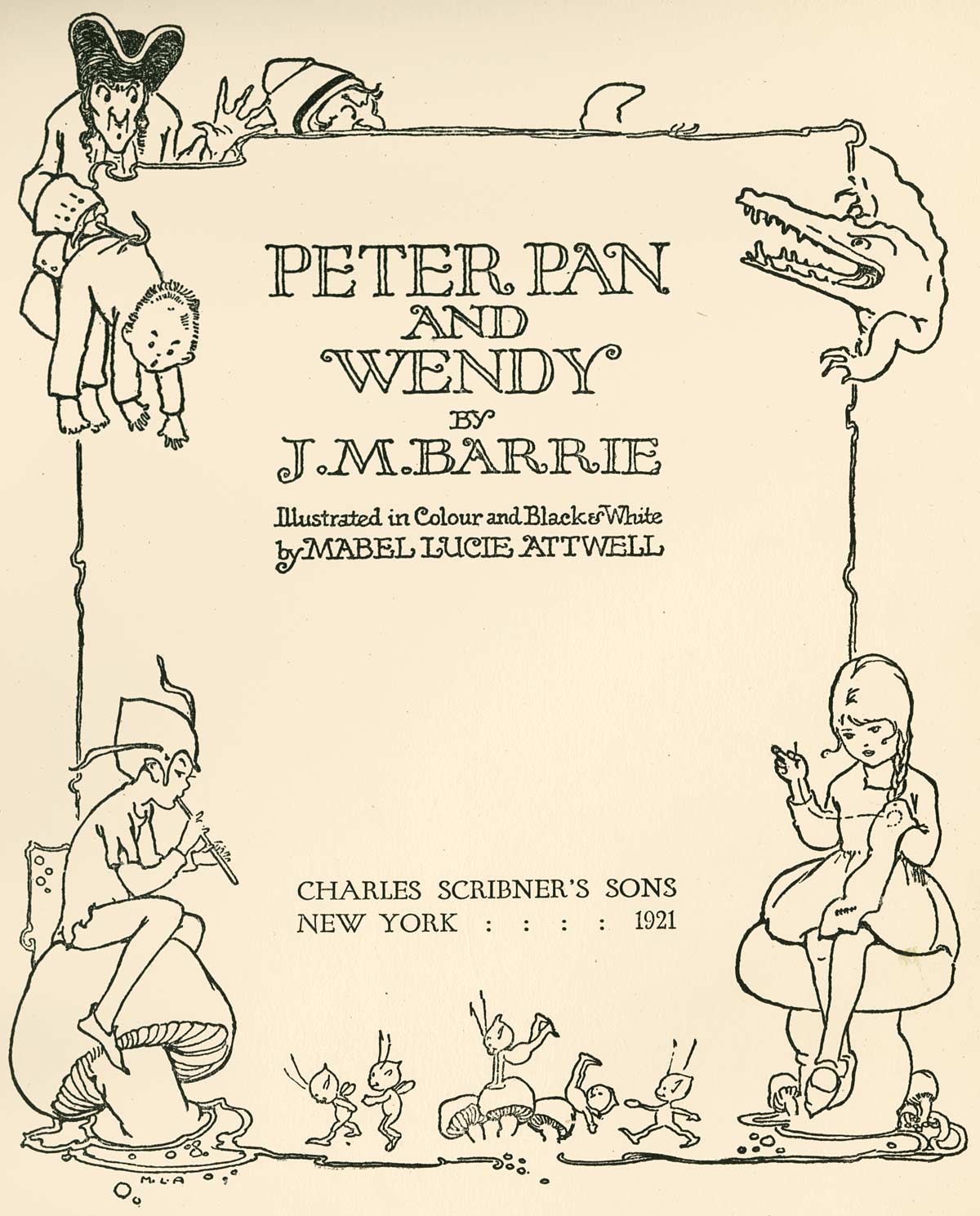
Peter And Wendy, the edition I read as a child, and still read
I’m so grateful to my daughter’s teacher, Ann Guthrie, who knew of my fasciation with this kind of story, and loaned me Daisy Ashford’s book.
(And I felt so racy, reading a book with this delicious cover.)
I’ve long been meaning to post about some fabulous and intriguing books I’ve read recently. First in line is Robert Edric’s The London Satyr.
From the cover:
1891. London is simmering in the oppressive summer heat, the air thick with sexual repression. But a wave of morality is about to rock the capital as the puritans of the London Vigilance Committee seek out perversion and aberrant behaviour in all its forms.
Charles Webster, an impoverished photographer working at the Lyceum Theatre, has been sucked into a shadowy demi-monde which exists beneath the surface of civilized society. It is a world of pornographers and prostitutes, orchestrated by master manipulator Marlow, for whom Webster illicitly provides theatrical costumes for pornographic shoots.
But knowledge of this enterprise has somehow reached the Lyceum’s upright theatre manager, Bram Stoker, who suspects Webster’s involvement. As the net tightens around Marlow and his cohorts and public outrage sweeps the city, a member of the aristocracy is accused of killing a child prostitute…
After reading his PS Publishing novella, The Mermaids, in 2012 I had the pleasure of interviewing Robert Edric. (Part 1 of the inteview is posted here. I intend to transcribe the rest of it as time allows.) The London Satyr was very different but no less pleasing to read than The Mermaids. The plot layers within The London Satyr allowed me to get lost in the corners of its streets and backstage world, but this novel can’t and won’t be boiled down to that. Edric’s prose–his sentences–are little gifts in themselves. As Webster walks through this perilous situation, I felt I was walking with him through London, always considering things, interpreting glances and shadows, always on guard, falling into more and more danger alongside him. Thrilling, to say the least.
In his sentences, Edric does beautiful and hypnotic things with repetition. One of the currents within this novel is Webster’s grief over his seven-year-old daughter Caroline, who, many years before the story is set, had died. Without spoiling anything (because I do hope you will read the novel) I’ll say there’s a passage near the end of the novel which keeps haunting me, so I am indulging in the pleasure of typing it:
“When Caroline had been alive, she had often waited for me at the corner of the street, a few doors from our own, looking out for me as I climbed the gentle slope. And upon seeing me, seeing me wave to her and then crouch down and hold out my arms to her, she would run towards me at a gaterhing pace, stopped only by her collision into me, whereupon, having steadied myself, I would rise and lift her into the air and spin her, holding her against my chest and over my shoulder until all of her sudden energy and momentum was lost, absorbed into my body and then passing in a tremor through me into the solid ground beneath us. I would feel this happen, feel her small and fragile body and all its vital forces absorbed into my own.
There were days when I had set off home already looking forward to this meeting, always disappointed when something kept her from the corner. She would hang laughing uncontrollably over my shoulder and then babble her day’s news into my ear. News of the things she had done, the people she had seen, what she had eaten, what she had worn, what her mother had said to her, what her sister had said, what she had said to them. A whole day in those few spinning seconds.
…
And later, these stories would resume at bedtime, when I would sit with her as she fell asleep. Sometimes, I would go on spinning these tales long after her eyes had closed, lowering my voice to a whisper for the simple pleasure of sitting with my child and watching her sleep, secure in the knowledge that she was happy and well and safe, and secure too in my own fierce conviction of the endless future and what it held for us both.
For a year after her death, I could not turn that corner except with the hopeless expectation of seeing her there again, running towards me with her arms out. And when she did not come, when that one small miracle did not occur, I could not help but also feel the sudden blade of sadness which pierced me again and again, and nor could I stop the tears which filled my eyes as I continued home to that cold and lifeless house.”
It’s when I read passages like this that I know something in my bones: reading makes us more human.
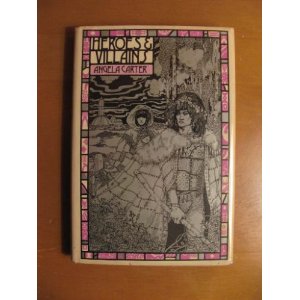
This is not my book, but there’s one like it on my desk. I wish you could see the cover up close.
There’s a book on my desk that I finished but can’t quite put away. I want to blog about it but have not had time to be thoughtful, and the tapestry of its pages is still sinking into my soul. It’s Heroes & Villains by Angela Carter. My husband recommended it–he thought it would inspire me as I work on my new novel, because it’s also about a young woman who loses (and maybe finds) herself in a world very different from the one she’s known. (In my case, the protagonist has amnesia, so she doesn’t know what she’s known.) And both lost/found young women get pregnant. Reading this novel confirmed what I knew: I need to read much more Angela Carter.
As I read, I saw that my husband’s recommendation was eerily right on. I am not comparing my work to Carter’s writing, but there are some similarities between my book and hers. How could I have known that the novel I’m working on has this kind of root source essence to dig into? I read this novel too quickly; I didn’t give it the time and attention it deserved. Now it sits prettily on my desk, wanting more of me, and me of it, but there’s no time right now.
All I can say is that it deserves more of me, and we will both have to wait. But it will be worth the time, at least for me.
Robert Edric, author of The Devil’s Beat and The Mermaids (among many others)
Robert Edric is the author of twenty-two books, most recently The Devil’s Beat. I had the pleasure of talking by phone with Mr. Edric on March 8, 2012. Our conversation centered around Edric’s novella, The Mermaids, from PS Publishing. (Special thanks to Peter Crowther from PS for arranging our interview.)
Here’s the first installment transcribed. I will post more as time allows.
REBECCA KUDER
This spring, I’m teaching a creative writing course, and looking at a examples of well-written fiction and nonfiction, approaching reading as painters look at brushstrokes, to understand how the thing was made. I’m assigning The Mermaids because I love it, because of its economy, and its unity of place and action. I think it’s a great text to focus on.
ROBERT EDRIC
With regards to the actual writing itself, it was one of those books that actually got smaller and smaller and smaller. I wrote it in a week, twelve years ago, when we’d just moved house, and I didn’t have anywhere to work. And every autumn, I get the urge to write a book again, and so I sat down, and I wrote three novellas, of which The Mermaids was one. I originally spent a fortnight, I only ever work for a few hours in the morning, and I spent a fortnight writing it, and then I typed it up, which takes a very long time for me, and I put it away. And I didn’t look at it again for three or four years, because…I don’t know what happens in America, but in England, novellas, short novels, were just a no-no for publishers, and I had another book on the stocks, and I put these three novellas to one side, thinking they would make a nice trilogy eventually. With The Mermaids, I much enjoyed writing it because as you may have guessed, that kind of language over anything much longer than that length isn’t sustainable. It’s very unreal language… it’s loquacious and it’s poetic…it hovers between language of the real world, and language of dreams. The book itself is posited on the notion of the existence of mermaids, of course, and we all know they don’t exist. So you have to take out of the equation, instantly, the reader’s suspension of disbelief. You can’t depend on your reader thinking, “Oh, I believe in mermaids, so I’ll read this,” or, “I don’t believe in them, so I won’t.” The language somehow has to reflect that lack of the concrete… the language itself isn’t concrete because the facts aren’t concrete, because the reality of the situation is that it all exists inside a girl’s head. She’s fifteen, just about to be sixteen which sort of turns her into a woman in the eyes of them all, so the language is the language of thought, and dream, and fantasy, as opposed to the language of the real world. Nowhere in the book is there a suggestion of time, and place. I know where it’s set, and the timing is about the mid 1930s. There’s a very tiny reference to a major war having been fought fifteen years earlier. And the language somehow has to be as timeless as the notion of mermaids, which is why the language is as it is, which is a consequence of the book having been revised and revised and revised downward. My manuscripts are invariably twice the size of the finished product because of the way I work. I work very organically. I know this sounds a little precious but I sit down, and I write for about two hours, and I produce 6000 or 7000 or 8000 words, usually a whole chapter, in the case of The Mermaids, five or six chapters, five or six pieces rather, and then I literally leave it a year, having written for two or three months, and then go back to see what’s there. I’m not a planner. I don’t work things out, I don’t know what happens the day after and the day after and the day after. I write and write and write until I’m exhausted, and don’t want to do it anymore, and then I go back to create some kind of order out of that particular chaos, and I create the form of the book out of what I’ve written, as opposed to worrying about what’s missing or what should be there. I see what I’ve written, and then I work out how to best structure it. And so the language, I suppose, is all there in the very beginning but you need then to create the spaces in the language. And I’m very conscious of the fact that it’s the most poetic thing that I’ve written. I’ve written crime novels where the language is completely different. But I’m also a writer who’s very aware of language. I love reading well-constructed sentences. I love finding out how meaning has come into being through language. One of the important things a lot of reviewers and critics never seem to want to know about, never want to talk about, is how something was actually created. It always concerns me that there’s a kind of belief that the thing was there, and what the writer’s done is give it some kind of meaning and structure. You scream at them and say, “No, it’s all been made up! It’s all come from my head, it’s all come from my imagination!” But it’s an intangible. It’s one of the things that they don’t know. And they don’t know about fine writing. You never see in a review, “Well, this is beautifully written,” well, they’ll say it as a throw-away, it’s like calling a meal “well-cooked.” It’s very edible. Well of course it should be! And writing should be clear and simple and straightforward. It should do what the writer wants it to do, and most importantly of all, for me, the writing should reflect the nature of the story being told. And that brings us back to the idea of this being fantasy, dream… it’s a kind of vaporous language, the language in The Mermaids. It’s very suggestive, and you can disagree with practically everything that’s written about the mermaids from the girl’s perspective. The counterpoint for that, of course, are the three men who are questioning the girl. And their language, and the writing which reflects and represents them, is very very different.
REBECCA KUDER
I’d like to pick up on several things you said, but I’d like to start with some very heartfelt praise about what you’re talking about in the language, because I’m very concerned with sentences and phrases. You have so many watery images and words and so much, I would say, hypnosis, within the sentences, that I felt the sentences and phrases were often mimicking the movement of waves on the shore. And it just thrills me when words are so beautifully steeped in the essence of the book.
ROBERT EDRIC
Thank you for that. Do you know something, one of the greatest things for me in writing is being able to do that. It somehow doesn’t matter that the reader doesn’t pick up on it–it’s always nice when it happens–but it doesn’t matter, because the ability to put things in is more important than the ability to take them out at the end. And I’m a great fan of something called euphony where words simply look right, the tone… I mean I’m one of these ridiculous writers. I think James Joyce used to do it. I read a sentence and instinctively I know if it’s right or wrong. And if it’s wrong, and I don’t know why it’s wrong, I work out the number of syllables, and it’s a ridiculous way of structuring a sentence, but sometimes it is simply the number of syllables in a sentence which is wrong. And it’s not something you pick up, it’s instinctive, like walking or running, you know how to do the thing you do well, but it goes wrong sometimes and if you were that good at doing it, why does it keep going wrong? And yes, you’re right, there’s an incredible amount of watery imagery in The Mermaids, and there’s a lot of reflection, there’s a lot of looking glass, there’s a lot of surface of water, there’s a lot of the tide rising and falling, just as the tide rises and falls through the little village. And there are a lot of people changing direction just as the tide comes and goes, and there are lots of people being believed and disbelieved in equal measure. And I live at the seaside, I walk my dog on the beach once or twice a day, and I know what a difference living by the sea makes. I don’t suspect you get that there.
REBECCA KUDER
I sure don’t! Sadly.
It’s interesting about sound–it’s such an intimate connection with words and sound and how things look and sound. I remember being at a seminar that Cathy Smith Bowers, an American poet, was giving, and she handed out this chart of vowel sounds and the feelings that we get from different vowel sounds, and I realize that I hear that and I experience it intuitively, but looking at it now, on later drafts, I can see, “Oh, I have lots of o sounds here, what’s going on with that,” and then make more of it. In The Mermaids, there is a passage on p. 41 where you have such beautiful repetition: “She herself had told no one except the photographer, and had told no one else of what she had told and shown to him–told no one that he and she had gone back to the cave together before the sea had returned and filled it again…” and the repetition of “had told” was somehow very luscious. And the vowel sounds supposedly cause, in the reader, feelings of sorrow, awe, dread, gloom, heaviness, but also of calm and soothing, so it’s an interesting and very complicated way to look at sentences but it’s a poet’s look at sentences, I guess, and I love seeing that in prose.
ROBERT EDRIC
Most writers who’ve served their proper apprenticeship–I mean, I’ve published, God knows, 20, 22 books now–and so I daresay that intuitively, you do pick up these things without being told what you’re doing. It almost seems preposterous to tell a creative writing student that there are too many i’s or too many o’s and why do you use the word “told” four times in two sentences? Well, one answer for that is it’s like a bell being tolled, and if you’re telling someone, you’re not simply whispering or speaking or saying or remarking or answering or suggesting, telling someone is a different thing entirely. I love deciding which words work best. And I think with things like The Mermaids, it is an allegory, and most allegories depend on a very very simple language… not childlike, but a language a child would easily understand. My first instinct on writing The Mermaids was to make it so a ten-year-old could read that book. And there’s not a word in it that they wouldn’t understand. I know it has a few dark shadows in the book which children wouldn’t appreciate, and I know it’s about puberty and adolescence, which a lot of people don’t want to sort of face up to, from either side of it, so to speak, but the language of the book is–I hesitate to use the word “biblical”–but biblical language is incredibly straightforward. If somebody’s saying something, it is “I said” “he said” “I said” “he said” and I think that that’s great. People worry about this; people worry in creative writing, they say, “Oh, you’ve used ‘he said/she said/he said/she said’” and I normally say to that, “Well, if we know who’s speaking, there’s no need to tell it, but by telling who said it, you’re making another point. It’s a bit like the old cliché about Raymond Carver, “Oh, God, he overdoes it,” but he doesn’t. “What’s the weather like?” he said, “It’s raining,” she said. “Is it?” he said. “Yes,” she said. It’s the “he saids” and “she saids” in that sentence that make it the desperate little conversation it is. And I don’t know how you can tell people that that’s a good thing or the right thing or the proper way to do it, but it is. Like most writers, you do intuitively know it.
REBECCA KUDER
And it becomes a metronome, sort of.
ROBERT EDRIC
It does. And part of euphony, part of words looking and sounding right is of course the rhythm. I love the rhythm of words. I love words that somehow look to be doing the job they’re doing. In a very simple way, “he said/she said” does, but then you can describe the flow of water, the flow of seaweed, the flow of air, the flow of time, the flow of a narrative, the flow of a dress, the flow of anything. You can describe words using the same one, you can describe events using the same few words. Short stories, and novels, have to have some kind of cumulative effect. The nice thing about The Mermaids, from my side, is that, with it being only eighty pages long, I can control that flow from beginning to end. I would love that book to be read in a single sitting because there will be echoes and reflections throughout it which depend upon each other. You read the first ten pages of a novel, and by the time you get to page 400, there are meant to be echoes and reflections of 400 pages ago, so you might be two or three months away from that first page, whereas with something like The Mermaids, you’re very close to the first page still. It is, in a sense, like writing a piece of music.



 Rebecca Kuder