Finding rabbits

Two Steiff woolen rabbits with photo of John Ott

As you five swell followers might know, I’ve been writing an essay about my childhood home that was burned down in a planned fire exercise when I was sixteen.  A rabbit figures in the story.  Here are a couple of excerpts.

After their pyrotechnic work was done, house gone, I returned to the remnants, stood on the ashes.  Near where the shed had been, I found one of my small wool Steiff rabbits, intact, unscathed.  A tiny symbol of the phantom limb of home–does keeping hold of stuff I had before the house disappeared stand in for a home?  When I hold that rabbit in my hand, I feel something stable and secure, but that’s too simple.

Then later in the essay:

Now I hold the Steiff rabbit that didn’t burn.  I imagine again walking across the charred land, finding the thing, the size of a cotton ball, where our garage had been.  How hadn’t I packed it?  How hadn’t it been torched?  I want to touch, smell, hear, see, consume the moment of finding that rabbit.

So telling truth, I pin that rabbit to a velvet board, and into a new ghost story I shove the cute animal, twist rabbits against type, make them sinister, keep writing.  Everything must be lit, and burn, then melt, transmogrify: everything must milk and then feed that famished ghost, memory.

At a fabulous Yellow Springs yard sale this morning, I found two Steiff rabbits, and bought the pair for a mere $7.  It was like my recurring dreams of finding pieces of my childhood Steiff collection at antique stores and having to buy them back, but in reverse: this morning they were not my rabbits, and I was awake.  Now they are on (the one clean corner of) my desk.

Just more evidence that things keep turning and turning, but won’t let us forget: carbon replaces itself, surprises us, and continues to haunt…

In The Skin of A Lion

Cover of the first edition

I’m re-reading and pondering Michael Ondaatje’s book, In The Skin of A Lion.  I love this book. For me, this is a book to read again and again, to study and learn from.  This novel is an open apprenticeship.  Any good novel might be like that: think about which novel yours might be.  This one speaks to me.

Tonight, this passage from p. 157 seems like one definition of community:

“Alice had once described a play to him in which several actresses shared the role of heroine.  After half an hour the powerful matriarch removed her large coat from which animal pelts dangled and she passed it, along with her strength, to one of the minor characters.  In this way even a silent daughter could put on the cloak and be able to break through her chrysalis into language.  Each person had their moment when they assumed the skins of wild animals, when they took responsibility for the story.”

Paragraph as fingerprint?

image of egg stolen from http://tinyurl.com/3c7rfzo

In hopes of assessing how many one sentence paragraphs I had in my novel, I changed the magnification on my word processor window, which made the text appear much smaller than usual.  This allowed me to see most of a page on one screen.  As I scrolled through the pages, stopping whenever I saw a one sentence paragraph, I joined what I could with longer paragraphs, and omitted some.  This was prompted by a piece of advice in Francine Prose’s Reading Like A Writer, namely not to overuse the one sentence paragraph.  As I combed through the text, some unexpected things happened:

1) I realized that sometimes one sentence paragraphs are necessary, the best choice.  I want to trust the reader, and not lean too heavily on the structural signal of a one sentence paragraph as alert: “Hey you reader!  Look here! This line is so  important I set it up on its own!  Read carefully!”  And yet sometimes a one sentence paragraph just feels right.  (It was good to interrogate each occurence, however, to be sure.)

2) The decision about where to break paragraphs has its own intuition, and the writer should take time to quiet down enough and follow it.

3) I was doing a lot of changing and then changing back, doing and undoing.  A lot of tinkering, but maybe the act of tinkering confirmed that I’d gotten some bits “right” before questioning, if such a thing as “right” is possible in a thing so subjective as fiction.

4) Another nuance I hadn’t considered, in defense of keeping some one sentence paragraphs in this novel: my protagonist is seven years old.  The child’s close lens on her world and the visual smallness of a one sentence paragraph seem connected.  I don’t think this is overly precious, in this case.

5) The exercise was a great lesson, and proved the point that Prose includes in her book.  On p. 68-9, she quotes Rex Stout’s novel, Plot It Yourself, in which “Nero Wolfe is called upon to determine if three manuscripts that figure into a case involving accusations of plagiarism could have been written by the same person.”:

“A clever man might successfully disguise every element of his style but one–the paragraphing.  Diction and syntax may be determined and controlled by rational processes in full consciousness, but paragraphing–the decision whether to take short hops or long ones, and whether to hop in the middle of a thought or action or finish it first–that comes from instinct, from the depths of personality.  I will concede the possibility that the verbal similarities, and even the punctuation, could be coincidence, though it is highly improbable; but not the paragraphing.  These three stories were paragraphed by the same person.”

So is the paragraph like a fingerprint, individual to each writer?  Maybe.

Another thing happened as I worked through the manuscript, not related to paragraphs, but worth noting.  As the text looked so much smaller to my writing eye, it performed a visual trick on me.  I’ve done this bird’s-eye thing before, but this time I was pulled into some scenes despite (or maybe because of) how hard it was to read the words.  The clusters of words formed different shapes in my brain, pulling me in.  Like those little sugar Easter eggs that you peer into, I had to look closely and see the world that was hiding there.  And thus I did a whole lot of unexpected line editing than I planned to do.  Good.

As always, I hope it’s stronger for the toil.

Breaking, where to break

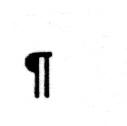
An important little symbol.

Oh, where to break the paragraphs, how to expunge some one sentence paragraphs, justify some two sentence paragraphs, avoid too many short paragraphs, how not to be jarring, or coy, and how to trust the reader to know where I mean to place emphasis, how to trust my intuition, the flow of the words, the lightning bolt that tells me to end or begin a paragraph…

Understanding, maybe a little bit, how poets work.

Vigor takes work

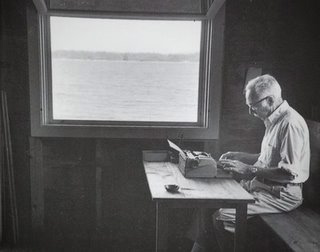
E.B. White, writing in Maine

I just reread Elements of Style, and several bits of wisdom have taken residence in my mind.  This was the first time I’ve read the fourth edition.  I found the updates to this edition helpful, in particular, some of the tidbits in the final section on style.  If you haven’t read it, do.

I’ve been working through a novel, editing, pruning, and rearranging.  Strunk and White remind me of point 22, on p. 32 of this edition: “Place the emphatic words of a sentence at the end.”  This can apply to sentences, paragraphs, lines of poetry, and even words: the beginning and end of these units carry the most power, the most weight.  The middle can be incidental, or worse, ignored.  Here’s a clever example (possibly urban legend, but interesting anyway) of how words can work with mixed up middles becoming invisible, and yet the content is still clear.  (Thanks to my friend Lara for digging this up when my human memory failed.):

“Aoccdrnig to a rscheearch at Cmabrigde Uinervtisy, it deosn’t mttaer in waht oredr the ltteers in a wrod are, the olny iprmoetnt tihng is taht the frist and lsat ltteer be at the rghit pclae. The rset can be a toatl mses and you can sitll raed it wouthit porbelm. Tihs is bcuseae the huamn mnid deos not raed ervey lteter by istlef, but the wrod as a wlohe.”

Beginnings and ends of these words are stable, are what we expect, and therefore they guide in reading through the garble.

Another thing that Elements of Style illustrates is more visual than literal.  Writers have to learn the twin arts of making a mess (making a creation, a draft) and then cleaning it up (editing, revising).  If you look at the layout of the examples in Strunk and White, you could consider the left column (before the makeover) as the making of the mess, and the right column (after the makeover) as cleaning it up.  I’m going to use this idea when I talk to students.  I think it helps to put the implicit and explicit judgment of Strunk and White into a context: all writing is a process, a walking through and then away from the muddy, toward the clear.  Start somewhere.  Edit as needed, strive to improve the mess, to communicate better.

Maybe the most important advice is point 17, on p. 23, “Omit needless words.”  An anthem for some people who write, an ideal to strive toward.  I’ve been polishing, weeding the needless, plucking extraneous words from overburdened sentences.  Sometimes it takes years to realize a word is needless.  Omit needless words is a noble mantra and practice.  With time, I could whittle this paragraph down even more than I have, but in the battle between how the blogosphere measures time and my tendency toward perfectionism, I go for speed and risk flaws.  This time, for the first time, I found (or noticed) the sub-mantra of Omit needless words on p. 19, under point 14.  “Note, in the examples above, that when a sentence if made stronger, it usually becomes shorter.  Thus, brevity is a by-product of vigor.”

It’s worth repeating: “…brevity is a by-product of vigor.”

That is such a beautiful fact, and beautifully put.  No wonder I am tired, this revision has been vigorous.  The novel is shorter.  And, I hope, stronger.

Cutting, that fragile balance

Spring cleaning.

Having gained sufficient time and distance from the sentences in my novel, I’m cutting.  Many sentences have too many words.  Some need words rearranged, the most important word relocated to the end of the sentence, emphasizing the point.  There is something so refreshing about this process of paring down, pruning to make a thing flourish.  The trick is  balance: how to tell when you’re tinkering to tinker, when the first way was better.  Breathing with each sentence, the comfort of making them stronger, the comfort of those moments when I know I’ve made them better.

Delicious, rewarding, nerdy.  Yes.

The alpha and the omega

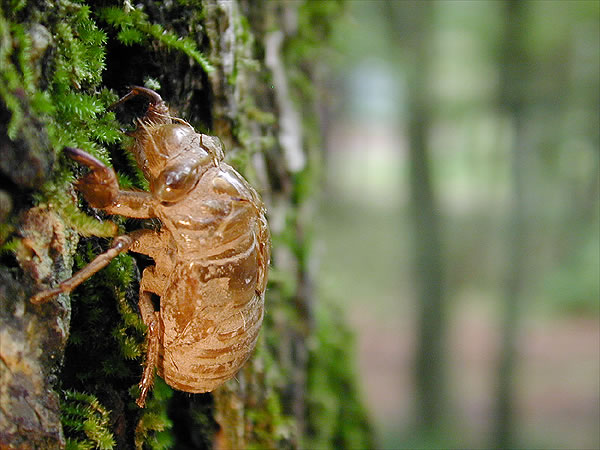
Something emerging...

I got this trick via Jim Krusoe, who attributes it to Carol Emshwiller.  (Thanks, Jim and Carol!)

Writers of fiction: Take the first and last words of a piece, then put them together.  The idea is that the resulting phrase might somehow relate to the whole.  Here are mine.

The Watery Girl: “Something emerging.”

The Eight Mile Suspended Carnival (which is rough and will surely change): “Mim hands.”

Both, weirdly, work.

Maybe that’s it.

What you cannot recreate

(The following might be the final paragraph of The Eight Mile Suspended Carnival.   It will make no sense without the novel that comes before it.  It might not even make sense with the novel that comes before it.  But what the heck.  It’s my blog, I can post if I want to.)

Ladies and gentlemen.  Jettison what you can recreate.  Take the essentials: bolts, wire, rope.  Other parts can be found elsewhere.  Take what you most need.  Take the things you can use: arms, hands, legs, and sometimes other parts.  Hands.

Funny, I don’t feel any different.

The storm inside, the storm outside

What a day.  What a lilting, bourgeois opera, but I have yet to write the libretto.  The highlight:

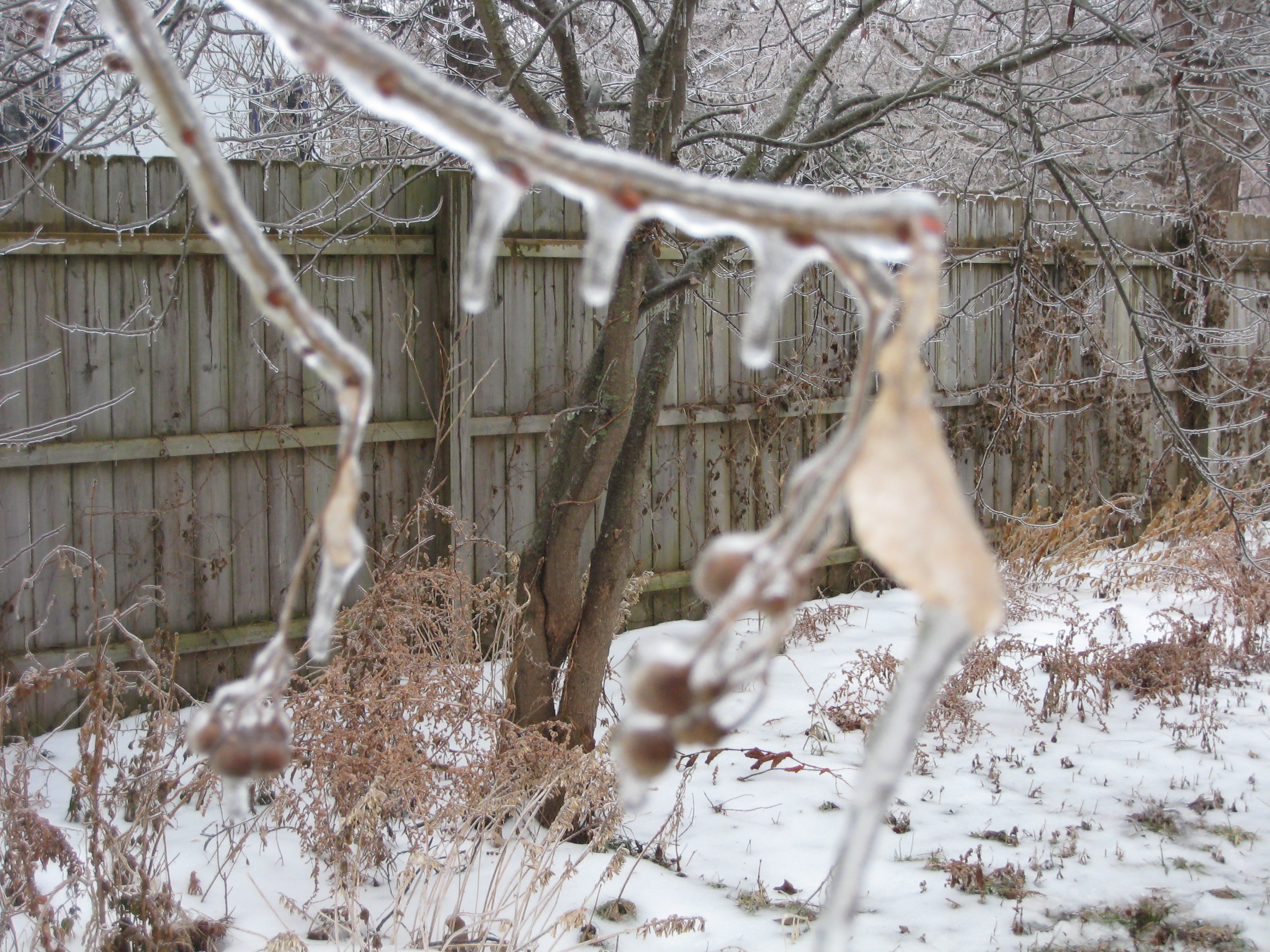
1) I finished my novel today.  The ice storm helped, offering time at home, and sound effects.  That crackle of ice on limb on wind opened something and let me let it be done.  The end of the story was very simple.  Ends are weird, and I don’t know if this is the right one, but it came clear and natural, so I will let it be for now.  There’s still a passel of work to do, but I got to the end of the story!  This novel took me ages, what feel like lifetimes, to finish–the first note I have with the germ of idea is from 2001, and I’ve been writing it since 2004.  But for now I’m done.  In a way.

To celebrate, I opened the week-and-a-half-old bottle of wine from the fridge (a very good wine that my friend Kurt, owner of Emporium, recommended) and put on The Black Rider by Tom Waits.  (Sounds from Tom Waits have been partially to blame for the novel.)  My husband celebrated with me; my daughter said she didn’t like the music but didn’t insist I turn it off.

After dinner, I noticed the dripping from the picture window (a leak, we need to figure out why, and have it fixed) was tap tap tapping with a tad more force than it had been this afternoon into the yogurt containers there to catch the drips…still is, but now fortified by towels, and other vessels to catch the water…saw a thin line of shine, so just in case, I emptied the cabinet below of myriad cups, saucers, tea, cocoa, and other important detritus…all dry…so for now, all I can do it sit back and wait to see if this really is the storm of the season, and see if the power will go out.

And probably best to eat some ice cream, which is still frozen.  That’s the most obvious bourgeois bit, the ice cream.  Because I’m not trapped in an ice-covered wonderland without it.

But I just heard a really creaky sound outside…

Sixty thousand words (plus or minus a few)

My novel is now past 60,000 words.
Image stolen from http://www.opacity.us/ephemera/post/royal_land/

Microsoft Word is now showing my novel has 60,437 words. It has been such slow progress; I am not going to tell when I started writing this thing.  But now it feels like it’s going to be a real novel some day. I’m close to the end (of the plot) so how not to rush, how to stay slow enough that I don’t skimp on the things that this mess-in-progress deserves?   Its allure and complex grime keep calling me back to previous scenes, unanswered questions, pieces of the puzzle that now make sense, or don’t. How to twist things into the right shape, how to fortify what needs strength, how to obliterate the coy, the unnecessary, the overly precious junk?

In my distractions, I do a google search for images, “decrepit carnival,” and find this about a place called Royal Land, which was a sort of recycled carnival that did not travel.  My carnival is a non-traveling carnival, so finding this link (and image, which I love) today, I’m renewed–the serendipity cherubim at google hooked me up.  I love conducting this type of non-scholarly research.  It’s one of the great things about writing fiction, the freedom to make things up, but make things up that are also underpinned with some real things, somehow held together with real wire and string, but not so precisely tethered to the mundane.

Back to work now, as Tom Waits would say, “Hoist that rag.”