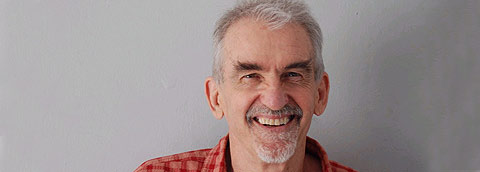
Where to break things

I have been thinking in a very gestural and unscientific way about how poems, short stories, and novels are similar and different, both for reader and writer.

Something comes to mind about pacing, tempo, and where to break things.

When working on a novel, finding the right chapter break is crucial. It’s also important to think about where to end paragraphs. Is the question of where to end paragraphs even more important in writing short stories? And decisions about line breaks, even in the very occasional poems I’m working on, seem similarly intuitive and challenging.

I am not claiming that sentences, or words, are not crucial in novels. But there does seem to be a point of comparison among the forms, with the question of chapters, paragraphs, and lines, and where to break them.

Now the question is: how to end this post?

The reluctant outliner

Outlining, after having written 150 pages of mess. All this will amount to a novel some day, but now, it’s a snarl of words in my computer and notebook.

And in my head.

I sometimes write an outline when I have something to write that needs a clear, simple structure. But with my fiction, which can be (and usually is) a mess, I tend to write an outline when I’m near the end of a draft, and stuck, not sure what happens, or needs to happen next.

Today, stuck, resuming after an uncomfortably long break, my smart husband suggested I write an outline, figure out what I have, and where I need more stuff.

It sounded quite unappealing. No romance, no forward motion.

But once I got started, it was welcome, easy, comforting busy-work. “I’m doing something in aid of my novel!” I thought. It’s not the exhilarating fall of writing new stuff, but feels productive. Like something a grown up would do. Like someone who Writes Novels would do.

Here’s how I do it:
1. Make sure all the handwritten notes are typed up into the computer file. (I write new matter on paper, with a fountain pen. It’s much more fun for me. And I usually write down scenes and new stuff as they occur to me, trying to put them in an order that makes sense, but not always in a linear or chronological way.)
2. Open the computer file, and start looking at it, page by page, but from a bird’s eye view (anyone who has a better way to put this without using a cliche, please share!).
3. With paper and pen next to the computer, write an outline, scene by scene. Mostly focus on plot (what happens) but sometimes on themes or other important things to note, things to pick up on later.

It takes a long time, but in the past, I have found it very useful. Sometimes the outline ends up being like a stage manager’s “bible” with set, costume, prop notes, and actor’s motivations, etc. Often, that’s how I find big gaps, things that need to be rearranged, or just taken out. I hope this will be true this time around.

At least it feels like I’m doing something.
Waifs and orphans

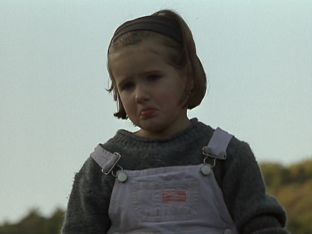
Why do I write about waifs and orphans? I am neither, but they stir me. Why?

Recently I realized that the characters in my novel-in-progress are all, in some manner, orphaned. I’m still uncovering, discovering, or making up the extent to which this manifests itself (and matters) in the mess. But I know that’s an emerging, and somehow important, current through this work, and much of my other work.

In my novel, The Watery Girl, Claire and the watery girl are both alone.

I am an only child, and the mother of an only child. But I don’t think my obsession with waifdom and orphandom is that simple. It could be the notion that we are all alone in some deep sense. I’m still figuring it out.

Community and family are really important to me, and day-to-day, I don’t feel alone. Honestly, I would like to have more actual time alone. But I don’t want to feel alone inside. There’s something scary about that feeling. And yet I also understand that independence is important, dependence can be tricky and dangerous, and I am okay with the occasional loneliness of being alone.

But the waif. The orphan. Something about their vulnerability (which is, perhaps, in all of us, in some deep, hidden place) attaches itself to what I am doing, or trying to do, in my fiction. Do these waifs and orphans need me to tell their stories? Does this render me less alone?

Magic (might be) where you find it


I have been ruminating about Lynnell Edwards’ question on the Red Hen Press blog, and wanted to post my thoughts here.

I don’t have a policy on vampires. I have read beautiful, strong, amazing prose in a variety of genres, including “literary realism.” I haven’t read Twilight or Harry Potter, but I have read Lord of the Rings. And though I don’t want to compare a television show to a novel, I do love “Buffy,” because the writing is excellent, the characters rich and complicated, and the issues they deal with (ethical, moral, metaphysical) are important and paradoxically what I would consider “real.” These are some of the same characteristics I would look for in a good novel or story.

Different genres have different sets of expectations from the readers, and publishers. It can be hard to run a workshop or a class with a mix of genres–if only because other writers, leaders or teachers aren’t necessarily familiar with all genres. That can make things tricky, especially when students are just learning how to operate within a workshop setting.

One problem is that writing students (and readers in general) may be reacting to having been fed more visual media or media tie-in books than original books within the fantasy and science fiction genres. But as small children, most of us read plenty of fantastical things. Dr. Seuss, Harold and the Purple Crayon are a couple things that come to mind. It makes me sad that so many adult readers lose access to what is magical in literature by way of shedding childhood and heading into the “real world.”

Ursula LeGuin has some interesting things to say about the genre silos, and the “literary” biases against fantasy. If this problem interests you, check out her essay collection, Cheek By Jowl. I find a lot of bias in academe against work that is other than literary realism. Magical realism is acceptable, usually, and a few other lucky or pushy writers who have slipped with their novels into the list of acceptable, despite the fact that they write science fiction. I am thinking of Margaret Atwood. She has protested long and loudly enough to have convinced many readers (who might disdain other works of “science fiction”) that she’s not writing it. If something can be translated or packaged as allegorical, it “transcends” the genre. (Even the word “transcend” bothers me here.)

Overall, I don’t care where my students aim to publish their work. If it’s good, it’s good. I strive to help students learn about what I think makes fiction work, what makes it strong, what might make it transcend whichever box it ends up being placed in by a publisher.

Or, to quote Shakespeare’s Juliet:
“What’s in a name? that which we call a rose/By any other name would smell as sweet…”

And: There’s a Library of America collection of Philip K. Dick’s novels. So I guess he is another who slipped through the cracks.

Jim Krusoe’s novel “Erased”

A couple weeks ago, I finished reading Jim Krusoe’s novel, Erased. I wanted to read the whole thing again right after finishing the last line.

Reading this book, or really any of Krusoe’s fiction, is like taking a trip to the inner layer of the mind, which has somehow been turned inside out and exposed to the sun, and then finding some unknown organ that you need to survive but never knew was there. In his novels, dreams and reality at first seem to (but then don’t quite) fit each other…like a box of mismatched lids for old canning jars.

Here’s a bit from later in the novel, which I don’t think will spoil anything.

“Time, that old fooler, expanded and compressed itself, rolled over and played dead, only to spring back to life again when I least expected it. How long I walked, I couldn’t tell. It could have been hours. It might have been minutes. I heard the high squeals of bats and the sharp cries of night birds. I heard my own breath grow heavy as I trudged up a smallish hill, then I heard it ease on the way down. The wild dogs, or a completely different set of wild dogs, were back.”

In Erased, Krusoe’s protagonist is looking for his mother, who is supposedly dead, but keeps sending him postcards. This quest takes him to Cleveland, an idealized Cleveland that is laughable to anyone who has been to the real Cleveland. In Krusoe’s vision, the city is brimming with artists, carrying their work (often classical sculpture busts) with them to cafes like real-life celebrities carry small dogs in handbags. I love how the writer boldly steals the city from “our” reality.

Speaking of theft, I stole this photo from an interview with Jim Krusoe at Bookworm on KCRW.

Jim Krusoe was my mentor in graduate school at Antioch Los Angeles. I still consider him my mentor. Jim is a wonderful teacher. By asking a seemingly a simple question, “What are you interested in writing?” and telling me to write seven pages, Jim fostered my novel The Watery Girl into being. His manner is so good-natured and encouraging that, when he tells you the first few pages of a story need to go, you cut them without pain. I have learned so much from Jim over the years, I can’t imagine where I’d be as a writer without him.

I think Erased is his strongest work yet. And I can’t wait to read more, and read again.

The Buckaroo Banzai Principle

“The Adventures of Buckaroo Banzai across the 8th Dimension” is near the pinnacle on my list of my top favorite movies, ever, of all time. It’s got everything a girl could dream of: brain surgery, aliens, a cornet solo, an unexplained watermelon, Rasta aliens carrying bubble-wrap glasses to view their leaders’ video-letters, a kid named Scooter who outsmarts the Secretary of Defense, John Bigboote… I could go on.

Those of you who know, know.

But for those of you who don’t know: In the film, Buckaroo Banzai and his band, the Hong Kong Cavaliers, are also stars of a very popular comic book. Early in the movie, Buckaroo and one of his entourage, a hot 80s blonde guy named “Perfect Tommy,” are walking down a cellblock, looking for “Penny Priddy” (played by Ellen Barkin) to bail her out. Someone from another cell reaches toward Perfect Tommy, he dodges the hand, and you hear a female prisoner’s voice say, “Oh my Gawwwwd, Perfect Tommy!”

There’s no room for doubting this world; we just accept that everyone knows who Perfect Tommy is. Of course we hear a woman calling after his tall, handsome, bleach-blonde self as he walks down the hall, because she’s probably just read the latest comic. We trust that someday, “Reno” will tell us later about that mysterious watermelon in the lab.

Meanwhile, NEW JERSEY and RENO NEVADA are searching another lab. They pass
racks of equipment, including a large watermelon clamped into some sort of
apparatus.

NEW JERSEY:
Why is there a watermelon there?

RENO NEVADA:
I’ll tell you later.

My husband and I refer to this phenomenon as “The Buckaroo Banzai Principle.” When a work of fiction is so confident in itself that the reader just enters the world and goes with it. I aim for that in my work, and hope, someday, to achieve it.

(Recently, one of my students informed me of something, so I should probably stop waiting for the sequel, billed at the end of this film thusly:

WATCH FOR THE
NEXT ADVENTURE
OF
BUCKAROO BANZAI

BUCKAROO BANZAI
AGAINST THE
WORLD CRIME LEAGUE

because, among other things, Peter Weller, who played Buckaroo, is getting his PhD in Renaissance Art at UCLA. Oh my Gawwwwd, maybe he really IS Buckaroo!)