
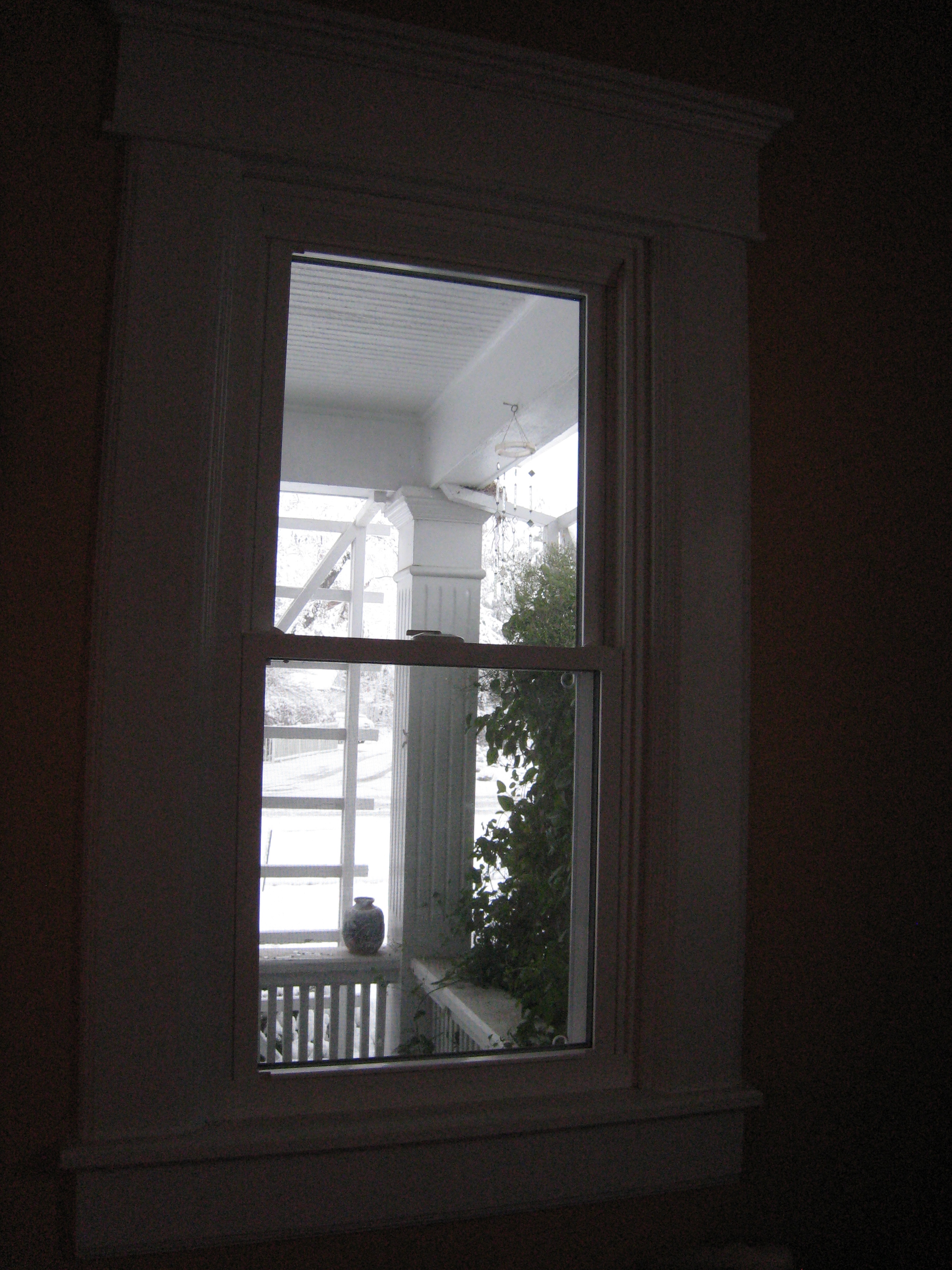
The novel I’m revising is like a dear old hound dog. Waits for me on the porch, with an occasional, “woof” when the wind blows, until I remember to come over and give that dog something to chew on.
The novel I’m revising is like a dear old hound dog. Waits for me on the porch, with an occasional, “woof” when the wind blows, until I remember to come over and give that dog something to chew on.

This is the time of year when winter feels claustrophobic and oppressive, and although my brain knows, as Poor Will reassures us, that we have gained an hour of daylight since December 26, my psyche has trouble believing it. It’s when I start to yearn for spring, for the new life narrative that returns each year as things begin to soften and melt.
My daughter and I saw a robin in the redbud tree the other day; can it be counted as this year’s first? So early? I attach story to that robin, wonder how it could have landed, ruffled and fat, apparently unperturbed so close by the window that my daughter can’t help opening to say hello. The equinox can’t be far off.
This year, in addition to newness and hope, the equinox will bring Resurrection House XIII, an anthology of which editor Mark Teppo writes, ““Thirteen” is the first month of a new yearly cycle, wherein the old skins have been shed and the newborns are still learning to walk.” A short story of mine will be included, and I’m excited to see what else it holds, rising from the ground, between those pages.
(Any reviewers out there? I understand there may still be review copies available at Edelweiss.)
 That moment when the new novel (new romance, how sweet, anything might happen!) unfolds in its wild way (organic, no map, messy and raw) and I must dig into worlds I know nothing about, must fortify the quivering green shoot of story that comes to me with facts about parts of the world and times in history I have not experienced…tether it down, tether it down…I’m so, so lost.
And this, apparently, is the process. Apparently this is the way.

[For this post, I’m pleased to welcome the writer David B. Coe as my first guest blogger. David is among my favorite colleagues at the Antioch University Midwest Individualized MA program, where he works with graduate creative writing students. He’s a wonderful guide; I always learn something when I witness his interactions with our students. As part of his blog tour for the forthcoming A Plunder of Souls, he graciously agreed to write a post about something that new (and maybe most) writers feel pressure to do: build a platform. Here, David reflects on the oft-heard edict “Thou shalt build a platform!” from his perspective. —Rebecca Kuder]
David B. Coe:
This post grows out of an online conversation I’ve had with a student I’m mentoring. She is earnest, hard-working, and talented, a combination that bodes well for her ultimate success as a professional writer. I fully expect that she will be published before long.
She has spent part of this summer revising short fiction that we worked on last semester, and building what is commonly referred to as “a platform” for her future promotional efforts. She has been setting up accounts on Twitter, on Facebook, on Pinterest, on Google Plus, and also maintaining a blog. I’ve tried to be encouraging as she develops her social media identity and online presence, but I have also wanted to temper her ambitions in this regard with a bit of reality based in my own experiences.
As an academic exercise, I believe that maintaining a blog and experimenting with online accounts and social media is a worthy endeavor. In the long run, I’m hopeful that her efforts will pay dividends. She’ll be published someday, and then she’ll need that platform. In the short run, writing her blog, generating content on a weekly or even daily basis is great training for a writing career. Writers need to be creative on demand; it’s part of the job. Committing to a blog can be terrific preparation for the future to which she aspires.
But she is also reading a couple of books that I fear might be misleading her somewhat. The authors in question claim that aspiring writers should set up their social media/blogging platform so that it can be a foundation for future writing success. I believe they have this backwards. The fact is that for most writers, building any sort of audience with social media and blogging is next to impossible until they have work that has been published. Yes, there are examples of people who have built audiences for themselves with their blogs and THEN published. A couple of the more prominent authors who have done this happen to work in speculative fiction, as I do. But these authors were able to establish themselves as unique voices in what we used to call the blogosphere. They found niches for themselves and took full advantage of doing so, parlaying their fame into successful careers as authors of fiction. Put another way, they were exceptions to the rule.
I would never say that she cannot follow a similar path to success. For all I know, she will be the next exception. But I do feel obligated to say—if for no other reason than to be a corrective to the books she’s been reading—that the odds against such a path leading her to the career she envisions are steep indeed. She (and other aspiring writers) should not be discouraged if she doesn’t gain much traction with her fledgling blog, at least at first. I have never found much of a following for my own blog, and I had several novels and stories already published when I launched it.
There is a tremendous amount of content being generated each day on the web. Blog posts, Facebook posts, Tweets, etc. All of it matters to someone, but taken together it is all so much noise. Making oneself heard above that din is difficult for the best known author. For a writer who is just starting out, who has no name recognition, it’s next to impossible. If there was a secret formula to finding the perfect blogging voice that would enable a writer to stand out from the crowd, I would surely NOT tell any of you about it. I’d be using it myself! But alas, no such beast exists.
So what is an aspiring writer to do?
Write, of course. I have encouraged my student to continue her online work for now, to use the summer to set up her platform. But I’ve also warned her not to expect too much from it. And more to the point, I’ve advised her not to let blogging and social media keep her from more important things. If it comes to a choice between writing fiction and writing her blog, she should choose the former. Every time. I have seen too many authors become so obsessed with writing blog entries, so determined, beyond all reason, to post X number of times per week, that they completely lose sight of their fiction — you know, the stuff that might actually pay bills someday, the stuff that we care about so much it keeps us up nights wrestling with plotting ideas, the stuff that, more than likely, got us to start blogging in the first place.
I know what the books my student is reading are telling her (or at least I can imagine). But those authors are offering their advice with an ulterior motive: doing so enables them to sell their own books. For any aspiring writer, her fiction, her family, her health and sleep, are all WAY more important than building a platform. Trust me on this. Once an author has completed that first sale and can start to publicize something specific, she will have plenty of time to build a platform. That’s how I have approached the construction of my own platform, the end results of which you are welcome to view using the links below. (And yes, I’m aware of the irony . . .) But she should be in no rush; in case you didn’t know, the publishing industry takes its sweet time getting books out.
To repeat: As an exercise, for the purposes of familiarizing oneself with blogging and social media, doing this kind of work for a time makes all kinds of sense. But then get back to the stuff that matters: your fiction. And don’t sweat the rest of it too much. It’s just not worth it at this stage of the game.
*****
D.B. Jackson is also David B. Coe, the award-winning author of more than a dozen fantasy novels. His first two books as D.B. Jackson, the Revolutionary War era urban fantasies, Thieftaker and Thieves’ Quarry, volumes I and II of the Thieftaker Chronicles, are both available from Tor Books in hardcover and paperback. The third volume, A Plunder of Souls, will be released in hardcover on July 8. The fourth Thieftaker novel, Dead Man’s Reach, is in production and will be out in the summer of 2015. D.B. lives on the Cumberland Plateau with his wife and two teenaged daughters. They’re all smarter and prettier than he is, but they keep him around because he makes a mean vegetarian fajita. When he’s not writing he likes to hike, play guitar, and stalk the perfect image with his camera.

http://www.dbjackson-author.com
http://www.dbjackson-author.com/blog
http://www.facebook.com/dbjacksonAuthor
http://twitter.com/dbjacksonauthor
http://www.goodreads.com/dbjackson
http://amazon.com/author/dbjackson

I just wrote a note to one of my students, and thought it blog-worthy. I don’t think you need any back story, except that my student is writing a novel and the protagonist has some things in common with the writer, both having lost a beloved. Here’s what I wrote:
If you are comfortable with it (or maybe even if you’re a bit uncomfortable–stretching is really important!), spend some time reflecting on paper about your experience and how it might shape your approach to the protagonist’s loss. I think acknowledging this will be a way to make the protagonist’s story deeper and more authentic. (Do you know about method acting? It’s the parallel that comes to mind right now–where an actor accesses past experiences and emotions to help portray a character. In a weird way, this is similar. I think about this a lot as a writer, and do it fairly often, sometimes without realizing that’s what I’m doing.) I would really like to see this in your proposal. This linking who we are as humans to who we are as writers is the kind of reaching and growing that seems very appropriate in a graduate level writing program.If you were to sort of skirt around it or not really “own” it, it might not get to the richness that is possible by owning it.
Joan Didion gets at a related something in her essay, “On Keeping A Notebook.” Didion writes, “I think we are well advised to keep on nodding terms with the people we used to be, whether we find them attractive or not.” Otherwise, as she goes on, these former selves tend to haunt us.
And as usual: I need to follow my own advice.

I’m happpy to announce that my story, “Rabbit, Cat, Girl” was accepted by Resurrection House for XIII. Here’s something about the anthology XIII from the website: “When Mark Teppo, the founder of Resurrection House, acquired Underland Press, he wanted to start numbering the titles that would be released under the new imprint. Before doing so, he wishes to acknowledge and celebrate What Was and What Will Be. “Thirteen” is the first month of a new yearly cycle, wherein the old skins have been shed and the newborns are still learning to walk. “One” and “Three” make “Four,” which is the number of completion, of coming home, and of realizing the form that has been in process for some time. Nothing is true; everything is possible. And the more things change, the more they stay the same. The thirteenth Tarot card is Death, and he is the symbol of transformation and rebirth.
This is the genesis and root of XIII.”
Ironic, to me, that when I heard the story had been accepted, in a vase in my house we had exactly what I describe in the story they’ll publish: “How lovely the lilies of the valley are, dead, brown-edged, drooping in the vase, the stem-slope curvier than when fresh, somehow more truly themselves, more graceful as they relax, tender bells now browning, baby hats tumbling off.”
Here’s another hint about the story. I’ll let you know when you can read more.

“What’s a snow cone?” my almost-six-year-old said this evening. I’d been telling her a story about a girl and a mouse who thought it was hailing. (“Tell me a Sally and Joey story and they think it’s a storm.” For this section, she’d specified that it had to be hail. In my fiction, quickly spun, the hail was actually someone shaving a snow cone.) Her question was earnest, so I explained. Then she asked, “Like an ice cream cone of snow?” Yeah, something like that, except we’ve had real snow ice cream (bowl of snow with honey, or maple syrup, and sometimes for mama, smoked paprika and cinnamon) and we’ve had cider slushies at the local apple orchard. But never the iconic Snow Cone. (How I’ve failed as a parent, I thought.)
Later, in the kitchen, she described her method for peeling garlic. “You start with the tail,” she said, and demonstrated how. (Maybe not a failed parent after all, I thought.)
And in this way, success and failure curl their necks around each other and get tangled, unsure of who is whom, and whether it matters anymore.
And today in that tangle for me is one of the sweetest bits of being alive.
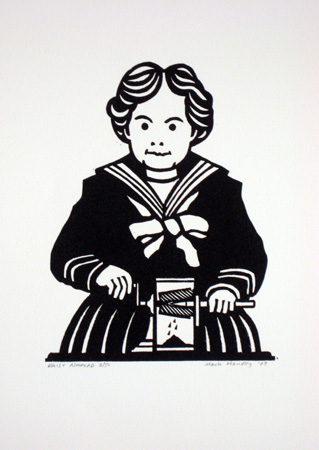
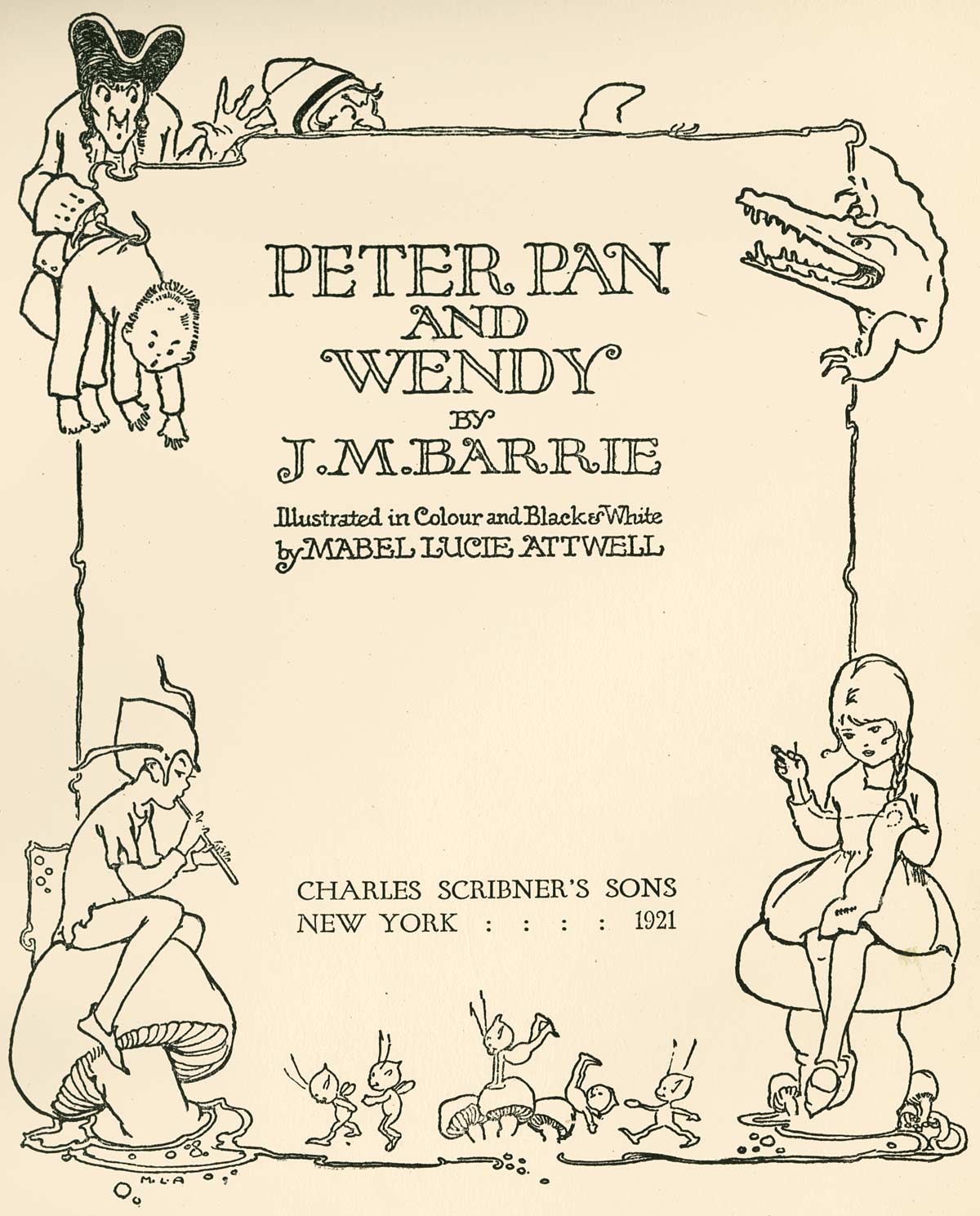
I’ve just read the most ridiculous and wonderful novel. It’s called The Young Visiters (sic) Or, Mr. Salteena’s Plan by Daisy Ashford. Written around 1890 by nine-year-old Daisy Ashford, the novel was published in 1919. (I love the internet. You can read the original text here.) According to the Academy Chicago Publishers 1991 preface by Walter Kendrick, J.M. Barrie, my icon and one of my favorite writers, doomed this novel to obscurity in our time. Kendrick writes: “I would lay the blame for juvenilizing The Young Visiters on Sir J.M. Barrie, creator of Peter Pan, who wrote a treacly preface to the 1919 edition. Barrie drew a precious picture of little Daisy at work, now with ‘the tongue firmly clenched between her teeth,’ now with ‘her head to the side and her tongue well out.’ He imagined her sucking her thumb and called her the ‘blazing child.’ The British stomach such goop better than Americans do; they seem to place a smaller premium on growing up. Barrie, however, falsified The Young Visiters for all readers when he made it out to be merely the product of a precocious imagination. It is that, of course, but it is also a Victorian novel in miniature, a tidy précis of English fiction circa 1890.” (I know that’s his opinion, and I might argue–have not yet read Barrie’s preface, but will later, as it’s online at Project Gutenberg. Stay tuned. And more on Barrie in a moment.)
But rather than tell about the novel, let me show. On p. 86, Miss Ashford treats the reader to the following, with the original spellings:
Chapter 9: A Proposale
Next morning while imbibing his morning tea beneath his pink silken quilt Bernard decided he must marry Ethel with no more delay. I love the girl he said to himself and she must be mine but I somehow feel I can not propose in London it would not be seemly in the city of London. We must go for a day in the country and when surrounded by the gay twittering of the birds and the smell of the cows I will lay my suit at her feet and he waved his arm wildly at the gay thought. Then he sprang from bed and gave a rat a tat at Ethel’s door.
Are you up my dear he called.
Well not quite said Ethel hastilly jumping from her downy nest.
Be quick cried Bernard I have a plan to spend a day near Windsor Castle and we will take our lunch and spend a happy day.
Oh Hurrah shouted Ethel I shall soon be ready as I had my bath last night so wont wash very much now.
No don’t said Bernard and added in a rarther fervent tone through the chink of the door you are fresher than the rose my dear no soap could make you fairer.
I have never read a book like this. The allure for me as reader hides in its layers, and in the child’s awareness of the weary adult world. Her prose. Her exuberent misspellings. And the allure is also in imagining this nine-year-old in the context of the nine-year-olds I know–smart and imaginative as they are–writing a book like this.
As Kendrick writes in the preface on p. xvii, “Ashford’s masterpiece truly deserves the overworked adjective ‘unique’: there is nothing else like it, and nothing can match the special pleasure it gives.”
In writing this post, I thought about a presentation I gave in graduate school about J.M. Barrie and the story behind Peter. I forgot how deeply I had then delved into Barrie’s work and life, but here are some of my presentation notes, which explained (in my words from twelve years ago, which I would re-write today, but for expediency, won’t) why this is interesting to me: “I have been working on an adult novel from a child’s point of view. I did not anticipate the power of looking through a child’s eyes at all the small things adults tend to overlook. This has been a great lesson in detail and imagery. Perhaps to normalize my obsession with childhood and the connection between child and adult, I keep coming back to Peter Pan as an important emblem. Reading Peter and Wendy has helped me think about the layers a writer can use to involve both child and adult awareness.”
I’m so grateful to my daughter’s teacher, Ann Guthrie, who knew of my fasciation with this kind of story, and loaned me Daisy Ashford’s book.
Now off to buy my own copy.

I’ve long been meaning to post about some fabulous and intriguing books I’ve read recently. First in line is Robert Edric’s The London Satyr.
From the cover:
1891. London is simmering in the oppressive summer heat, the air thick with sexual repression. But a wave of morality is about to rock the capital as the puritans of the London Vigilance Committee seek out perversion and aberrant behaviour in all its forms.
Charles Webster, an impoverished photographer working at the Lyceum Theatre, has been sucked into a shadowy demi-monde which exists beneath the surface of civilized society. It is a world of pornographers and prostitutes, orchestrated by master manipulator Marlow, for whom Webster illicitly provides theatrical costumes for pornographic shoots.
But knowledge of this enterprise has somehow reached the Lyceum’s upright theatre manager, Bram Stoker, who suspects Webster’s involvement. As the net tightens around Marlow and his cohorts and public outrage sweeps the city, a member of the aristocracy is accused of killing a child prostitute…
After reading his PS Publishing novella, The Mermaids, in 2012 I had the pleasure of interviewing Robert Edric. (Part 1 of the inteview is posted here. I intend to transcribe the rest of it as time allows.) The London Satyr was very different but no less pleasing to read than The Mermaids. The plot layers within The London Satyr allowed me to get lost in the corners of its streets and backstage world, but this novel can’t and won’t be boiled down to that. Edric’s prose–his sentences–are little gifts in themselves. As Webster walks through this perilous situation, I felt I was walking with him through London, always considering things, interpreting glances and shadows, always on guard, falling into more and more danger alongside him. Thrilling, to say the least.
In his sentences, Edric does beautiful and hypnotic things with repetition. One of the currents within this novel is Webster’s grief over his seven-year-old daughter Caroline, who, many years before the story is set, had died. Without spoiling anything (because I do hope you will read the novel) I’ll say there’s a passage near the end of the novel which keeps haunting me, so I am indulging in the pleasure of typing it:
“When Caroline had been alive, she had often waited for me at the corner of the street, a few doors from our own, looking out for me as I climbed the gentle slope. And upon seeing me, seeing me wave to her and then crouch down and hold out my arms to her, she would run towards me at a gaterhing pace, stopped only by her collision into me, whereupon, having steadied myself, I would rise and lift her into the air and spin her, holding her against my chest and over my shoulder until all of her sudden energy and momentum was lost, absorbed into my body and then passing in a tremor through me into the solid ground beneath us. I would feel this happen, feel her small and fragile body and all its vital forces absorbed into my own.
There were days when I had set off home already looking forward to this meeting, always disappointed when something kept her from the corner. She would hang laughing uncontrollably over my shoulder and then babble her day’s news into my ear. News of the things she had done, the people she had seen, what she had eaten, what she had worn, what her mother had said to her, what her sister had said, what she had said to them. A whole day in those few spinning seconds.
…
And later, these stories would resume at bedtime, when I would sit with her as she fell asleep. Sometimes, I would go on spinning these tales long after her eyes had closed, lowering my voice to a whisper for the simple pleasure of sitting with my child and watching her sleep, secure in the knowledge that she was happy and well and safe, and secure too in my own fierce conviction of the endless future and what it held for us both.
For a year after her death, I could not turn that corner except with the hopeless expectation of seeing her there again, running towards me with her arms out. And when she did not come, when that one small miracle did not occur, I could not help but also feel the sudden blade of sadness which pierced me again and again, and nor could I stop the tears which filled my eyes as I continued home to that cold and lifeless house.”
It’s when I read passages like this that I know something in my bones: reading makes us more human.
I’m happy to announce that my novel, The Watery Girl, is among the finalists for the Many Voices Project Prize for prose. Read more about New Rivers Press and the prize here.
 Rebecca Kuder