Nick Cave and The Bad Seeds (Wild God tour, Columbus, Ohio, May 2, 2025)

blurry photo of bottom half of man carrying umbrella, city sidewalk.
(Seems fitting this was the only photograph I took that night. Photo taken by accident. Husband carries umbrella.)

(Having seen Nick Cave and the Bad Seeds on the Wild God tour, at the Palace Theater in Columbus, Ohio, on May 2, 2025:)

Early in the show, a horrid cough erupts from stage left. Warren Ellis is not well, Nick Cave says. Please, whatever you do, don’t let Warren Ellis lick your face. A bit later, Nick Cave says, Warren Ellis is dying onstage in Columbus.

But thank goodness, Nick Cave is wrong.

Warren Ellis alternates postures: hunched in his chair; standing upon said chair to perform feats of magic; rotating an arm like a propellor, like it might break and fly off; playing the strings off his bow (literally); and blowing and throwing copious kisses to the audience. No face licking that I can see, and thank Wild God—Warren Ellis makes it to the end of the show (and beyond, apparently, to play another day).

Early in the show, Nick Cave says to the audience: You don’t know whether to stand or kneel. And it’s true; he’s exactly right…and later he says, You’re so far away…they put these chairs in here…

Nick Cave gives himself to the audience, connects viscerally and physically (holds many hands, walks or is raised above shoulders and heads) and gives himself, most of all, through sound.

I first learned of Nick Cave when I saw Wings of Desire, in 1987. (One more song and it’s over. But I’m not gonna tell you about a girl, I’m not gonna tell you about a girl… “I wanna tell you about a girl…”)

The merch line snakes through the lobby and the hallway and up the stairs toward the heavens…

So much light. And still Nick Cave is willing to acknowledge the darkness. Willing to be in it. To give sorrow its due respect.

The artist Nick Cave is a mesmerizing combination of parts—crooner, punk, poet, musician, showman, trickster…little kid up to no good, devil, preacher, broken-but-still-here father, lover, human.

Before the show, we find our seats and settle in, watch others arrive…it’s a wild mix of humanity, dressed in velvet or all black or leather or dapper suits, tattooed or costumed or some, outwardly ‘normal’…everyone seems to step a bit more lightly than they would on a normal day, a time for celebration…the air is pixie-dusted, and people are glowing, breathless, as if awaiting some revival, which, suddenly, is how the night feels to me…A revival where the preacher refuses to hide his beef with god, and will make brilliance with whatever mileage and heartbreak have somehow not yet broken his spirit. Nick Cave aims to show us the light, which is still there, still here, despite all this pain. (Exhibit A: “Joy“.)

Nick Cave loves us, he says, not in the meet-up-later-by-the-stage-door kind of way, but loves in the collective, in the abstract but very real…a sky-filling notion of love…Nick Cave is such a peculiar and specific person, like any of us, but also not like any of us, a human willing to share and show off what he has inside, an alchemist to perform transmogrification of suffering, whatever viscera he has inside, still beating. (Exhibit B: “I Need You“.)

So we adherents to this complicated, messy preacher and his messy, gorgeous crew marvel and sing along as Warren Ellis continues to defy Nick Cave’s false prophesy, continues to beat and bow well enough and to kick over the mic stand, to do what must be the opposite onstage, of dying…to slump and rest when needed, and wipe sweat from his face and then like a gorgeous, terrible monster, fully vivify himself to jump back up on his chair and kick and twirl till someone comes to save him from the instrument’s umbilical cord…a whirling gymnastic which Warren Ellis easily survives, and lives on to tear the errant hairs from his bow.

It’s not just those two, it’s the Bad Seeds plus a celestial choir in silver, artists all called together to make this machine—the machine the artists are making in front of us keeps going because each part is All In and still breathing, each is still doing each part, still vivid and vivified and the show must go on because we need it and because the artists too must keep cheating death, must continue to not die on stage in Columbus, Ohio, and some of them might truly be unwell but all keep making music and mopping brows and keep not dying…just don’t let Warren Ellis lick your face.

But to be perfectly frank, I would let Warren Ellis lick my face, if I could get close enough to him, if only he would ask, I would turn my cheek to him, let the living spread across the skin to infect me. The cumulative energy of everyone onstage and everyone here, those who are here in this beautiful moment infects the room, and the illumination for we the devoted is infectious, even back here in row U, where we and you are all human, and human together. You’re beautiful, you’re beautiful, you’re beautiful, Nick Cave et al sing, and we sing it back, the truest call and response. It’s all we can do, just be human together right here in row U. It’s all we can do right now, and right now, it’s enough.

Sears Eldredge (RIP)

(Sears Eldredge, Earlham Sargasso, 1986)

I am so grateful to have known and worked with Sears Eldredge, who I learned this week has recently died. Sears was wonderful, kind, and imaginative. He was my teacher, director, and mentor at Earlham College, and has always been a source of inspiration in the creative quest.

A couple years ago I read his wonderful book Mask Improvisation, and I could hear his musical voice in the sentences. Not only about mask performance/study, this book would be a pleasure for anyone who is interested in character and the psyche, and shows an early awareness of what we now call somatics. A beautiful and rich resource.

(RIP, dear Sears. A true artist engaged in the world. You can read his obituary here.)

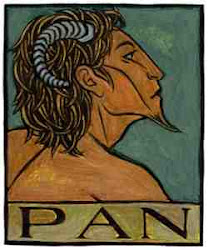
Q&A at the Pan Review

(image stolen from The Pan Review)

Dear friends,

Mark Andresen at the Pan Review (“a bi-monthly look at the arts and literary scene”) graciously invited me to answer some wonderful questions for the Pan Review Of The Arts No. XIII. I’m very grateful to Mark for this opportunity, and grateful there are such fascinating corners of the internet, where we can ponder the inner workings and explore inspiring esoterica.

Here’s where you can read the Q&A. And please support these creative people, including Daniel Mills, whose story collection Among The Lillies can be found at the most fabulous Undertow Publications.

Love, Rebecca

Dollhouse.

I’ve almost finished with my dollhouse re-vamp as part of spiffing my office. The dollhouse had become like a beach at low tide, catching every small bit the waves cast there. Many of the items in the dollhouse are from my childhood, many handmade by my friends and me. (I’ve blogged about my dollhouse here.)

Yesterday I took everything out, cleaned the shelves, and am sorting through it all, deciding what to keep. Not all of it, but the most important bits.

Today I realized that Maude, the mama bear, doesn’t have an art studio (which she had when I was a kid–a separate cardboard box with canvases, etc.)!  And there’s a perfect spot for it. So now I get to make some stuff.

There’s something so calming about taking time with this.

And while I should be decluttering other (larger) things for an imminent yard sale, too bad; this day has been perfect.

Existence & if it were another world

IMG_1201
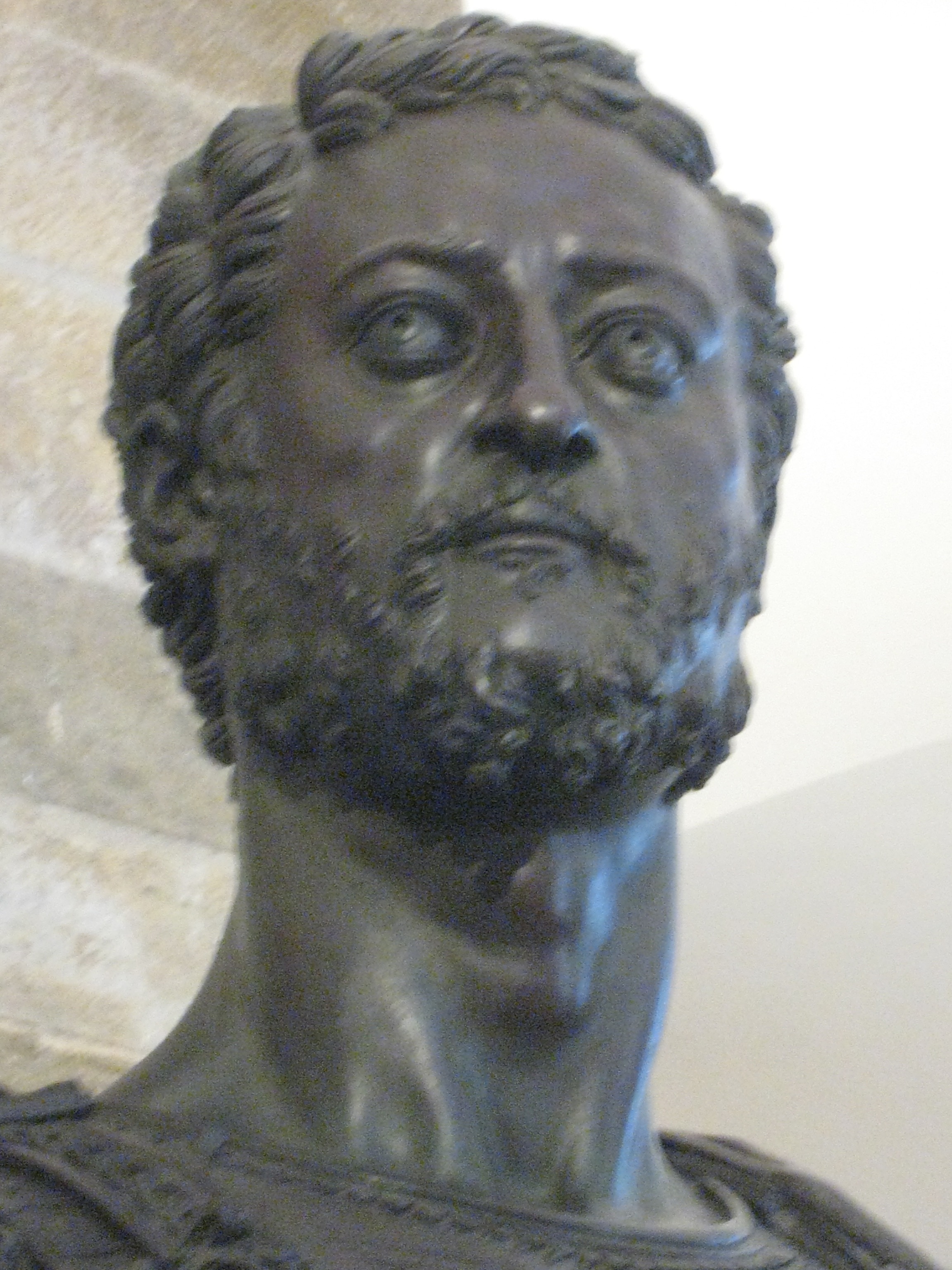
Ancient and modern: An ancestor of Jon Langford? (Benvenuto Cellini’s bust of Cosimo I de Medici, Museo Nazionale del Bargello, Firenze.)

Listening to the Mekons EXISTENTIALISM this morning, I spoke parts of the following to my husband…jet-lagged, and not as precise as I’d like to think is my usual, here’s an attempt to capture my words/thoughts, after a little more caffeine:

I can’t believe I never knew of the Mekons until I met [you] my husband. Not because I knew so many bands, but because the music of the Mekons goes straight into the body, to reach the tender bit that is humanity, or something else I can’t articulate. Anyway, their music feeds that part. As I listened this morning, I thought, why doesn’t everyone see this? Maybe it’s just an inescapable fact of independent art-making, the small batches that come from not being a Big Famous Commercial Commodity. Microbrew of sound. An acquired taste? We should all acquire it. If the world were just, their sounds would spill out to all humanity. We’d hear the Mekons piped through the air in sports bars and over sidewalks. (Wouldn’t that be a different world?) If that happened, we’d have to wake from complacency and consumption; I wonder if we’d ever get anything “done.” If the trains could possibly still run on time, if making and selling widgets would still be relevant, or if our inner parts would thrive better, if we’d get off our rumps beyond widget-making, and make art.

…help me answer these and other raggedy questions by purchasing EXISTENTIALISM from Bloodshot Records here. (And add the most excellent ANCIENT AND MODERN for just $8.95 more!)

(Who are the Mekons? If you’ve never heard of them, now’s the time.)

jdlpromoshot1
Cosmio I, is that you?

Blackbird project at Emerson College

Blackbird4-1

Last year at Emerson College, Senior Writer-In-Residence (and my friend) William Orem created an installation called THE BLACKBIRD PROJECT from photographs of multiple sections of the Wallace Stevens poem “Thirteen Ways of Looking at a Blackbird,” projected onto the walls. (My voice was among those of several poets and writers who recorded stanzas of the poem, which played throughout the gallery. You can watch the video here.)

A useful process from Lynda Barry

img_0183
Writing the Unthinkable, Omega Institute, 2016

Since attending WRITING THE UNTHINKABLE with Lynda Barry at Omega Institute in July, I’ve used a process Lynda (aka Professor Andretti) described for writing her amazing novel, Cruddy. I adapted the steps a bit to write a short story. My process was:

DRAFT 1: Write the first draft by hand—not with ink and brush (as she did, when drafting Cruddy), but with a black Flair. Using lined paper, I double-spaced lines. (This is important: skip a line in the composition book, as if your hand is double-spacing).

(I started this story from a very messy prompt/embryo I did last spring about taking stuff to the curb for junk day. We have this junk week thing in our town every year, where you can take just about anything to the curb and either another resident will harvest it or the trash collectors will take it. The essay was what I started with, literally writing the words I had typed up onto the paper, longhand, but veered from the essay totally so it ended up as fiction. Really, I’m dealing with some of my (internal) baggage in this essay-turned-story and so using this ‘junk’ was both cathartic and creative.)

DRAFT 2: Re-copy draft 1 by hand without taking anything out (!) but slowing down and adding things where needed. (This is really important: you must copy everything you wrote in the first draft. You can add as much as you like, but you are not removing anything. When I tried it, it began to feel like I was not cutting myself to shards, but instead just acknowledging that some of the junk—every word!—had a reason to be there, at this stage. Doing this worked against the constant self-critique I usually feel when writing. I wasn’t finding flaws and rooting them out, I was just re-copying words in slow, deliberate shapes with a pen. In fact, as Professor Andretti recommended, when my brain started to go faster than my hand, I deliberately

s l   o   w   e   d                        d   o   w   n

and focussed on making the shapes with my pen on the paper.)

DRAFT 3: Type up. On a typewriter. Professor Andretti used an actual typewriter for Cruddy, because you can only go forward (pretty much) on a typewriter whereas on a keyboard and screen you can go both ways (this ‘just keep moving forward’ idea is an extension of steps 1 and 2 above, i.e. not cutting down but building up, keeping momentum going.) I did this step on word processor because my typewriter needs a new ribbon—but before I used the word processor, I turned off the (judgmental!) automatic spell/grammar check as you type feature. If you try nothing else from my post, try this. It’s totally liberating! I knew I’d eventually do a manual spell check, so I just didn’t worry about it at this point. And I am maybe never turning that sucker back on. Like double-spacing my handwriting, excusing The Judge allows more oxygen in the room of my writing, lets me breathe. Ah! Doesn’t that feel better? Yes.)

DRAFT 4: Here is where Professor Andretti would finally type it up on a computer. Once I had the draft on the computer (see step 3), I did a spell check, and then printed it. It still needed work and I took things out and added things, etc., but a lot of what came through in the process was evocative and strong writing. What came through most of all was the character’s voice. I believe that using this technique allowed her enough oxygen to tell her story.

It was a great and illuminating process. It felt good instead of pressured. (It was actually much more fun than usual writing.)

I’m happy to have spent those several weeks using some of the techniques I learned from Professor Andretti…and living in the not knowing/not fiction/not non-fiction/what the hell is an image/”search for underpants, eee*” zone…and I got a story out of it!

* This is a reference to a song Lynda Barry would sing in the morning at our workshop. I much prefer her/our version to the South Park version—we all sang along with her—but if you want to hear the song, go here.

To learn more about Lynda Barry, go to her Instagram.