Stories help make us more human!

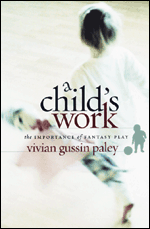
One of many fantastic books by Vivian Gussin Paley

And yes, I grant myself that exclamation point!

Here’s an interesting piece by Annie Murphy Paul about the neroscience of reading fiction.  It validates things that many know intuitively: among other things, reading fiction makes more empathetic humans.  (And it slashes through those conversations–conversations which, frankly, piss me off–about how nonfiction is somehow more important than fiction in helping people deal with “the real world.”  I love that the study corrects for things like whether people who are more naturally empathetic read more fiction.  Take that!)

Described in the piece is how we register sensations as we read descriptive language: how the evocative qualities of words like “cinnamon” work our sense of smell.  This aligns with something I heard the poet Cathy Smith Bowers discuss: when we read a word aloud, its sound affects us emotionally, but even when we read a word silently on the page, our bodies experience similar sensations.  As a writer of fiction, all this helps me understand why I care about what I do.  Why it’s important to make stories.  As a reader, it all sounds very true.

Last night, I finished reading Vivian Paley’s book, A Child’s Work.  Its emphasis is on the importance of fantasy play and stories in developing a young child’s ways of processing and coping with the world.  All the books by MacArthur Fellowship recipient Paley that I’ve read have moved me–she is a gifted writer, and her subject is so vital.  In her work, in addition to her observations as a wise teacher, she records and shares dialogue from real children in real classrooms, making sense of their real worlds and lives through fantasy and imagination.  In this book, Paley rightfully despairs at the push to bring academics to children too soon, leaving less and less time for preschool children to dream and do their natural thing.  Among many passages in this book that move me and are so true, Paley writes, on p. 102:

“Every day brought me new evidence of the preeminence of fantasy in children’s thinking.  It has reinforced my certainty that we perform a grave error when we remove fantasy play as the foundation of early childhood education.

We are going too far in the opposite direction.  Some school people feel that because young children engage in magical thinking we must pull them on to another track as early as possible; having added extra years of schooling to their lives, we are emboldened to counteract fantasy play with ‘reality-based’ activities.

Is this not the adult version of magical thinking?  To imagine that the purpose of early childhood education is to reorder the stages of human development is like the story of the prince who was turned into a frog.  In attempting to turn children into creatures that are unchildlike, we ignore all the messages young children give us as they play.  The frog turns back into a prince when the princess recognizes his need to be treated with kindness and respect.  In the case of our children, this would include the kindness of acknowledging that their perceptions and premises are not the same as older children’s or as our own.”

This idea of how we think we can reorder the natural stages of a child’s development haunts me.  Paley’s work speaks to me in particular now as the mother of a young child.  And pausing to read it has helped me slow down enough to more fully engage in the play my daughter is about.  So many of her sentences start with “Pretend that…” and I’m paying closer attention, and doing more active pretending with her.  (It’s good for adults, too!)  But anyone who is interested in stories and storytelling and their central importance to our humanity ought to read Paley’s books.  The Boy On The Beach is a really good one, too, and gets at why storytelling is important to building communities.

Now, back to my story in progress…
How can I can gratitude?

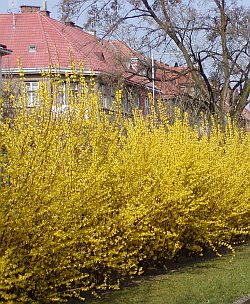
Maybe I can can some forsythia instead...

Because I know how life can be (nasty, brutish, and short) I want to can the end of last week and the anticipation of this week.  If I could, during harder times to come, I’d go to the basement shelf, perhaps having forgotten completely the dusty Ball jar is even there, and discover it.  It’s full of yellowness.  Open it.  Inhale it, taste a spoonful.  A few reasons for this urge, in mostly chronological order:

1) Serendipitous pizza lunch last Friday with my daughter and her friend and her friend’s mother, also my friend….the fun the children had, the fun their mothers had…

2) This ridiculous summer in March!…

3) Spontaneous last-minute plans to have dinner with friends Friday, the fun the kids had despite not getting lollipops afterwards…the portrait her friend drew of  most of us as sponge bob characters…

3) A playground work party at the Antioch School, where I did very little work, but being there with others, at one of the few places near here that still has a seesaw, caring about the place tangibly (I picked up a few sticks after all) talking about the importance of that place in the world; seeing the school with my dear old friend, also an alum, and her daughter, hearing from my friend how small the rooms are now…spending time with those friends later in the weekend, how our children play together like puppies…

4) A healthy and joyful daughter, a loving, gorgeous husband…

5) A birthday party of another of my daughter’s friends, where the sun shone like July and the kids ran up and down the beautiful Ohio hill, chasing chickens…

6) Anticipation of the new moon, and being in a circle with women I love…

7) Anticipation of seeing Julia Sweeney on Saturday night for a really great cause…

8) The iPod’s parting song this morning, during which my family danced our daily goodbyes…

9) Forsythia everywhere…

10) The ability to keep adding to this list as it grows…

Interview with Marly Youmans

I love what I’ve read of Marly Youmans’ work.  Her words remind me of snowdrops.  I’m using her story, “The Horse Angel,” for a class I’m teaching this spring.  The story is quiet, lovely, and tender without being sticky-sweet.  It’s also great example of how to do tricky maneuvers well, for example, using two points of view in a short story.  In the story, Youmans performs feats that new writers are often told not to attempt, but shows why rules should be broken, if broken well.  I am eager to read her forthcoming novel, Winner of The Ferrol Sams Award for Fiction, A Death at the White Camellia Orphanage from Mercer University Press.  I’m also honored to participate in the collective interview she’s giving at several blogs, in anticipation of the novel’s release on March 30, 2012.  You can order the novel from the publisher here.

 Rebecca:

As I re-read your story, “The Horse Angel,” I noticed a fascination with layers of orphandom.  Of the ghost in the mirror, you write, “…Edward and I thought that he looked as though he’d mislaid something of value and couldn’t think where it might be.  Or maybe it’s his family he’s mislaid. Maybe he can’t find his way back to them.”  The newly widowed Elsbeth dreams of her past, of being a sort of parent orphan: “…we are young man and woman again but changed, and often I hold my lost boy in my arms.”  And Mary, the younger neighbor of Elsbeth was violently orphaned when her stepfather killed her mother and then himself.  Your new novel, A Death at the White Camellia Orphanage, centers around the journey of a young orphan Pip Tatnell.  What is it that compels you to write about the orphan?

Marly:

Reading that quote from “The Horse Angel,” I immediately remembered the Rachel in Moby-Dick: how Stubb thinks that the captain of the ship has lost something, perhaps his watch, only to find that it is his precious son that he has lost to the sea. Some of my favorite characters are orphans—Ishmael is an orphan, and the indomitable Jane Eyre, and that other Pip from Great Expectations, and many more. “Orphan” is a state that often produces maximum trials and also may allow maximum freedom of thought and movement; it is automatically a condition set apart, a kind of state and place where dramatic things may happen. Fairy tales and stories often kill off the parents before or at the start.

I had not considered a relationship between “The Horse Angel” and A Death at the White Camellia Orphanage until you mentioned the two together. Perhaps one of your students assigned to read the story will read the book and tell me about it!

Although I am reticent about such matters and don’t care much for author talk about family or personal life (I have a distaste for the idea of misfortunes being used as a sensational marketing “hook,” though it is often done), I will say that my family suffered a death of one of its members in my childhood.  Such losses shape people and do not end or go away but leave traces. The sense that something is terribly missing can be quite strong and leave a child with the sense of being orphaned from the way the world ought to be. No doubt that childhood feeling colors “The Horse Angel” and A Death from the White Camellia Orphanage as well.

**

More about the novel can be found at Marly Youmans’ blog.

Comments from writers about A Death at the White Camellia Orphanage:

“A Death at the White Camellia Orphanage tells of a young boy’s travels through the black heart of Depression America and his search for light both metaphorical and real.  Writing with a controlled lyrical passion, Marly Youmans has crafted the finest, and the truest period novel I’ve read in years.”  –Lucius Shepard

“Marly Youmans’ new book is a vividly realized, panoramic novel of survival during The Great Depression. There is poetry in Youmans’ writing, but she also knows how to tell a riveting story.”  –Ron Rash

“In A Death at the White Camellia Orphanage, Marly Youmans gives us a beautifully written and exceptionally satisfying novel. The book reads as if Youmans took the best parts of The Grapes of Wrath, On the Road, The Reivers, The Adventures of Huckleberry Finn, and The Curious Incident of the Dog in the Night-Time and crafted from them a tale both magical and fine. Her rich language and lovely turns of phrase invite the reader to linger. Ironically, there is at the same time a subtle pressure throughout the novel to turn the page, because Youmans has achieved that rarest of all accomplishments: she has created a flawed hero about which we care. A Death at the White Camellia Orphanage is one of the best books I have read.” –Raymond L. Atkins

From the cover:

After a death at the White Camellia Orphanage, young Pip Tatnall leaves Lexsy, Georgia to become a road kid, riding the rails east, west, and north. A bright, unusual boy who is disillusioned at a young age, Pip believes that he sees guilt shining in the faces of men wherever he goes. On his picaresque journey, he sweeps through society, revealing the highest and lowest in human nature and only slowly coming to self-understanding. He searches the points of the compass for what will help, groping for a place where he can feel content, certain that he has no place where he belongs and that he rides the rails through a great darkness. His difficult path to collect enough radiance to light his way home is the road of a boy struggling to come to terms with the cruel but sometimes lovely world of Depression-era America.

On Youmans’ prior forays into the past, reviewers praised her “spellbinding force” (Bob Sumner, Orlando Sentinel), “prodigious powers of description” (Philip Gambone, New York Times), “serious artistry,” “unobtrusively beautiful language,” and “considerable power” (Fred Chappell, Raleigh News and Observer), “haunting, lyrical language and fierce intelligence” (starred review, Publishers Weekly.) Howard Bahr wrote of The Wolf Pit, “Ms. Youmans is an inspiration to every writer who must compete with himself. I had thought Catherwood unsurpassable, but Ms. Youmans has done it. Her characters are real; they live and move in the stream of Time as if they had passed only yesterday. Her lyricism breaks my heart and fills me with envy and delight. No other writer I know of can bring the past to us so musically, so truly.”

“Give me something to sing about” (RIP Whitney Houston)

Alas, this is not Whitney Houston.

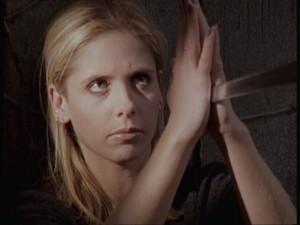
“Give me something to sing about,” sang Buffy the Vampire Slayer, in the excellent Joss Whedon musical, “Once More, With Feeling.”  (From which the title of this post was mis-appropriated.)  Buffy had died and gone, probably, to heaven, but her friends wanted her back home.  So they re-animated her.  Buffy was kinda bummed.

I just read that Whitney Houston died.  My first thought was, “Wait, Whitney Houston DIED?”  Shit.  My second thought was a song, an earworm from my 1990s, before the term earworm, before the song became an earworm for me.

(Rewind.)

FADE TO:  Somewhere in Los Angeles, a city where I did not live.  Sometime in the early 90s.  Just before Valentine’s Day.  Visiting a man.  (I am choosing vagueness.  Some people I know will be glad.)  I was fairly smitten with this guy, despite the miles that separated us, and many other differences.  He was sweet, and fun.  His life seemed big, glamorous.  I lived in Seattle.  (Same time zone, one thing in our favor.)  We’d gone to see a movie.  Memory is funny: I went down to LA several times while we were involved, and he came to Seattle several times–and our visits start to blur, but I’ll say that we saw a movie the night before Valentine’s Day; I’ll say the movie was “The Crying Game.”  Late that night, he said something that made me feel our time together was almost over, that he didn’t want to continue a long distance relationship.  Despite my own misgivings about how long it could last, I was young and romantic and sad when I heard him say whatever it was he said.  Though these years later I know it was best to let go, back then, I wasn’t ready.  There were things I thought ours might have been.

Early the next morning, and I mean really early, something like 7am on a Sunday morning LA time, Valentine’s Day, someone in his apartment complex decided to turn up the radio really loud.  The radio was blaring a song.

You know the song.

First, in the origami that was folding in my heart (expect and hope for something, then have it change too many times until it can never be the shape you thought you wanted) the song’s refrain was an irony at my expense.  Later, every time I heard that song, it was a reminder of that salty moment, that sadness which felt like emptiness.  (I didn’t learn until years later that Dolly Parton wrote the song, a fact which now makes the song more okay, especially when it’s Dolly and not Whitney singing.  More personal origami, this just in: As research for two novels, I’m reading a book about the April 1974 tornados that scoured the middle U.S., and according to King Wikipedia, that’s the exact month when Dolly Parton released that song.)

“AND I-I-I-” (HOW LONG CAN SHE HOLD THAT “I”???) “WILL ALWAYS LOVE YOUUUUUUUU-U-U-U” Whitney Houston sang on that early Valentine’s morning, from a stereo I would never see, volume cranked past 10 to 11 by someone I would never meet, some random person living near a man I had hoped to spend a lot more time with.  (Maybe that person played the song that morning extra loud for a valentine.  Maybe that person still loves that valentine.  Maybe there is an “always” somewhere.  For: I am happily married and have a wonderful child.  The man who lived in LA is married and has children, too, and I hope he’s happy.)  At that moment, though, even Whitney sounded sad, her sadness spilled out, sad for the sad little me, lost in that anonymous LA apartment complex, so early on Valentine’s morning.

So now you, too, know what I heard, actually, when I “heard” the news tonight about Whitney Houston.

It’s awful that another talented and tortured soul died early.  I wish people going through her kind of pain could get better, could live to be happy and really old and then die of natural causes.  I have other things I could write about Whitney Houston, but this memory, this earworm, floated to the top.

(“Don’t give me songs…don’t give me songs…give me something to sing about,” Buffy said.)

Into her drawers and shadows (Joan Didion’s Blue Nights)

Haunted Didion

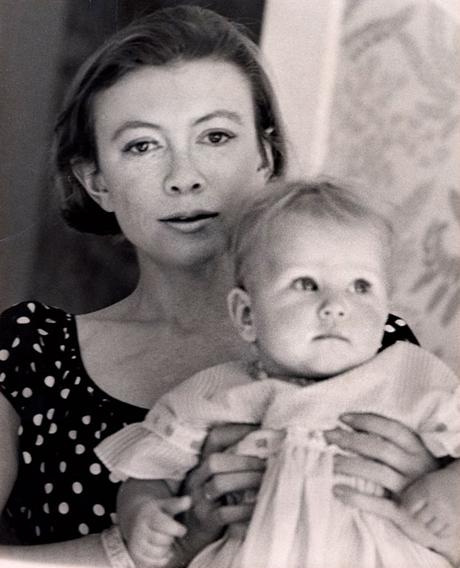
As I read Blue Nights, Joan Didion’s repetition of images and phrases hypnotized me, as did her peeled and still-peeling layers of story.  As with The Year of Magical Thinking, here I felt Didion recounting memories in the way we actually experience them.  As if she set out to articulate against the linear necessity of language: one letter, one word, one thought at a time, arranged tidy in a row, which is one way we make sense.  The intentional fragmentation of narrative was accessible and didn’t fall off the page (or render me lost in the land of “what the fuck?”) because of Didion’s clarity.  Because of her sentences.  And perhaps because of the fact of what she was doing: the narrative act of slowing down, examining, opening drawers and closets brimming with iconic possessions.  As Didion names these ghosts on p. 45: “The objects for which there is no satisfactory resolution.”  The detritus of the lives of the people she loves best, and lost.  As she opens each drawer and tells the stories of what she finds, she assumes the role of docent in the Joan Didion Museum of Loss.

(In the essay “Slouching Towards Bethlehem,” Didion writes: “Someone works out the numerology of my name and the name of the photographer I’m with.  The photographer’s is all white and the sea (‘If I were to make you some beads, see, I’d do it mainly in white,’ he is told), but mine has a double death symbol.”  I read that passage again after I’d read The Year of Magical Thinking, and could not avoid thinking of her life story’s foreshadowing in that moment, the double death that awaited her.)

In addition to the quandary about what to do with all that stuff (and my own eventual stuff, should I live long enough, outlive someone I love) I felt the writer’s grief and discomfort at the ache of questions she turns over and over, things upon which she shines a light, unable to avoid the vast shadows of murk.

Shadows which, despite the fact that some people, including me, happen to believe Didion walks on water, do not flatter her.

There’s something about that peeling, that sad onion, those haunts, her willingness to shine light despite what might crawl out, which makes me feel more human.

Eating potatoes, greedily

Flann O'Brien, of whose prose I could not get enough last month

Like tucking into a vat of potatoes after long without food, during winter break, I read in rapid (rabid?) succession Flann O’Brien’s The Poor Mouth and The Hard Life. Truly when I finished reading The Poor Mouth, I was still hungry and needed more.  Good thing I stocked up on both books!

Anything I say about Flann O’Brien will clunk like a can down malnourished and decrepit steps into the void of my own unworthiness, but my evangelical urge I can no longer ignore.  So.

If you’re into the show “Lost” perhaps you’ve heard of or even read O’Brien’s The Third Policeman.  I didn’t watch many episodes of that show, so I’m blind to the connection, but I’m glad more people heard about (and possibly read) O’Brien’s novel.  (The which I need to re-read, and soon.  I first read it as part of a seminar in grad school with Rod Val Moore.  The book was suggested in preparation for a field trip to the Museum of Jurassic Technology.)

Reading The Poor Mouth (published in 1941) is like diving into a pool of hilarity and squalor (yes) and eating it all with a spoon.  Yum, hyperbole!  My favorite!  Among other things I hope to grasp as soon as I re-read The Poor Mouth, O’Brien becomes a sort of cantor, invoking lyrical phrases of misery, a tapestry of moments in which, for instance, we hear, “…generally no sound except the roar of the water falling outside from gloomy skies, just as if those on high were emptying buckets of that vile wetness on the world.”  A tattered weariness in which scenes begin with openings like: “One afternoon I was reclining on the rushes in the end of the house considering the ill-luck and evil that had befallen the Gaels (and would always abide with them) when…”  Reveling in this luxurious squalor and over-the-topness, I laughed loud and often as I read along, even more than while reading Wodehouse.  To rip a phrase from O’Brien and twist it terribly, each chapter is like a thesis, proving without doubt that the plight of O’Brien’s Gaels is a bad life “whose like will ever be there again.”  (Just read the book.  It’s short.  If you hate it, I’ll give your money back.)  I also need to read it again to see how it lines up with another hyperbolic novel on the topic of poverty, though not nearly as hilarious, George Orwell’s Down and Out in Paris and London.

Literary belly still grumbling, I took up The Hard Life.  Published in 1962, the story was more shaped and plotty than The Poor Mouth.  At intervals, two characters tussle in flappy rants about the shadowy political power of Jesuits within the Catholic church.  Their dialogue was so well written that I didn’t struggle, despite my lack of knowledge about the issues they debated.  To press these two characters into a modern context, their arguments could have been mouth-offs between two old school rappers, one-upping each other (mostly) good-naturedly, but with no self-censor.  They were funny.  And the mountingly bizarre plot twists were delectable.  (See, I’m still on this stuff as if it’s food!  And really, it is.)  The end was unexpected and brilliant.  I’ll say no more, so as not to spoil a good meal.

Bon appetit!

Joan Didion and her bits

Joan Didion and Quintana Roo

“Only the very young and the very old may recount their dreams at breakfast, dwell upon self, interrupt with memories of beach picnics and favorite Liberty lawn dresses and the rainbow trout in a creek near Colorado Springs.  The rest of us are expected, rightly, to affect absorption in other people’s favorite dresses, other people’s trout.  And so we do.  But our notebooks give us away, for however dutifully we record what we see around us, the common denominator of all we see is always, transparently, shamelessly, the implacable ‘I.’  We are not talking here about the kind of notebook that is patently for public consumption, a structural conceit for binding together a series of graceful pensees; we are talking about something private, about bits of the mind’s string too short to use, an indiscriminate and erratic assemblage with meaning only for its maker.”

–Joan Didion, “On Keeping a Notebook,” Slouching Towards Bethlehem, p. 136.

I just began reading Blue Nights.  The passage above from Didion’s much older essay has been with me as I approach a still-too-tender writing project.  It’s stuff I will write about some day, though more time must first elapse.  I need perspective, and this is too messy and raw.  Meanwhile I put bits into a jar (or notebook) to save, to turn over, to approach for the quilt when it’s time.

Meanwhile, merely typing Didion’s words (and reading her new memoir) is a comfort and a privilege.

Wes Anderson & the Buckaroo Banzai Principle

I wrote a post here nearly two years ago (at my yearly movie outing, so sad!) about Wes Anderson.  Today, I watched “The Life Aquatic” again on DVD and though I adore it, it was as if I had never seen it before.  Turns out I barely remembered the movie, though it’s my favorite of Anderson’s.  I noticed things this time I either saw and forgot or never saw.  I watched the background this time, allowed myself to look away from the principal humans and around the room, as it were, and linger in my tour of the Belafonte.

The film’s similarities to “Buckaroo Banzai” (another favorite film) were more beautifully apparent this time.  One Banzai moment with Team Zissou was the curtain call, which some loving film geek posted here in mashup.  (There’s also the Jeff Goldblum connection linking the two films.  And as my husband said, TZ would have mirrored BB and the Honk Kong Cavaliers more fully had they brought back Ned for the curtain call, as  W. D. Richter did with Rawhide.  But not bringing Ned back does a more authentic job of continuing and closing the film’s narrative rather than opening it up, so maybe in the lineage of collective filmmaker evolution, this omission makes some sense.)

But in addition to the visual homages that Anderson paid Banzai et al, much more fundamentally, he followed the Buckaroo Banzai Principle as outlined here.  It’s, briefly:

When a work of fiction is so confident in itself that the reader just enters the world and goes with it.

Applies equally to a written or cinematic world, but as I thought about it today, I realized how I’m not quite doing that with my new novel, and thought of one little way that I can follow the BBP more closely.  For which I owe Mr. Anderson a card of thanks.  If only I had some Kinglsey (Ned) Zissou corrsepondance stock.

(Dear Mr. Anderson, if you are reading this:  Thank you.  Thank you for caring enough about your audience to make something so fully realized.  Thank you for following your own obsessions and idiosyncrasies with such commitment and grace.  Thank you for Seu Gorge reinterpreting Bowie.  Thank you for your hard work, which looks effortless as breathing in and breathing out.)

Cinderella, what big, sharp teeth you have!

Because of my recent rants about princess stuff, a friend recommended Cinderella Ate My Daughter by Peggy Orenstein.  I finally read it.  It was great.

It was great even through the lens of Orenstein’s preaching to the cliched choir (me).  It was great despite how depressing it was to read what inspired the Disney Princess phenomenon–in 2000, a new executive at Disney went to see Disney on Ice, and noticed, to his horror, that the girls wore HOMEMADE princess dresses.  In the small gowns, rather than creativity at the hearth, he saw a missed merchandising opportunity.  Thus the Disney Princess brand was born.  (And now we have girls clad in shiny, generic, made-in-China garb, rather than homespun results of someone’s invention.)

I live in Yellow Springs, Ohio, a bubble like Orenstein’s city of Berkeley, both places relatively more immune to over-the-top materialistic madness than much of the U.S.  This book was great because it was reassuring to read someone thinking about how to revolt against the default definition of femininity as only and always about what girls look like rather than what they do.  And not only is Orenstein thinking about how to revolt, she’s done her research.  She backs up her arguments.  As a journalist, she seems responsible in her work.  Her credibility as a person in the narrative is crucial to how therapeutic this book was to read.  Throughout, she’s grappling in plain view with the same questions other parents are.

It’s overwhelming to consider how to fight the subtle and unsubtle corporate power of entities like Disney.  My four-year-old daughter saw the Disney Princess undies at Target, and it’s all she wanted.  She could not be easily dissuaded.  (I bought them.)  The other day at Goodwill, I steered her away from the shelf of half-clad Barbies in the toy section.  I lured her to the books, figuring that was safe and we could get out without her wanting to buy yet another “baby.”  (She has always loved her “babies” and it’s often a struggle to convince her she has plenty of plastic mouths to feed.)  In the book section, she found a shiny pink Barbie book called Little Sisters Keep Out.  She does not know what Barbie is, though she’d seen them on the shelf.  She saw the book’s cover and said, “It’s a princess book!”  Ironically, I had just finished reading Orenstein’s book the night before.   I stood there, holding my own literary find–a gorgeous illustrated Aesop’s Fables–and reminded myself I had grown up with Barbies, and I turned out okay.  (Yet, like Orenstein, my self esteem was not helped by Barbie, nor by Seventeen Magazine, nor that iconic, tarted-up teen, Brooke Shields.)  Like the “I grew up watching too much TV and I turned out okay” argument, my Barbie excuse thins when I think too hard about it.  I bought both books, though I refused to read the Barbie book to her.  I told her that I didn’t like the kind of story inside it.  She said, “I love it.”  I told her those kinds of stories say girls can only do certain things, like brush their hair, not run and jump and climb and do fun things like that.  “But they go to the playground,” she said.  (One picture shows the dolls sitting on swings.  She decided she would read the book to her babies.  She makes up stories about the plastic dolls in the photos, and we have a compromise.)

Now that we grownups realize what TV does to a young person, or what all-pink-all-the-time (not to mention the focus on how a girl-to-woman looks rather than how she feels) does to the feminine psyche, we have the power (the responsibility!) to make better choices.

Let’s!  Let’s.

For me, all roads lead back to Buffy.  A slayer, a killer of demons.  Always fashionable, sometimes wearing implausible slaying footwear (but hey, she’s the slayer!) she takes care of herself and by “takes care of herself” I do not mean a pedicure.  In a dark alley, Buffy is the one kicking ass.  The final paradigm shift of the end of the TV series still makes me cry, every time I think of it:

“From now on, every girl in the world who might be a Slayer, will be a Slayer. Every girl who could have the power, will have the power. Who can stand up, will stand up. Every one of you, and girls we’ve never known, and generations to come…they will have strength they never dreamed of, and more than that, they will have each other. Slayers.  Every one of us. Make your choice.  Are you ready to be strong?”

Buffy wasn’t taken seriously at first.  She grew from a blonde teen cheerleader to a strong woman who changed the (fictional) world.  She spawned a small academic field called Buffy studies.  (And yet I found a Buffy dress-up game, where you can change Buffy’s clothing as if she were a paperdoll on the screen.  Sigh.)  The size of the problem of raising a strong, confident female person amidst well-funded and deeply entrenched corporate sinisterness makes me tired.  I have no answers.  But Orenstein’s book gave me hope.  Maybe parents will read it and meet together, talk about alternatives to the madness.  Maybe this kid’s parents read the book.  Maybe this kid can help start the revolution.

Maybe we will start making our own costumes again.

The Rules

THE RULES:

1) NEVER UNDERESTIMATE EACH OTHER.

2) KEEP YOUR HANDS STRONG.

3) DON’T KEEP WHAT YOU CAN’T CARRY.

4) CLOSE YOUR EYES ONLY WHEN NECESSARY.

5) NO SPITTING.

6) NO PUGILISM.

7) A THING ISN’T YOURS UNTIL SOMEONE GIVES IT YOU.

8) MACHINES SHALL REMAIN PRISTINE.

9) DON’T BE TOO SUPERSTIOUS.

10) BE A LITTLE SUPERSTITIOUS.

11) TRUST US.

(From The Eight Mile Suspended Carnival.  Please abide by these rules if you ever have a chance to visit.)