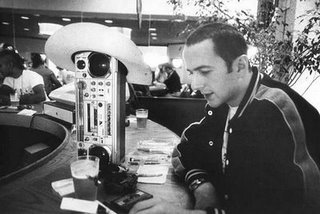
Daniel Knox and the “more interesting vegetables”

Daniel Knox opening for Langford et al at Southgate House Revival

Before I saw Jon Langford a couple weeks ago at the Southgate House Revival, I had read that Daniel Knox was going to open the evening. I went to Knox’s website to orient myself, but as often happens, I was interrupted before I could listen to anything. The night of the show, I wasn’t paying attention when an unassuming guy walked onstage and sat at the keyboard. I didn’t even notice until he began to sing. His gorgeous, haunting voice rippled among the waves of his musical score, working the tension between fancy croon and despair. Daniel Knox has alarming range in his voice. I don’t know what type of person I would expect to have brought those musical bones to the stage, but the contrast between the guy I saw and the revelation of his music added to the wonder. It was one of those moments of discovery when I learn there’s another entire world that has just casually walked into the room.

His set in Newport included the keyboard, supported by four overturned milk crates, and himself. After he played, I stumbled over some compliment to Mr. Knox at the merchandize table and bought his CD Evryman For Himself. On the ride home, I read the CD liner notes: Ralph Carney and others play with Knox. (“Ralph Carney?” I said to my husband. I know Carney from his work with Tom Waits, icon.)

The sound of Daniel Knox is theatrical, so I was not surprised to see he has collaborated on stage productions. Some of his songs make me think of Kurt Weill, some of Fiona Apple (Extraordinary Machine is her album I’m most familiar with, but Knox and Apple also seem to share a certain strain of hopeful bitterness), and there’s certainly some Waitsian sounds involved, too. Knox is another of these fabulous interdisciplinary aestheticians, whom, if I were hiring, I would invite to join the IA dream department. After finishing each song, he would toss the pages of music (which I suspect might have been props) to the floor behind him, a floor salad of inspiration.

Maybe because I had no idea what to expect, the milk crates supporting the keyboard added a layer of secrecy to the moment. It was a little like sitting in a basement in college, listening while a friend reads from her journal, finding perfectly-formed gems of humanity inside each line. Knox’s songs are like little sad 70s movies, minimal but complete stories with haunting soundtracks. His work is raw and fragile, but also strong like a metal building, an eternally-surviving frame surrounding a tiny, exquisite flower of pain. I scribbled some of these notes in the semi-dark as I listened, and one thing I wrote (my memory between the moment of going to his website weeks before and being interrupted and that evening at the church was so blurry), was, “and I don’t even know his name—I sat through the whole set not knowing his name!”

There was once a humble Vietnamese restaurant nearby our town. I used to like to get the noodle bowls there. On the menu, with the listing of choices, there was a note: For 50 cents extra, you could order “more interesting vegetables.” I always ordered more interesting vegetables, and although I can’t now recall which specific vegetables came for that half-dollar splurge, the term became shorthand in my house for more interesting anything, usually to do with books or movies or art or people.

Daniel Knox is one of those who deals in more interesting vegetables.
A live encounter with Jon Langford’s Here Be Monsters

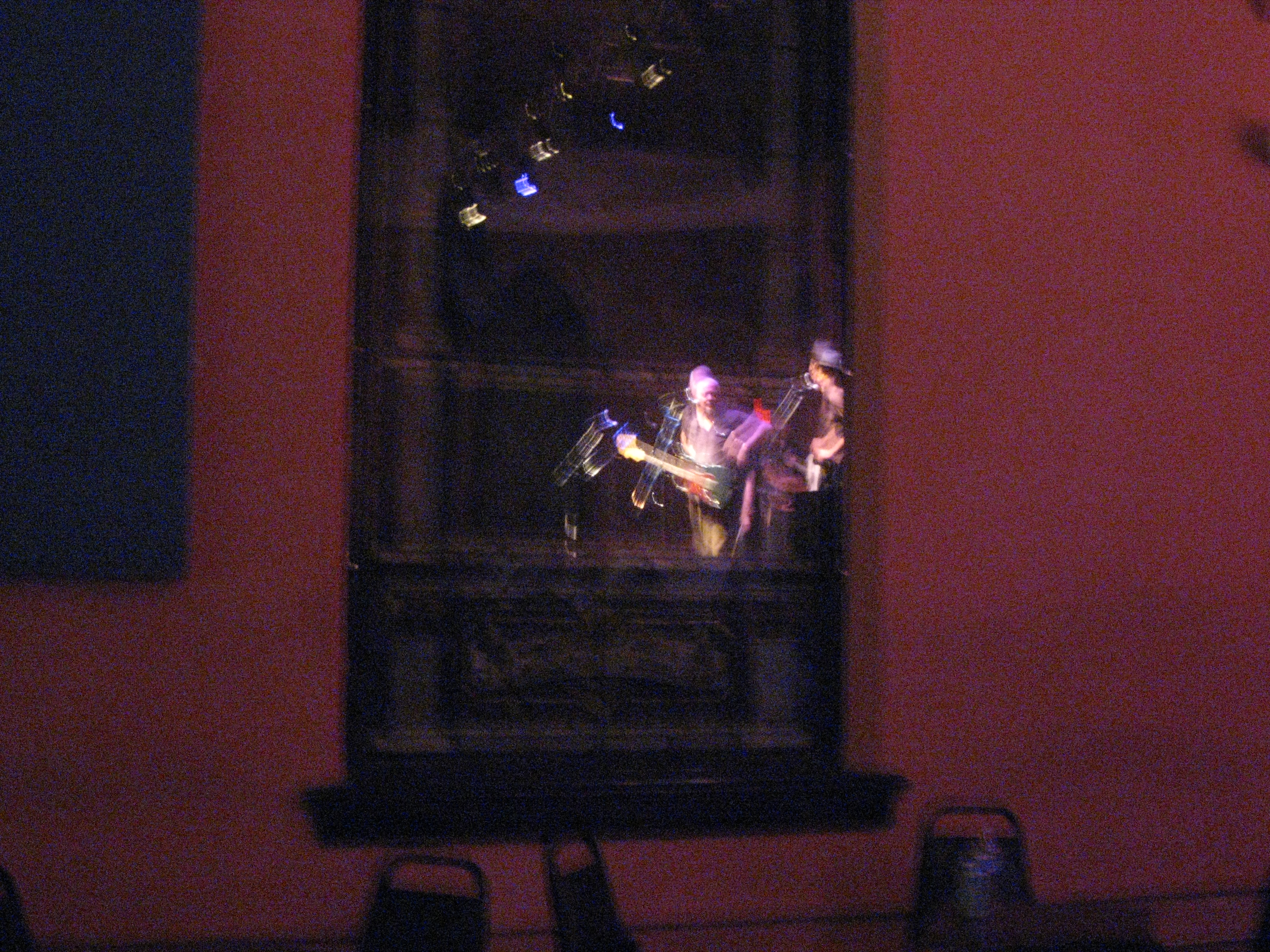
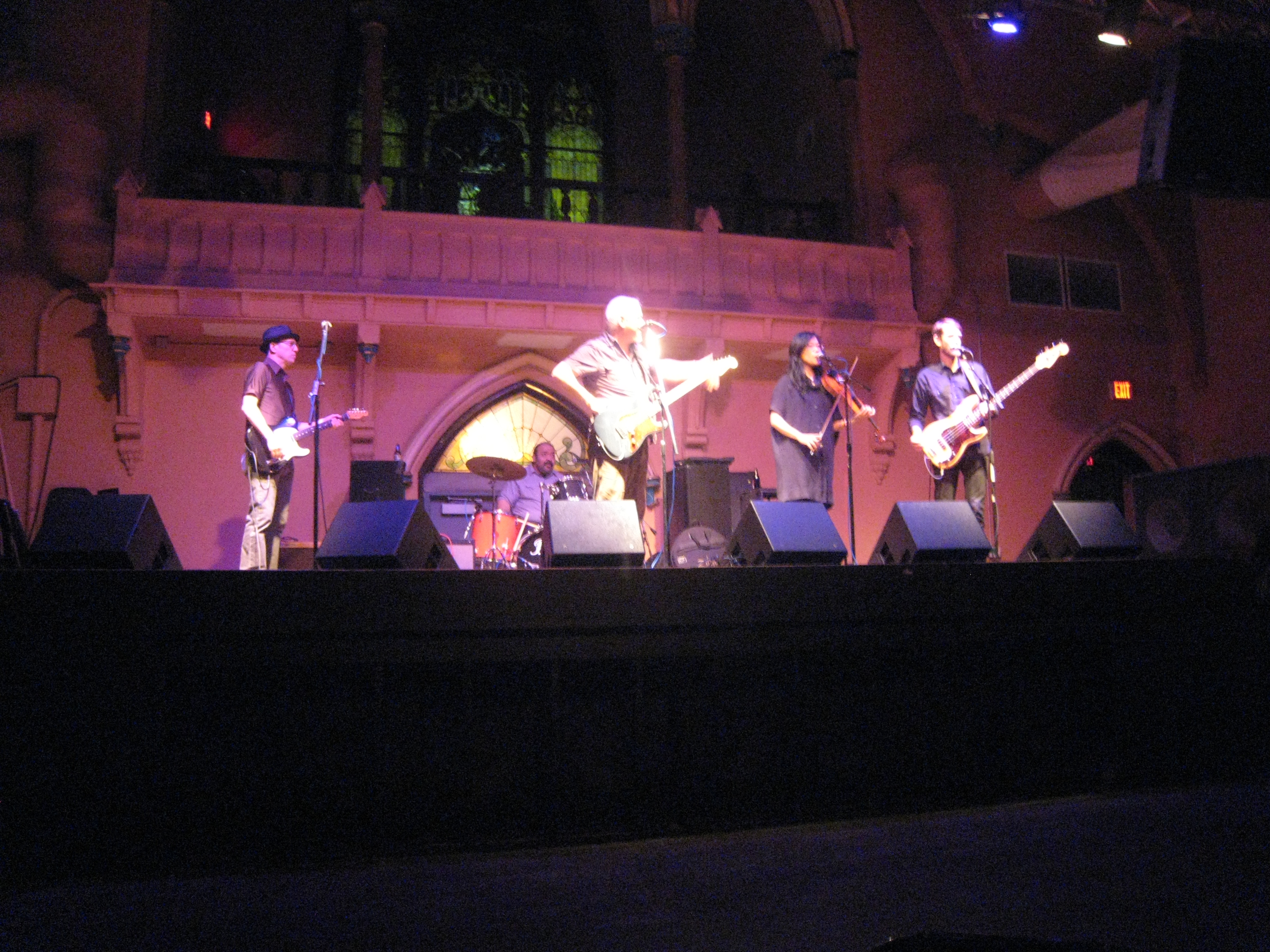
On April 9, I had the pleasure of seeing Jon Langford and Skull Orchard rock the stained glass out of Newport, Kentucky’s Southgate House Revival. (Okay, I’m exaggerating. The windows are still there, or they were when I left the church/club, as evidenced by this photo.)

IMG_4344
Jon Langford and Skull Orchard at Southgate House Revival

While waiting for the bill at a pizza place nearby, I worried that by the time we got to the club, it would be packed. When my husband and I got to the church (on time, after all), Langford was in the bar, and we had a moment to say hello and chat. I’ve met him before, and it’s always a treat. Langford is irreverent, generous, and funny, full of the best of what humanity can be.

As an artist, Langford knows about layers. His paintings echo memories of musical icons, ragged images full of heart. Ragged like most adult humans, beneath the veneer. Langford knows there is a crack in everything, and he knows that’s how the light gets in. Doing a Waco Brothers song that night, they were “walking on hell’s roof, looking at the flowers” in a former church, adding layer upon layer. I blogged about Jon Langford and his work another time over here. That night’s was a “small perfectly formed” audience, Langford said. I guess for a weeknight, it wasn’t shocking that the place wasn’t full to the choir loft, but I wish the world were different and I wish that a guy who makes stuff like Langford makes would be valued over, say, (insert manufactured popular music icon of your choice here).

It might have been my ears which have been recently more attuned to how we cheat and don’t cheat death, but Langford tapped into something that keeps haunting me lately: We don’t have much time. Do something now. Do something you care about, something you can live with. Drain all the juice, stop equivocating (okay, he didn’t say all that, but he showed it), go. No point saving the good china for good. (I might be imposing ideas from other sources I’m colliding with right now. Like how you see a specific number everywhere, once you start to notice its importance.)

Stained glass window, reflecting.

But it does seem that Jon Langford’s songs are about how to be alive. How we decide to be, while we’re living. They are all about waking us up.

The Newport lineup included Bill Anderson, who I know from The Horsies, which was cool because, well, you can go watch The Horsies here. The cumulative power of the musicians in Newport (Langford, Anderson, Jean Cook, Joe Camarillo, and Ryan Hembrey) created something complicated and rich and decadent and shhh, secretly fragile, because it’s so rare. Whatever you want to call it, it was perfect, the air between those stained glass windows. And we of the small, perfectly formed audience were treated to a kick-ass set, uncensored stories, and other hijinks, perhaps because it was the final show on this part of the tour. The band were like ridiculously talented children, up on stage, playing for sheer fun.

That night felt like the best kind of party, celebrating sound, story, and full-on-why-go-halfwayism, and it’s just the kind of party that spring needs, and that I need, to blow out the cobwebs of winter and remind me that

I

am

alive.


p.s. Daniel Knox opened for Langford & Skull Orchard.  The experience of seeing Daniel Knox is another story, which I will write about soon as I can.

“What if Peter hadn’t caught the wolf? What then?”

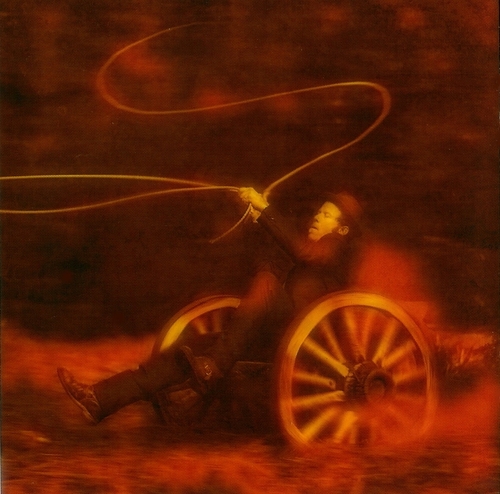
Was this the album cover of my youth?

This morning, with my daughter’s school I went to hear the Dayton Philharmonic concert perform several stories, including Peter and The Wolf.  I was sleep-deprived, having worried overnight about a very scary situation a friend was going through–a reminder that we don’t get out of here alive. The strains of Peter and the Wolf  hurled me back to childhood, and left me tearful…the music (as music will sometimes do) approached me from other human hearts (composer, musicians), reached into my body, held my wrung-out heart, exposing that red and tender mess to music’s melodic touch.  Of course I cried.

At the end of the story of Peter and the Wolf, the characters parade to take the trapped wolf to the zoo.  “What if Peter hadn’t caught the wolf?  What then?” asks Peter’s grandfather.

I cried while I watched the story today in part because a friend from college, the roommate of my college boyfriend, went to the hospital last Christmas day because his stomach hurt.  It was stomach cancer.  Two weeks ago, despite the ever-youthful impish angel energy he carried with him so beautifully through the decades, after how many rounds of chemo and thousands of people circling him with love and support, he died.  (The wolf was not caught.  But my friend the imp-angel, in his final months, due to his loving, kind spirit, pulled back together a circle of friends whom I’d missed for years.  One bright fact in this horrible loss, the light he shone on us.)

This morning I learned that last night’s freshest reminder of our damned mortality, my friend who I worried about while I did not sleep, might have cheated death awhile longer.  This morning I pled in my journal , “Please let him be okay,” covered the page with scrawled hearts, as I often do when I’m wishing, but I might as well have written, more bluntly: “Please let him cheat death awhile longer.”

Each breath cheats death, doesn’t it?  As I write this and as you read it, look at the two of us: just a couple of lucky, breathing cheaters.

As a child, the wolf was a scary dark force, who always slinked up at the same point in the symphony, on cue.  This morning, watching the Dayton Philharmonic and the Dayton Ballet School amid an audience of school children,  my adult mind was able to see a crucial nuance: The wolf is hungry.

The wolf is always hungry.

So hungry, in fact, that she swallows the duck whole.  (If you listen closely, you can still hear the duck’s song.  That’s called memory, children.)

But what if Peter hadn’t caught the wolf?  What then?

To go skating on your name…again…

71M+4uRaXxL
“By tracing it twice, I fell through the ice of Alice…” –Tom Waits

Today, I went ice skating for the fourth time in my life.  The first time was in my late teens, and despite back then being a passable roller skater, my recollection of ice skating was that it was somewhat of a disaster.  (After mostly falling, I had no urge to try it again.)  Last autumn, when my daughter’s school had an ice skating field trip planned, they needed drivers.  I signed up.  I was anxious, but thought I would try skating again.

(It was fun!  And who knew I’d have the opportunity, at age 47, to revise my long-believed story that I couldn’t ice skate?)   I went on a second school skating trip last week, and again, had fun.  Both times my daughter skated, she grew more and more comfortable on the ice, as children tend to do when they are learning.  (It was odd but also fun to be learning alongside her.)  I fell once and hurt my wrist, but not so badly that it scared me off that cold frozen ground.

When a friend suggested we take our kids skating today, I thought, Sure!  (Ice skating twice in one week!  And with bruises to prove it!  I’m starting to feel like a jock.)  Today, again it was fun, but alarming (and annoying) how many people had stopped in the flow on the ice, tossing up human obstacles in the way of us beginners.  Why had they stopped?  Posing for photos or taking photos.  

On the ice.

As a novice, ice skating is an activity that forces me to focus on what I am doing at each moment.  The present.  (Remember that old friend, the present?)  On the ice, if I start to have a conversation, or think about something else for more than a moment, if my focus is on anything other than my body and my balance, that’s when I tend to fall.  (“To go skating on your name…and by tracing it twice…” sang Tom Waits, about to fall through.  More about that song here.)

I love taking pictures; I understand the urge.  Like skating, it’s fun.  But there’s a balance to be found, especially as a parent.  Accumulating roll after roll of photographs, as a new parent I realized I can either take pictures, or I can participate in my life.  (Today I wanted to say to the posers and clickers, “Enough with the smart phones and selfies.  Enough.  Stop documenting and live your life.”  But I was polite, and just said, “Excuse me,” as I skated around them.)

Maybe it’s time for a new bumper sticker: Hang up and skate.

Wings

Sufjan Stevens, wearing them well

When I watch this video of Sufjan Stevens doing his song “Chicago” on Austin City Limits, so many things coalesce for me…semi-obvious things that my friends would recognize as important to me (theatrical performance, my recent interest in wearing wings in public) and also things that no one knows, things that float and soar in the interior of my psyche, blind, nameless things, unnamable things, things that make me do the creative work I do, things that keep my heart beating.

(Sufjan Stevens, young wispy man, young crackle-voice, young echo of Clive Owen…oh, how you would have had me swooning back in those younger years, oh, how you now have me swooning for other reasons, less stirred, more steady…)

Oh, you dark dreams of adolescence that soured as you were neglected, decades later return on such iridescent wings, wings made silently in the caves of my heart, refined and fortified over time, now landing you dreams effortlessly, carrying (still!) you old larval friends, now winged on impossibly transparent magic.  Bad metaphors don’t stand up but are somehow sustained by the sound of that old laughter, that trickster, Time.  And Breath.  And Sufjan Stevens sings:

I made a lot of mistakes

I made a lot of mistakes

I made a lot of mistakes

I made a lot of mistakes

“I love that song,” says my six-year-old daughter, who asked to watch the video on youtube, again.

(Me too, sweetie, thinks her mama, caught, deliciously, between the push and the pull of that trickster, Time.)

Even icons die

(Lou Reed rocked and took some trippy photos, too.)

When my daughter was about two and a half, we were listening to Velvet Underground and Nico sing, “Sunday Morning” on a Sunday morning (as is often our practice.  And “I’m waiting for my man” was soundtrack to French toast and pancakes–whichever vessel we chose for the morning’s drug: maple syrup.  For a while, we would alternate between that album and the Fugs song “Nothing.”).  As a surprise, while my husband was out of the room, I coached my daughter to say “Lou Reed is an icon.”  (She said it right on cue and got the laugh I was hoping for.)  “Lou Reed is an icon” became a sweet little joke in our house, an illustration of how we adults were indoctrinating our child.  (I make no apology about this.)

When my husband came outside into the sunshine today and said that Lou Reed had died, I cried.  Of course I didn’t know Lou Reed, and at first it felt hyperbolic, crying, but it came from a sincere feeling of shock and loss.  (How can Lou Reed die?  Right, I know we all die, but how can that apply to Lou Reed?)  I hugged my husband.  He said I was going to make him cry.  I explained to my daughter why I was crying.  We had a good talk, defining the word icon.  We talked about some of our other icons.  Some are famous, some are not.  The constellation changes, and also doesn’t.

Lou Reed is an icon.

A Suzuki parent’s lament (and occasional triumph)

These cuties make violin practice fun!  (Sometimes.)
These cuties make violin practice fun! (Sometimes.)

I’m not a musician.  I played oboe for a brief time (a few weeks?) in middle school, but gave up because it was too hard.  I love music, I sang in musicals throughout school, but I cannot read music.  As a Suzuki parent, this is a challenge.

My daughter, who is now five and a half, showed an early passion for violin, with specific interest in western swing.  Her grandmother had studied violin at Juliard, and played in the Houston Symphony.  So we encouraged the child, and began Suzuki lessons when she was four.  (Complicating factor: she had severely injured her left hand in an accident when she was three and a half, so from the start, she has been playing violin left-handed.)

The Suzuki method, taught in its strictest form, would have required me as home practice teacher to learn violin alongside my daughter.  Because I’m not doing that, we have another challenge in learning, and in getting her to practice.

Early on, I talked to a friend (who is also a wonderful violin player) about this issue of getting the child to practice.  It seemed like I should teach my daughter about the importance of having a practice, having any practice.  My friend advised that if my daughter loves violin, I should consider not putting that baggage onto playing violin.  She assured me that people do learn even if they don’t practice every day, and that when a person wants to learn a particular piece, for instance, s/he will work at it and want to practice.  Sagely advice.  I felt so liberated!

Meanwhile, we do need to do some amount of practice.  Here are some things that have helped:

  • Following my daughter’s teacher at lessons, we use plastic eggs in a  basket, each egg containing one task.  This adds a sense of play, and it also makes my daughter feel she’s in control–she’s choosing what to do rather than my telling her.  (She and I often collaborate on extra things to put in the eggs.  She wanted an empty egg, so I added one.  And when I realized she wanted more freedom, in another egg, I wrote on a slip of paper, “violin thing–your choice”  so she really does have a sense of being able to do what she wants while we practice.  This has yielded some wonderful improvisation.)
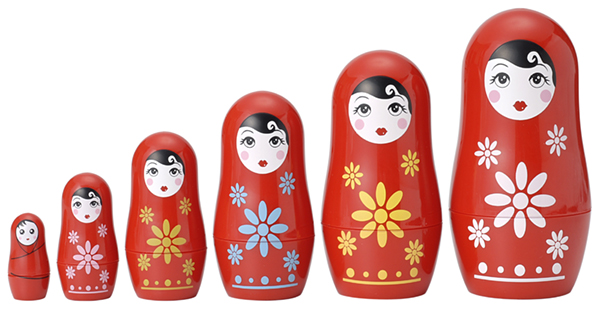
  • Again, at the teacher’s suggestion, we use a set of Russian nesting dolls to count repetitions of a piece.  We unpack the dolls, put them in a row, and then she closes a doll each time she does the thing, until they are all packed into one.

These are some things that have NOT helped:

  • Bossing her around;
  • Begging;
  • Getting really frustrated and walking away.

We don’t do charts and incentives, unless you count the classic vegetables before desert, “we need to practice before we go to the playground” sort of thing.  I’ve never wholeheartedly tried charts and incentives in general in our house, in part because philosophically, we want her to experience intrinsic (vs. extrinsic) motivation.  I don’t want her to practice for the sake of pleasing me, or getting money or a prize.  I want her to practice because she wants to do it, because it matters to her, because she loves playing violin.  I want her to have the joy of doing something  for the love of it.  Or for herself!  Short term, this means I don’t have as many ways to convince her to practice.  Which can be really frustrating.  (Sometimes I want to give up, but I don’t want her to give up, so I have to model not giving up.  Kind of like a lot of things in life, actually.)

Recently, we were at a group lesson, and it was my daughter’s turn to play her solo piece.  She was feeling put on the spot, and wasn’t comfortable enough to play the piece her teacher was asking for.  She began to cry, and we had to leave the room.  (We’d gotten a ride from a friend, so we had to wait until the end of the lesson, which was probably a good thing.  I might otherwise have left.)  As I sat, wanting to comfort my daughter, she said very clearly that the problem was that I hadn’t been making enough time to practice.  (She was right.  It was summer, our schedule had been irregular, and we had not been practicing enough.)  I felt ashamed, too ashamed even to explain to the friendly parents in the other room.  But as I thought about it, I realized that my anxiety was about my being judged, about being seen as an imperfect Suzuki parent.  Whose business is that?  Who cares?  After the lesson was over, I explained to the adults that my daughter said I had not been making enough time to practice, and she was right.  I am not Catholic, but I imagine that’s what confession feels like.  It felt good to tell the truth.  And then I recommitted to practicing regularly.  Even when I remind her of what she said, my daughter often does not want to practice, but then, she’s a kid.  There are so many other things she wants to do.  I can’t blame her.

Music should be fun.  And lately, when I let go of trying to steer it too much, it has been.

“…don’t forget you’re alive.”

Joe Strummer.  Nice hat.
Joe Strummer. Nice hat.

Last night, I  watched “The Future is Unwritten,” a documentary about the life of Joe Strummer.  I didn’t know much about Strummer beyond his music, and it was quite illuminating.  One thing that sticks with me was when he said:

“I don’t have any message except: Don’t forget you’re alive.”

(And all day, the words from Jon Langford’s “Oh No, Hank!” –from Nashville Radio–have been also going through my head: “He’s somewhere out there, happy and alive.”  It adds texture that the corn is actually as high as an elephant’s eye at the moment in my Ohio.)

From both legendary musical sources: Good message.  It strikes me that Strummer (and maybe punk rock, and Langford too, while we’re at it, who’s still somewhere out there, possibly happy and actually alive) is/was about nothing less than, essentially, reclaiming humanity.

“the briar grows before the rose, and neither grows alone.”

Thinking about Jack Hardy today, this May Day.  (Here’s my homage to Jack.)  I can’t find a clip of him playing the song, but here are the lyrics, for your edification, on this fine first day of May…

May Day by Jack Hardy

it's not like pan to play his flute
for those who dance for fun
the fire flickers through poison roots
where chance is on the run

it's not elves to hide their gold
where fortune seekers dive
though pirate lore and island shore
yield only ransomed lives

(chorus:)
there's may day and may wine
and may i please come home
but the briar grows before the rose
and neither grows alone
we'll dance tonight 'til we faint in the light
of the dawn's sweet song of spring
'round the may pole like a day stole
like our feet are borne of wings

it's not sirens to sing their songs
for sailors with cautious ears
they lure no coward right or wrong
and trade not death for fear

it's not like kings to yield their wines
for hundreds of years of war
though drop by drop the ancient vine
paints blood on every door

(repeat chorus)

it's not like girls to give consent
to men of ragged prose
though poets sing of nursery rhymes
their cradles are filled with hope

it's not like me to give my heart
in these drowsy daffodil days
though dreams they douse the timid spark
where sleep presents its plays

(repeat chorus)

it's not like saints to tell their tales
of nights on windswept moors
where death defies the dreams of fate
to close the cellar door

it's not like shepherds to lay them down
when wolves are on the prowl
though songs they scare the waking town
an ill wind has no howl

(repeat chorus)