my essay, “Everywhere is War”

To help launch their new anthology, Nothing Compares to You: What Sinead O’Connor Means to Us, editors Sonya Huber and Martha Bayne invited others to submit essays, which Sonya would share on her e-newsletter (Nuts and Bolts from Sonya). You can read “Everywhere is War,” my essay inspired by watching Sinead O’Connor destroy a photo of the Pope on Saturday Night Live. (Content note: description of child sexual abuse.)

p.s. It means so much to me, as a survivor of child sexual abuse, to tell my story. The act of telling (and writing, and sharing) brings the issue out from the shadow of shame. I am grateful to be alive at a time when we can do this. I am grateful for all the love and support that helps us heal. Thank you for being part of my healing.

Resources for the college search

photo of pond, blue sky reflecting in the water

I want to share some resources that our family found helpful in the process of choosing where and how to apply for college. (Our public library carries these books—you certainly don’t have to buy them unless you want to.)

Where to start? We started with COLLEGES THAT CHANGE LIVES.
This is a book by Loren Pope, and a website. (This is particularly helpful for people interested in liberal arts colleges.) From the website: “CTCL was founded on a philosophy of building the knowledge, character and values of young people by introducing them to a personalized and transformative collegiate experience. Although the member colleges approach this challenge with varying perspectives, institutional missions, and pedagogical strategies, a student-centered mission is common to all campuses.” And: “The Colleges That Change Lives, Inc. (CTCL) story begins in 1996 when a book by the same name — Colleges That Change Lives — was published by retired New York Times education editor and journalist Loren Pope. A longtime student advocate and independent college counselor, Mr. Pope sought to change the way people thought about colleges by dispelling popularly held myths and challenging the conventional wisdom about college choice. His groundbreaking ideals were welcomed by students and the college counseling community alike. As a result, many of the colleges featured in the book began working together to further promote this philosophy of a student-centered college search. In 1998 the CTCL organization was formally organized, independent of Mr. Pope (although with his blessing) and his publisher.”

Where else to go? THE FISKE GUIDE, by Edward B. Fiske. This is a regularly-updated, near-encyclopedia of colleges (large and small and in between). Extra helpful is information for each college that was gleaned from actual students. (Much more helpful than simply perusing a college’s website.)

Then when you are ready for more, check out the illuminating THE PRICE YOU PAY FOR COLLEGE, by Ron Lieber. Here you will learn various practical considerations and other ineffables (beyond ‘price’). Such as, don’t assume public colleges will be more affordable than private colleges! This book demystified the sometimes unnerving and weird intricacies of the college business, as well as how to appeal a college funding package (need-based or merit-based—and yes, people do that, and are sometimes successful, which I did not know).

Along the way, the college-bound person will need to write a college application essay. Maybe your college-bound person has ample confidence about how to do this (‘this’, meaning to write an 650 word essay that aims to convince a stranger to not only let them in to college, but offer huge funding…but no pressure!). If your person would benefit from some help, please check out The CAPE Crusade: Your Guide to a Great College Application Personal Essay by Billy Lombardi. This book is great for anyone who wants to write a personal essay (not only for college applications). I have written many personal essays, and I, too, found this book helpful! It’s like a workshop in a book, and offers the reader/writer great ways to get to known themselves better, what they care about, and who they are. In addition to offering step-by-step, life-affirming advice, it alleviates pressure on the reader/writer. I could go on and on! But I must at least say that using even parts of this book—to write an essay without the use of AI—will help a college-bound human feel more confident in their ability to navigate personal storytelling, and the writing process in general. Which will help them be more prepared for college. This book is seriously great!

(Please please please don’t let them resort to using AI!)

(p.s. If you know a college-bound person who might want support in the writing process, please do contact me for more information. And please check out Dear Inner Critic: a self-doubt activity book, which will be handy for college applicants and others!)

(p.p.s. And parents/families: Please remember to attend to your own inner game.)
Dispatches from Utopia

My latest essay, “You Never Know: On Memory and Memoir and Packing Light,” is now online at Reading and Traveling. This piece is among the fabulous Dispatches from Utopia that we Wayward Writers wrote at (or after) camp in the Catskills in April 2024.

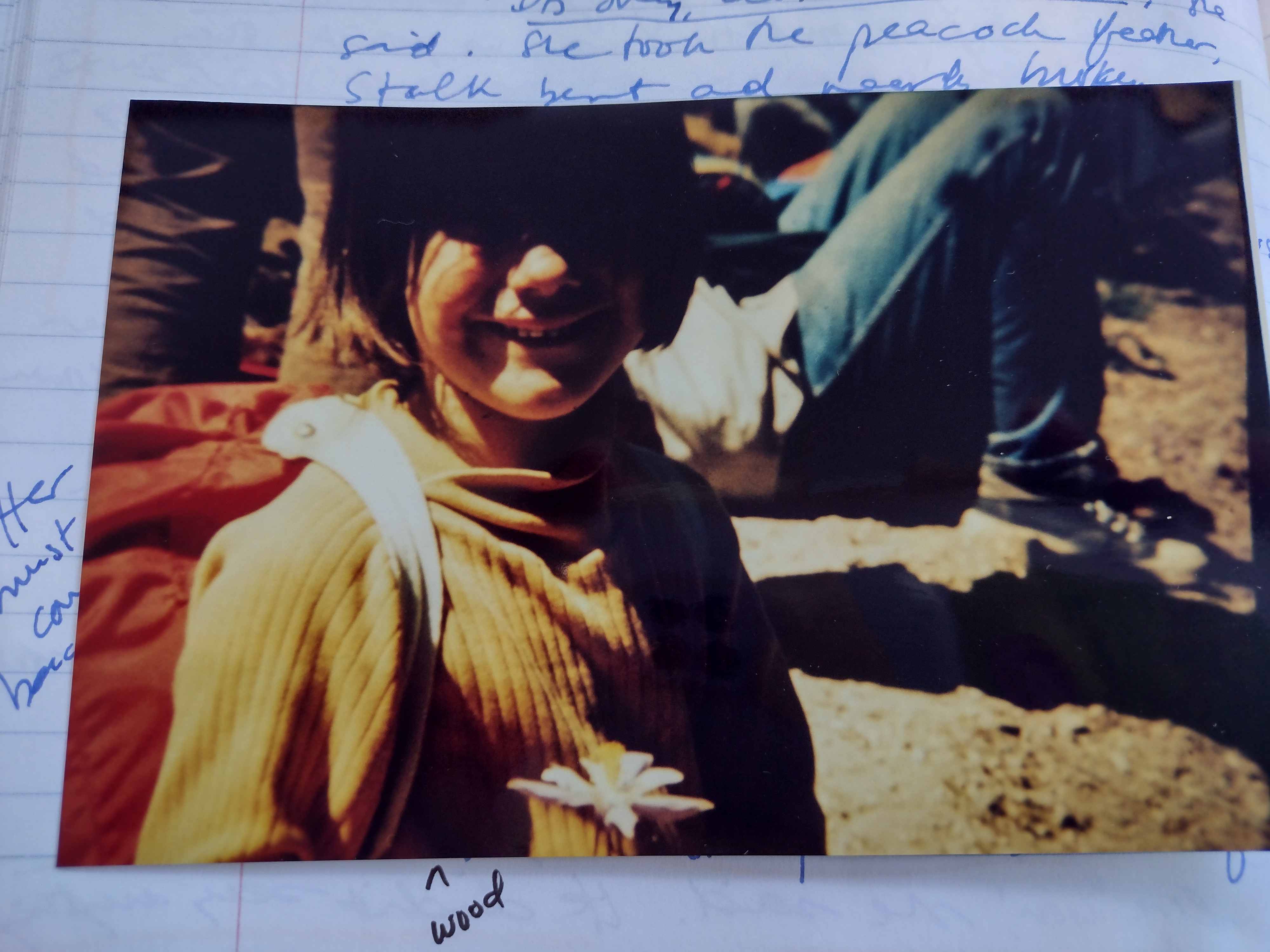
My piece centers on the gap-filled memories of the 1972 inaugural Rainbow Family Gathering, which I attended when I was five, with my young parents.

I am grateful to have had the opportunity and space (at the Mutual Aid Society in the Catskills, a new utopia forged by Adrian Shirk and others) to unearth & investigate these bits of light, and grateful to Ariel Gore and the amazing, badass campers for their curiosity, hearts, and willingness to play.

Trauma (present tense)

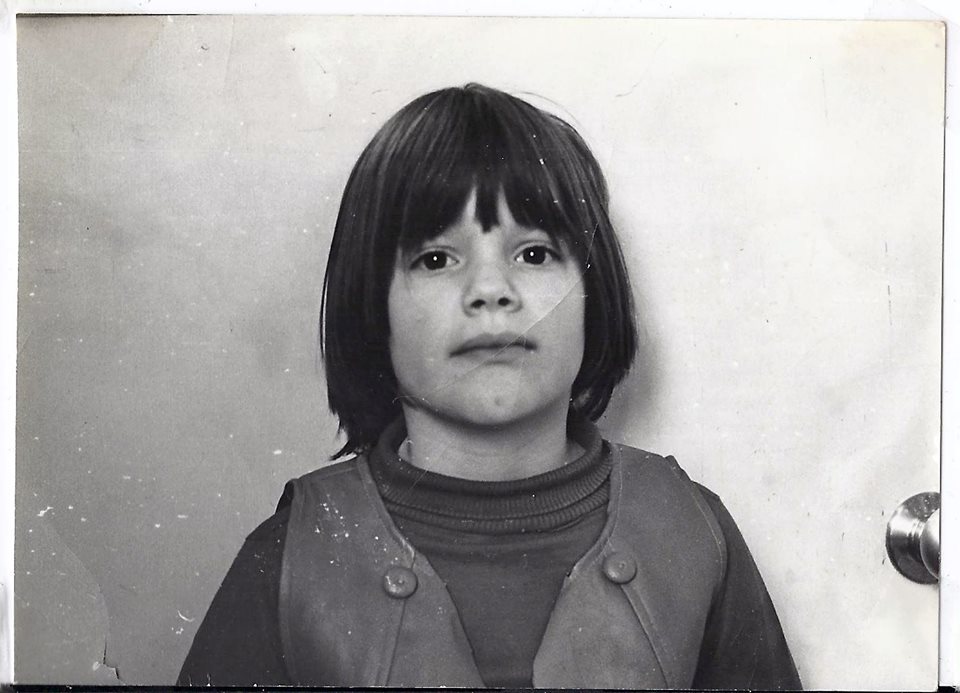
child in vest
me, younger

I’ve been thinking about the hippocampus lately. I did a web search and found Dr. Christine Blasey Ford’s testimony. I’m pasting it below.

“Indelible in the hippocampus is the laughter,” Ford says, her voice cracking. “The uproarious laughter between the two. They’re having fun at my expense.”

“You’ve never forgotten them laughing at you,” Leahy says.

“They were laughing with each other,” Ford replies.

“And you were the object of the laughter?” Leahy asks.

“I was underneath one of them, while the two laughed,” Ford says.

In an essay I wrote about my childhood sexual abuse, as I shaped and shaped the narrative, it became clear that most of the piece should be told in the present tense. I did this to replicate how trauma works in the memory.

The brain stem, the so-called lizard brain—the part of the brain that registers trauma—has no sense of time. The lizard-brain is the part that keeps us alive, eliciting a fight, flight, or freeze response. Because of the lack of time involved with the lizard brain, when long-ago trauma is triggered, it is remembered outside of time. The sensation is as if it is happening now.

Dr. Ford was questioned 36 years after she claims to have been assaulted by Brett Kavanaugh, but on September 27, 2018, when questioned, she says, “They’re having fun at my expense.”

Present tense.

A grammatical slip. But also true.

Because that’s how it feels.

A thing that won’t happen again (two essays published in two weeks!)

IMG_5518
Blue heron on Ellis Pond

All I can conjure to write is the cliche about raining and pouring, but I’ll spare you that. Another essay I wrote went live today on the Jaded Ibis Productions blog, Bleed. (You can read the essay here. And the essay at the Manifest-Station is here.) I’m so grateful to be able to share these fragilities with others. Sending my personal essays into the world is wholly new for me, and my baby legs are tottery. I’ve been inspired by the brave writing of people around me, including Rachel McKibbens, Taylor Mali, and Tara Hardy, the awesome poets I wrote about in the essay. Witnessing their courage, I awaken my own. My hope is that if I act brave, others will, too. And the world will become more whole.

Although many things distract me from knowing that it’s really this simple, lately I keep circling back to the core: For me, the whole point of doing this work (fiction, nonfiction, poetry, anything) is to connect with our shared humanity. That’s it. There are tools for this work (the craft) and plenty of folderol but really, it’s about finding and seeing the spark that lives in each of us.

(On Saturday night, I was with a group of others at Ellis Pond in Yellow Springs.  A blue heron stood on spindle legs in the water, undisturbed by our gathering. Calmly teaching us about how to live.)