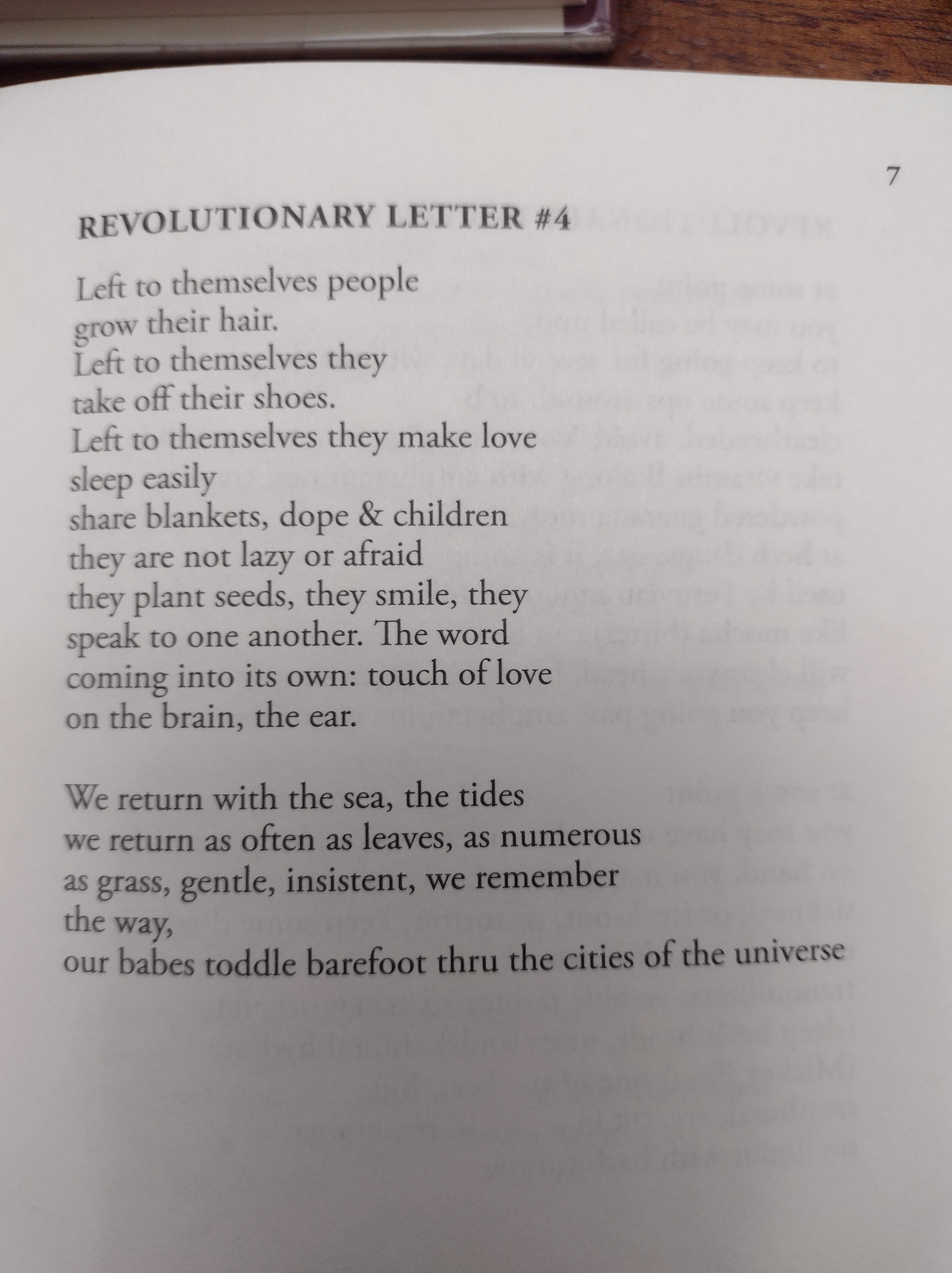
I just started reading Revolutionary Letters by Diane di Prima. Wow. It’s powerful and relevant and it’s blowing my mind.
Why did I never read this book before?
Why are the children not reading this book in high school English class?

I just started reading Revolutionary Letters by Diane di Prima. Wow. It’s powerful and relevant and it’s blowing my mind.
Why did I never read this book before?
Why are the children not reading this book in high school English class?
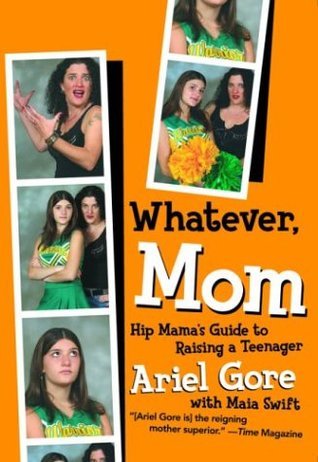
Whatever, Mom, by Ariel Gore & Maia Swift…What a great book. I read it in 2023, and while the times have changed a lot for all of us since this book was published—it’s still extremely relevant. The love and wisdom in these pages still apply, maybe more than ever. So grateful for this book as a guide through the brambles of raising a teen. Check it out!

Teen drug use concerns me. I am learning more about it, with the lofty hope of de-normalizing it. I’m assuming others might feel the same, and I hope this post is helpful.
When I was a teen, I smoked pot at fairly regular intervals. I was lucky and didn’t develop problems related to drug use. But marijuana & its spinoffs are quite different than back in the 80s. It would be natural for someone like me to shrug off kids using pot (after all, We turned out fine!). So I’m grateful to learn how these substances are different now—and to focus on what we now know about the teen brain.
It seems like harm reduction is a really wise framework for this topic. A friend pointed me toward a helpful brochure called Safety First. It’s free, downloadable, and you can also order print copies. That was a great place to start.
If you want to go deeper, there’s a whole curriculum (also free) which you can find here. The curriculum is extremely informative, and has seeded important discussions in my family about harm reduction strategies, mental health, and other crucial things. Learning together has helped us consider (in a non-judgmental framework) how we choose to be in the world.
The curriculum includes helpful videos (from AsapSCIENCE) like this one, about smoking vs. vaping. What I like about these videos is that they are chock full of science & facts, and are engaging and non-judgmental.
(Did you know? In Ohio, Good Samaritan laws protect teens who call 911 for medical help when they see someone overdose. I don’t know if this is widely known. Please tell your humans about this—and let’s all look out for each other.)

This passage from Celeste Ng’s novel, Little Fires Everywhere, captures so perfectly the feeling of wanting what I know I can’t have.
“After Pearl had begun to snore softly, Mia kept her hand in place, as if she were a sculptor shaping Pearl’s shoulder blades. She could feel Pearl’s heart, ever so faintly, beating under her palm. It has been a long time since her daughter had let her be so close. Parents, she thought, learned to survive touching their children less and less. As a baby Pearl had clung to her; she’d worn Pearl in a sling because whenever she set her down, Pearl would cry. There’d scarcely been a moment in the day when they had not been pressed together. As she got older, Pearl would still cling to her mother’s leg, then her waist, then her hand, as if there were something in her mother she needed to absorb through the skin. Even when she had her own bed, she would often crawl into Mia’s in the middle of the night and burrow under the old patchwork quilt, and in the morning they would wake up tangled, Mia’s arm pinned beneath Pearl’s head, or Pearl’s legs thrown across Mia’s belly. Now, as a teenager, Pearl’s caresses had become rare—a peck on the cheek, a one-armed, half-hearted hug—and all the more precious because of that. It was the way of things, Mia thought to herself, but how hard it was. The occasional embrace, a head leaned for just a moment on your shoulder, when what you really wanted more than anything was to press them to you and hold them so tight you fused together and could never be taken apart. It was like training yourself to live on the smell of an apple alone, when what you really wanted was to devour it, to sink your teeth into it and consume it, seeds, core, and all.”
—Celeste Ng, Little Fires Everywhere (p. 248)
(Learning “to live on the smell of an apple alone” seems like the work of my current stage of motherhood.)

I’m keeping a list of books & resources that have helpful to me in raising a human person. I thought it would be helpful to share them here. Please preview to see if they will work for your family. :)
BOOKS for pre-teens and teens
BOOKS for adults
ONLINE:
Drugs & Alcohol education for teens (harm reduction model):
Want to talk to your kids about drugs? Take a look at this helpful, free brochure from the Drug Policy Alliance called Safety First. And here is their free curriculum.

I’m thrilled to announce that my essay, “(Perfection) DEFECTION” was published in the summer issue of Tiferet Journal. You can read the essay by clicking on the link below. Please also consider purchasing the full issue for $4.95 through Tiferet’s marketplace.
This essay grew from a rant I wrote and performed at Women’s Voices Out Loud in Yellow Springs, Ohio in 2016. (You can read more about Women’s Voices Out Loud here.)
I’m grateful to Gayle Brandeis and all the good people at Tiferet for the opportunity to share this piece, and for the work they are doing in the world.
Enjoy!

Time for another episode of Rebecca Recommends!
I recently read Talk To Me First: Everything You Need to Know to Become Your Kids’ “”Go-To”” Person about Sex by Deborah Roffman. Alongside books like the Robie Harris sexuality books (It’s Not The Stork for ages 4 and up, It’s So Amazing for ages 7 and up, and It’s Perfectly Normal for ages 10 and up), and Peggy Orenstein’s Girls & Sex, Roffman’s book is an excellent, excellent resource for parents who want to encourage healthy sexuality in their kids.
Roffman’s book is about much more than sexuality. Really, it’s about how we talk to children, and what children need from the adult nurturers around them so that they know how to make smart, thoughtful decisions. She talks about what children need, and based on those needs, she describes communication as a five piece suit, composed of 1) affirmation, 2) information, 3) clarity about values, 4) setting limits, and 5) anticipatory guidance.
Soon after I started reading it, I had a conversation about something else difficult (I can’t even recall what it was, but I know it didn’t have to do with sexuality) using Roffman’s ideas, and was able to navigate the awkwardness with grace and honesty. In terms of discussing sexuality, I have my own baggage and tricky spots—and Roffman’s book helped me approach some of those things that previously felt too scary or uncomfortable.
I recommend this book to anyone who wants to help guide children toward strong, healthy adulthood.

January 20, 2017
Dear Merida,
Today, I’m knitting the last of three black wool pussy hats for friends who will travel to Washington DC to the women’s march. Today, for a few more hours, Barack Obama is president. I’m grateful that he’s been the only president you’ve know in your lifetime thus far. I’m sad to see him go. No one is perfect, but he has been a wise and compassionate leader. This morning when I put on my Obama tee-shirt, you said you’re sad for your friend. When I asked why, you said because her birthday is the day after Trump moves into the White House. I said no, he can’t ruin our parties! I said he’s not that powerful.
Here’s what else I want to say to you today: There are so many ways to make the world better. Some ways are to listen to other people, to be kind, and thoughtful, and maybe most importantly, to be fair. To realize that we all deserve to be free, and to work to make that happen. When we see something that isn’t right or fair, we speak up and make it better. If you keep these things in your mind and heart as you grow, if you keep paying attention to ways you can make the world more kind and fair and just, you will make the world better. No one can ruin the party of the world that you and your generation are creating. You know that song we sing, the one that goes: “A woman who loves herself, though she may be shaken, a woman who loves herself will never fall.” The beautiful world we are creating is the same as that woman. We do create the world, all of us, each of us. If we fill it with fairness and compassion, even when it is shaken, it will never fall.
At the Women’s Park in Yellow Springs, along with many other friends and family, your name is on a stone, along with the words of Patti Smith: “The world is yours, change it, change it!” You and your generation will find, and will be, the leaders. You will continue making the world more fair and loving. All you need to do is keep listening, and trust what you know in your bones: that we all deserve to be loved and free.
I have infinite faith in you and your generation. You are strong and mighty. Your hearts are brimming over with love, and your voices resonate.
Use your strong hearts to keep shining the light of love and compassion outward to all.
I love you,
Mama
I sing this song often. I sing it in my circle. When I sing it, it is sometimes a balm, sometimes a war cry, sometimes a dirge for some part of myself, or a blessing, or an encouragement for someone who needs to remember what is waiting inside her, and has been, all along.
It goes something like this:
My sister, pick up your power.
My sister, claim your voice.
Remember those gone before us.
And pray for those yet to come.
Today I am singing it for Hillary Clinton: May she pick up her power, claim her voice, remember those gone before us, and pray for those yet to come.
May she plant her feet firmly in the ground, feeling the connection to Mother Earth.
May she feel the strength of the ancestors in her bones.
May she sing the songs of peace and protection that are in her to sing.
May she access all her selves, and even discover new ones: mother, warrior, peacemaker, human.
 Rebecca Kuder