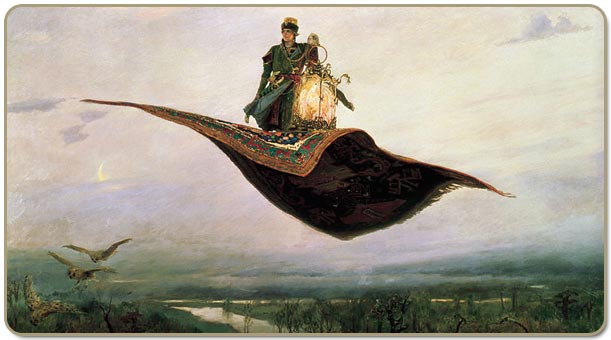
 Oh, novel. I’m to page 182, near the end, surely, and sure, and not sure, how it ends. Looking into the less cloudy abyss. How not to rush, how to give it the time it needs? Stevie Wonder sings, in cafe background, “I believe (when I fall in love it will be forever)…” How many times does he repeat that line, I can’t count, but enough times until I start to believe in its incantation, and the love becomes the writing…and then…
The river of lost words
 Trying to recreate words lost in the recent death of my hard drive (and overly old backup files). Writers beware: back up your data. (Or risk having to recreate. I think the following might be better than what I had, but there was too much angst in the process of loss.)
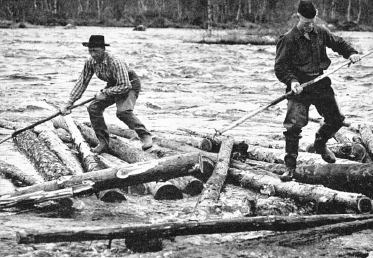
Years before, opportunity had stolen most of the trees. Bend, snap, cut went the rhythm of thieves. Wood mill. Trees sometimes fall naturally into water, storms come and leave their messes behind, but these logs were felled too fast, unnatural, and shipped down the river, money to be made. They’d grow back, some said, but forgot to plant seedlings, no thought beyond the next greed-meal. Just along the river, a few bushes remained in the thin trickle of lush.
The logical vs. the expected
 Someone very smart just articulated something I needed to hear. In the context of writing fiction, specifically, world-building, there’s a need to embrace the logical, but move away from the expected. For instance, if your novel is placed along a river, in a very dry climate, there would be trees there, or if not trees, an explanation of what happened to them. Logical, both in nature, and in the context of the world being created. But when a writer is deciding which of two characters named Anton (“Anton the Elder” and “Anton the Younger”) should quit a carnival due to fickle working conditions, the expected would be the younger leaving. Youth has more energy and less patience, right? But why can’t Anton the Elder leave?
So I decided he did leave. In my world, age has more wisdom and less capacity for bullsh*t.
The beginning of empathy?

My daughter, who is two-and-a-half, is developing a habit of hugging books. When we’re reading a story and someone gets hurt, or might be scared, or sad, she embraces the book for a long moment. When Madeline gets her appendix taken out, or when Sal loses her tooth (One Morning in Maine) and makes a bitter face “almost like crying,” my daughter leans in to hug. She does this with her parents, too, when we stub toes or drop things, or are not feeling well. In trying to raise a child who cares about other people, we’ve talked a lot about considering others’ feelings, reminding her that it hurts the cat when she yanks his tail.
Tonight, I was reading Harold and The Purple Crayon at bedtime.
“He was tired and he felt he ought to be getting to bed. He hoped he could see his bedroom window from the top of the mountain. But as he looked down over the other side he slipped–And there wasn’t any other side of the mountain. He was falling, into thin air.”
Harold is shown upside down, with his purple crayon, simply falling. My daughter leaned in to hug Harold, and then held and comforted him (the book) for a long time. She said, “I’m going to hold Hamold” (as she calls Harold).
The wise people who write about child development tend to discount these early displays of empathy, and certainly my child does her share of throwing her dolls to the floor so that they cry, so that she can comfort them. (I encourage her not to throw them to the floor–“It’s better if they don’t cry in the first place, right?” but that’s not the point. She needs them to cry so that she can comfort them.) It is heart-warming to see her hugging a book, especially when the child protagonist is in peril, or pain, but I don’t think my daughter is unusual in this way.
I read an article recently (I wish I could remember where!) about a book that was claiming there is too much fiction in K-12 curriculum, and that children need to learn how to read nonfiction, that it helps them learn about the real world more than fiction does. Admittedly taken out of context, this notion really bothers me. Yes, children need to learn to read all kinds of things, and it’s crucial that they learn the nuances and distinctions between fiction and nonfiction. But how can I say that fiction doesn’t teach children about life in the “real” world? Even putting “issue” books aside (in my generation, there was Judy Blume) it’s not fair to partition fiction out of what is real in the world.
We learn the world from stories, and through stories.
p.s. There is truth and fiction everywhere.
Antioch Writers Workshop July 2010
Embroiled fully in this year’s Antioch Writers Workshop. I love being around writers, talking about writing, writing with writers, the world cracking open before me.
Before the keynote on Saturday, I was driving to campus and feeling guilty, semi-taking a week off from child, home, life, to do the workshop, because sometimes it seems like choosing to be a writer is a silly luxury (but is it even a choice? I ask myself).
However.
Then I realized (it’s so easy to REALIZE things while driving, isn’t it?) that all writing is really about life. Whether fiction or nonfiction, poetry or prose, a person (who is alive) puts something on paper (or screen, or sand) and it means something to at least one person. What else is life, if not that?
I was right!
 As long as I can remember observing the phenomenon, the “act” of listening to someone talk on a cell phone has annoyed me. On the other hand, unless the participant voices are overly loud or grating, listening to two people talking in a cafe rarely bugs me–in fact, it’s often good ambience for writing. (Especially at a place like The Underdog Cafe, where it has been scientifically proven that 99.23% of all conversations are exceedingly intelligent.) But I find overhearing half a conversation irritating.
As far as back as when cell phones first became the fashion, my theory has been that the act of hearing one side of a conversation forces my brain to fill in the other side of the conversation. I can’t not guess at what the other person is saying. I don’t think it’s exclusive to writers, but maybe writers (thinking about dialogue in a very intentional way) are more susceptible to this irritation. I’ve told friends about my theory over the years; they can back me up here.
Turns out I was right, that’s just the reason it’s maddening! Cornell University researchers found this to be true.
I love being right, even if it confirms a reason for something that I’ve always hated. Yes, I said hated. However, being that I am human, and therefor a hypocrite, I own a cell phone. And have talked upon it. I try not to have conversations where there is a captive audience–usually I go to a hallway or go outside, away from other people. Partially because I value privacy (so why do I blog? Hmmm…) but also because I know how irritating it is to hear others’ conversations.
Just trying to do my part to be a good, community-minded citizen.
But I do love being right.
Lovely review of Wexler’s The Painting and The City
There’s a very nice review of my husband’s novel at OF Blog of the Fallen. The reviewer, Larry, really seems to get at what I observed when I watched Robert work on the novel, when he says,
“Wexler’s novel felt as though it were a briskly-paced story that had been stripped of any extraneous fat, leaving the reader with a story that moves at a falsely languid pace until s/he realizes just how quickly things have developed and how engrossed s/he is with what has transpired.”
Gratifying!
Imagination proves life is worth living
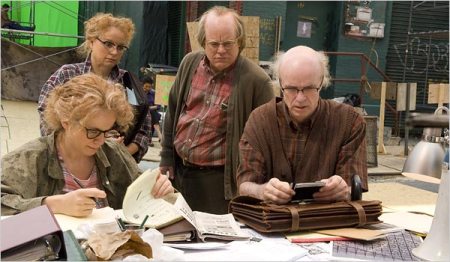 A couple of weeks ago, I watched “Synecdoche, New York” with the brilliant Phillip Seymour Hoffman leading a delectable cast of independent actor types. I say “types” because the layers of fiction and nonfiction within the film (and the roles reversed and layered and reversed again) were so head-spinny that it made my head spin like a terrible cliché.
But.
The film was incredible. Incredible that what started out as a dire look at what appeared to be the real world cracked open so deliciously and before me stood actors, cardboard cutouts, people, all echoing each other so brilliantly. In a way, it reminded me of the intricate and mostly successful novel called The Way Through Doors by Jesse Ball.
So the film opens with this depressive, apparently hypochondriac theatre director (Hoffman looking really terrible) whose best creative days are behind him. His painter wife (played by the fabulous Ms. Catherine Kinnear) and child soon leave for a show in Berlin without him. From that point on, things (like time, space, etc.) start to crack open. Layers of paint and facade peel off. Hoffman’s character gets involved with a woman who buys a house that is literally on fire. Etc.
Grindingly depressing, maybe.
But.
Phillip Seymour Hoffman holds the work together, like glue for layers of peeling wallpaper that wants to step off the wall and live a life that has nothing to do with two dimensions, thank you.
If you have the time and patience to sit through some grim, horrid, sad “what is the meaning of art?” types of questions, please watch this movie.
The fact of making a movie like this, and the human spirit embodied in a piece of work that sustains the crazy fantasy magical mess that unfolds (and folds back upon itself, several times), to me, proves the point that life is worth living. It is such an incredible work of imagination. This fact: that the filmmaker (Charlie Kaufman) made his film to the end, taking the magic of the world he created seriously is a feat of genius and love. This type of real commitment to something (anything!) magical seems sadly rare in these cynical days.
The mere fact of the film undercuts the miserable character’s quest for meaning, and in a strange way, I found it completely uplifting.
The importance of manuscript formatting/I admit to being a nerd!
As a new faculty person, I am learning about a thing I refer to as “Thesis Season.”
It’s fascinating and exhausting. I’ve read a bunch of creative writing manuscripts in the last few months, sitting right next to to sentences, words, and images. (Luckily, the writing is often beautiful, lyrical, strong, clean, titillating, and compelling. I do love my job.)
One thing, though, that has got me all het up, is the importance of following instructions. Some writers are more comfortable with computers and word processing than others: writers are like other humans in that way. If I could, I would take all these writers into a room and together, we’d go through each step to achieve proper formatting. Margins, line spacing, consistent typeface, point size, page numbering. I know that these details can be really hard to face if you’re not adept at digital technology. I’m lucky that my previous job was all about showing students and faculty how to navigate the word processing jungle. I’m a nerd about this stuff. According to Microsoft, I am a “Word Expert.” (This always amuses me, especially when I’m writing, because the last thing I feel like is a word expert!) For this reason, however, I harp on formatting. My students might be tired of hearing it, but I am trying to help them as they approach the larger world where their work will be judged by someone who doesn’t care about them nearly as much as I do.
As writers, it’s in our absolute best interest to follow guidelines EXACTLY. If a publisher desires certain formatting, we better pay attention. If the goal is to impress the reader with our lovely words, sentences, images, then having the manuscript itself not distract from that seems essential.
Teachers, but more importantly, future editors, are easily distracted by a writer’s inattention to these details. They are looking for a reason not to read our work. Let’s not give them the one that is, in some ways, easiest to avoid.
If a writer wants to be taken seriously, is in her best interest to gain control over the “physical” aspects of manuscripts.
The Word Expert has spoken.
Stark Folk Interview (via Laconic Writer)
This is an interview that my husband, Robert Freeman Wexler, did with Brady Burkett of Stark Folk. Check out the interview; check out the band!

via Laconic Writer
 Rebecca Kuder
