What Can You Make Of It? (for Becky Teilhet, and Aliki)

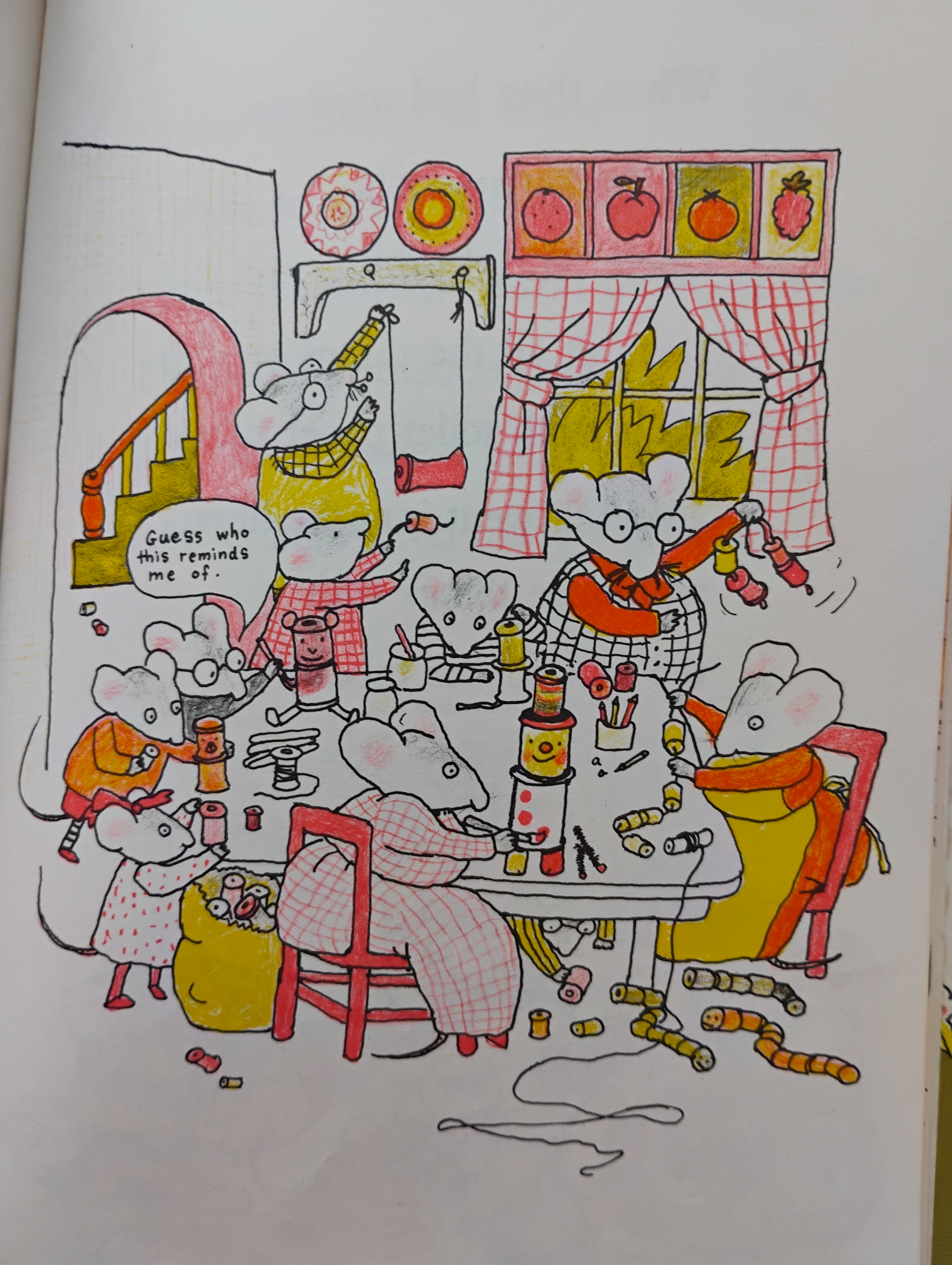
illustration from p. 35 of What Can You Make Of It? (field mouse family making crafts at dining room table, 1977 picture book by Franz Brandenberg, illustrated by Aliki)
from What Can You Make Of It? p. 35

My neighbor Becky Teilhet was a baby whisper. When I had a baby, her first sleepover was at Becky’s house next door. Becky was a remarkable person, sweet and funny and a little mischievous and she had a beautiful, huge, loving heart. Her husband Justin is a ceramic artist. They made a living with art. Becky made beautiful quilts. Once, she loaned us a book she had read to their son Jay, called What Can You Make Of It? by Franz Brandenberg, illustrated by Aliki.

Published in 1977, the book depicts a family of field mice, who live in New York City (or near—the illustrations include a Zabar’s bag). The mice are preparing to move, and rather than get rid of their rubbish, they keep and move their collections of egg cartons, orange juice cans, yarn spools, old magazines, etc., which means they need seven moving vans. “Mr. and Mrs. Fieldmouse’s new house was an old house,” says the start of Chapter Two. Once inside the new old house, they must decide where to put all the rubbish. It lands in the garage. When Uncle Alfred and Aunt Kate come to visit in chapter three, the Fieldmouse family must clear out the garage so their visitors won’t have to park on the street. They lug the rubbish from the garage (“Garages are for cars,” says Mother Fieldmouse) into the new old house. The visitors arrive, and remark upon the nice new old house which has no place to sit down. In Chapter Four, Uncle Alfred—perched impossibly on the top of a tower of old magazines—says, “Look at all the things you can make with rubbish!” The field mice proceed to make lions, tigers, horses, bears, a top hat, then snakes, a trapeze, monkeys, a clown, a rattle, a family of elephants, a microphone, opera glasses, a hoop, a cannon, turtles, pedestals, cups, owls, a rabbit, and cages. “We have made a whole circus!” says Uncle Alfred. They take everything into the garage and present The Greatest Show On Earth.

Like my neighbor Becky, the illustrations are sweet and more than a little mischievous—these dear mice are always in motion, stuffing toilet paper tubes into bags, tripping over spools. It’s a fabulous book. (It’s out of print, but findable in libraries, and definitely findable on eBay or abebooks.) (Thank you, dear Becky.)

As soon as we read it, we decided to start a What Can You Make Of It? bin. We kept whatever seemed it would be useful. Our child made tons of creations from the bin. It became a reflex—if she needed something, someone would say look in the What Can You Make Of It bin!

#

I come from a family, a culture of rubbish-keepers. The central thing may be to find something to make from the leftovers. Letting it sit around and gather dust or take up space meant for other things will (eventually) stop working. To keep everything forever is not sustainable.

A lived life may be full of discarded rubbish. A day lived, memories, experiences. When I write memoir, I go to the bin, see what’s there, tape it together, arrange it with something else—trying, always, to see what I can make of it. If I make something, if I even try, even when it doesn’t turn out how I imagine, doesn’t that mean this life is more than just emptied and spent days? Doesn’t that mean it’s more than rubbish?
Support Haitian immigrants in Springfield, Ohio

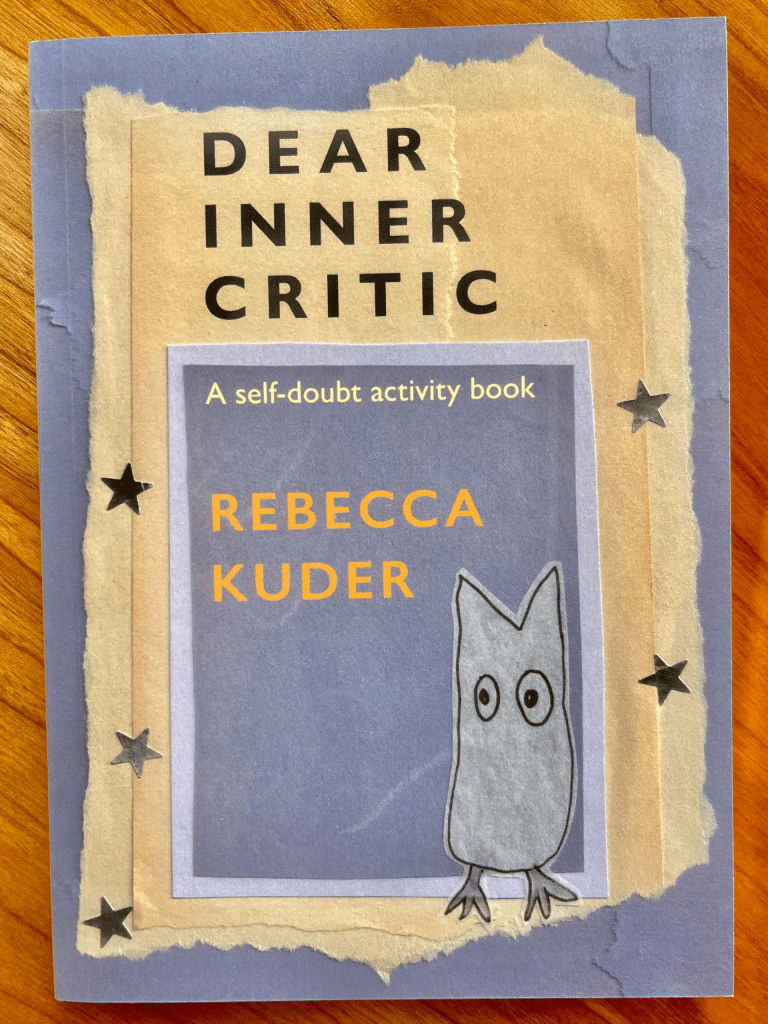
photo of cover of Dear Inner Critic: a self-doubt activity book

From now through March 31, I will donate all proceeds from direct sales of Dear Inner Critic: a self-doubt activity book to groups that are supporting the Haitian community in Springfield, Ohio.

To purchase directly: Venmo or PayPal $15 (includes shipping—please specify mailing address or local pickup) PayPal: rebecca.kuder (at) gmail.com
Venmo: @rkuderys (last 4 digits=4484)

Dear Inner Critic letters (January, 2026)

photo: shadow of human standing on sidewalk

[On a recent solo writing retreat, I noticed I needed to write something before I started writing. Here’s what I wrote.]

5 January, 2026 (Day One)

Dear Inner Critic,

It’s been a while. I have not really had much to say to you, but I noticed lately you’ve been sneaking in the back door of my thoughts, leaving plastic bags of rotten produce, a little stinky, I noticed you by the smell. Very sneaky, to find ways other than your usual mean notes scribbled on scraps of paper or your megaphone in my ear in the dark when I’m trying to sleep. The bags of yuck are not welcome, I asked you a long time ago to take them out to the compost, it’s almost as if you are digging up the junk from out back in order to bring it to me—why? I don’t need that stuff, those nasty packages, it can all just go back out there to fester & rot and make new soil. I do not need to smell its process. If you are trying to get my attention, just ask, just give me a face to face, just say what you mean. In the meantime, I don’t need your stinky parcels. I’m glad I realized it was you so I could remind you. I want you to find something else to do with your time & your trash bags. I don’t need your shade. Right now I’m trying something new, so just let me do it. You do your thing, somewhere else.

Thank you for your attention to this matter.

Love,
Rebecca

***

6 January, 2026 (Day Two)

Dear Inner Critic,

First of all, I can hear you muttering about how I didn’t do enough yesterday. That is your opinion. But I am not a machine. I don’t need to defend myself to you, but I will say that I needed some transition time, to get settled into the space & the time & the project. It’s not like I did nothing! Yes, I watched a trashy movie & took a bit of time to walk & shop. No I did not start that blessed Cat book yet. But I am going to give it a try today, and besides, who is in charge here? It’s me, not you. You are just a voice in the distance, you are not the one writing this novel. You are a pebble in my shoe, to be perfectly candid. At the very least, could you find something else to do, in this cute little town? Could you just take a day off, please?

Thanks for your help!

Love,
Rebecca

**

The good news is that I had a couple more days on the retreat, but felt no need to write any more letters. So I just spent the time working on my new novel. Stay tuned…

What is wrong with people?

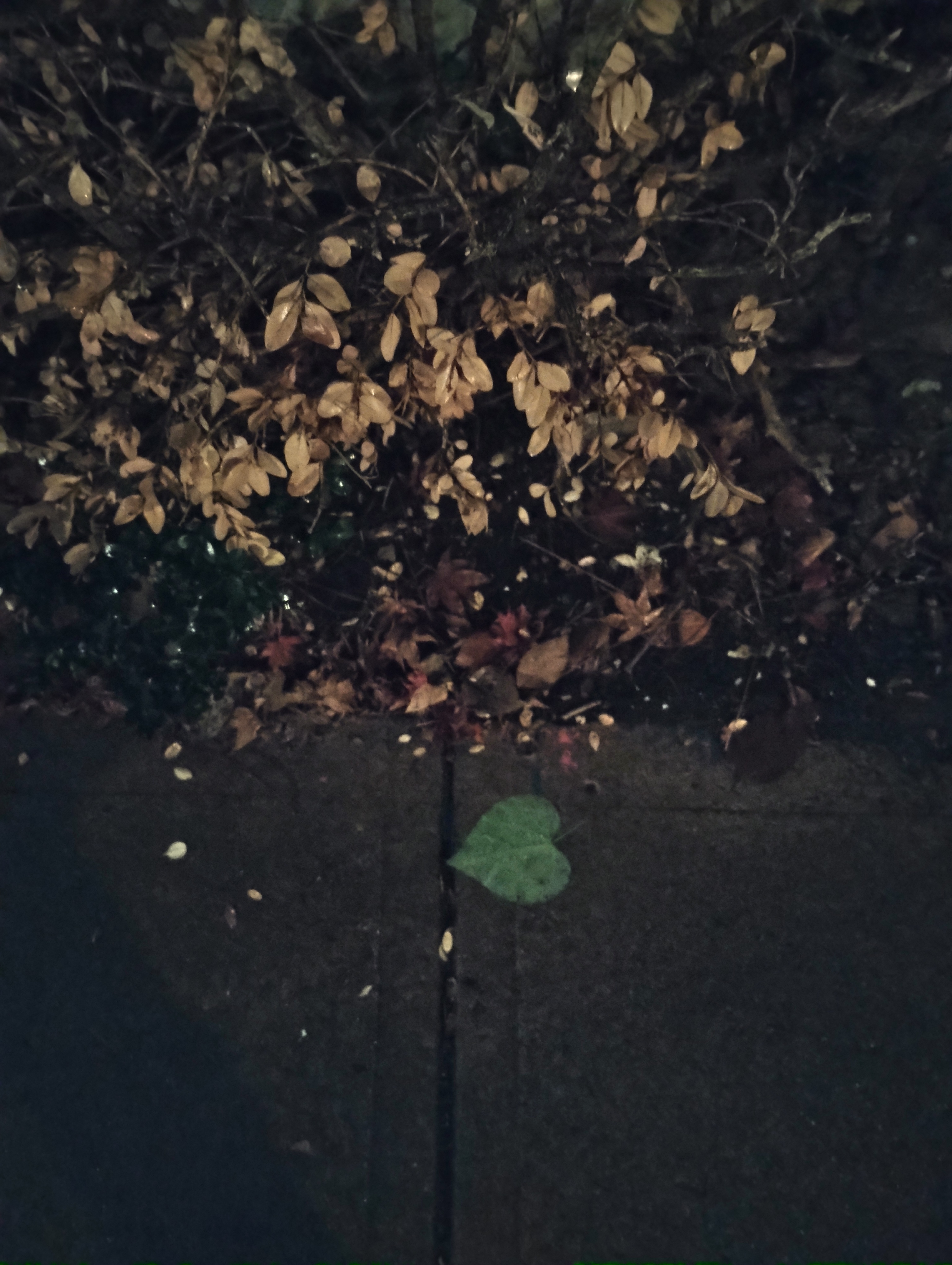
photo of heart-shaped leaf on wet pavement

So so many mass shootings lately, and constantly (each person dead sending out a ripple of grief to their beloveds, mycelium, we all are, in this broken world…)…and just now the heartbreaking killings of Rob & Michele Reiner, which hit me in the gut. I grew up watching All In The Family, and of course there were so many other beloved projects he made… On social media, as often happens after yet another moment of irrevocable (people gone) violence, tragedy, I saw people asking ‘what is wrong with people?’ A cry of agony, we all feel it…this morning what came to me, by way of working toward an answer:

We are traumatized & trauma-tired, and capitalism and materialism and white male patriarchy do not value, or leave (or make) room for mending ourselves & our relationships. And I don’t know what to do about it, except to work on my little corner of the world (& myself). These violent deaths are so fucking sad and senseless. There are plenty of things we can do in the public/political realms, so let’s find our things, but sometimes it’s all I can do to take care of myself & my people, and just breathe every moment and try not to lose faith in humanity. That’s it. A hard thing. But it’s one thing I (maybe we) can do.

Thank you for reading this post. May we each find something we can do.

my essay, “Everywhere is War”

To help launch their new anthology, Nothing Compares to You: What Sinead O’Connor Means to Us, editors Sonya Huber and Martha Bayne invited others to submit essays, which Sonya would share on her e-newsletter (Nuts and Bolts from Sonya). You can read “Everywhere is War,” my essay inspired by watching Sinead O’Connor destroy a photo of the Pope on Saturday Night Live. (Content note: description of child sexual abuse.)

p.s. It means so much to me, as a survivor of child sexual abuse, to tell my story. The act of telling (and writing, and sharing) brings the issue out from the shadow of shame. I am grateful to be alive at a time when we can do this. I am grateful for all the love and support that helps us heal. Thank you for being part of my healing.

Dear Inner Critic—Interview by Ariel Gore

sepia tone image of human, on the floor, with papers and material spread out, writing on a notecard.

I am so grateful for Ariel Gore‘s invitation to chat about Dear Inner Critic: a self-doubt activity book and other salient things. Read our interview here. Ariel’s Literary Kitchen (aka School for Wayward Writers) is where Dear Inner Critic was born, so to share the book’s story there warms my heart.

If you are like me, you know in your bones that these times call for much inspiration and fortification! So please do whatever you can to support independent, collective, human-scale publishing, and eschew the monsters of big capitalism!

Head over to the Literary Kitchen’s Underground Book Shelter to purchase fabulous, unique, humanity-expanding books.

Resources: The inner game of parenting a person who’s heading off to college

pond reflecting blue sky

(My intention is for this post to grow as I find more resources. Stop back often!)

As a parent, I have long appreciated wisdom and advice from Lisa Damour. Her podcast about college-bound kids is really helpful.

And after I reached out to others for help, my dear friend Melissa shared a post from Gretchen Rubin about dropping kids off at college. (In that post, Gretchen Rubin writes: “I’m not really sure what I’m feeling. A friend emailed me, ‘You may still be processing those emotions for a long time.’ I think she’s right.”)

Nick Cave and The Bad Seeds (Wild God tour, Columbus, Ohio, May 2, 2025)

blurry photo of bottom half of man carrying umbrella, city sidewalk.
(Seems fitting this was the only photograph I took that night. Photo taken by accident. Husband carries umbrella.)

(Having seen Nick Cave and the Bad Seeds on the Wild God tour, at the Palace Theater in Columbus, Ohio, on May 2, 2025:)

Early in the show, a horrid cough erupts from stage left. Warren Ellis is not well, Nick Cave says. Please, whatever you do, don’t let Warren Ellis lick your face. A bit later, Nick Cave says, Warren Ellis is dying onstage in Columbus.

But thank goodness, Nick Cave is wrong.

Warren Ellis alternates postures: hunched in his chair; standing upon said chair to perform feats of magic; rotating an arm like a propellor, like it might break and fly off; playing the strings off his bow (literally); and blowing and throwing copious kisses to the audience. No face licking that I can see, and thank Wild God—Warren Ellis makes it to the end of the show (and beyond, apparently, to play another day).

Early in the show, Nick Cave says to the audience: You don’t know whether to stand or kneel. And it’s true; he’s exactly right…and later he says, You’re so far away…they put these chairs in here…

Nick Cave gives himself to the audience, connects viscerally and physically (holds many hands, walks or is raised above shoulders and heads) and gives himself, most of all, through sound.

I first learned of Nick Cave when I saw Wings of Desire, in 1987. (One more song and it’s over. But I’m not gonna tell you about a girl, I’m not gonna tell you about a girl… “I wanna tell you about a girl…”)

The merch line snakes through the lobby and the hallway and up the stairs toward the heavens…

So much light. And still Nick Cave is willing to acknowledge the darkness. Willing to be in it. To give sorrow its due respect.

The artist Nick Cave is a mesmerizing combination of parts—crooner, punk, poet, musician, showman, trickster…little kid up to no good, devil, preacher, broken-but-still-here father, lover, human.

Before the show, we find our seats and settle in, watch others arrive…it’s a wild mix of humanity, dressed in velvet or all black or leather or dapper suits, tattooed or costumed or some, outwardly ‘normal’…everyone seems to step a bit more lightly than they would on a normal day, a time for celebration…the air is pixie-dusted, and people are glowing, breathless, as if awaiting some revival, which, suddenly, is how the night feels to me…A revival where the preacher refuses to hide his beef with god, and will make brilliance with whatever mileage and heartbreak have somehow not yet broken his spirit. Nick Cave aims to show us the light, which is still there, still here, despite all this pain. (Exhibit A: “Joy“.)

Nick Cave loves us, he says, not in the meet-up-later-by-the-stage-door kind of way, but loves in the collective, in the abstract but very real…a sky-filling notion of love…Nick Cave is such a peculiar and specific person, like any of us, but also not like any of us, a human willing to share and show off what he has inside, an alchemist to perform transmogrification of suffering, whatever viscera he has inside, still beating. (Exhibit B: “I Need You“.)

So we adherents to this complicated, messy preacher and his messy, gorgeous crew marvel and sing along as Warren Ellis continues to defy Nick Cave’s false prophesy, continues to beat and bow well enough and to kick over the mic stand, to do what must be the opposite onstage, of dying…to slump and rest when needed, and wipe sweat from his face and then like a gorgeous, terrible monster, fully vivify himself to jump back up on his chair and kick and twirl till someone comes to save him from the instrument’s umbilical cord…a whirling gymnastic which Warren Ellis easily survives, and lives on to tear the errant hairs from his bow.

It’s not just those two, it’s the Bad Seeds plus a celestial choir in silver, artists all called together to make this machine—the machine the artists are making in front of us keeps going because each part is All In and still breathing, each is still doing each part, still vivid and vivified and the show must go on because we need it and because the artists too must keep cheating death, must continue to not die on stage in Columbus, Ohio, and some of them might truly be unwell but all keep making music and mopping brows and keep not dying…just don’t let Warren Ellis lick your face.

But to be perfectly frank, I would let Warren Ellis lick my face, if I could get close enough to him, if only he would ask, I would turn my cheek to him, let the living spread across the skin to infect me. The cumulative energy of everyone onstage and everyone here, those who are here in this beautiful moment infects the room, and the illumination for we the devoted is infectious, even back here in row U, where we and you are all human, and human together. You’re beautiful, you’re beautiful, you’re beautiful, Nick Cave et al sing, and we sing it back, the truest call and response. It’s all we can do, just be human together right here in row U. It’s all we can do right now, and right now, it’s enough.

Resources for the college search

photo of pond, blue sky reflecting in the water

I want to share some resources that our family found helpful in the process of choosing where and how to apply for college. (Our public library carries these books—you certainly don’t have to buy them unless you want to.)

Where to start? We started with COLLEGES THAT CHANGE LIVES.
This is a book by Loren Pope, and a website. (This is particularly helpful for people interested in liberal arts colleges.) From the website: “CTCL was founded on a philosophy of building the knowledge, character and values of young people by introducing them to a personalized and transformative collegiate experience. Although the member colleges approach this challenge with varying perspectives, institutional missions, and pedagogical strategies, a student-centered mission is common to all campuses.” And: “The Colleges That Change Lives, Inc. (CTCL) story begins in 1996 when a book by the same name — Colleges That Change Lives — was published by retired New York Times education editor and journalist Loren Pope. A longtime student advocate and independent college counselor, Mr. Pope sought to change the way people thought about colleges by dispelling popularly held myths and challenging the conventional wisdom about college choice. His groundbreaking ideals were welcomed by students and the college counseling community alike. As a result, many of the colleges featured in the book began working together to further promote this philosophy of a student-centered college search. In 1998 the CTCL organization was formally organized, independent of Mr. Pope (although with his blessing) and his publisher.”

Where else to go? THE FISKE GUIDE, by Edward B. Fiske. This is a regularly-updated, near-encyclopedia of colleges (large and small and in between). Extra helpful is information for each college that was gleaned from actual students. (Much more helpful than simply perusing a college’s website.)

Then when you are ready for more, check out the illuminating THE PRICE YOU PAY FOR COLLEGE, by Ron Lieber. Here you will learn various practical considerations and other ineffables (beyond ‘price’). Such as, don’t assume public colleges will be more affordable than private colleges! This book demystified the sometimes unnerving and weird intricacies of the college business, as well as how to appeal a college funding package (need-based or merit-based—and yes, people do that, and are sometimes successful, which I did not know).

Along the way, the college-bound person will need to write a college application essay. Maybe your college-bound person has ample confidence about how to do this (‘this’, meaning to write an 650 word essay that aims to convince a stranger to not only let them in to college, but offer huge funding…but no pressure!). If your person would benefit from some help, please check out The CAPE Crusade: Your Guide to a Great College Application Personal Essay by Billy Lombardi. This book is great for anyone who wants to write a personal essay (not only for college applications). I have written many personal essays, and I, too, found this book helpful! It’s like a workshop in a book, and offers the reader/writer great ways to get to known themselves better, what they care about, and who they are. In addition to offering step-by-step, life-affirming advice, it alleviates pressure on the reader/writer. I could go on and on! But I must at least say that using even parts of this book—to write an essay without the use of AI—will help a college-bound human feel more confident in their ability to navigate personal storytelling, and the writing process in general. Which will help them be more prepared for college. This book is seriously great!

(Please please please don’t let them resort to using AI!)

(p.s. If you know a college-bound person who might want support in the writing process, please do contact me for more information. And please check out Dear Inner Critic: a self-doubt activity book, which will be handy for college applicants and others!)

(p.p.s. And parents/families: Please remember to attend to your own inner game.)