(…she’s not me…)

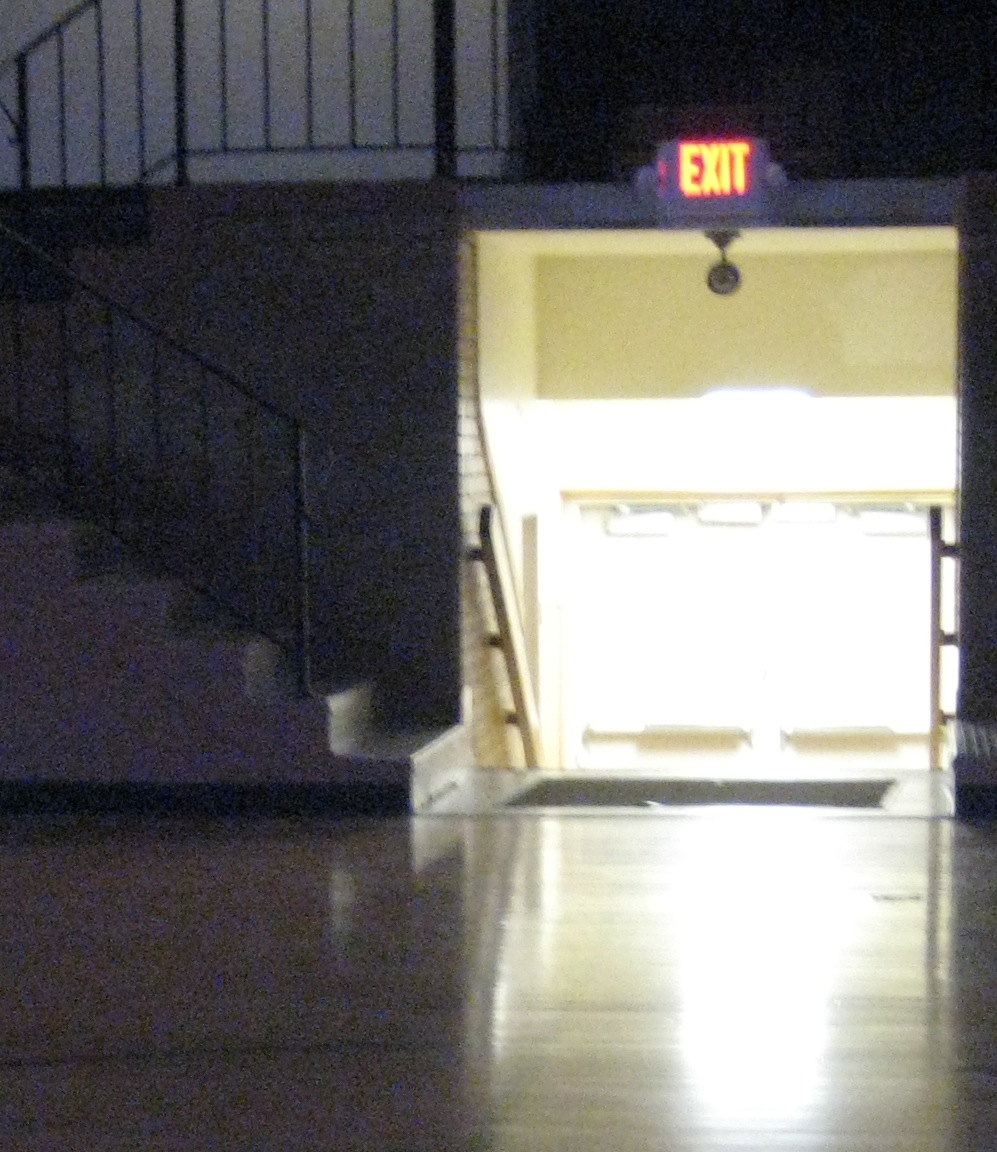
Dear Lanky One: Let me show you the stairs...
Dear Lanky One: Let me show you the stairs…

(I wrote the following in response to a prompt about describing your inner critic, from Bonni Goldberg’s book, Room To Write.)  

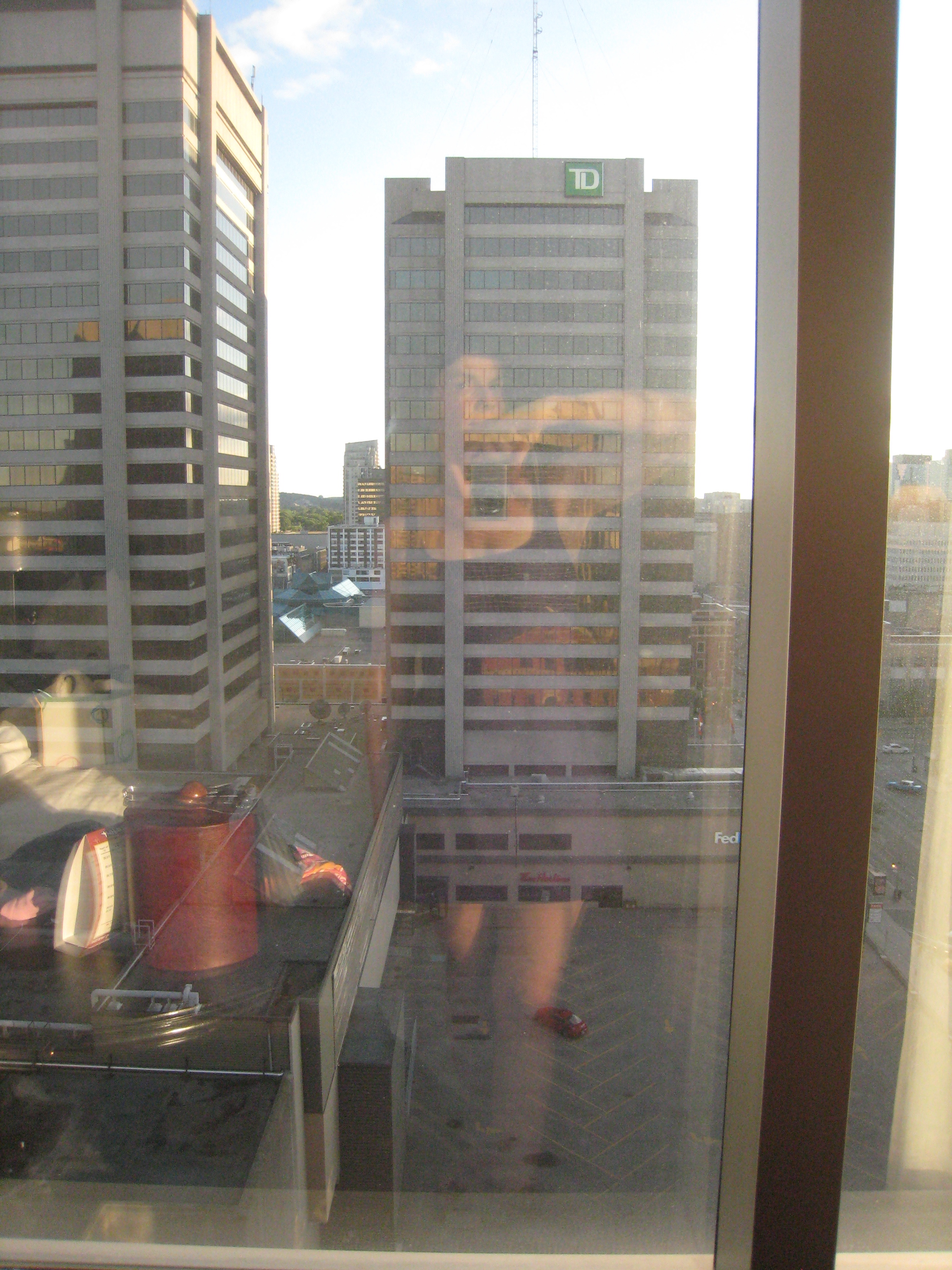
I would like to say that my inner critic is a hellhound with five heads, full of bile and venom, but I am not so sure. I think, instead, she’s a better version of me. She’s taller, more lanky; I’m not lanky at all, I have no lank. But I wish I did. In this way, she taunts me. She’s nearly perfect; I’m sure there’s something about her that isn’t, and certainly she would be able to spot the flaw. She’s good at spotting flaws. But she’s the Barbie-me, she’s the one with the glamorous life, she’s the one I was supposed to want to be, and still do, because of all the lies we’re fed about how we are not enough. (This soapbox, did she build it?) I think I can see her off in the corner, she’s smirking, she looks much more LA than I do (whatever that means!). Stick with it, stay, look at her. In a self-defense class I took in Seattle, the teacher talked about maximizing resources: If you are walking down the street at night and hear footsteps behind you, don’t simply speed up. Instead, turn around and look at who it is, see the person, make sure the person sees you seeing them, knowledge is a resource, “Who’s following me?” It’s good to know these things. That self-defense class was put on by an organization called Alternatives To Fear. A great organization. I still recall so much of what I learned there, but I haven’t been practicing my kicks and punches, I haven’t used my body that way in a long time. In class, we were encouraged to keep practicing even after the class was finished, so we wouldn’t get rusty. I am rusty at kicking ass. I am rusty at kicking the ass of inner critics. I don’t know if I could take her, that lanky critic. She probably took the same class, but was better at it.

What does she look like, my critic? She has no ink stains on her hands, she never needs to fill a pen. What she does is cleaner, and she needs no tools. When I get out my pen and start writing, I kick her penless ass with my rusty self-defense, my alternatives to fear. I maximize my resources. I do the work.

I feel ten feet tall, and sometimes I am.
Unknowing is the way

IMG_6128That moment when the new novel (new romance, how sweet, anything might happen!) unfolds in its wild way (organic, no map, messy and raw) and I must  dig into worlds I know nothing about, must fortify the quivering green shoot of story that comes to me with facts about parts of the world and times in history I have not experienced…tether it down, tether it down…I’m so, so lost.

And this, apparently, is the process. Apparently this is the way.

A sense of wonder

photo by Merida
photo by Merida, age 6

(This post was prompted by a discussion in one of my classes about Rachel Carson’s A Sense of Wonder.)

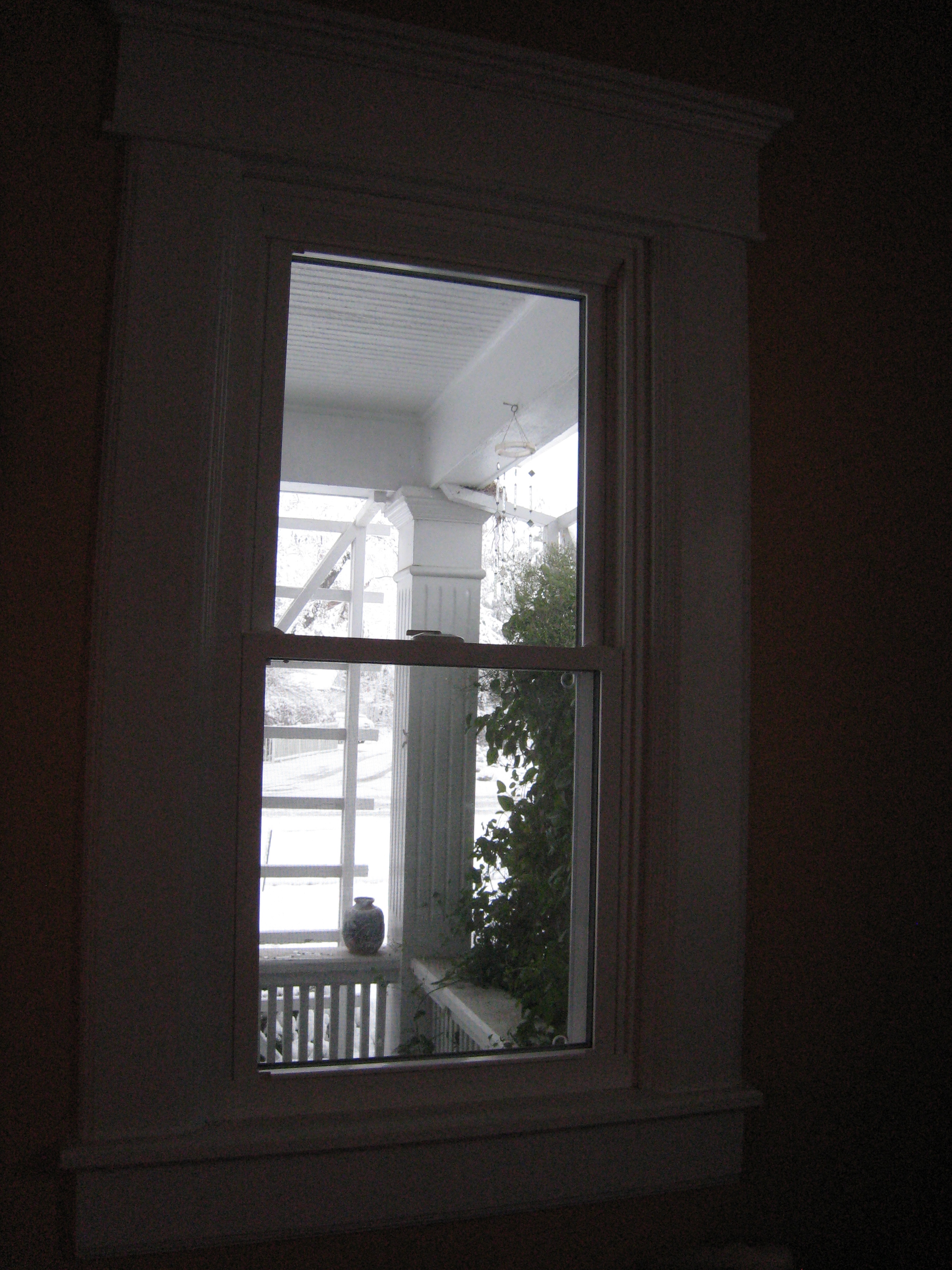
When I was a kid, I used to watch raindrops on the window, and imagine tiny dramas played out with them. I wrote about the raindrops in my manifesto #1, here.

I had never told my daughter Merida about this idea of the raindrops.

Last summer, in the car on the way to Toronto, I noticed she was staring at the rainy side window, and she started telling me about the raindrops racing. (This made me so happy, in that crying kind of way…reminded me of the end of Peter Pan, when Wendy Grows Up and her daughter Jane is the one who goes to help Peter with his spring cleaning, and so on through the generations. J.M. Barrie writes: “As you look at Wendy, you may see her hair becoming white, and her figure little again, for all this happened long ago. Jane is now a common grown-up, with a daughter called Margaret; and every spring cleaning time, except when he forgets, Peter comes for Margaret and takes her to the Neverland, where she tells him stories about himself, to which he listens eagerly. When Margaret grows up she will have a daughter, who is to be Peter’s mother in turn; and thus it will go on, so long as children are gay and innocent and heartless.”)

I like to believe about myself that I’m paying close attention a lot of the time (hence immortalizing this idea in my manifesto) but I’m not sure that I do.  In fact, I’m sure that I don’t, not often enough, and as I see the grains of “baby” draining out of my child, I keep thinking, “Wake up, Rebecca!  Stop washing the dishes!  Listen to her!  Look in her eyes!  Watch her as she’s drawing!”  (And the times I have consciously stopped and watched her as she is drawing, I feel I can see how her mind works.  Can see how she makes sense of things.)

How she makes sense of things is often related to nature, because, thankfully, she has a life where she gets to spend a lot of time outside, observed from a distance, but without nature being mediated, packaged, overly explained. She has freedom to discover all those tiny things now that I so often overlook.

This is the nature of the generations, these are the cycles of humanity, but oh, how lovely when we can again slow down and see those nearly-invisible wonders.

Reading at Antioch College Local Writer Series

I'll be reading on Wed., Nov. 12, 7pm, at the Coretta Scott King Center at Antioch College.
I’ll be reading on Wed., Nov. 12, 7pm, at the Coretta Scott King Center at Antioch College.

I’ve been invited to read from my novels and shorter work at the Antioch College Local Writer Series. The reading will be on Wednesday, November 12, at 7pm at the Coretta Scott King Center at Antioch College (Livermore Street, across the street from the main Antioch towers). The event is free and open to the public, and I hear there will be snacks (and maybe a little glitter!).

Mike Thiedeman, artist and professor (an appreciation)

I wrote this in 2012, about Earlham College art professor, Mike Thiedeman.  At the time, I meant to post it on my blog, but forgot.  Recently I started re-reading a book that I read back then, and realized my omission.  I post this now because it’s never to late to express gratitude.  (Thanks, Mike!)

I graduated from Earlham with a Theatre Arts major in 1988. While at EC, I took a painting class and a drawing class with Mike Thiedeman. I wasn’t majoring in visual art, and I felt intimidated but welcomed into the rigorous studio environment—in part because Mike was so respectful. I recall painting a still life featuring a red enamel teapot with a black handle. The painting I did was up close so that most of the canvas paper was full of redness. It’s hanging in my kitchen now. It looks very little like that actual teapot (which I still remember well). At the time, Mike admired the painting, and offered to trade one of his ceramic pieces for it. I declined the trade, which I regret now, but I think I declined because his valuing of my painting made it have more value for me. In this simple act, he made me see that what I made had meaning. Mike had a real respect for students, and this came through in his teaching. As a teacher in a graduate creative writing program, I know how important it is to balance support and challenge, but above all, to do everything so that you don’t kill the creative spirit. Mike was an early guide to me in how to be collaborative and treat the student artist with respect. These years later, I still think about those classes and some of the principles I learned: that the artist has choices about how to frame the work, not only literally, but in terms of where the borders are, what to include and exclude from the narrative of the piece. For some reason, I became really fascinated with a certain kind of close focus, and also with its (possible) contrast: white space. I still am haunted (in a good way) by those kinds of considerations. One charcoal portrait I drew of a friend who was also taking the drawing class had almost all white space in on the page, with the line of his arm and inner elbow on the left side of the paper. This kind of seeing, this kind of visual meaning making, was something I had never considered before taking Mike’s classes. My own creative focus has taken the form of writing fiction and personal essay. In some ineffable way, that idea, that way of examining perspective and how to play with it to make meaning, translates to my words on the page, and I see it in most good writing: what we leave in, what we leave out. Absence as presence. I’ve continued to be fascinated with how each of the arts can inspire the other, this idea of interdisciplinary aesthetics. Though creativity in its many forms has been a core of who I am since childhood, I think the start of this conversation—of the finding of words to articulate these inklings—began during my time at Earlham. Mike Thiedeman’s teaching and aesthetic was a formative essential.

Long live the book (and long live the conversation)

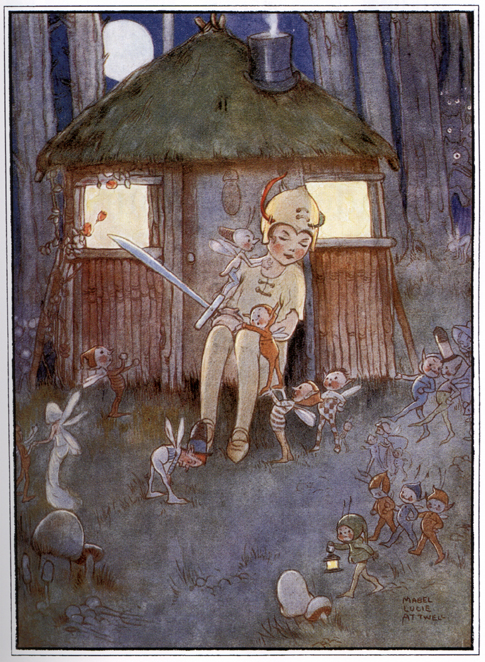
from Peter and Wendy, by J.M. Barrie (illustration by Lucie May Atwell)

Here’s a NY Times article that brings up some more questions about where and how we should read to children, and whether any reading (on an e-reader, for instance) is better than nothing.  (The brief answer:

“What we’re really after in reading to our children is behavior that sparks a conversation,” said Kathy Hirsh-Pasek, a professor of psychology at Temple and co-author of the 2013 study. “But if that book has things that disrupt the conversation, like a game plopped right in the middle of the story, then it’s not offering you the same advantages as an old-fashioned book.”)

Again and again, what seems central to so much about how we live: being active (rather than passive) is almost always best.

(Listen to yourself.)

Sufjan Stevens, banjo, heart, wings

Unless your heart is prepared to Feel Things, please don’t listen to Sufjan Stevens on the day when your daughter, who suddenly wakes up Very Tall, begins first grade.

Especially don’t listen to a version of this song; don’t listen to it while you’re sitting on the floor with her later that afternoon, constructing a little world from the cardboard boxes sent by her best friend away in Italy, don’t listen, because last winter you watched, with this tall girl, this specific video, heard the sweet story of the wasp…the girl was transfixed last winter by this video, by the young orchestra playing and wearing wings…asked for them again and again…if you listen to this song on this now-day, this tall day, your heart will expand, become a stretched balloon full of the breath of love that is created by biology (she’s your daughter, she’s getting taller, she’s growing so fast) and horomones (you’re older now too, approaching a later life threshold, but feeling younger than ever before in so many ways, how your heart is liberated, flying, soaring, but too, paradoxically full of the knowledge that time becomes shorter and shorter with each exhilarating breath, holding all the complexity of this, and her new shoot of life, this sprout, this girl, all the wings, and what this song means to the young man who wrote it, which has nothing to do with your daughter growing up, except that it does, because all of humanity means this, everything does, as our little interior mirrors work to show and mean what we see in them, always ourselves along with the world and work around us, and how messy and glorious that mess is)…and talk to her at night about death, help her understand what you are still trying to understand, keep telling her that no one knows everything, keep making room for it all…

(And Sufjan sings, “I can tell you, I love him each day…”)

and his earnest, beautiful, shining orchestra plays with him, their hearts in their fingers on strings and keys, telling their own stories, lips on brass, holding bows and sticks and hitting drums to make and manifest together         just           one             thing            .

Which is beauty.


Grateful today for the heart that can hold so much.

A thing that won’t happen again (two essays published in two weeks!)

IMG_5518
Blue heron on Ellis Pond

All I can conjure to write is the cliche about raining and pouring, but I’ll spare you that. Another essay I wrote went live today on the Jaded Ibis Productions blog, Bleed. (You can read the essay here. And the essay at the Manifest-Station is here.) I’m so grateful to be able to share these fragilities with others. Sending my personal essays into the world is wholly new for me, and my baby legs are tottery. I’ve been inspired by the brave writing of people around me, including Rachel McKibbens, Taylor Mali, and Tara Hardy, the awesome poets I wrote about in the essay. Witnessing their courage, I awaken my own. My hope is that if I act brave, others will, too. And the world will become more whole.

Although many things distract me from knowing that it’s really this simple, lately I keep circling back to the core: For me, the whole point of doing this work (fiction, nonfiction, poetry, anything) is to connect with our shared humanity. That’s it. There are tools for this work (the craft) and plenty of folderol but really, it’s about finding and seeing the spark that lives in each of us.

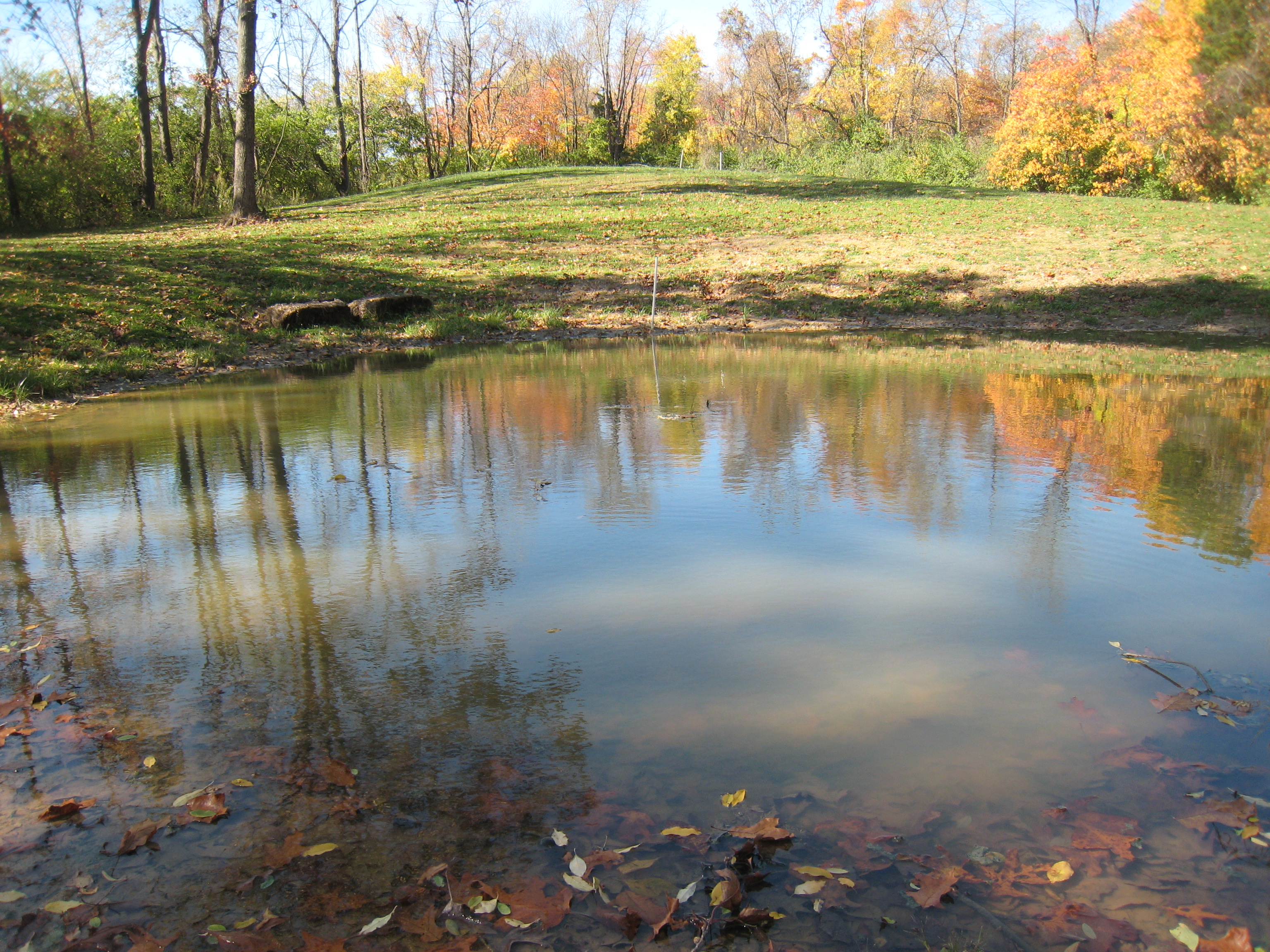
(On Saturday night, I was with a group of others at Ellis Pond in Yellow Springs.  A blue heron stood on spindle legs in the water, undisturbed by our gathering. Calmly teaching us about how to live.)

Incantations

Jack Hardy and his daughter, Morgan Hardy, in 2006
Jack Hardy and his daughter, Morgan Hardy (2006)

Two of my short pieces (a story and an essay) that will be published within the year include lyrics from Jack Hardy’s songs. (Read some posts about Jack here.) In my response to his family’s  granting permission for me to use his words, I wrote:

His music has been (and continues to be) the tea in which my soul steeps, often, almost without thought, which must be why the lyrics make their way into my writing.  I know that part of what he intended with his songs was that they be incantatory.  I hope that in immortalizing them in these short pieces, his incantations will ripple outward…

This is how life works. And what glorious tea in which to steep!

(What are you steeping in right now? How does your life-tea suit you?)