If the world broke and this song had never happened…I wouldn’t know what I was missing, but everything else would be a waste of breath, and the narrator would know something wasn’t quite r i g h t
(Little Hands of Concrete and always with the good hat, this guy.)
(And this version is quite Hendrix-Fripp-tastic. Enjoy.)
I know it’s good practice for writing (and living!) to slow down and listen to children. Their work (in my daughter’s case, drama and storytelling, the elements of theatre, almost every sentence beginning with “wait, pretend that…”) is as important to them as our work (making dinner, job stuff) is to us. This morning, keeping up with my daughter’s work was aerobic, and impossible. I was exhausted by the rapidity of the “wait, pretend that…”s coming from her mouth. But then–for an instant–I was able to step back and realize something. “Wait, pretend that…” is exactly what I want her to be doing. It’s how I want her to be in the world. It’s the stuff of childhood. I never want to squash that spark. I want to give it as much room and air and light as I can. The collision of the “wait, pretend that…”s with the things I must do to get through the day defines a certain kind of tension, a tension that is maybe necessary for creating things (I tell myself). And yet I wish that I could slow down enough to bask in her world of “wait, pretend that…”
And then I remember that I am a writer, and I have to “wait, pretend that…” if I want to do this work (that my soul calls upon me to do).
And then I hope that this tension will resolve itself into something beautiful. (And I watch, in my home, as sometimes, it does.)
“What’s a snow cone?” my almost-six-year-old said this evening. I’d been telling her a story about a girl and a mouse who thought it was hailing. (“Tell me a Sally and Joey story and they think it’s a storm.” For this section, she’d specified that it had to be hail. In my fiction, quickly spun, the hail was actually someone shaving a snow cone.) Her question was earnest, so I explained. Then she asked, “Like an ice cream cone of snow?” Yeah, something like that, except we’ve had real snow ice cream (bowl of snow with honey, or maple syrup, and sometimes for mama, smoked paprika and cinnamon) and we’ve had cider slushies at the local apple orchard. But never the iconic Snow Cone. (How I’ve failed as a parent, I thought.)
Later, in the kitchen, she described her method for peeling garlic. “You start with the tail,” she said, and demonstrated how. (Maybe not a failed parent after all, I thought.)
And in this way, success and failure curl their necks around each other and get tangled, unsure of who is whom, and whether it matters anymore.
And today in that tangle for me is one of the sweetest bits of being alive.
I was sealing my payment for my Target Card Services payment today. On the back of the return envelope (which they kindly included with my bill, so I could send the payment) this message is printed in Target red letters:
“THIS ENVELOPE IS 100% RECYCLABLE. PLEASE RECYCLE.”
Perhaps they were trying to fool anyone reading it, using the word “recyclable” to imply (the way our eyes can fool us when we are reading words) that the envelope itself is made from 100% recycled paper.
(I read it again.)
(It’s the return envelope which they included with my bill, so I can send them my payment.)
Underneath the “100% recyclable” message, with an arrow, I wrote:
“I hope someone at Target Card Services reads this and recycles this envelope, because I need to use it to make my payment, so I cannot recycle it right now. And to answer the ‘PLEASE RECYLE’ please know that whenever I can, I do.”
In case it wasn’t clear years ago, this is just more evidence that I am a proud member of the curmudgeon club.
(Lou Reed rocked and took some trippy photos, too.)
When my daughter was about two and a half, we were listening to Velvet Underground and Nico sing, “Sunday Morning” on a Sunday morning (as is often our practice. And “I’m waiting for my man” was soundtrack to French toast and pancakes–whichever vessel we chose for the morning’s drug: maple syrup. For a while, we would alternate between that album and the Fugs song “Nothing.”). As a surprise, while my husband was out of the room, I coached my daughter to say “Lou Reed is an icon.” (She said it right on cue and got the laugh I was hoping for.) “Lou Reed is an icon” became a sweet little joke in our house, an illustration of how we adults were indoctrinating our child. (I make no apology about this.)
When my husband came outside into the sunshine today and said that Lou Reed had died, I cried. Of course I didn’t know Lou Reed, and at first it felt hyperbolic, crying, but it came from a sincere feeling of shock and loss. (How can Lou Reed die? Right, I know we all die, but how can that apply to Lou Reed?) I hugged my husband. He said I was going to make him cry. I explained to my daughter why I was crying. We had a good talk, defining the word icon. We talked about some of our other icons. Some are famous, some are not. The constellation changes, and also doesn’t.
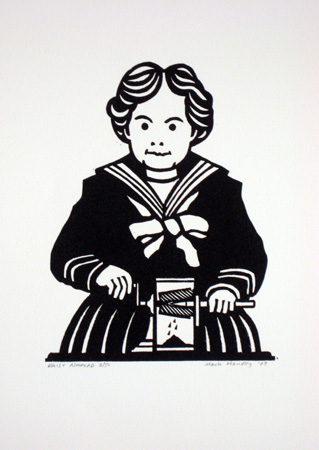
I’ve just read the most ridiculous and wonderful novel. It’s called The Young Visiters (sic) Or, Mr. Salteena’s Plan by Daisy Ashford. Written around 1890 by nine-year-old Daisy Ashford, the novel was published in 1919. (I love the internet. You can read the original text here.) According to the Academy Chicago Publishers 1991 preface by Walter Kendrick, J.M. Barrie, my icon and one of my favorite writers, doomed this novel to obscurity in our time. Kendrick writes: “I would lay the blame for juvenilizing The Young Visiters on Sir J.M. Barrie, creator of Peter Pan, who wrote a treacly preface to the 1919 edition. Barrie drew a precious picture of little Daisy at work, now with ‘the tongue firmly clenched between her teeth,’ now with ‘her head to the side and her tongue well out.’ He imagined her sucking her thumb and called her the ‘blazing child.’ The British stomach such goop better than Americans do; they seem to place a smaller premium on growing up. Barrie, however, falsified The Young Visiters for all readers when he made it out to be merely the product of a precocious imagination. It is that, of course, but it is also a Victorian novel in miniature, a tidy précis of English fiction circa 1890.” (I know that’s his opinion, and I might argue–have not yet read Barrie’s preface, but will later, as it’s online at Project Gutenberg. Stay tuned. And more on Barrie in a moment.)
But rather than tell about the novel, let me show. On p. 86, Miss Ashford treats the reader to the following, with the original spellings:
Chapter 9: A Proposale
Next morning while imbibing his morning tea beneath his pink silken quilt Bernard decided he must marry Ethel with no more delay. I love the girl he said to himself and she must be mine but I somehow feel I can not propose in London it would not be seemly in the city of London. We must go for a day in the country and when surrounded by the gay twittering of the birds and the smell of the cows I will lay my suit at her feet and he waved his arm wildly at the gay thought. Then he sprang from bed and gave a rat a tat at Ethel’s door.
Are you up my dear he called.
Well not quite said Ethel hastilly jumping from her downy nest.
Be quick cried Bernard I have a plan to spend a day near Windsor Castle and we will take our lunch and spend a happy day.
Oh Hurrah shouted Ethel I shall soon be ready as I had my bath last night so wont wash very much now.
No don’t said Bernard and added in a rarther fervent tone through the chink of the door you are fresher than the rose my dear no soap could make you fairer.
I have never read a book like this. The allure for me as reader hides in its layers, and in the child’s awareness of the weary adult world. Her prose. Her exuberent misspellings. And the allure is also in imagining this nine-year-old in the context of the nine-year-olds I know–smart and imaginative as they are–writing a book like this.
As Kendrick writes in the preface on p. xvii, “Ashford’s masterpiece truly deserves the overworked adjective ‘unique’: there is nothing else like it, and nothing can match the special pleasure it gives.”
In writing this post, I thought about a presentation I gave in graduate school about J.M. Barrie and the story behind Peter. I forgot how deeply I had then delved into Barrie’s work and life, but here are some of my presentation notes, which explained (in my words from twelve years ago, which I would re-write today, but for expediency, won’t) why this is interesting to me: “I have been working on an adult novel from a child’s point of view. I did not anticipate the power of looking through a child’s eyes at all the small things adults tend to overlook. This has been a great lesson in detail and imagery. Perhaps to normalize my obsession with childhood and the connection between child and adult, I keep coming back to Peter Pan as an important emblem. Reading Peter and Wendy has helped me think about the layers a writer can use to involve both child and adult awareness.”
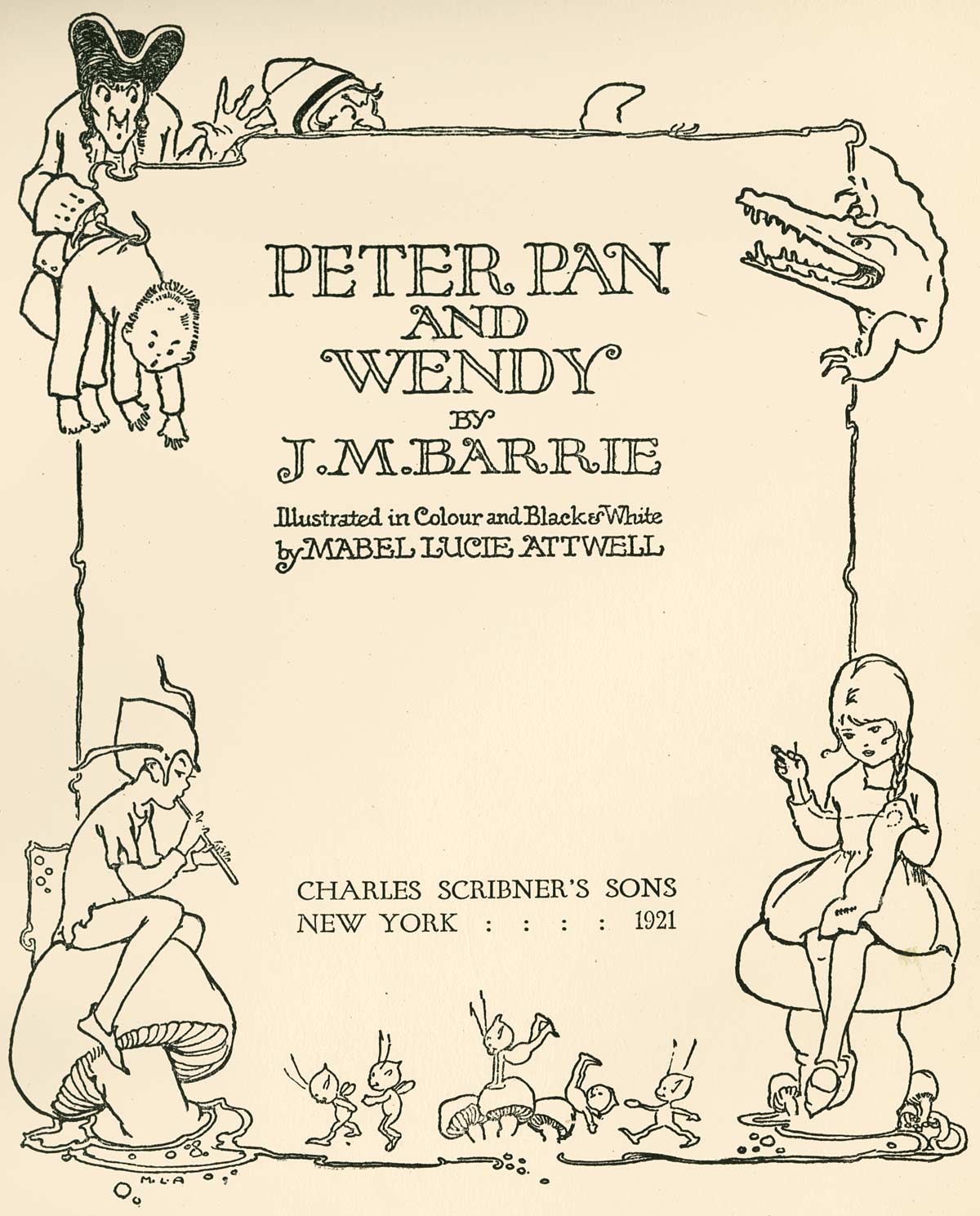
Peter And Wendy, the edition I read as a child, and still read
I’m so grateful to my daughter’s teacher, Ann Guthrie, who knew of my fasciation with this kind of story, and loaned me Daisy Ashford’s book.
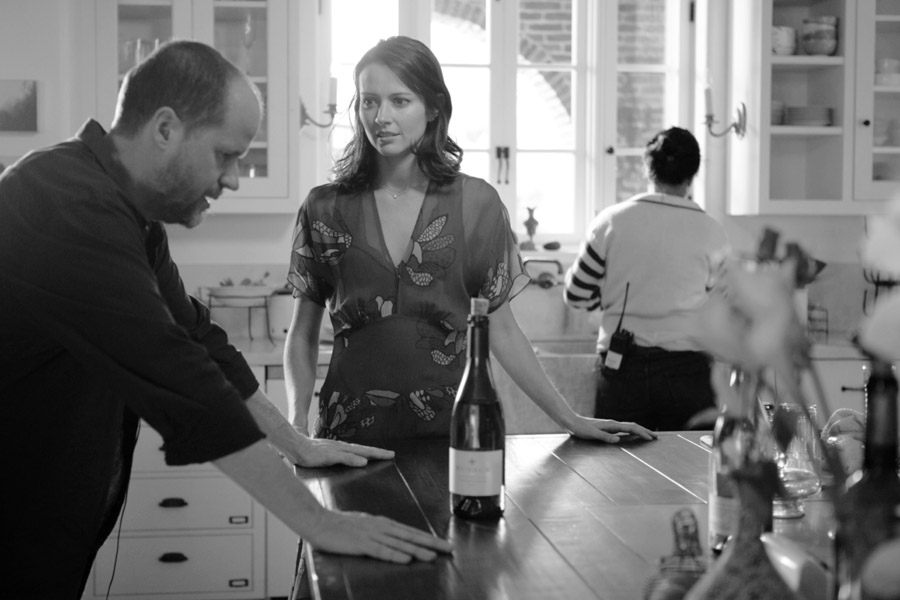
In which Amy Acker (and others) rocked Joss Whedon’s kitchen
My five blog readers might recall that I don’t get to the movies often, not as often as I’d like to. Since I became a mother in 2007, I’ve been averaging fewer than one movie theatre trip per year. (The last one I saw, I believe, was Beasts of the Southern Wild.)
Last night I saw Joss Whedon’s Much Ado About Nothing. As a long time fan of all things Joss, I was expecting a lot. But this film surpassed my high hopes. I anticipated a romp, and plenty of Jossy humor. I got those things, but what elevated the experience beyond my hopes was how stylish the production was, and how much depth it had. The light and darkness of the story, illuminated in black and white filmmaking, were equally present and resonant. I am not a purist about Shakespeare, nor am I a scholar, so I can’t catalog the liberties taken. This in mind, I don’t mind adaptations, but please, let them make sense, and let them work. This one did, and did. Joss took liberties–gender-bending, reading sex into places that it might not naturally have been, but it worked. The wine-at-all-hours, casual glitz garden party was such an escape, such a vacation from my everyday life which contains real things like gravity that I can still feel it in my bones as if I was there, hanging with that wit and language and drink, plot-twisting alongside those indie-iconic actors. One layer of decadence for this fan was seeing where Joss lives–the film was shot at his home. One imagines the proto-productions when King J. and his friends got together to read some Shakespeare. (She typed, and swooned…)
(Ten years hence, one asks, Branaugh who? Okay, that was a cheap shot. Apologies. I liked that film, too.)
On a larger level, I love how this film might introduce Shakespeare to people who haven’t gotten there yet. It makes the play accessible, but not in a dumbed-down way. To my eye, it makes the play sexy and relevant. A shiny hipster debauch, once more, with feeling. We could do much worse! See if it you can.
These cuties make violin practice fun! (Sometimes.)
I’m not a musician. I played oboe for a brief time (a few weeks?) in middle school, but gave up because it was too hard. I love music, I sang in musicals throughout school, but I cannot read music. As a Suzuki parent, this is a challenge.
My daughter, who is now five and a half, showed an early passion for violin, with specific interest in western swing. Her grandmother had studied violin at Juliard, and played in the Houston Symphony. So we encouraged the child, and began Suzuki lessons when she was four. (Complicating factor: she had severely injured her left hand in an accident when she was three and a half, so from the start, she has been playing violin left-handed.)
The Suzuki method, taught in its strictest form, would have required me as home practice teacher to learn violin alongside my daughter. Because I’m not doing that, we have another challenge in learning, and in getting her to practice.
Early on, I talked to a friend (who is also a wonderful violin player) about this issue of getting the child to practice. It seemed like I should teach my daughter about the importance of having a practice, having any practice. My friend advised that if my daughter loves violin, I should consider not putting that baggage onto playing violin. She assured me that people do learn even if they don’t practice every day, and that when a person wants to learn a particular piece, for instance, s/he will work at it and want to practice. Sagely advice. I felt so liberated!
Meanwhile, we do need to do some amount of practice. Here are some things that have helped:
Following my daughter’s teacher at lessons, we use plastic eggs in a basket, each egg containing one task. This adds a sense of play, and it also makes my daughter feel she’s in control–she’s choosing what to do rather than my telling her. (She and I often collaborate on extra things to put in the eggs. She wanted an empty egg, so I added one. And when I realized she wanted more freedom, in another egg, I wrote on a slip of paper, “violin thing–your choice” so she really does have a sense of being able to do what she wants while we practice. This has yielded some wonderful improvisation.)
Again, at the teacher’s suggestion, we use a set of Russian nesting dolls to count repetitions of a piece. We unpack the dolls, put them in a row, and then she closes a doll each time she does the thing, until they are all packed into one.
These are some things that have NOT helped:
Bossing her around;
Begging;
Getting really frustrated and walking away.
We don’t do charts and incentives, unless you count the classic vegetables before desert, “we need to practice before we go to the playground” sort of thing. I’ve never wholeheartedly tried charts and incentives in general in our house, in part because philosophically, we want her to experience intrinsic (vs. extrinsic) motivation. I don’t want her to practice for the sake of pleasing me, or getting money or a prize. I want her to practice because she wants to do it, because it matters to her, because she loves playing violin. I want her to have the joy of doing something for the love of it. Or for herself! Short term, this means I don’t have as many ways to convince her to practice. Which can be really frustrating. (Sometimes I want to give up, but I don’t want her to give up, so I have to model not giving up. Kind of like a lot of things in life, actually.)
Recently, we were at a group lesson, and it was my daughter’s turn to play her solo piece. She was feeling put on the spot, and wasn’t comfortable enough to play the piece her teacher was asking for. She began to cry, and we had to leave the room. (We’d gotten a ride from a friend, so we had to wait until the end of the lesson, which was probably a good thing. I might otherwise have left.) As I sat, wanting to comfort my daughter, she said very clearly that the problem was that I hadn’t been making enough time to practice. (She was right. It was summer, our schedule had been irregular, and we had not been practicing enough.) I felt ashamed, too ashamed even to explain to the friendly parents in the other room. But as I thought about it, I realized that my anxiety was about my being judged, about being seen as an imperfect Suzuki parent. Whose business is that? Who cares? After the lesson was over, I explained to the adults that my daughter said I had not been making enough time to practice, and she was right. I am not Catholic, but I imagine that’s what confession feels like. It felt good to tell the truth. And then I recommitted to practicing regularly. Even when I remind her of what she said, my daughter often does not want to practice, but then, she’s a kid. There are so many other things she wants to do. I can’t blame her.
Music should be fun. And lately, when I let go of trying to steer it too much, it has been.
(And I felt so racy, reading a book with this delicious cover.)
I’ve long been meaning to post about some fabulous and intriguing books I’ve read recently. First in line is Robert Edric’s The London Satyr.
From the cover:
1891. London is simmering in the oppressive summer heat, the air thick with sexual repression. But a wave of morality is about to rock the capital as the puritans of the London Vigilance Committee seek out perversion and aberrant behaviour in all its forms.
Charles Webster, an impoverished photographer working at the Lyceum Theatre, has been sucked into a shadowy demi-monde which exists beneath the surface of civilized society. It is a world of pornographers and prostitutes, orchestrated by master manipulator Marlow, for whom Webster illicitly provides theatrical costumes for pornographic shoots.
But knowledge of this enterprise has somehow reached the Lyceum’s upright theatre manager, Bram Stoker, who suspects Webster’s involvement. As the net tightens around Marlow and his cohorts and public outrage sweeps the city, a member of the aristocracy is accused of killing a child prostitute…
After reading his PS Publishing novella, The Mermaids, in 2012 I had the pleasure of interviewing Robert Edric. (Part 1 of the inteview is posted here. I intend to transcribe the rest of it as time allows.) The London Satyr was very different but no less pleasing to read than The Mermaids. The plot layers within The London Satyr allowed me to get lost in the corners of its streets and backstage world, but this novel can’t and won’t be boiled down to that. Edric’s prose–his sentences–are little gifts in themselves. As Webster walks through this perilous situation, I felt I was walking with him through London, always considering things, interpreting glances and shadows, always on guard, falling into more and more danger alongside him. Thrilling, to say the least.
In his sentences, Edric does beautiful and hypnotic things with repetition. One of the currents within this novel is Webster’s grief over his seven-year-old daughter Caroline, who, many years before the story is set, had died. Without spoiling anything (because I do hope you will read the novel) I’ll say there’s a passage near the end of the novel which keeps haunting me, so I am indulging in the pleasure of typing it:
“When Caroline had been alive, she had often waited for me at the corner of the street, a few doors from our own, looking out for me as I climbed the gentle slope. And upon seeing me, seeing me wave to her and then crouch down and hold out my arms to her, she would run towards me at a gaterhing pace, stopped only by her collision into me, whereupon, having steadied myself, I would rise and lift her into the air and spin her, holding her against my chest and over my shoulder until all of her sudden energy and momentum was lost, absorbed into my body and then passing in a tremor through me into the solid ground beneath us. I would feel this happen, feel her small and fragile body and all its vital forces absorbed into my own.
There were days when I had set off home already looking forward to this meeting, always disappointed when something kept her from the corner. She would hang laughing uncontrollably over my shoulder and then babble her day’s news into my ear. News of the things she had done, the people she had seen, what she had eaten, what she had worn, what her mother had said to her, what her sister had said, what she had said to them. A whole day in those few spinning seconds.
…
And later, these stories would resume at bedtime, when I would sit with her as she fell asleep. Sometimes, I would go on spinning these tales long after her eyes had closed, lowering my voice to a whisper for the simple pleasure of sitting with my child and watching her sleep, secure in the knowledge that she was happy and well and safe, and secure too in my own fierce conviction of the endless future and what it held for us both.
For a year after her death, I could not turn that corner except with the hopeless expectation of seeing her there again, running towards me with her arms out. And when she did not come, when that one small miracle did not occur, I could not help but also feel the sudden blade of sadness which pierced me again and again, and nor could I stop the tears which filled my eyes as I continued home to that cold and lifeless house.”
It’s when I read passages like this that I know something in my bones: reading makes us more human.




 Rebecca Kuder