Magic (might be) where you find it


I have been ruminating about Lynnell Edwards’ question on the Red Hen Press blog, and wanted to post my thoughts here.

I don’t have a policy on vampires. I have read beautiful, strong, amazing prose in a variety of genres, including “literary realism.” I haven’t read Twilight or Harry Potter, but I have read Lord of the Rings. And though I don’t want to compare a television show to a novel, I do love “Buffy,” because the writing is excellent, the characters rich and complicated, and the issues they deal with (ethical, moral, metaphysical) are important and paradoxically what I would consider “real.” These are some of the same characteristics I would look for in a good novel or story.

Different genres have different sets of expectations from the readers, and publishers. It can be hard to run a workshop or a class with a mix of genres–if only because other writers, leaders or teachers aren’t necessarily familiar with all genres. That can make things tricky, especially when students are just learning how to operate within a workshop setting.

One problem is that writing students (and readers in general) may be reacting to having been fed more visual media or media tie-in books than original books within the fantasy and science fiction genres. But as small children, most of us read plenty of fantastical things. Dr. Seuss, Harold and the Purple Crayon are a couple things that come to mind. It makes me sad that so many adult readers lose access to what is magical in literature by way of shedding childhood and heading into the “real world.”

Ursula LeGuin has some interesting things to say about the genre silos, and the “literary” biases against fantasy. If this problem interests you, check out her essay collection, Cheek By Jowl. I find a lot of bias in academe against work that is other than literary realism. Magical realism is acceptable, usually, and a few other lucky or pushy writers who have slipped with their novels into the list of acceptable, despite the fact that they write science fiction. I am thinking of Margaret Atwood. She has protested long and loudly enough to have convinced many readers (who might disdain other works of “science fiction”) that she’s not writing it. If something can be translated or packaged as allegorical, it “transcends” the genre. (Even the word “transcend” bothers me here.)

Overall, I don’t care where my students aim to publish their work. If it’s good, it’s good. I strive to help students learn about what I think makes fiction work, what makes it strong, what might make it transcend whichever box it ends up being placed in by a publisher.

Or, to quote Shakespeare’s Juliet:
“What’s in a name? that which we call a rose/By any other name would smell as sweet…”

And: There’s a Library of America collection of Philip K. Dick’s novels. So I guess he is another who slipped through the cracks.
On not being a poet

Writers of all forms say they feel not simply drawn, but called to write.  But when I was in grad school, I noticed something about the poets.  Many seemed more mystically attached to what they did than the writers of prose.  Those poets were not pretentious, but watching them, I got the feeling there was something purer, maybe gnostic, about the practice of poetry.  Could poetry be a more athletic practice than prose, if only in the necessary distillation and economy of words?  (I don’t mean to make too many generalizations about forms and writers: there are certain novelists who are or might as well be poets, or whose prose feels like poetry.  I love reading a novel that feels like it was written by a poet.)

I’ve written poetry most of my life, but I always feel timid taking my poetry seriously.  When it comes to poetry, I know I am a hobbyist.  Not a real poet, but someone who visits the land of poetry on vacations, wearing garish clothing and the wrong shoes, talking too loud, and taking snapshots of the pretty sites.  With a straight face, I can call myself a writer, but not a poet.

I need to work some light into that dark corner.  I need to read and write more poetry.

Wexler reading, Burkett to accompany (March 9)

From a press release someone sent me the other day…I hear he’ll be reading in English, not French.

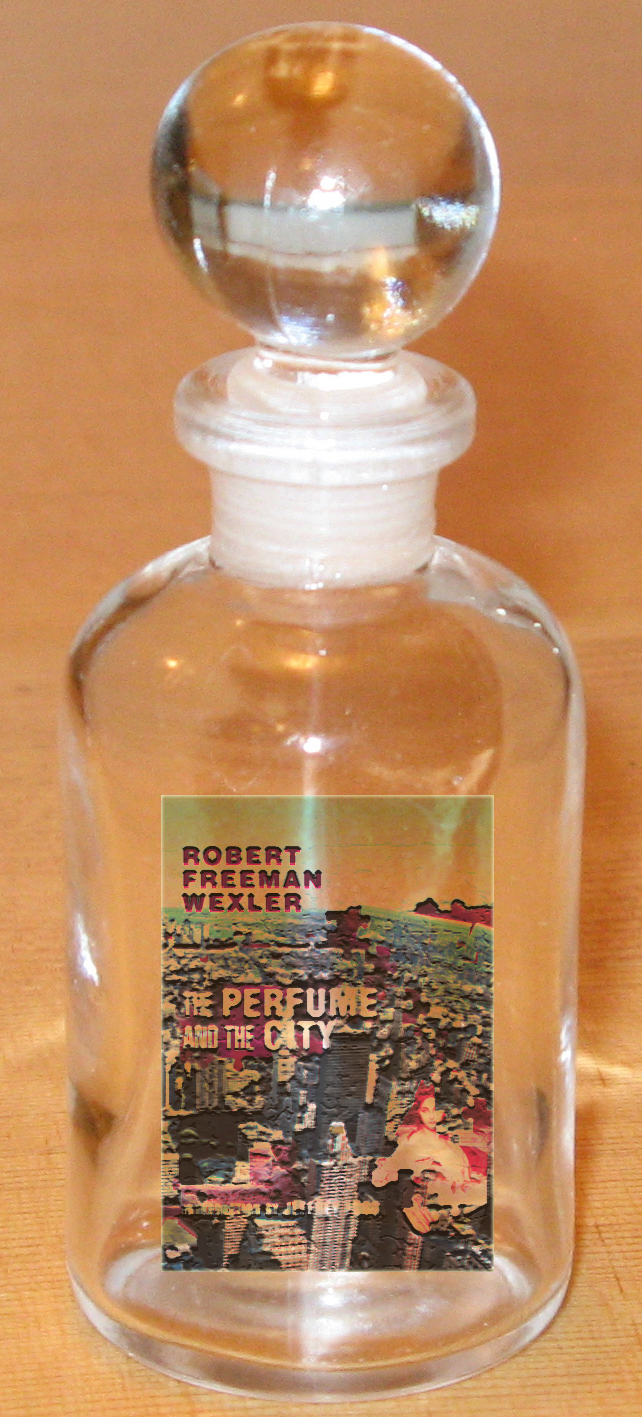
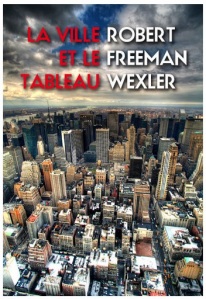
Robert Freeman Wexler will read from his novel The Painting and the City, Tuesday, March 9, 7 pm, at the Yellow Springs Library, 415 Xenia Avenue, 937-352-4003. He will be accompanied by Brady Burkett of Stark Folk on electric guitar. The Painting and the City tells a story of art and its conflict with commerce, the way art can (literally) reshape the world, and the consequences of such a reshaping. Wexler’s surreal cityscapes combine with Burkett’s guitar improvisation to create a unique listening experience.”

Woody Guthrie was right

“I hate a song that makes you think that you are not any good.

I hate a song that makes you think that you are just born to lose. Bound to lose. No good to nobody. No good for nothing. Because you are too old or too young or too fat or too slim too ugly or too this or too that. Songs that run you down or poke fun at you on account of your bad luck or hard traveling.

I am out to fight those songs to my very last breath of air and my last drop of blood. I am out to sing songs that will prove to you that this is your world and that if it has hit you pretty hard and knocked you for a dozen loops, no matter what color, what size you are, how you are built, I am out to sing the songs that make you take pride in yourself and in your work.

And the songs that I sing are made up for the most part by all sorts of folks just about like you.”–Woody Guthrie

Burl Ives and Wes Anderson

I saw “Fantastic Mr. Fox” and loved it.  Though many people consider Tennenbaums the holy grail of Wes Anderson-dom, before seeing Fox, I was most fond of “The Life Aquatic.”  (It’s still my favorite.  Too many wonderful moments and quotable lines to be displaced, and Seu Jorge doing David Bowie is unparalleled in the world of adaptations.  And Klaus!  I want to watch it again right now.)

Early in “Fantastic Mr. Fox,” I recognized some music that I hear often these days: Burl Ives singing “Fooba Wooba John.”  What a funny treat!

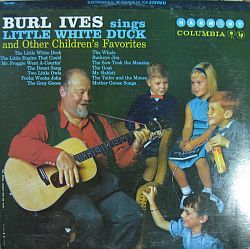
Although the adults at our house recoil at the sound of most music intended for kids, one beloved album is from my husband’s childhood–Burl Ives Sings Little White Duck and Other Children’s Favorites.  It might seem unlikely, but this morning I was actually craving that album.  Ives’ rendition of “The Little Engine That Could” made me a little misty-eyed over breakfast.  I don’t know why.  Maybe the wonder and hope of the two year old next to me, calling it the “sink I can song” or maybe just that I still believe that positive thinking is important.  (“I knew I could I knew I could I knew I could…”)

As usual, Wes Anderson chose perfect music for his latest movie.  There’s an earnest, post-cynical lens in that I love.  I see it in the Zissou saga, as I did in “Fantastic Mr. Fox” and so now I find myself tapping a foot, humming “Buckeye Jim” around the house, and now, in addition to the warmth of Burl Ives’ voice, that tune delivers me Anderson’s glorious sunset orange hues, and lovable, heroic foxes.  And I smile a silly, true smile.

Dented Can of the Week: Hamster Hotel


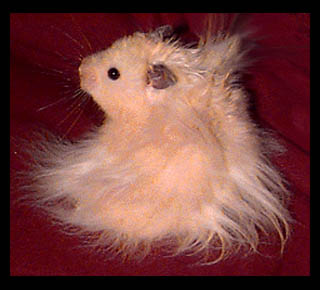
I read about this place in Nantes, France, where you can pay to pretend you’re a hamster. It strikes me that this is a good way to kick off my optimistically planned, weekly column, “Dented Can of the Week.”

My friend Arden, who has developed an impressive, hilarious, and exquisitely effective argot over the decades, coined the term “Dented Can” to mean a person who was highly damaged at some point in life, and is still playing out, in highly unhealthy ways, the issues that lead to the dent/s. My interpretation of the metaphor includes the fact that a non-dented can might contact botulism from interaction with the contents of said dented can.

Can a whole concept hotel be a “Dented Can?” I guess this rodent-themed auberge is more playful than some weird places might be, but it struck me that places, as well as people, might fit into this category. Discuss…

Looking tough

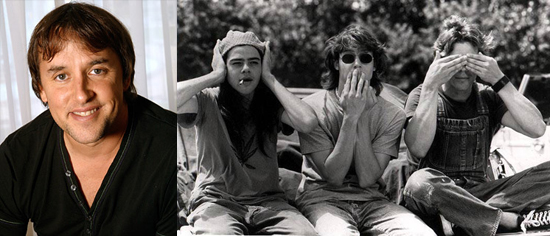
One of my favorite movies is “Dazed and Confused” by Richard Linklater. So many reasons, but I love watching even five random minutes of it. I remember keggers like they had by the moon tower. (Well, parts of keggers.) My high school boyfriend looked and acted kinda like Sasha Jenson, who is pictured wearing overalls on the right in this photo. Sasha Jenson’s extra cool, too, because he was in the original “Buffy The Vampire Slayer” movie, which is not as good at the long-running TV series, but it still counts for something.

When I watch even five minutes of that film, it makes me feel cooler than I actually am.

This scene below seems to be haunting me these days.

Cut to: Pink with an old couple leaving the game.

OLD TIMER

How’s your Dad doing?

PINK

Er, he’s doing great.

OLD TIMER

This arm ready to throw about two thousand yards next fall?

PINK

I don’t know we’ll see.

OLD TIMER

We’re depending on you boys and let me tell you what. You’re looking good. Thirteen starters coming back. Twenty-two lettermen looking tough.

PINK

Er yeah. Well you folks take care.

OLD TIMER

Okay good to see you Randy.

Richard Linklater can teach master classes at the department of Interdisciplinary Aesthetics. Hope everyone out there is looking tough.

How to get through winter

The leaves are mostly gone from the deciduous trees around our house, many of them stuffed in the gutter. (Have to do something about that.) It’s still sometimes warm enough to hike with only a sweatshirt, but that’s one of the false, temporary good things about climate change.

But the temperature can’t fool me–it’s almost winter.

This morning, my husband put on a CD by Ulaan Kohl, one of the incarnations of Steven R. Smith. (Smith is also responsible for Hala Strana.) Perfect choice. For me, fallintowinter is the season of Dead Can Dance and Hala Strana. I love the introspection and moroseness in this music; it’s so clashingly rich. Along with warm sweaters, extra cocoa, and stout beer, music like this weaves the tapestry I can hang on through winter.

In my house, there’s an imagined scenario. It goes a little something like this: At a family reunion, or holiday party, Lisa Gerrard‘s aged auntie says to her, “Lisa, can’t you write something a little more upbeat? You know, for the kids?” Lisa just looks at her.

These people will also be invited to teach in the department of Interdisciplinary Aesthetics. But only in winter.