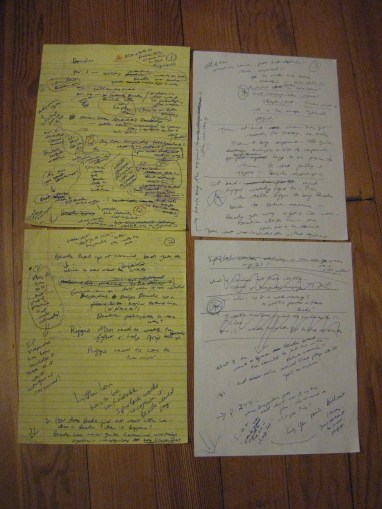
I just had that feeling again: Final tweaks to my carnival novel, paper manuscript having been read aloud by me, inked notes having slashed many paragraphs, sentences, and words, now typing it up…
…this novel’s first of its nine lives was so overwritten, so many adjectives…I piled them on until the pile slid down into a word-hoarder’s jumble and hid the story…
…but the feeling I just had, again, slashing, slaying, comes back to TRUSTING THE READER…but also remembering that as writer, first, I had to KNOW (that the goggles were cloudy and tight, the straps were safe, there was “so much wind and motion”)…
…I had to see it & know it before I could show it…
…a very satisfying feeling, knowing now what I don’t need to say on page…
…there must be a word for that feeling…the first-knowing-then-trusting-before-being able-to-do-the-showing…
I’m trying experiments where I don’t overthink some of the writing I release into the world. Where I don’t polish until it’s as perfect as my ego can make it (perfection is overrated and a lie, anyway.). This (below) is a raw something I wrote recently (some even tonight) and I will soon type it onto handmade paper by Sarah Strong for an exhibit called The Power Of Story, so I thought I’d also put it here.
**
I am from
1970s Osh Kosh overalls having
too much TV in the afternoon after school
Brady Bunch Courtship of Eddie’s Father, as sad a show as I have ever known.
What else in the afternoon in the house that is no longer there is the driveway even there anymore, I think not.
I am from a fire exercise a house burned down on purpose
it was my house but not really my house because we were renters.
Who did that fire serve, I hope someone, maybe it served my friend whose house burned down later because maybe the firefighters had learned something when they burned down my house.
Did they learn anything.
What did I learn.
Maybe just that stuff needs a place
but if you don’t have a place then
at least keep the stuff keep all the stuff you can from that place
from those days
(and later learn that whether or not you keep one damn thing it doesn’t matter
because stories stick to you better than the shadow to Peter Pan
and don’t need to be reattached by Wendy or anyone else.)
For weeks, maybe months, I’ve been hobbling alongside compromised implements: all my fountain pens were writing choppily, or out of ink (or both). There are giant problems in the world, but a functional, pleasing pen is one small texture of my day that matters a lot (to me). (Neglected, deferred, the increasing row of pens waiting for service at the edge of my desk becomes a metaphor for a woman who is not taking care of herself.) Last week, overwhelmed by important and unimportant work to do, fumbling through the soup of distraction, I decided I needed to do something physical, tangible.
I needed to clean the pens.
Jim Kruose (whose book Parsifal I blogged about recently) suggests ammonia for clearing clogged pens. I finally bought some at the hardware store. It took more than an hour to clean all ten pens (two of which belong to my mother). The sink and my hands were a beautiful mess.
During
I refilled them with Noodler’s Ink, Concord grape. (I love Noodler’s. I even love the way it smells.) Some are flowing better but not perfectly, seem to need more than one cleaning. But most of them are working now.
This was a real thing I saw in the Glen…frost in the center, moss on a cut stump. Eternal.
With certain kinds of new endeavor, I often feel completely unprepared (=like a fraud). But this day, as I quickly prepare for the next new work, I realize I have everything I need. I have worked for years to prepare the ground; the green tendrils peek from the soil. It’s all there, always been, breathing, waiting to stretch…
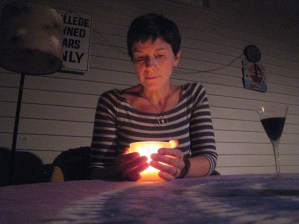
Flea market lamp; thrift store wine glass bought for our wedding; College Cars Only sign stolen from Earlham College in the mid-1980s; tablecloth brought from Africa via college friend; ship painting by folk artist Mary Paulsen acquired in 2012 in North Carolina; glass flowerpot candleholder from Mendelson’s Liquidators and used for wedding centerpiece, still useful; Writer in the midst of detritus of the Weird.
I’m grateful to editor Mark Teppo of Resurrection House for first publishing the story, and to Year’s Best Weird Fiction 3 guest editor Simon Strantzas and Michael Kelly at Undertow.
It’s a big deal (to me) that 1) Anyone is reading anything these days, that 2) Mark Teppo liked my story enough to publish it, and that 3) Simon and Michael also liked it enough to honor it in this way.
I don’t often write short stories. This story came from months and strata of excavation, which I wrote about here and elsewhere on the blog: layers of messy personal essay drafting, onion-peeling story attempts…all trying to find where the innards of that slice of my humanity would fit into Story.
Grateful that it fit somewhere, and that people in the world outside my head appreciate it. I always felt, and still feel, weird. Nice to have an upper case confirmation.
Writer with a stink bug (Antioch College Olive Kettering Library)
This week I set the goal of finishing a solid revision of my novel. Thanks to the wise and generous writers who read and gave feedback on this round (Kristin Walrod, Melissa Tinker, and Robert Wexler), and the stink bug who showed up for the final lap, I made it.
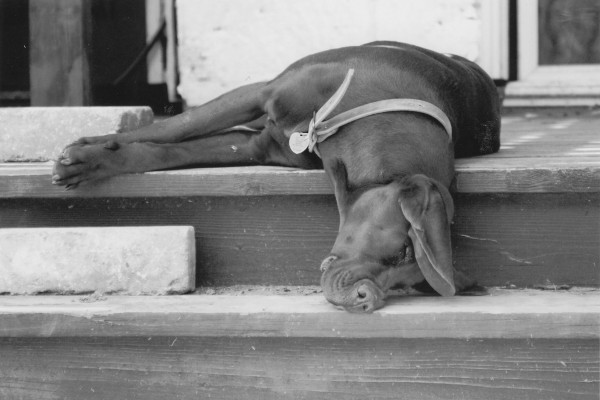
The novel I’m revising is like a dear old hound dog. Waits for me on the porch, with an occasional, “woof” when the wind blows, until I remember to come over and give that dog something to chew on.
I asked the students in my creative writing class at Antioch College to try this. Because it was a good exercise for me as a writer to type up the sentences of these writers, I am posting it here.
**
Read Colson Whitehead’s “The Port Authority” and/or the fragment from Joan Didion’s “The White Album” (section 12, pp 44-45) again. Find a spot from which you want to take inspiration, and write for 10 minutes (or longer). This is a rather open-ended option.
OR, for a tighter frame:
Use one of these fragments below—You might even choose one sentence, or one image. Read it aloud, and then write for 10 minutes (or longer).
*
“It is the biggest hiding place in the world. The inevitable runaways. The abandoned, only recently reading between the lines. After the beauty contest this is the natural next step. All the big agencies are there. He saved his tips all summer and to see them disappear into a ticket quickened his heart. Not the first in the family to make the attempt. The suitcase is the same one his father used decades before. This time it will be different. The highway twists. She will be witty and stylish there. With any luck he will be at the same address and won’t it be quite a shock when he opens the door but after all he said if you’re in town. Hope and wish. In the light of the bonfire she realized the madness of that place and was packed by morning. They will send back money when they get settled, whatever they can. A percentage. Reliving each good-bye. Practicing the erasure of her accent, she watches her jaw’s reflection in the window. Wily vowels escape. No one will know the nickname that makes him mad. This is the right decision, they tell themselves. And then there is you.”
—Colson Whitehead, from “The Port Authority”
“During the years when I found it necessary to revise the circuitry of my mind I discovered that I was not longer interested in whether the woman on the ledge outside the window on the sixteenth floor jumped or did not jump, or in why. I was interested only in the picture of her in my mind: her hair incandescent in the floodlights, her bare toes curled inward on the stone ledge.”
—Joan Didion, from “The White Album”
*
“I believe this to be an authentically senseless chain of correspondences, but in the jingle-jangle morning of that summer it made as much sense as anything else did.”
—Joan Didion, from “The White Album”
*
“There is a crack in everything. That’s how the light gets in.”
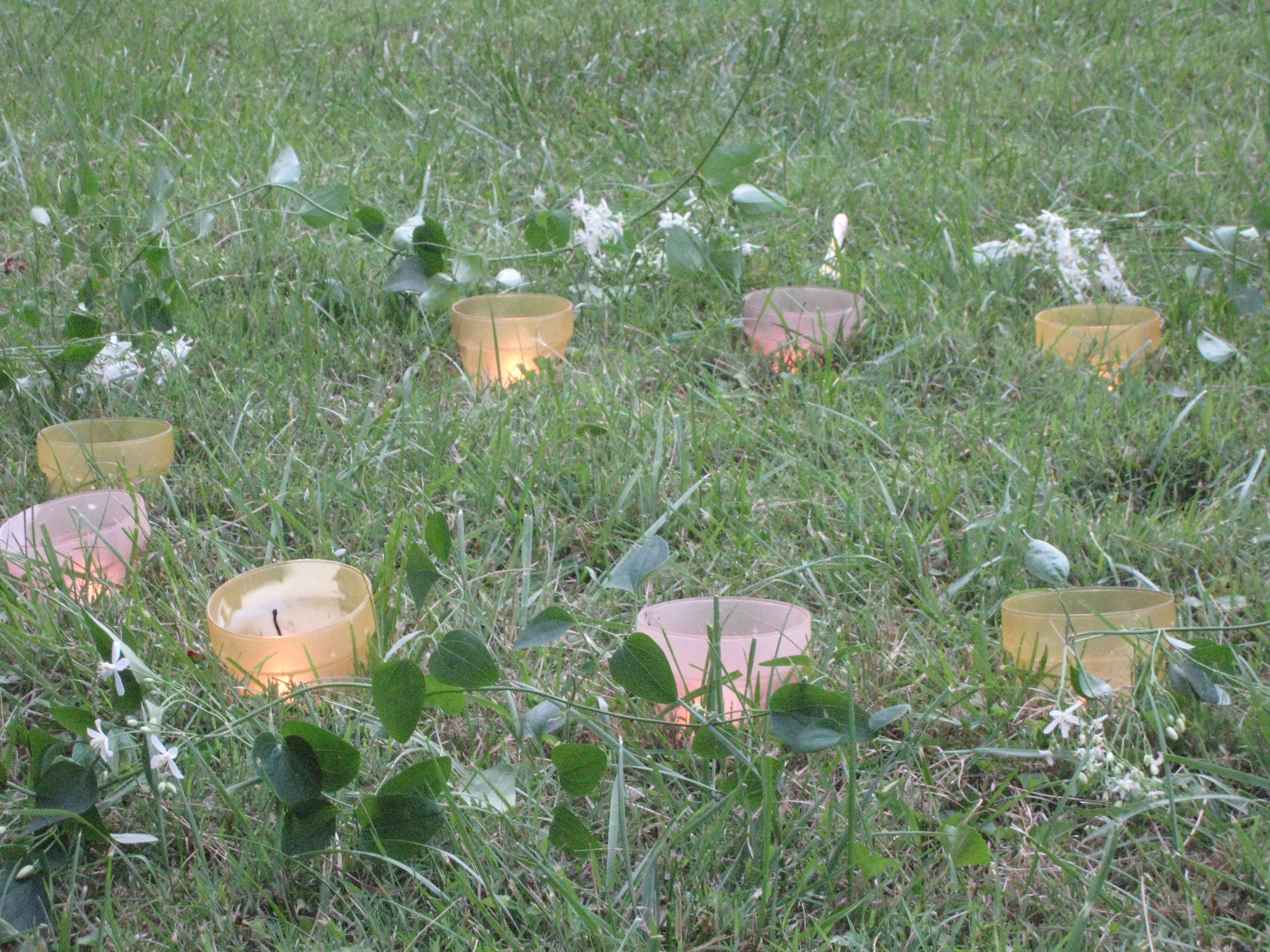
Leftover candleholders from my wedding, and weeds.
Here’s a statement I wrote last week for a grant application. I’m new-ish to personal essay, so it feels weird to proclaim anything about it (because I keep learning what it is!) but this piece describes some of my process and reasons for writing personal essay, so I thought it was worth posting here. It’s slightly edited toward blogginess. Cheers!
***
My essays grow from lived experiences (transitions and grief), but I wait to write them until I find a way to transcend my life and connect to something larger, something that might resonate for readers. Writing stories about life can be very therapeutic, but must stretch beyond the writer’s singular experience and have meaning to others.
In my experience, the process of writing personal essay is murky and chaotic. Sometimes I use the metaphor of an onion, as layer after layer I peel away to reveal what I really mean, to move toward something that feels true. (Some layers are just rotten, bound for the compost heap.) From there, I discover a shape, rendering that central image or idea in the stuff of lyrical essay. As I craft each essay, draft after draft, I interrogate myself repeatedly about what is relevant. When a story involves others, I ask myself which parts are mine to tell. I am careful in what I include, and what I protect. Writing personal essay means navigating these boundaries. Writing from life demands constant vigilance and integrity, lest the exercise and the writing itself collapse into mere therapy, or worse, narcissism.
With these essays, I intend to connect to others. Beyond that, I am interested in language, how to refine until even the vowel sounds help the reader feel what I mean to impart. It is life affirming when a reader tells me that something I wrote moved them, and it is satisfying as a creator when someone compliments the way I tell a story. It is these twin aims (reaching others, and artful storytelling) that keep me writing personal essay.
Specifically, in “The Bit Jar,” I wasn’t sure I was going to write about this topic for the public, but I felt called to encourage others who might be going through trauma. When the opening scene presented itself, I realized it could be the right frame to approach the material.
Sometimes finding a tight container is the way in.
In a similar way, “Love Letter (an avalanche)” arose when I sat and listened to a poetry reading. First I thought, “I have to write my ex a letter.” As the event continued, I thought, “Maybe this is a blog post.” Then finally I thought, “Maybe this is an essay.” The work-in-progress (“Hot Thing”) emerged because I wanted to capture in prose what it felt like to have a hot flash. The first draft began as a list, and eventually I kept the list form, steeping the essay in rumination about the tension between the facts and how it felt to me.




 Rebecca Kuder