The Climber (an old poem)

IMG_0281


When my daughter was four months old, I wrote a poem called “The Climber” which was published by Mothering Magazine in 2008. Because the magazine is now defunct and the poem is no longer archived online, I’m posting it here so I can share it with a Facebook friend.  (p.s. I always feel vulnerable when I put a poem out because I’m not a poet. And because this is old, I want to edit and make it a better poem, but I’m not going to tinker right now, and instead just share it. A new mother of my acquaintance describes how her baby and her body intertwine as they nurse, and when I think of that, I zoom back to those raw, free-falling moments of early motherhood, when the tiniest thing seemed also like the biggest thing, and vice versa, and I was so sleep deprived and confused, who could even tell the difference. I remember how hard that time was, and now just want to stand in the swirl of those complexities and say to anyone in the midst of any of it: you are not alone.)

***

The Climber


When I was twenty-one,

I went rock climbing in the Clifton Gorge.


The leader held up

a bandanna,

said:

we could use it

to climb

blindfolded

if we wanted to.


Late in the day, I decided to try.


Belayer below me,

blindly I climbed,

finding foot holds

by braille.


Later the other women said I’d picked

places to support me

I wouldn’t have chosen

with my eyes.

Crevasses chosen by touch, by feel.


Twenty years later, the rocks in the Gorge are off limits

to climbers–

there were accidents,

people got hurt

or worse.


So I hike there,

carrying you,

and find columbine in the rocks

I climbed before.


And at night, when you nurse beside me,

eyes closed,

your tiny toe finds my navel.


Okay, you be the climber,

I’ll be the rock.

Trust your toe holds,

don’t fall,

don’t fall.

And if you fall,

I will catch you,

breech baby climber,

head up.


Little rock climber,

four months ago,

you were on the other side of my belly button.

Your hand grips my thumb now

like a walking stick.


You came from here.

“Run like hell my dear”

peace
peace

Years ago, my friend Pegah gave me a book called The Gift, with poems by Hafiz (translated by Daniel Ladinsky). When I need inspiration, this book always helps. As summer solstice approaches, here is something that sparks me. (If I can remember these things, if I can remember and live these things…)

Here it is, from Hafiz (and Ladinsky):

We Have Not Come To Take Prisoners

We have not come here to take prisoners,
But to surrender ever more deeply
To freedom and joy.

We have not come into this exquisite world
To hold ourselves hostage from love.

Run my dear,
From anything
That may not strengthen
Your precious budding wings.

Run like hell my dear,
From anyone likely
To put a sharp knife
Into the sacred, tender vision
Of your beautiful heart.

We have the duty to befriend
Those old aspects of obedience
That stand outside of our house
And shout to our reason
“O please, O please,
Come out and play.”

For we have not come here to take prisoners
Or to confine our wondrous spirits,

But to experience ever and ever more deeply
Our divine courage, freedom, and
Light!

—by Hafiz
(translated by Daniel Ladinsky)

The twist of things

(Inspired by having read Mark Levine’s book, F5.)

March 2, 2012, remembering those skies of 1974

Toss words against chaos

see if something sticks

and undulates

sultry

opaque

like a twister

twister

and here’s

where

I start

my

story.

Who lost track past midnight at the Spurlock Munitions Factory, near-river, 1917?

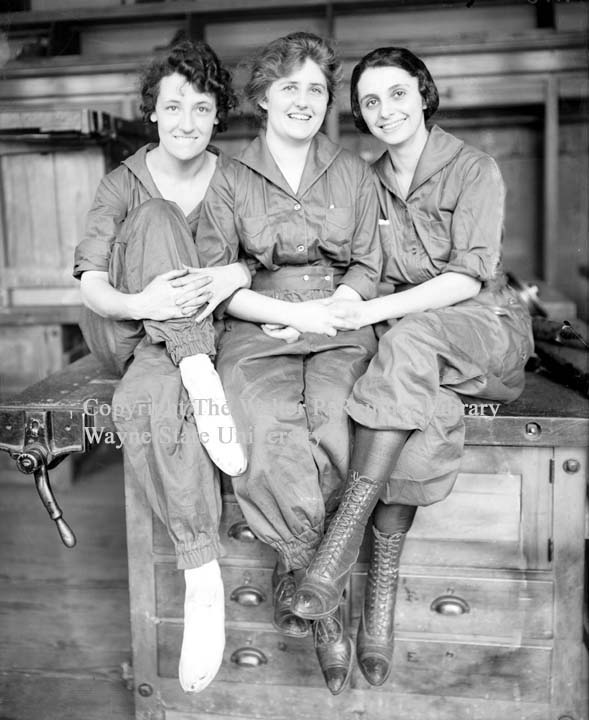
The lovely ladies of some munitions works

A poem from a couple years ago, inspired by the novel I’m working on, working title of which is The Eight Mile Suspended Carvinal.  This is the character Beede talking.  I can’t do line breaks right in html, so I think the word “vast” was originally on the line above where it appears, but below it’s an orphan, which makes sense in the story of the novel at least.

Who lost track past midnight at the Spurlock Munitions Factory, near-river, 1917? 

Oh yes Oh yes Oh yes
What you’re to see, boys, you dark, dirty skells, you
seen plenty spark here, what else, you’re thinking
you constitute yourselves of solids, you’re commanding
gentlemen, can take some things, maybe you’ve traveled, say
Illinois, Illinoise, farther, it does not take ambitious nature
to see the world, just a slick hand and some loose pocket. Rust is everywhere–
Davey knows my language. So you did time, who hasn’t, all we got is time in this vast
bum’s end of things, I’ve spit up wet gobs of coal, we’re all the same
just don’t get caught. Once saw a man dangling from a shagbark hickory, by the neck, all of it, tree bark and scales fallen from those eyes, all I can say is use the brain-pan,
don’t get caught
and you won’t end up with any fallen scales, don’t laugh back there, it wasn’t all
that amusing seeing that man up there, the weight of himself dead
meat. He didn’t have much luck.

But you’ve stepped up around here, all of you,
waiting on that kiss which makes us all breathe in, every crusted morning, for the long years we’ve got, a kiss humid and lovely like that mind-reader at the carnival,
she’s got curves, wait another day and maybe you’ll find that luck somewhere. Factory life got you groaning, you’re thinking anew, ready for this
fire? Let me take off my shirt now. The way I do it, you won’t even see the spark,
just watch. Lucien B. Dunavant will show you the light.

You count your breaths; I’ll count mine. That old sack granddaddy Spurlock
has not one thing on me.

Ready, boys?

“Nous Sommes Embarques”

The hands of Bruno Ganz and Peter Falk

I watched some episodes of “Columbo” as a child, but it was the Peter Falk of Wim Wenders’ breathtaking “Wings of Desire” that I recall, sad at Falk’s passing.  In the film, Peter Falk played himself, “Peter Falk,” come to Berlin to make a movie about the Holocaust.  In the clips on youtube, Falk (as “Falk”) politely puts off the media who want to interview him, complains to the costumer until he gets a decent hat, and draws a portrait of one of the extras on the fictional set.  He marvels at her face, and about the extras:

 ‎”Extras. These humans are extras. Extra humans.”

Later, “Falk” talks about drawing, the process of making a line, making art, being alive.  He says,

“Here, to smoke, have coffee. And if you do it together it’s fantastic. Or to draw: you know, you take a pencil and you make a dark line, then you make a light line and together it’s a good line. Or when your hands are cold, you rub them together, you see, that’s good, that feels good! There’s so many good things! But you’re not here – I’m here. I wish you were here. I wish you could talk to me. ‘Cause I’m a friend.”

After we realized we both loved “Wings of Desire,” a friend sent me the poem which runs through the film.  It’s beautiful, and so I am sharing it here. (Thanks, and RIP, Steve B.)

Song of Childhood

By Peter Handke

When the child was a child
It walked with its arms swinging,
wanted the brook to be a river,
the river to be a torrent,
and this puddle to be the sea.

When the child was a child,
it didn’t know that it was a child,
everything was soulful,
and all souls were one.

When the child was a child,
it had no opinion about anything,
had no habits,
it often sat cross-legged,
took off running,
had a cowlick in its hair,
and made no faces when photographed.

When the child was a child,
It was the time for these questions:
Why am I me, and why not you?
Why am I here, and why not there?
When did time begin, and where does space end?
Is life under the sun not just a dream?
Is what I see and hear and smell
not just an illusion of a world before the world?
Given the facts of evil and people.
does evil really exist?
How can it be that I, who I am,
didn’t exist before I came to be,
and that, someday, I, who I am,
will no longer be who I am?

When the child was a child,
It choked on spinach, on peas, on rice pudding,
and on steamed cauliflower, 
and eats all of those now, and not just because it has to.

When the child was a child,
it awoke once in a strange bed,
and now does so again and again.
Many people, then, seemed beautiful,
and now only a few do, by sheer luck.

It had visualized a clear image of Paradise,
and now can at most guess,
could not conceive of nothingness,
and shudders today at the thought. 

When the child was a child,
It played with enthusiasm,
and, now, has just as much excitement as then,
but only when it concerns its work.

When the child was a child,
It was enough for it to eat an apple, … bread,
And so it is even now.

When the child was a child,
Berries filled its hand as only berries do,
and do even now,
Fresh walnuts made its tongue raw,
and do even now,
it had, on every mountaintop, 
the longing for a higher mountain yet,
and in every city,
the longing for an even greater city,
and that is still so,
It reached for cherries in topmost branches of trees
with an elation it still has today,
has a shyness in front of strangers,
and has that even now.
It awaited the first snow,
And waits that way even now.

When the child was a child,
It threw a stick like a lance against a tree,
And it quivers there still today.

And so, Mr. Falk, as the elderly Storyteller of the film says, at the final moment, “Nous sommes embarques!”

A fan back here is wishing on your wings, now returned to you.

In The Skin of A Lion

Cover of the first edition

I’m re-reading and pondering Michael Ondaatje’s book, In The Skin of A Lion.  I love this book. For me, this is a book to read again and again, to study and learn from.  This novel is an open apprenticeship.  Any good novel might be like that: think about which novel yours might be.  This one speaks to me.

Tonight, this passage from p. 157 seems like one definition of community:

“Alice had once described a play to him in which several actresses shared the role of heroine.  After half an hour the powerful matriarch removed her large coat from which animal pelts dangled and she passed it, along with her strength, to one of the minor characters.  In this way even a silent daughter could put on the cloak and be able to break through her chrysalis into language.  Each person had their moment when they assumed the skins of wild animals, when they took responsibility for the story.”

Breaking, where to break

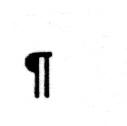
An important little symbol.

Oh, where to break the paragraphs, how to expunge some one sentence paragraphs, justify some two sentence paragraphs, avoid too many short paragraphs, how not to be jarring, or coy, and how to trust the reader to know where I mean to place emphasis, how to trust my intuition, the flow of the words, the lightning bolt that tells me to end or begin a paragraph…

Understanding, maybe a little bit, how poets work.

Shut up and sing the song

Jack Hardy’s (magic) green velvet coat

When a songwriter at Jack Hardy’s weekly songwriters group would explain what he or she was about to sing, Jack Hardy would say, “Shut up and sing the song.”  Abrupt, and to some, rude, but a valid procedural point for a workshop, even more notable in its good advice to the writer.

Let the work speak for itself.  If something is  important enough, yet is not on the page, or in the lyrics, put it in there.  Rework or revise it later if you need to, if what you mean is not conveyed through your magic lattice of words, sounds, syllables.

I’ve stolen Jack’s  line when approaching fiction workshops: it applies.  I feel very rude ever telling someone to “shut up,” and usually preface it with context.  As an imperative to action, “Shut up and sing the song” is simple and worth doing.  (I’m talking to myself, too.  For years, I whined about how I wanted to write and yet was not doing it.)  Shut up about what you want to do, wish you could do, mean to do, intend to do.

Shut up and sing the song.

Everything’s so easy for Pauline…

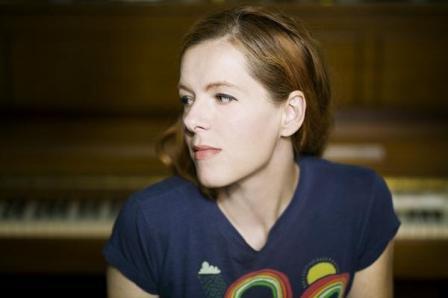
Neko Case, looking cool as usual. But I think she's still "Margaret."

This song haunts me.  Neko Case is amazing from any angle: musician, poet, strong survivor of life’s trials.  But this song sticks with me, and I can’t shake it off.  I’m sure the story is not as simple from Pauline’s point of view, but still…  This song seems as much a poem as any of Simon and Garfunkle’s poetry.  Here are the lyrics.

“Margaret vs. Pauline”

Everything’s so easy for Pauline
Ancient strings set feet a light to speed to her such mild grace
No monument of tacky gold
They smoothed her hair with cinnamon waves
And they placed an ingot in her breast to burn cool and collected
Fate holds her firm in its cradle and then rolls her for a tender pause to savor
Everything’s so easy for Pauline

Girl with the parking lot eyes
Margaret is the fragments of a name
Her bravery is mistaken for the thrashing in the lake
Of the make-believe monster whose picture was faked
Margaret is the fragments of a name
Her love pours like a fountain
Her love steams like rage
Her jaw aches from wanting and she’s sick from chlorine
But she’ll never be as clean
As the cool side of satin, Pauline

Two girls ride the blue line
Two girls walk down the same street
One left her sweater sittin’ on the train
The other lost three fingers at the cannery
Everything’s so easy for Pauline

Antioch Writers Workshop July 2010

Embroiled fully in this year’s Antioch Writers Workshop.  I love being around writers, talking about writing, writing with writers, the world cracking open before me.

Before the keynote on Saturday, I was driving to campus and feeling guilty, semi-taking a week off from child, home, life, to do the workshop, because sometimes it seems like choosing to be a writer is a silly luxury (but is it even a choice? I ask myself).

However.

Then I realized (it’s so easy to REALIZE things while driving, isn’t it?) that all writing is really about life.  Whether fiction or nonfiction, poetry or prose, a person (who is alive) puts something on paper (or screen, or sand) and it means something to at least one person.  What else is life, if not that?