“Wait, pretend that…”

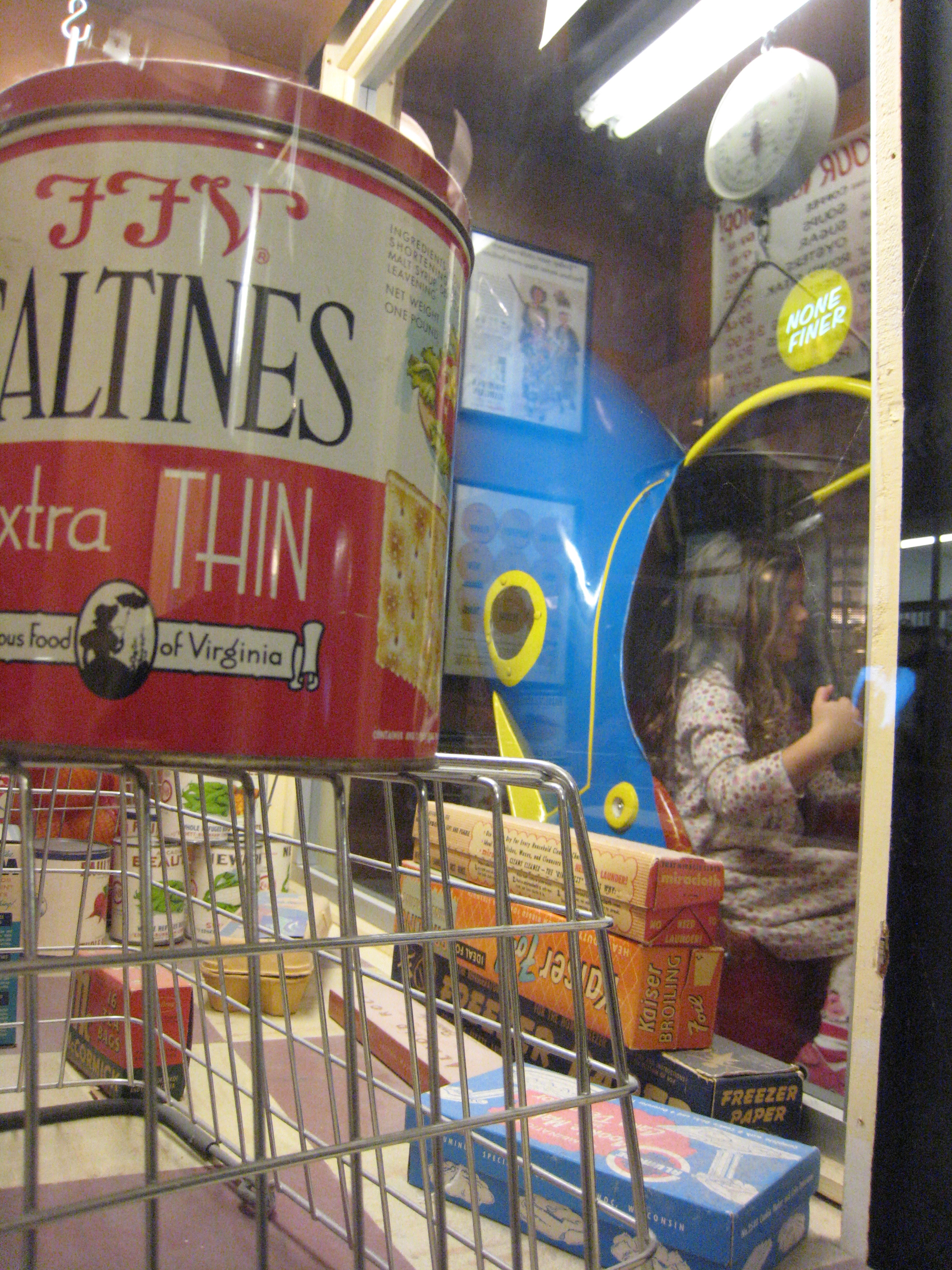
none finer
none finer

I know it’s good practice for writing (and living!) to slow down and listen to children.  Their work (in my daughter’s case, drama and storytelling, the elements of theatre, almost every sentence beginning with “wait, pretend that…”) is as important to them as our work (making dinner, job stuff) is to us.  This morning, keeping up with my daughter’s work was aerobic, and impossible.  I was exhausted by the rapidity of the “wait, pretend that…”s coming from her mouth.  But then–for an instant–I was able to step back and realize something.  “Wait, pretend that…” is exactly what I want her to be doing.  It’s how I want her to be in the world.  It’s the stuff of childhood.  I never want to squash that spark.  I want to give it as much room and air and light as I can.  The collision of the “wait, pretend that…”s with the things I must do to get through the day defines a certain kind of tension, a tension that is maybe necessary for creating things (I tell myself).  And yet I wish that I could slow down enough to bask in her world of “wait, pretend that…”

And then I remember that I am a writer, and I have to “wait, pretend that…” if I want to do this work (that my soul calls upon me to do).

And then I hope that this tension will resolve itself into something beautiful.  (And I watch, in my home, as sometimes, it does.)
A found poem (for Jim Krusoe)

Here’s a found poem, found in that I found this written in my Antioch Writers’ Workshop notebook from July 12, 2010 for my graduate school mentor, the novelist Jim Krusoe.  I wrote this almost-poem in a morning class three years ago, before I learned more about how people write poetry, but today something about it seems quaint, and worth reiterating, so I am posting it.  Bad poetry, admittedly, but its DNA is true.

Editing (for Jim Krusoe)

You said,
“Start here,”
lopping several pages
from the front of my story
like a severed limb
I had muscled
and exercised,
polished, toned.

The thing
(the now-partial body, I thought)
stood there.
I thought I saw blood–
not a Monty Python spurt,
but a trickle.

But I was wrong.
There was no blood.
It was a good cut, the right cut;
the story stood stronger
without those pages.

You were kind
and you were right.

Brown Bag Discussion: Writing of a life

After my last post, my colleague and I decided to host a discussion on the topic of what to do with our journals.  If you are interested, please do join us.

**

 Brown Bag Discussion

Writing of a life: Keeping the personal journal, 2.0

When: May 29, 2013, 12:30pm

Where: Antioch University Midwest Library

(900 Dayton Street, Yellow Springs, OH 45387)

You’ve kept a journal through the years…perhaps decades.  Your life is documented in those pages, which languish in towers of dusty boxes.  Now what?  It may have been healthy to keep a journal. But is it healthy to reread it?  And, ultimately, what do we do with our journals?

Join Antioch University Midwest faculty Jim Malarkey and Rebecca Kuder for a discussion about what we can do with the pages of our lives.

 This discussion isn’t about how or whether to keep a journal.  It’s for people who have kept a journal for a sustained period of time.  We’ll share our thoughts about what it means to reacquaint with our earlier words and selves, and ideas about what to make of these journals today.

If you’d like, bring one of your journals.

 Please bring your lunch.  Coffee and tea will be provided.

Note: Though this discussion will focus on hand-written journals, electronic journal keepers are welcome.

**

Review of Wexler’s In Springdale Town (ebook)

Here’s a great little review of In Springdale Town,  by Robert Freeman Wexler (who is also my husband).   The ebook “opens with an ostensible introduction from the author, purporting to tell us the origins of the tale, but he immediately raises our doubts…”

What a lovely finish for the review: “This is a fantastically idiosyncratic narrative that will stick with you long after you put it down. A must must must-read.”

Trent Walters, J’agree!

(p.s. You can read an interview with Robert here.)

Oh, you beautiful mess

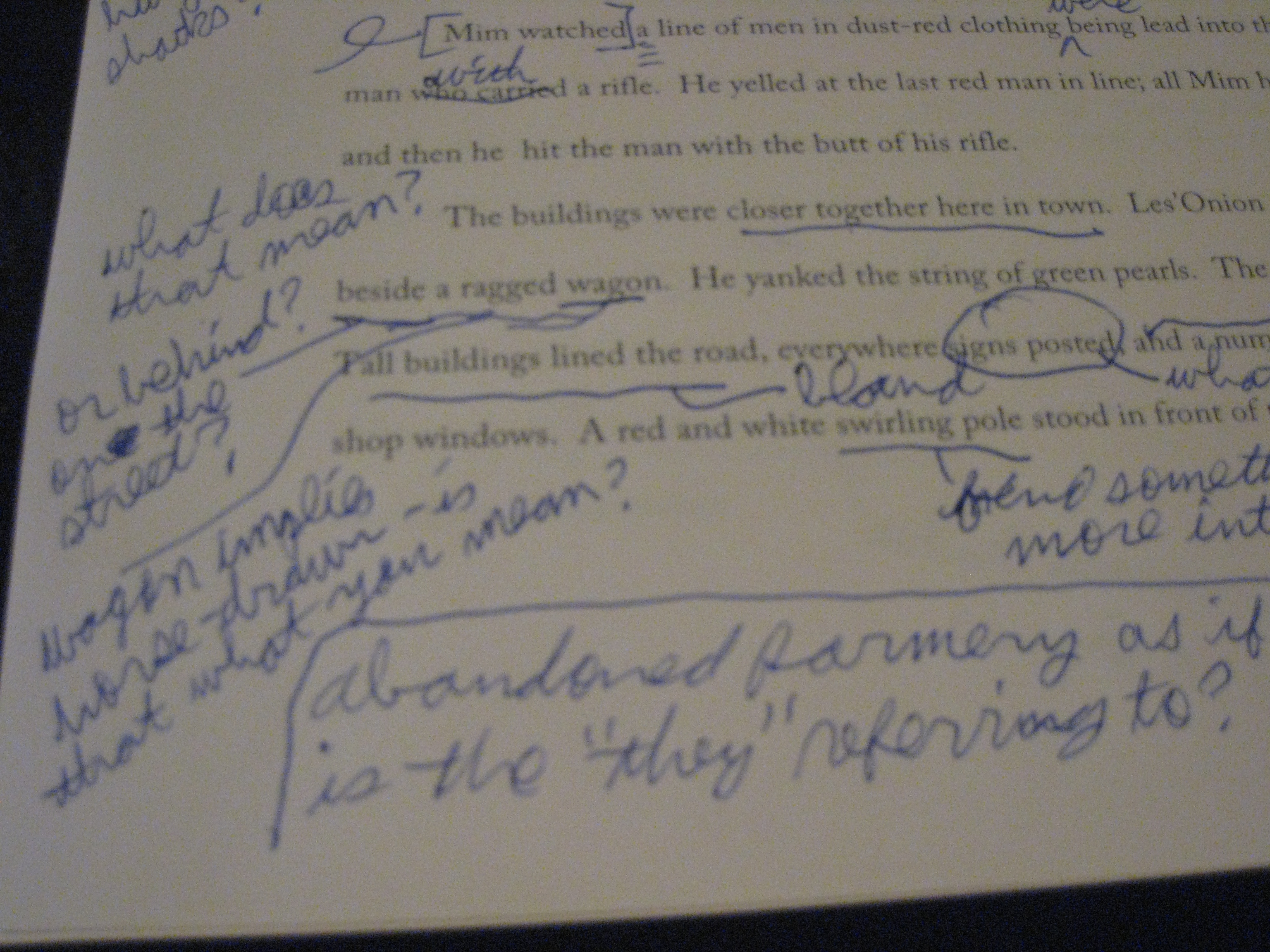
IMG_0256To have written, to have made order from chaos: to have written about messy life stuff that defaced three pages of legal pad, scratched, abbreviated, rounding corners, lines written above below obscuring other lines, arrows pointing everywhere but straight forward. To have made some sense of that snarl, of that juice. To have expressed my self.

To say: today I am a writer.

I hope gratitude is never tardy

shadow and light in Glen Helen

Sorting through my office, confronting the hamster nests of papers in order to pack and move, I found a piece of yellow legal paper on which I drafted (but never ultimately sent) a note of thanks to send to friends after my daughter Merida’s accident in the summer of 2011.  (I blogged about her accident here.)  Because the world of people to whom I’m grateful continues to expand, I am posting it here.  (You know who you are.)

Here’s what I wrote back then.  Back then, I would have refined it before sending, but now, I won’t:

Dear friends,

This is a note of belated yet enduring gratitude.

Your compassion, company, cards, and meals collectively sustained us after M’s accident.  Today as I cooked a pack of Annie’s mac & cheese, I remembered when a friend who brought us a dinner of summer bounty (fresh veggies from the garden, quinoa) had also included a box of Annie’s–a thoughtful addition to the feast that might only suit grownups.  So many little things like this made such a difference.  And to everyone who’s become part of our lives since, teachers and friends at Antioch School…

As we celebrate Merida’s healing, I wanted to take a moment to thank you for the part you played in supporting us through it all.  Maybe one of the most important things she’s learning in this is how beautiful community can be.

It’s still true.  And gratitude, its physical feeling, feels good.

write

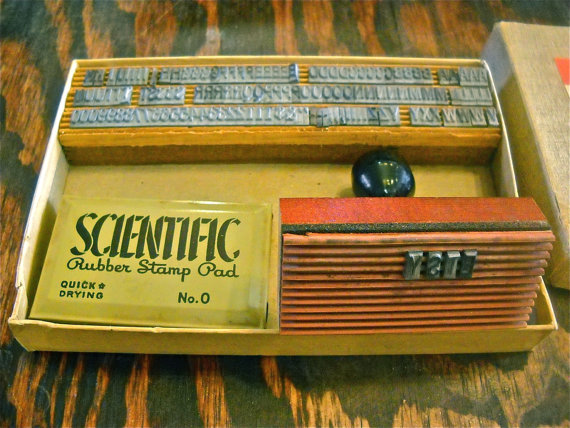
This is like my Base-Lock Rubber Type kit.

This will sound ridiculously small an act, but I’ve been doing this for years now (a decade?) and it seems to help.  I have a Base-Lock Rubber Type kit with tiny letters (think linotype) and on one line I keep the word “write.”  I keep a paper planner, and each year, at the start of the year, I get out the stamp pad (some years black, some years purple, with no apparent logic) and stamp that word on each square in the planner, so the word “write” accosts me every day.  (It helps that this planner is the way I keep track of everything, and yes, I’m still wed to paper.  And yes, I spilled water on it one year and it was sobering, but because I usually use pencil, it was not as devastating as it might have been.)  Each day that I write something, I check off the word “write.”  Each day that I don’t, I draw a line through it.  There are plenty of lapses, days at a time when I haven’t checked off the word, but somehow this small practice keeps me accountable to myself.  And when it happens, it feels really good to have a week with more checks than lines marked through.   (For all of us, may there be many more such weeks, this year and beyond.)