Stammering on NPR

This is not a photo of my actual car.

Has anyone else noticed that either NPR is now intentionally hiring broadcasters who stammer, or broadcasters are deliberately mimicking Terry Gross?  Or worse, World Cafe’s David Dye?

I have nothing against Terry Gross, in fact, I love “Fresh Air.”  Back in college, I remember listening to “Fresh Air” (usually on road trips in my 1967 Plymouth Valiant) and the way Terry Gross said, “From WHYY in Philadelphia, I’m Terry Gross, and this is Fresh Air” made me believe that not only did she have the best job in the world, but she relished simply saying the words.  I still dream of being on her show some day.  Her stammer has always sounded natural, quirky, and endearing.  And her interviews!  She can make utterly uninteresting topics fascinating.  And clearly, she listens to the people she is interviewing.

I wonder about David Dye.  He stammers, too, but also fawns, and generally, while the music was once interesting (I’m thinking back to the 1990s), these days, I find it incredibly watered down to a bitter, weak tea.  There are exceptions, but usually I am lulled into a stupor by the mediocrity in his musical choices.  (Dangerous when driving.  And probably a reflection on what fits in the uninventive AAA format of radio in 2010.  cc: Elvis Costello.)  What bugs me the most about David Dye, though, is how he doesn’t even seem to be listening to what his interviewers are saying, but instead reading and preparing to ask the next question.  I can’t recall him switching gears, or probing deeper.  There is an art to the interview (as Terry Gross and her fans know) and David Dye seems more interested in flattering his guests than getting into real conversations.  And in style, I have long wondered about him: whether, when he interviews people, he is copying the cadence of Terry Gross, hoping some of her talent will rub off on him by association.

Then there’s Ira Glass.  I rarely get to hear This American Life, but when I do, I’m usually completely engrossed after a few moments.  Ira Glass stammers a bit, but it sounds genuine, usually at times when he’s baffled by some bizarre aspect of humanity.

But for a long while, I’ve noticed others on NPR stammering.  Stammer is cropping up in serious political interviews on All Things Considered.  And even on the weekends, there is an increase in stammering.

Here’s my thesis, based on a plethora of very exacting scientific research (ahem).  Maybe since George W. Bush’s “beer buddy” image of the 2000 Presidential election, NPR, and the rest of the friendly U.S., wants to feel more folksy, more disarming.  It’s human to stammer.  We all do it. (Henry James might be the one exception.  He was a stutterer, and as a child, he became used to drafting sentences in his head before he spoke them.  Ultimately, this, along with wrist problems, led to him dictating his writing to a typist.)

I do wonder if NPR is coaching their people to do this intentionally. “Listen to Terry, listen and learn!  She knows!” Human Resources might say to new hires.

The logical vs. the expected

Someone very smart just articulated something I needed to hear.  In the context of writing fiction, specifically, world-building, there’s a need to embrace the logical, but move away from the expected.  For instance, if your novel is placed along a river, in a very dry climate, there would be trees there, or if not trees, an explanation of what happened to them.  Logical, both in nature, and in the context of the world being created.  But when a writer is deciding which of two characters named Anton (“Anton the Elder” and “Anton the Younger”) should quit a carnival due to fickle working conditions, the expected would be the younger leaving.  Youth has more energy and less patience, right?  But why can’t Anton the Elder leave?

So I decided he did leave.  In my world, age has more wisdom and less capacity for bullsh*t.

The beginning of empathy?

My daughter, who is two-and-a-half, is developing a habit of hugging books.  When we’re reading a story and someone gets hurt, or might be scared, or sad, she embraces the book for a long moment.  When Madeline gets her appendix taken out, or when Sal loses her tooth (One Morning in Maine) and makes a bitter face “almost like crying,” my daughter leans in to hug.  She does this with her parents, too, when we stub toes or drop things, or are not feeling well.  In trying to raise a child who cares about other people, we’ve talked a lot about considering others’ feelings, reminding her that it hurts the cat when she yanks his tail.

Tonight, I was reading Harold and The Purple Crayon at bedtime.

“He was tired and he felt he ought to be getting to bed.  He hoped he could see his bedroom window from the top of the mountain.  But as he looked down over the other side he slipped–And there wasn’t any other side of the mountain.  He was falling, into thin air.”

Harold is shown upside down, with his purple crayon, simply falling.  My daughter leaned in to hug Harold, and then held and comforted him (the book) for a long time.  She said, “I’m going to hold Hamold” (as she calls Harold).

The wise people who write about child development tend to discount these early displays of empathy, and certainly my child does her share of throwing her dolls to the floor so that they cry, so that she can comfort them.  (I encourage her not to throw them to the floor–“It’s better if they don’t cry in the first place, right?” but that’s not the point.  She needs them to cry so that she can comfort them.)  It is heart-warming to see her hugging a book, especially when the child protagonist is in peril, or pain, but I don’t think my daughter is unusual in this way.

I read an article recently (I wish I could remember where!) about a book that was claiming there is too much fiction in K-12 curriculum, and that children need to learn how to read nonfiction, that it helps them learn about the real world more than fiction does.  Admittedly taken out of context, this notion really bothers me.  Yes, children need to learn to read all kinds of things, and it’s crucial that they learn the nuances and distinctions between fiction and nonfiction.  But how can I say that fiction doesn’t teach children about life in the “real” world?  Even putting “issue” books aside (in my generation, there was Judy Blume) it’s not fair to partition fiction out of what is real in the world.

We learn the world from stories, and through stories.

p.s. There is truth and fiction everywhere.

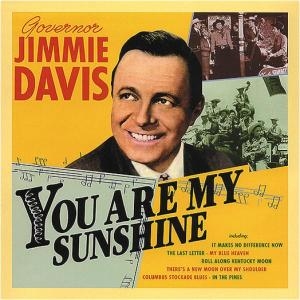
You Are My Sunshine (Who is my sunshine?)

“Sing the deer dear song,” my two-and-a-half-year-old daughter said, early this morning.

She has a cold, and wanted me to sing, “You Are My Sunshine” but with the phrase “dear deer” standing in for “Sunshine.”  (More on our familiar variant, “dear deer,” in a moment.)  No doubt she was seeking comfort in the song I used to sing to her when she was smaller.

The writing of the song “You are my sunshine” is (questionably?) attributed to Oliver Hood.  But according to family legend, my grandmother’s uncle (does that make him my great-great uncle?) Herman C. Becker actually wrote the song.

Great-great uncle Herman was a composer, creating, allegedly, the words and music for “You Are My Sunshine.”  My great-aunt Evelyn recalled making fun of him as he played the song on the piano, because it was so silly.  Herman sent the manuscript  to a music publisher in Chicago (or possibly New York) and never heard anything back.

Until, hearing the song on the radio, my ancestors learned of the supposed rip-off.

Decades later, I sing the song to my child as she’s going to sleep.  My daughter substitutes beloved friends’ names in place of “Sunshine,” or, created in a sillier moment of wordplay, one which Herman C. Becker might have appreciated, referring to the dead deer carcass on the hiking trail across the street (last autumn’s flattening lump of roadkill that we referred to as “deer body” in a first attempt to explain death to the child) she begs me to sing our private lyrics:

“You are my deer dear, my only deer dear, you make me happy, when skies are grey, you’ll never know deer dear, how much I love you, please don’t take my deer dear away.”

I don’t know if she would spell it “deer dear,” reverse it to “dear deer,” or, in simple repetition, choose “deer deer.”

How many generations have been lulled by this song?  And wooed?  To whom does belong?  Is there a point after which the notion of ownership fades?

No one can deny it’s our song.

Nearsighted Monkey (or is that farsighted?)

In the continuing drama of when I will receive Lynda Barry’s book, The Nearsighted Monkey, I got this via email today:

We’re writing about the order you placed on October 22 2009. Unfortunately, the release date for the item(s) listed below has changed, and we need to provide you with a new delivery estimate based on the new release date:

Lynda Barry “Nearsighted Monkey”
Estimated arrival date: November 22 2010 – November 29 2010

Does this mean this is the year?  Can it be?

Cliches (Or why I don’t want to visualize beating a dead horse)

Although some people defend the use of well-worn metaphors (such as “beating a dead horse”) as common language we can all visualize and understand, clichés that turn up unintentionally in writing really bother me.

One of my goals in life is to scrub every cliché I encounter from my own writing, and from the writing of others.  I do use them in speech (when I talk) but even then, I try not to.  (It helps me not use them in writing if I avoid using them in speech; it’s a type of practice.)  There are exceptions, but in general: clichés are the lazy way.  It is HARD not to use clichés.  Clichés are like germs, or maybe viruses.  We read them everywhere, we hear them everywhere, and so they infect us and seep into our writing.  Work against this!  Join the fight to improve the written word!  Try to find better, more interesting ways to say things.  Or try simply omitting the clichés you find.  (There are usually too many words in most stories.)  Your reader will thank you.  I am always refreshed to read work that has few or no clichés.  It makes me know that the writer is taking the words (and the work) seriously.  If you use clichés, make sure you are CHOOSING them, that you are aware of them; make sure you are not just using them by default.  It’s possible to twist clichés around, which serves to illuminate the fact of using a cliché in a sort of ironic way.  For instance, Joss Whedon (creator of “Buffy the Vampire Slayer”) performs this procedure regularly, and gets away with it well–but he is a sophisticated writer, and he is using the visual media of film and television, so he has an easier time indicating that he intends it to be ironic.  But in prose, why not choose something more interesting?

Here’s another thing to consider: Should your work some day be translated into another language, you show mercy to the translator by making your writing free of clichés.

How to recognize a cliché:  Usually, if there is a phrase or metaphor you have heard many times, it is a cliché.  When in doubt, go to:

CLICHÉ-SCRUBBING RESOURCES:

Clichesite.com: Perhaps the largest collection of clichés online: http://www.clichesite.com/

Grammar Girl: How to avoid using clichés:  http://grammar.quickanddirtytips.com/how-to-avoid-cliches.aspx

According to Grammar Girl’s site:

“Good writers avoid clichés wherever they might lurk. Novelist and essayist Martin Amis said, “All writing is a campaign against cliché. Not just clichés of the pen but clichés of the mind and clichés of the heart.”

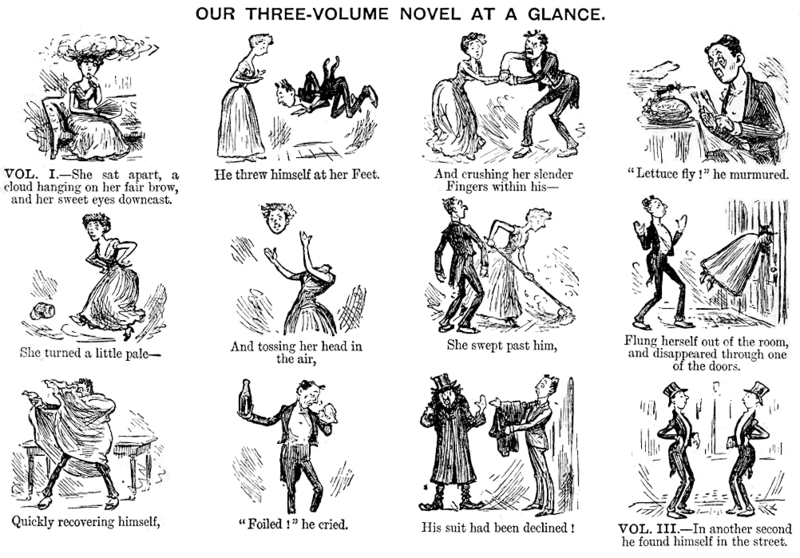
(I stole this excellent graphic from Wikipedia’s entry on cliches.)

Poetry at the Bastille

Yesterday, Bastille Day, is the day I celebrate the birth of my one best cat, my familiar, Houdini Gatallini Bambini Baby-ini.  She was a cat in a million.

In the poetry workshop I’m taking at the AWW, there is a lot of talk about cats, within poems and without.  Shadows of cats against walls, rare breeds, can you really love a cat as you would love a child?  Big questions.  I’m still sorting them out.

I miss her, still, always.

Antioch Writers Workshop July 2010

Embroiled fully in this year’s Antioch Writers Workshop.  I love being around writers, talking about writing, writing with writers, the world cracking open before me.

Before the keynote on Saturday, I was driving to campus and feeling guilty, semi-taking a week off from child, home, life, to do the workshop, because sometimes it seems like choosing to be a writer is a silly luxury (but is it even a choice? I ask myself).

However.

Then I realized (it’s so easy to REALIZE things while driving, isn’t it?) that all writing is really about life.  Whether fiction or nonfiction, poetry or prose, a person (who is alive) puts something on paper (or screen, or sand) and it means something to at least one person.  What else is life, if not that?

I was right!

As long as I can remember observing the phenomenon, the “act” of listening to someone talk on a cell phone has annoyed me.  On the other hand, unless the participant voices are overly loud or grating, listening to two people talking in a cafe rarely bugs me–in fact, it’s often good ambience for writing.  (Especially at a place like The Underdog Cafe, where it has been scientifically proven that 99.23% of all conversations are exceedingly intelligent.)  But I find overhearing half a conversation irritating.

As far as back as when cell phones first became the fashion, my theory has been that the act of hearing one side of a conversation forces my brain to fill in the other side of the conversation.  I can’t not guess at what the other person is saying.  I don’t think it’s exclusive to writers, but maybe writers (thinking about dialogue in a very intentional way) are more susceptible to this irritation.  I’ve told friends about my theory over the years; they can back me up here.

Turns out I was right, that’s just the reason it’s maddening!  Cornell University researchers found this to be true.

I love being right, even if it confirms a reason for something that I’ve always hated.  Yes, I said hated.  However, being that I am human, and therefor a hypocrite, I own a cell phone.  And have talked upon it.  I try not to have conversations where there is a captive audience–usually I go to a hallway or go outside, away from other people.  Partially because I value privacy (so why do I blog?  Hmmm…) but also because I know how irritating it is to hear others’ conversations.

Just trying to do my part to be a good, community-minded citizen.

But I do love being right.