Seeing and being seen (part 2)

Bronze female figure, Late Minoan I, ca. 1600-1450 B.C., Metropolitan Museum of Art, NY

I’m thrilled to finally spill a secret I’ve been keeping for months: I was awarded an Ohio Arts Council Individual Excellence Award! (And I’m thrilled to see some friends on the list, too. Congratulations to everyone!)

This feels really big for me. Big because while I’ve published more and more pieces & stories recently, I don’t (yet) have a book out; big because the award is for creative nonfiction, rather than fiction, which means that as I’ve ventured into writing my own stories, my work is being appreciated, and seen.

So many people I know (& love) work and work and still feel invisible. Feel like it’s pointless. Publishing can be fickle and hard and depressing, and the importance of recognition is huge, yet it can be so rare, and can feel like it’s never going to happen. (There’s a great book called Necessary Dreams, by Anna Fels, that deals with the importance of recognition, for women especially.)

Years ago, I wrote about seeing and being seen, its importance to humanity. I think about this a lot…when I talk to people, when I feel how busy everyone seems to be, often too busy to really connect (myself included). When I hear how invisible people feel. How broken we are. How part of the mending is to stop and see each other. Sometimes being seen takes the form of Big & Public (like an award), but sometimes it’s simply looking someone in the eye, with intention: I see you. You are not invisible.
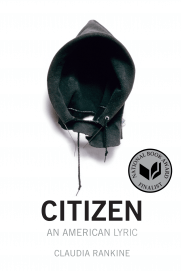

(“how to care for the injured body”) From Claudia Rankine, Citizen

citizen

I’ve long been meaning to post about the award-winning and beautiful lyric, Citizen, by Claudia Rankine.

I read it several years ago, and listened to the audiobook again a couple months ago as I drove back and forth to Dayton where I’m teaching. The living inside these pages (or on the discs, if you are old school like me, and listen to the CD) makes me know I have only just started to understand what it is to be living, in this country, at this time, as a person of color. And despite what I would like to believe about myself, I have only begun to understand. There are many ways of beginning to understand. This book is one of them. I recommend you read or listen, no matter what color your skin.

Something that resonates for me is a passage from “Some years there exists a wanting to escape…” on page 143. (Here’s a part, stripped of context, because the nature of this book is that it’s a lyric & a whole cloth, but this is haunting me today, for which I’m grateful, and I wanted to share it. You can read more of this passage at the Poetry Foundation.)

(And please read the book, too.)

How to care for the injured body,

the kind of body that can’t hold
the content it is living?

And where is the safest place when that place
must be someplace other than in the body?

Didion’s correct priorities

Joan Didion and Griffin Dunne

Great moment from the great film, The Center Will Not Hold, about the life of Joan Didion:

(Griffin Dunne checks on his aunt Joan Didion, recently widowed.)

Griffin Dunne (looking into her refrigerator): Look how much soup you have. Who makes all this soup for you?

Joan Didion: What soup?

Griffin Dunne: All this (pointing), is that soup?

Joan Didion: No, that’s ice cream.


So so good for breakfast

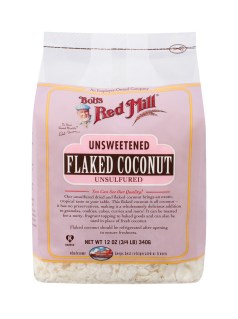
Bob's Red Mill flaked coconut
(You never know where you’ll find inspiration.)

UPDATED FROM THE ORIGINAL POST WITH A FEW ADDITIONAL INGREDIENTS!!!! (Because I care about my readers.)

If I’m counting correctly, this is my third ever post about what I had for breakfast. Today’s creation was so good, I had to crow about it. I wish I had taken a photo, but I’ll just do the product placement for Bob’s Red Mill coconut flakes instead.

This requires a high powered blender, though it would probably work in a normal blender if you chop things up small first. (My friend Sally moved to Australia last summer and I miss her like crazy, every day. The only thing good about her departure is that she sold me her Vitamix before she left.) I have made this without the coconut flakes, but today when I saw them, they called to me. I thought it would either be really good, or terrible. It was really good. So good, I want to make another one right now.

This recipe is approximate. My husband liked it, but I didn’t even try it on the child, because I know her by now. Maybe when she’s older.

Put in blender (approximately):

  • 1 medium apple (or another sweet fruit)
  • 2 celery stalks
  • 2 small carrots (or even better, a small to medium beet, peeled)
  • 1 clove garlic
  • about an inch or so of peeled ginger root
  • dash of cayenne pepper (don’t be shy!)
  • bigger dash of turmeric (I use several shakes!)
  • small handful of coconut flakes
  • small red bell pepper (or yellow, or orange, but not green–ick!)
  • 6-8 ice cubes, and enough water to blend (add more if needed)
  • About a tablespoon or two of raw organic apple cider vinegar (with “the mother”)
  • A small dollop of raw honey

Blend till it’s smooth.

Drink it down.

Notice the sensation: that feeling you might actually survive the day.

I’ve begun making large batches so I have some leftover for the next day—it does fine in the refrigerator overnight. Let me know if you try it!

#MeToo and Antioch College SOPP


keep calm and have boundaries


When I lived in Seattle in the 1990s, my partner was a student at the Antioch University campus there. The Sexual Offense Prevention Policy (SOPP) at Antioch College stood on its wobbly new legs. The SOPP manifested on the adult campus in Seattle (redolent with west coast, touchy-feely hugging culture) thusly: Please ask before hugging someone. To wit:

     “Do you want a hug?”

     (If no, no means no hug! Simple. An exercise in thoughtful boundaries.)

Fast forward to now, #metoo, and how we might build a culture of consent…The Antioch SOPP is back in the news. I think it’s great that collectively, we’ve finally caught up to Antioch, and consent is no longer simply fodder for sketch comedy.

Slowly, through creaks and bumps, we humans can make progress, right?

The inner critic is everywhere! But that won’t stop us, no!

IMG_20180405_101038871.jpgRecently I had the pleasure of teaching at the Antioch Writers’ Workshop‘s Dive Into Your Story: Where do you get your ideas?We dealt with the inner critic and how to renegotiate the relationship, moving aside the noise so we can get to getting ideas, and writing.
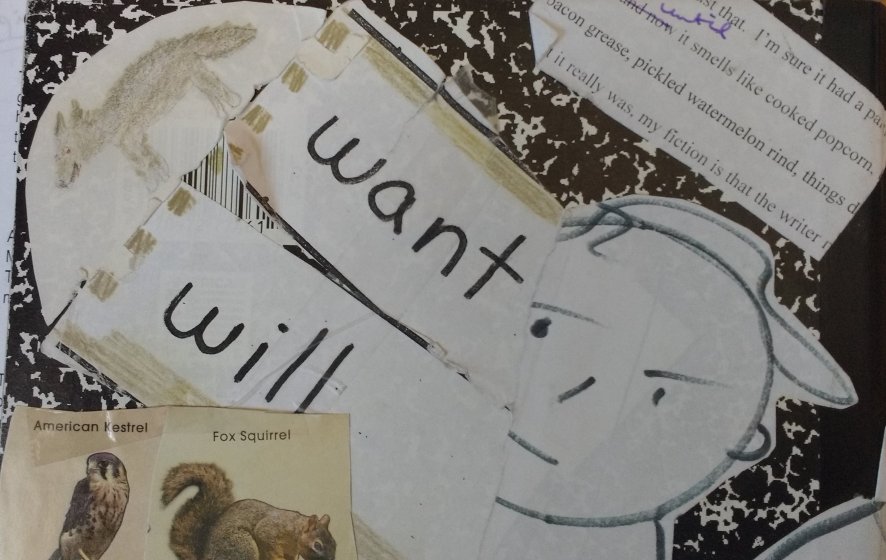
You who read this blog know I write & think about the inner critic all the time, so it was very fun to share those practices (inspired by Gayle BrandeisLynda Barry, Bonni Goldberg, Amy Cuddy, and others) with the humans at the workshop.

After the workshop, I got an email from one of the participants, Fredrick Marion. I’m always thrilled when the inner critic takes visual form, gets post office box, and becomes capable of receiving a Dear Inner Critic letter. Kudos to the writers who make that happen. Here’s Fredrick’s letter…Enjoy!

p.s. You might also want to subscribe to Fredrick’s awesome newsletter.

p.p.s. To engage with your inner critic, here’s a place to start.

IMG_20180405_100933660.jpg


Everything reminds you of what happened

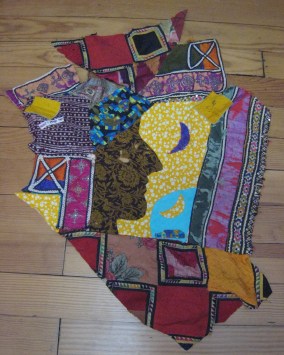
multi-color fabric partial quilt front, shape of face and moons, etc.
detail from a quilt I made in college, never finished

(That thing that happens when something is consuming you, how you see it everywhere. My memoir is everywhere, apparently. Here’s one place I saw it the other day.)

Question
by May Swenson

Body my house
my horse my hound
what will I do
when you are fallen

Where will I sleep
How will I ride
What will I hunt

Where can I go
without my mount
all eager and quick
How will I know
in thicket ahead
is danger or treasure
when Body my good
bright dog is dead

How will it be
to lie in the sky
without roof or door
and wind for an eye

With cloud for shift
how will I hide?

Letter to Senator Portman

Senator Rob Portman
37 West Broad Street
Room 300
Columbus, OH 43215

February 16, 2018

Dear Senator Portman,

I understand that over your career, you have benefitted from more than three million dollars worth of support* from the National Rifle Association. That is a lot of money. And I also understand that political careers require a lot of money.

But now, after yet another horrifying school shooting, I am begging you: Take a bird’s eye view for a moment. Pause and think about the sanctity of human life. Think about those families whose innocent children were murdered this week. And think about the entire community of Parkland, their shock, grief, loss.

Think about all the other communities that have lost children due to senseless gun violence.

Think about the child-shaped holes in the lives of these families, friends, and communities.

I am the mother of a ten year old girl. She is vibrant and amazing and beloved, and when she goes to school, I believe she should be free to learn and grow. When I start to imagine how those grieving parents must feel, and will feel forever…

Senator Portman, you are in a unique and powerful position to lead one of the most humanitarian missions of our time. On your watch, Senator, what will you do to protect innocent lives?

At what point will you step forward and lead our nation by rejecting money attached to the organization which, directly or indirectly, is responsible for these innocent lives?

What will it take? Will it take you losing someone who is close to you? (I hope not, because I do not wish that grief on anyone.)

How many tragedies are too many? When do you say ENOUGH?

Please, please use your position of power for good: Stand up to the gun lobby and say no. Tell them you will find other ways to sustain your career.

Respectfully,

Rebecca Kuder

*(source: NYTimes, 10/4/17, “Thoughts and Prayers and NRA Funding”)

(writing about math & the bones)

photo of papers on the floor, writing process
Working at Omega, October 2017

…when you hand yourself over to an hour freewrite about numbers and math, and it all adds up to the shape your bones will be when your body goes to the fire. (& instead of scrawling your usual “thank you” at the end of your freewriting, which Laraine Herring taught you in her workshop—thanking yourself and your writer self for showing up—you write “mic drop.”)

(boom.)

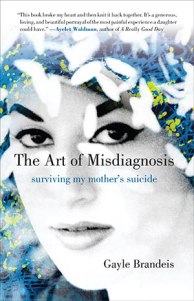
The Art of Misdiagnosis, by Gayle Brandeis

The Art of Misdiagnosis by Gayle Brandeis
An exceptional act of humanity is discoverable between these covers.

Sometimes I encounter a book I know I want to reread again and again, to understand grief, and humanity, and move my psyche toward wholeness. Among these glittering narratives is The Art of Misdiagnosis: Surviving My Mother’s Suicide, by my friend Gayle Brandeis. (Gayle Brandeis and I met when we both attended the Antioch Los Angeles MFA program—and then, as now, she seemed an angel in the world, though with the beauty of authenticity shining through.)

In her memoir, Gayle captures the static that is chronic worry about a damaged loved one…when someone close is suffering in an inescapable stew of chaos, the background noise of concern is constant…and Gayle depicts the grim throb that can be brought on by the phone’s ring…she shows how complicated is the very human wish for relief…

As I read her memoir, I imagine I’m sitting alongside the narrator in the patrol car of the heart, witnessing firsthand the human struggle between connection and release, touching the complicated fiber of existence as we intersect with & knock against other broken humans…how we each bend into the shape necessary to survive the life we’re born into…how we try not to drown as we reach (often involuntarily) toward the drowning beloved…

I’ve been obsessed lately with how trauma shapes our bodies: literally, the physical body, and the spirit/psyche. The Art Of Misdiagnosis meditatively walks this terrain, and also somehow inoculates against trauma and grief, or at least wakens antibodies for understanding those parts of a life.

I read Gayle’s memoir for pleasure, allowing myself not to take notes, just to take it all in…and as I’m processing some of my own traumas, the book provides a balm, strangely reassuring. (None of us are alone.) Taking notes sometimes pulls me from the reading experience, but couldn’t I resist this part, near the end, on p. 222, after the narrator has experienced an intense physical release of trauma…

“When I am ready, Celia helps me up and hugs me back into the world.

‘Thank you,’ I tell her, but the words don’t feel strong enough. How can you thank someone for softening the board over your heart? For helping release a burden you’ve carried all your life? For resurfacing just when you need her? For saving you again, almost twenty-four years after she saved you the first time?”

This memoir appears at the perfect time in my life. And as my body types Gayle’s words (above), I notice they echo how I feel about her memoir, and her writing in general: How can you thank someone for softening the board over your heart?