The power of PROM

IMG_0873

I’m going to the prom on Saturday night!  It’s not what you think.  From the Yellow Springs News:

Villagers will have a chance to relive — or redo — the greatest night of their lives at “Enchantment Under the Springs,” a 21-and-up event organized by a committee of the Yellow Springs Browns’ Backers.

“The idea was to let people relive their prom but have more fun,” said Kira Lugo, a member of the prom committee. “I’m excited to go to the prom and enjoy it the way it should be.”

I hadn’t planned to go.  Then last week at a discussion of Peggy Orenstein’s book, Cinderella Ate My Daughter (a great book, I blogged about it here), my friend said her husband wasn’t interested, so she would go stag.  (Is it called “stag” when it’s a woman going alone?  Is it going doe?)  Whatever the nomenclature, I decided I’d join her.  (Clearly, our husbands have no desire to relive their high school days.  Smart.)

What to wear?  The week is busy, too busy to peruse thrift shops for couture.  Something in my closet would have to do.  I have a few fancy dresses.  (And isn’t it more sane to not get stressed over something that’s supposed to be fun?  Don’t spend money, just choose something you already have!)  But as I considered what to wear, nasty anxieties bubbled beneath my mature, forty-six-year-old exterior.  To wit:

Junior year, 1983 (…thirty years ago??), as prom approached, each week, I stuffed myself into the hand-me-down bridesmaid’s dress, making sure it would still zip up.  I struggled with weight as a teenager.  Recently, my mother gave me some photos from her father’s things, including a picture of me that night in that dress.  Sausage-wedged inside the floor-length fuchsia gown, hair curling-ironed, make up covering my young skin, I smiled.  (Wrist corsage from my date, who was not my steady, but a neighbor friend.  He wore an all-white tuxedo.)  I have no curling iron now.  Back in middle school, I’d burned my cornea using a curling iron, but that didn’t stop me for years to come.  Now I see the insecure teen beneath the bright-pink girly sugar dream.  When my five-year-old daughter, princess and pink-loving, saw that photo, she cooed and said, “I wish I was you.”

“Why?” I asked.

“So I can have a beautiful dress like that.”

I reassured her that when her prom comes, we will find something even more beautiful for her to wear.  (She doubted that would be possible.)  (Reminder to mother: Your stories are yours, not hers.  All she sees in that photo is the shine, the fancy.)

For my senior prom, I found a vintage periwinkle knee-length dress.  Satiny skirt, wide satin belt, lace and rhinestones on the bodice.  At the time it was fairly gorgeous, and it fit me well.  I kept it for a long time.  (I wish I still had it!)  I think it cost $12.50 at Deborah’s Attic, a wonderful vintage store in Springfield, Ohio.

I am not who I was then, but some of that girl remains.  Ironically, this week, I read an abbreviated version of this article about the development of humans and how our self-image during the teen years can shape us as adults: how and why the years of high school linger long.  My friend and I have had several email chains going this week, giggling electronically at the silly stuff that PROM is calling up.  Our adult wisdom in tact, for me, it’s still been hard to maintain inner calm when I think toward Saturday night.  If it’s going to trigger some wobbly feelings from three decades ago, it’s an intentional trigger; I’m choosing to pull it.

I’m choosing a superficial week, focussing on the outside, seeing what it’s like to do this as an adult.  From the floor up: I’m going to wear my red “vintage” Dr. Marten boots.  I got them in the 90s, wore them everywhere, and nearly wore them out.  I wore them all around Italy.  I loved those boots.  I still love those boots.  I’m going to lace them with hot pink tulle leftover from a pair of butterfly wings I made my daughter last year.  I have a couple of dresses that might work with the boots and turquoise tights.  The real question for the rest of the outfit is whether to follow the notion of reclamation (wear what’s comfortable to you, now, decide to look fabulous!) or the urge toward theatrics (how often do I have the chance to go over the top?)  And do I have the chutzpah to be that freak mama who shows up in her big blue butterfly wings (which are hiding in my closet)?  And if I am, how far over the top shall I go?

Today, I went to Iona Boutique to buy a “doe” prom ticket.  The shop owner had a few old-school options, including a salmon-pink 80s style dress.  (“Might as well try it on,” I said.)  It fits.  I’m borrowing it–I gave her a donation to the Yellow Springs Kids Playhouse, for which the prom is a fundraiser.  (Men rent tuxedos, after all, don’t they?)

So, revisit?  Reclaim?  Redefine?  I’m not sure yet.  I just want to dance!
“the briar grows before the rose, and neither grows alone.”

Thinking about Jack Hardy today, this May Day.  (Here’s my homage to Jack.)  I can’t find a clip of him playing the song, but here are the lyrics, for your edification, on this fine first day of May…

May Day by Jack Hardy

it's not like pan to play his flute
for those who dance for fun
the fire flickers through poison roots
where chance is on the run

it's not elves to hide their gold
where fortune seekers dive
though pirate lore and island shore
yield only ransomed lives

(chorus:)
there's may day and may wine
and may i please come home
but the briar grows before the rose
and neither grows alone
we'll dance tonight 'til we faint in the light
of the dawn's sweet song of spring
'round the may pole like a day stole
like our feet are borne of wings

it's not sirens to sing their songs
for sailors with cautious ears
they lure no coward right or wrong
and trade not death for fear

it's not like kings to yield their wines
for hundreds of years of war
though drop by drop the ancient vine
paints blood on every door

(repeat chorus)

it's not like girls to give consent
to men of ragged prose
though poets sing of nursery rhymes
their cradles are filled with hope

it's not like me to give my heart
in these drowsy daffodil days
though dreams they douse the timid spark
where sleep presents its plays

(repeat chorus)

it's not like saints to tell their tales
of nights on windswept moors
where death defies the dreams of fate
to close the cellar door

it's not like shepherds to lay them down
when wolves are on the prowl
though songs they scare the waking town
an ill wind has no howl

(repeat chorus)

Brown Bag Discussion: Writing of a life

After my last post, my colleague and I decided to host a discussion on the topic of what to do with our journals.  If you are interested, please do join us.

**

 Brown Bag Discussion

Writing of a life: Keeping the personal journal, 2.0

When: May 29, 2013, 12:30pm

Where: Antioch University Midwest Library

(900 Dayton Street, Yellow Springs, OH 45387)

You’ve kept a journal through the years…perhaps decades.  Your life is documented in those pages, which languish in towers of dusty boxes.  Now what?  It may have been healthy to keep a journal. But is it healthy to reread it?  And, ultimately, what do we do with our journals?

Join Antioch University Midwest faculty Jim Malarkey and Rebecca Kuder for a discussion about what we can do with the pages of our lives.

 This discussion isn’t about how or whether to keep a journal.  It’s for people who have kept a journal for a sustained period of time.  We’ll share our thoughts about what it means to reacquaint with our earlier words and selves, and ideas about what to make of these journals today.

If you’d like, bring one of your journals.

 Please bring your lunch.  Coffee and tea will be provided.

Note: Though this discussion will focus on hand-written journals, electronic journal keepers are welcome.

**

Journals, documents of a life, what to do with them

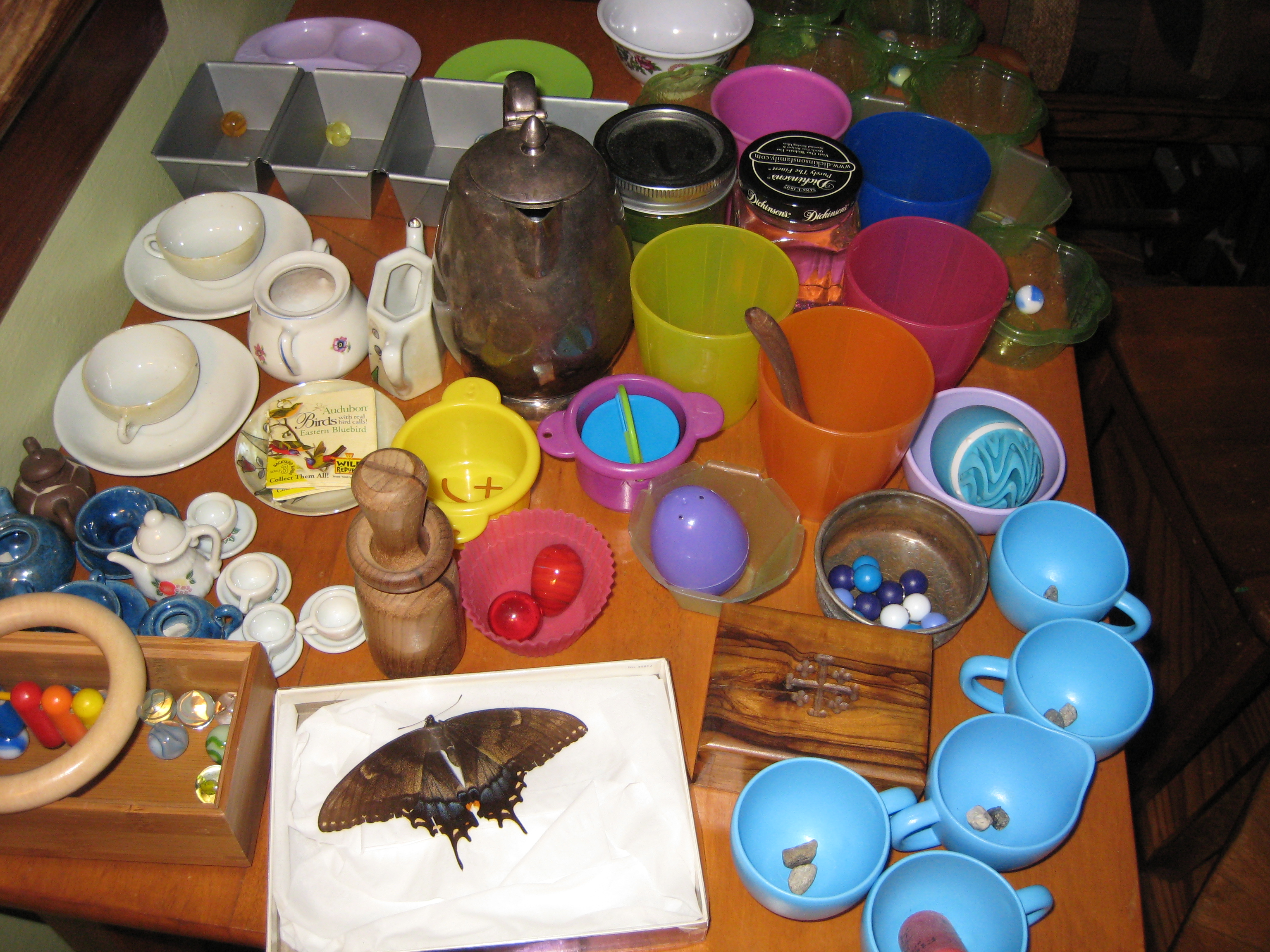
A "magic table" my daughter set up before we moved house.
The “magic table” my daughter set up before we moved house.

At  work today, a colleague asked if I knew anyone of my writing contacts who’s dealt with the question of what to do with decades of journals.

The question was unexpected, and as we talked, it shone a light into my own boxes, decades of life on the page, which my dear husband recently helped move from the attic of one house to another.

Take a walk through my first grade storybooks, stroll over to the first five year diary, with key, where I wrote things like, “Today, it was fun!”  Lean into college, its composition books covered with artsy collages featuring the amazingly beautiful and androgynous Famke Jansen.  (Wince at the terribly bad poetry inside.  Remember the heartbreak.)  Take care not to topple the towers of spiral notebooks full of Julia Cameron-inspired morning pages that helped me find my path. Live your life.

I’ve been keeping words written on paper almost my entire life.  What kind of magpie keeps this notebook?” Joan Didion asks, in her essay “On Keeping  A Notebook.”  I know this question.

What to do with them, the books, the boxes, the bins?  I used to think some day, when I was famous, and possibly dead, a biographer would hunt through them, knit a portrait of me.  I used to think, “Some day I will have time to read them all.”  (I used to think I would want to.)  I used to think  some day my child would want to know me better, to see how I was.  To know all those words written, breaths taken before she existed.

I once heard about someone whose journals were taken by police investigating a murder of her friend.  (Imagine the violation in that!)  I can’t recall the details now (I probably wrote them down somewhere in one of the bins) but the person who told me the story said the most sensible thing to do with journals is burn them.  (I’m not unconvinced.)

But surely there’s something there to mine, to harvest.  Ideas, images, patterns.  Surely more than just kindling.  Surely shape can be made from mess.  Surely there was a point to keeping those words.

As I talked with my colleague today, it became clear that we understood each other–that each knew the deep strain in the question of what to do with these paper artifacts.  We decided to keep talking about the question, to see what happens.  To look into that abyss a bit.

So writers: Do you keep a journal?  What will you do with it?

Review of Wexler’s In Springdale Town (ebook)

Here’s a great little review of In Springdale Town,  by Robert Freeman Wexler (who is also my husband).   The ebook “opens with an ostensible introduction from the author, purporting to tell us the origins of the tale, but he immediately raises our doubts…”

What a lovely finish for the review: “This is a fantastically idiosyncratic narrative that will stick with you long after you put it down. A must must must-read.”

Trent Walters, J’agree!

(p.s. You can read an interview with Robert here.)

Oh, you beautiful mess

IMG_0256To have written, to have made order from chaos: to have written about messy life stuff that defaced three pages of legal pad, scratched, abbreviated, rounding corners, lines written above below obscuring other lines, arrows pointing everywhere but straight forward. To have made some sense of that snarl, of that juice. To have expressed my self.

To say: today I am a writer.

I hope gratitude is never tardy

shadow and light in Glen Helen

Sorting through my office, confronting the hamster nests of papers in order to pack and move, I found a piece of yellow legal paper on which I drafted (but never ultimately sent) a note of thanks to send to friends after my daughter Merida’s accident in the summer of 2011.  (I blogged about her accident here.)  Because the world of people to whom I’m grateful continues to expand, I am posting it here.  (You know who you are.)

Here’s what I wrote back then.  Back then, I would have refined it before sending, but now, I won’t:

Dear friends,

This is a note of belated yet enduring gratitude.

Your compassion, company, cards, and meals collectively sustained us after M’s accident.  Today as I cooked a pack of Annie’s mac & cheese, I remembered when a friend who brought us a dinner of summer bounty (fresh veggies from the garden, quinoa) had also included a box of Annie’s–a thoughtful addition to the feast that might only suit grownups.  So many little things like this made such a difference.  And to everyone who’s become part of our lives since, teachers and friends at Antioch School…

As we celebrate Merida’s healing, I wanted to take a moment to thank you for the part you played in supporting us through it all.  Maybe one of the most important things she’s learning in this is how beautiful community can be.

It’s still true.  And gratitude, its physical feeling, feels good.

Something I can’t believe I’m blogging about

Hey Jessie, why is my child singing this cloying song?

I finally remembered to google the lyrics that my five-year-old daughter has been singing lately: “Hey Jessie, Hey Jessie, it feels like a party every day!”  In this song, “Jessie” is pronounced with attitude: “Jess-say!”

We don’t have cable.  My daughter doesn’t watch the Disney Channel; she barely understands what a television Channel is.  She learned the song from another nursery schooler.  WHY ARE LITTLE GIRLS SINGING THINGS LIKE “IT FEELS LIKE A PARTY EVERY DAY”?  Okay, any day probably does feel like a party when you’re five, when you can wear your pajamas to school and draw on your skin and be silly.  I don’t think this song is about that kind of party.

And I’m not convinced that’s a human singing.  It’s probably a machine.  Part of the big shiny plastic machine that chews up the natural self-esteem of children, and spits it out in shapes that are no longer recognizable.

(p.s. to followers of my blog: I’ve not been blogging lately because I’m renovating an old house and preparing to move.  Lots to share, when there’s time.  Stay tuned!)

The beautiful boxes that some people create, and how we breathe better

belafonte1
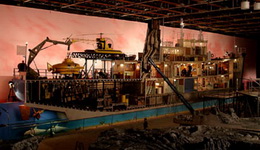
According to Chabon, the “Belafonte” could be Wes Anderson’s Cornell box.

Having just read this gorgeous essay by Michael Chabon, I had to share it with my loyal blog followers.  In the New York Review of Books essay, Chabon gets at precisely what itches my artistic soul and compels me toward interdisciplinary aesthetics.  Chabon gets at how artists (in this case, Wes Anderson, Joseph Cornell, and Vladimir Nabokov) can connect and transcend form.  Reading Chabon’s essay, I felt a sense of more oxygen getting into my lungs, filling my spirit.  Hoping it will give you the same creative uplift.

(I’ve blogged here and elsewhere about my fascination with Wes Anderson.  I haven’t seen Moonlight Kingdom, but it’s high on my list.)