Paragraph as fingerprint?

image of egg stolen from http://tinyurl.com/3c7rfzo

In hopes of assessing how many one sentence paragraphs I had in my novel, I changed the magnification on my word processor window, which made the text appear much smaller than usual.  This allowed me to see most of a page on one screen.  As I scrolled through the pages, stopping whenever I saw a one sentence paragraph, I joined what I could with longer paragraphs, and omitted some.  This was prompted by a piece of advice in Francine Prose’s Reading Like A Writer, namely not to overuse the one sentence paragraph.  As I combed through the text, some unexpected things happened:

1) I realized that sometimes one sentence paragraphs are necessary, the best choice.  I want to trust the reader, and not lean too heavily on the structural signal of a one sentence paragraph as alert: “Hey you reader!  Look here! This line is so  important I set it up on its own!  Read carefully!”  And yet sometimes a one sentence paragraph just feels right.  (It was good to interrogate each occurence, however, to be sure.)

2) The decision about where to break paragraphs has its own intuition, and the writer should take time to quiet down enough and follow it.

3) I was doing a lot of changing and then changing back, doing and undoing.  A lot of tinkering, but maybe the act of tinkering confirmed that I’d gotten some bits “right” before questioning, if such a thing as “right” is possible in a thing so subjective as fiction.

4) Another nuance I hadn’t considered, in defense of keeping some one sentence paragraphs in this novel: my protagonist is seven years old.  The child’s close lens on her world and the visual smallness of a one sentence paragraph seem connected.  I don’t think this is overly precious, in this case.

5) The exercise was a great lesson, and proved the point that Prose includes in her book.  On p. 68-9, she quotes Rex Stout’s novel, Plot It Yourself, in which “Nero Wolfe is called upon to determine if three manuscripts that figure into a case involving accusations of plagiarism could have been written by the same person.”:

“A clever man might successfully disguise every element of his style but one–the paragraphing.  Diction and syntax may be determined and controlled by rational processes in full consciousness, but paragraphing–the decision whether to take short hops or long ones, and whether to hop in the middle of a thought or action or finish it first–that comes from instinct, from the depths of personality.  I will concede the possibility that the verbal similarities, and even the punctuation, could be coincidence, though it is highly improbable; but not the paragraphing.  These three stories were paragraphed by the same person.”

So is the paragraph like a fingerprint, individual to each writer?  Maybe.

Another thing happened as I worked through the manuscript, not related to paragraphs, but worth noting.  As the text looked so much smaller to my writing eye, it performed a visual trick on me.  I’ve done this bird’s-eye thing before, but this time I was pulled into some scenes despite (or maybe because of) how hard it was to read the words.  The clusters of words formed different shapes in my brain, pulling me in.  Like those little sugar Easter eggs that you peer into, I had to look closely and see the world that was hiding there.  And thus I did a whole lot of unexpected line editing than I planned to do.  Good.

As always, I hope it’s stronger for the toil.
The best lilac ever lives on (and blooms)!

This little light of mine...

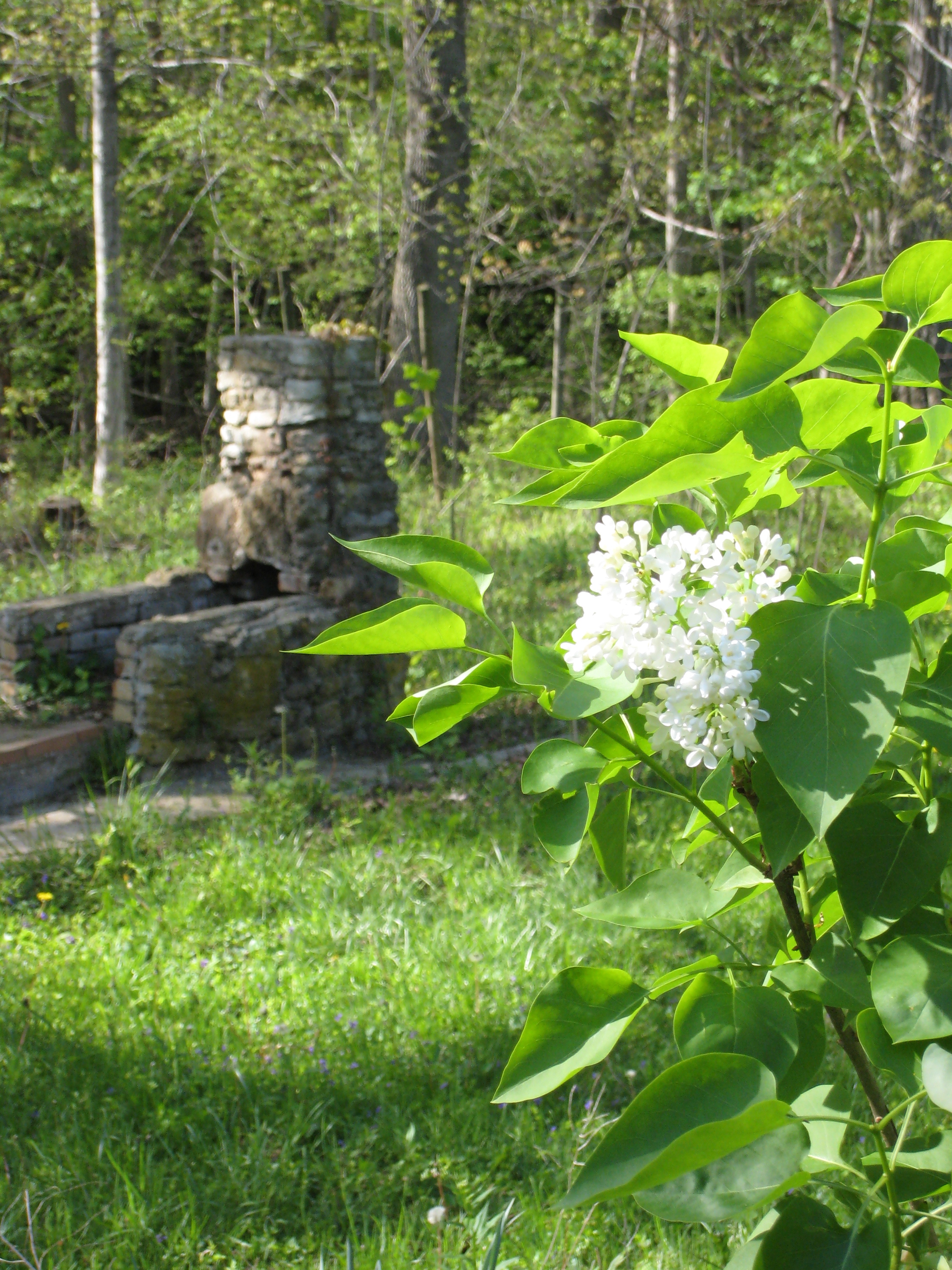
A tiny, important thing is happening in my yard.  The little white lilac is blooming.

Here’s the history of my beloved, best ever lilac tree.  When I read that old post from 2006, I marvel at how long ago that was in personal years.  Since then, I had a daughter, the country house is larger, now almost roomy, thanks to an addition.  And the white lilac shoot has been moved to its second country house location (to make room for the addition).

A harsh winter, a rainy spring, and now there’s beautiful popcorn on the small tree.  I breathe in its heady fullness.  I look back and think of how I wanted to kick the ass of the people who cut it down.  I think back to how I considered the word “evil” in the cutting down of that good grandmother lilac tree.  (Now, rather than “evil,” I would call it “unskilled,” and the word would not be a euphemism.)

I savor these blooms.  May the years provide many small but important moments to celebrate flexibility, evolution, and the tender cycle of life.

Solo: bird as metaphor

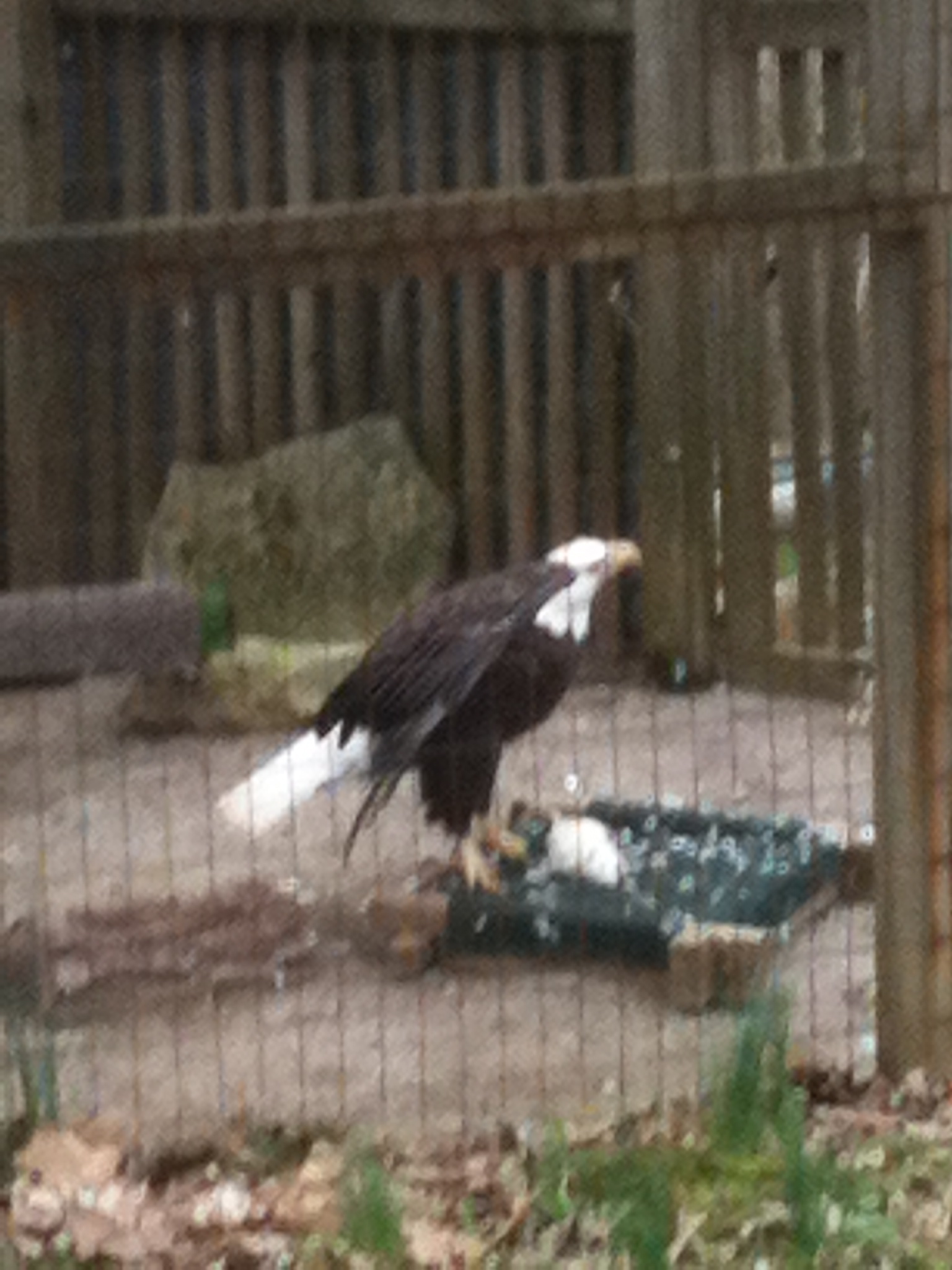
Solo, the one-winged eagle

At the raptor center at Glen Helen, there’s a bald eagle named Solo.  He’s over 30 years old, and lost his left wing after running into a power line.  My daughter loves going to see all the raptors there, but she’s especially fond of Solo.  The other day on our way down the bumpy lane, she said, “Solo is happy because he knows I’m coming to see him!”

When I saw the news about Osama Bin Laden yesterday, I was reminded again how much I’m a pacifist.

Some people believe that a human can be inherently evil.  I believe that humans are born with curiosity and kindness, the natural state of a child.  If, for whatever reason, those natural characteristics are neglected or broken, sometimes a person can gnarl as they grow, becoming one who does horrible (or “unskilled“) acts.  Experiences mix with beliefs, among other essential ingredients, and shape a person.

I am not defending Osama Bin Laden.  I am grateful that no one close to me died in the attacks on September 11, 2001.  Perhaps if I had experienced that loss more closely, I would have felt some relief or closure at Bin Laden’s death.  (I’m sure I would never have partied and chanted happily, however.)  But when I saw the headline, “Bin Laden Is Dead, Obama Says”, the sick feeling that spread through my gut, the repulsion, the sadness, the pain, was over the fact that our government (“we the people”) had killed someone.  I feel this way whenever I hear of a person who has received the death penalty being executed, no matter the crime.

I want us to be a better species.  I want us to find ways other than war to get along together here.  I believe we can each move toward peace, in small ways that might become huge: if we pay attention, and focus on other humans with kindness and open hearts.  I admit to being an unapologetic original hippie-kid idealist optimist (OHIO for short)!  But I have a poet’s sense that the intentional taking of a life disturbs nature  in ways we can’t know.  (This includes bugs and spiders, and I’m not yet reconciled on how to deal with them, so I continue to kill and maim.  And I am pro-choice, so some will call me a hypocrite.)

At a gathering of women last night, we sang, “One by one everyone comes to remember we are healing the world one heart at a time…”  Solo, American icon, left wing  missing, right wing irrelevant, can’t fly, but would hunt and kill if he could.  In order to eat, in order to survive.  (How to heal a wounded bird?  How to heal a wounded nation?  Take care of him, and think about how we affect each other.  How to heal a wounded world?  One heart at a time?)

Does the killing of Bin Laden heal the pain we feel over the loss of those who died on September 11, 2001?  His death is not about healing, it’s about vengeance, but I’d feel better if  we were trying to do better in the world.

I bet Solo would, too.

How things need to be said

How do you say "apple"?

This morning, my daughter was talking about how one of her friends says words.  He’s about two, and words are emerging from his little being.  My daughter said, “He says ‘apple’ how it needs to be said!”  Apple, that powerful and delicious word, its expression  with rewarding payoff in fruit.

I love the phrase “how it needs to be said.”  I wish I knew better how things I need to say need to be said.  All I can say is I’m working on it, working toward it, meanwhile watching the delectable round red fruit of finding the right word, often out of reach…

Breaking, where to break

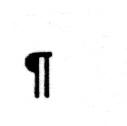
An important little symbol.

Oh, where to break the paragraphs, how to expunge some one sentence paragraphs, justify some two sentence paragraphs, avoid too many short paragraphs, how not to be jarring, or coy, and how to trust the reader to know where I mean to place emphasis, how to trust my intuition, the flow of the words, the lightning bolt that tells me to end or begin a paragraph…

Understanding, maybe a little bit, how poets work.

Vigor takes work

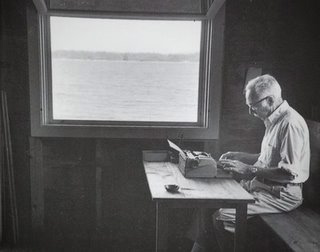
E.B. White, writing in Maine

I just reread Elements of Style, and several bits of wisdom have taken residence in my mind.  This was the first time I’ve read the fourth edition.  I found the updates to this edition helpful, in particular, some of the tidbits in the final section on style.  If you haven’t read it, do.

I’ve been working through a novel, editing, pruning, and rearranging.  Strunk and White remind me of point 22, on p. 32 of this edition: “Place the emphatic words of a sentence at the end.”  This can apply to sentences, paragraphs, lines of poetry, and even words: the beginning and end of these units carry the most power, the most weight.  The middle can be incidental, or worse, ignored.  Here’s a clever example (possibly urban legend, but interesting anyway) of how words can work with mixed up middles becoming invisible, and yet the content is still clear.  (Thanks to my friend Lara for digging this up when my human memory failed.):

“Aoccdrnig to a rscheearch at Cmabrigde Uinervtisy, it deosn’t mttaer in waht oredr the ltteers in a wrod are, the olny iprmoetnt tihng is taht the frist and lsat ltteer be at the rghit pclae. The rset can be a toatl mses and you can sitll raed it wouthit porbelm. Tihs is bcuseae the huamn mnid deos not raed ervey lteter by istlef, but the wrod as a wlohe.”

Beginnings and ends of these words are stable, are what we expect, and therefore they guide in reading through the garble.

Another thing that Elements of Style illustrates is more visual than literal.  Writers have to learn the twin arts of making a mess (making a creation, a draft) and then cleaning it up (editing, revising).  If you look at the layout of the examples in Strunk and White, you could consider the left column (before the makeover) as the making of the mess, and the right column (after the makeover) as cleaning it up.  I’m going to use this idea when I talk to students.  I think it helps to put the implicit and explicit judgment of Strunk and White into a context: all writing is a process, a walking through and then away from the muddy, toward the clear.  Start somewhere.  Edit as needed, strive to improve the mess, to communicate better.

Maybe the most important advice is point 17, on p. 23, “Omit needless words.”  An anthem for some people who write, an ideal to strive toward.  I’ve been polishing, weeding the needless, plucking extraneous words from overburdened sentences.  Sometimes it takes years to realize a word is needless.  Omit needless words is a noble mantra and practice.  With time, I could whittle this paragraph down even more than I have, but in the battle between how the blogosphere measures time and my tendency toward perfectionism, I go for speed and risk flaws.  This time, for the first time, I found (or noticed) the sub-mantra of Omit needless words on p. 19, under point 14.  “Note, in the examples above, that when a sentence if made stronger, it usually becomes shorter.  Thus, brevity is a by-product of vigor.”

It’s worth repeating: “…brevity is a by-product of vigor.”

That is such a beautiful fact, and beautifully put.  No wonder I am tired, this revision has been vigorous.  The novel is shorter.  And, I hope, stronger.

W-O-M-A-N (Turn that frown upside down!)

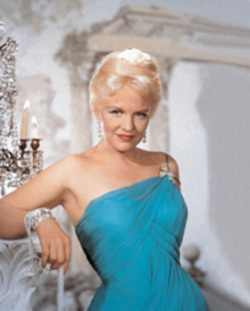
Peggy Lee. That lady must have had some darn fine warshing gloves.

One excellent reason to have Peggy Lee’s “Fever & Other Hits” lying around:

Say one morning you find cat barf in your kid’s bin of wooden food (each piece with velcro dots to let the child mimic chopping) because it was left on the floor (lesson: if you leave your toys on the floor, Dante, aka “Big Tiny” the cat might barf on them), you can turn a frown upside down!

Here’s how:

1) Assess which turnips, carrots, and tomatoes need warshed. Remove the big chunks first.  Get a clean bag and stash the unsullied food.

2) Get a used toothbrush (that you won’t reuse for your mouth), some good soap, and the sullied wooden food.

3) Start scrubbing.

4) Realize, through your disgust and crankiness, that this is an opportunity to teach your toddler the word “REPULSIVE.”

5) Realize still further, through this repulsive task, which song has popped into your head.  And laugh.

6) Put down the half-clean wooden carrot top.  Wash and dry your hands.

7) Put on Peggy Lee, risk blasphemy by skipping over the song “Fever,” which always reminds you of the good old college days, and watching Pee Wee Herman lip synching in platform shoes; pine momentarily for the careless 1980s.  (Anyone remember that?)  Skip directly to song number two.

8) Sing along, “‘Cause I’m a woman,” and make sure your daughter hears you spelling that glorious word.

(To the gentlemen: Before you get your boxers in a twist, yes, I know you can clean cat barf too.  Sure can!  And plenty else.  But you’ll need to find your own song, darlings.  This one is ours.)

Shut up and sing the song

Jack Hardy’s (magic) green velvet coat

When a songwriter at Jack Hardy’s weekly songwriters group would explain what he or she was about to sing, Jack Hardy would say, “Shut up and sing the song.”  Abrupt, and to some, rude, but a valid procedural point for a workshop, even more notable in its good advice to the writer.

Let the work speak for itself.  If something is  important enough, yet is not on the page, or in the lyrics, put it in there.  Rework or revise it later if you need to, if what you mean is not conveyed through your magic lattice of words, sounds, syllables.

I’ve stolen Jack’s  line when approaching fiction workshops: it applies.  I feel very rude ever telling someone to “shut up,” and usually preface it with context.  As an imperative to action, “Shut up and sing the song” is simple and worth doing.  (I’m talking to myself, too.  For years, I whined about how I wanted to write and yet was not doing it.)  Shut up about what you want to do, wish you could do, mean to do, intend to do.

Shut up and sing the song.

Jack Hardy (household icon)

Jack Hardy playing at my wedding

When Jack Hardy and his band played the Studebaker Family Reunion in 2001, he and the band stayed at our house.  I came back from work that Saturday afternoon to a kitchen full of fiddles and song; they were warming up for the evening’s gig.  Five years later, he came back with a band that included his bright-glowing daughter, Morgan.  I haven’t met his other family, but was so impressed with Morgan.  She seemed wise and mature for her years, and full of talent.

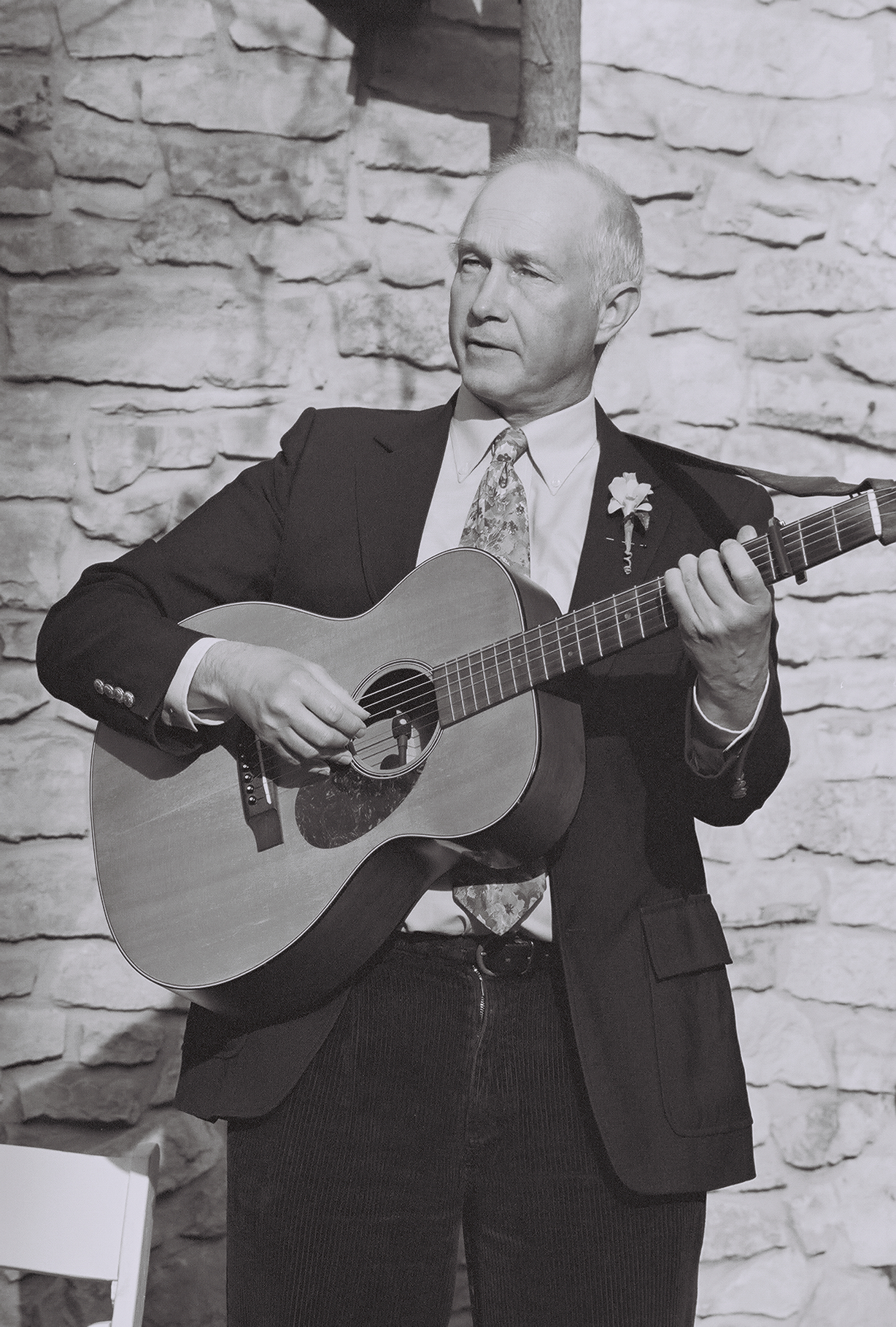
Jack Hardy sang and played at my wedding.  Jack’s presence filled whatever space he inhabited, no matter the scale and scope.  His songs seep into my soul.

My daughter might be his most fervent three-year-old fan.  She loves and sings so many of his songs.  “The moon is full, it’s just not hungry anymore,” she sings, looking up at the moon.  When the recent ice storm truncated our willow tree, she wanted to play Jack’s Willow Song.  (She looked out the window, told the tree to listen as we played it inside.)  In the mornings when we make oatmeal, first she has to pick up the 1 cup metal measuring cup–it’s her telephone–and call Jack Hardy to tell him to come over and play “Blackberry Pie” or “Sheila” or her recent favorite, “Willie Goggins’ Hat.”  My husband and I had been saying we should call him on the actual phone, and let the girl talk to him for real.  I wish we hadn’t waited so long.

His ways of knowing and telling about nature and human nature will help form hers.  Jack Hardy is part of her landscape and her narrative, and she will never get to hear him play his music in person.  I ache when I think about what his children and family are going through.  But the hardest thing for me to release at the news of his passing is that Merida won’t be able to hear him play live.

There’s a hole in the world now.  True of anyone’s passing, but the gap Jack leaves here is so large, and will echo, as do the strains of his music, through time and space.

Cutting, that fragile balance

Spring cleaning.

Having gained sufficient time and distance from the sentences in my novel, I’m cutting.  Many sentences have too many words.  Some need words rearranged, the most important word relocated to the end of the sentence, emphasizing the point.  There is something so refreshing about this process of paring down, pruning to make a thing flourish.  The trick is  balance: how to tell when you’re tinkering to tinker, when the first way was better.  Breathing with each sentence, the comfort of making them stronger, the comfort of those moments when I know I’ve made them better.

Delicious, rewarding, nerdy.  Yes.